The Three Washington National Parks
Three national parks sit inside Washington's borders, and the remarkable thing is how little they have in common. Drive to the far northwest corner and you can stand on a fog-wrapped beach in the morning and walk through a rainforest dripping with moss by lunch. Head south and a single snow-covered volcano fills the whole windshield for an hour before you reach the gate. Point the car north toward the Canadian line and the road climbs into a wilderness of bare rock and hanging ice that looks like it belongs in Alaska. Same state, same short list of parks, three completely separate worlds. Here is what makes each one worth the trip, and how to get the most out of a day inside it.
Olympic National Park

Few places pack as much variety into one boundary as Olympic. The park spreads across nearly a million acres of the Olympic Peninsula, and within that space sit three landscapes that rarely share a zip code: glacier-topped mountains, some of the last old-growth temperate rainforest left in the country, and more than 70 miles of wild Pacific shoreline. That range is exactly why UNESCO named the park both a World Heritage Site and an International Biosphere Reserve. It is also why more than three million people show up every year, and why almost none of them see the same park twice.
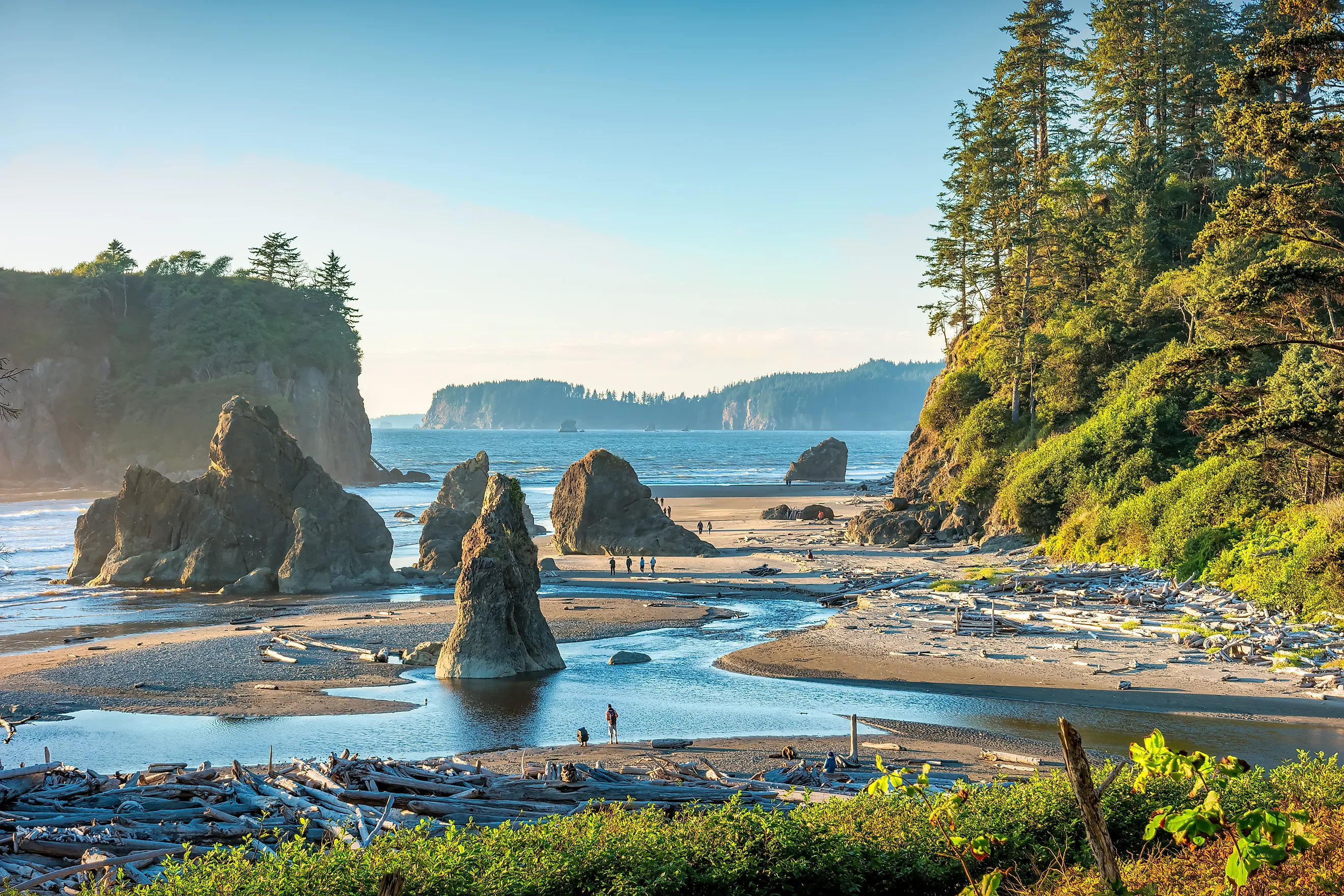
The coastline alone would justify a visit. Waves break around towering sea stacks, tide pools fill with anemones and starfish at low water, and seals, sea otters, and migrating gray whales work the surf just offshore. Turn inland and the rivers take over, running thick with salmon and gathering into waterfalls like the multi-armed Sol Duc Falls, which fans out and drops roughly 48 feet into a narrow gorge. Elk, black bears, deer, and more than 300 kinds of birds live across these forests, and the sheer size of the place, over 600 miles of trail and more than a dozen campgrounds, means you can find solitude even on a busy weekend.
Best Things To Do In Olympic National Park

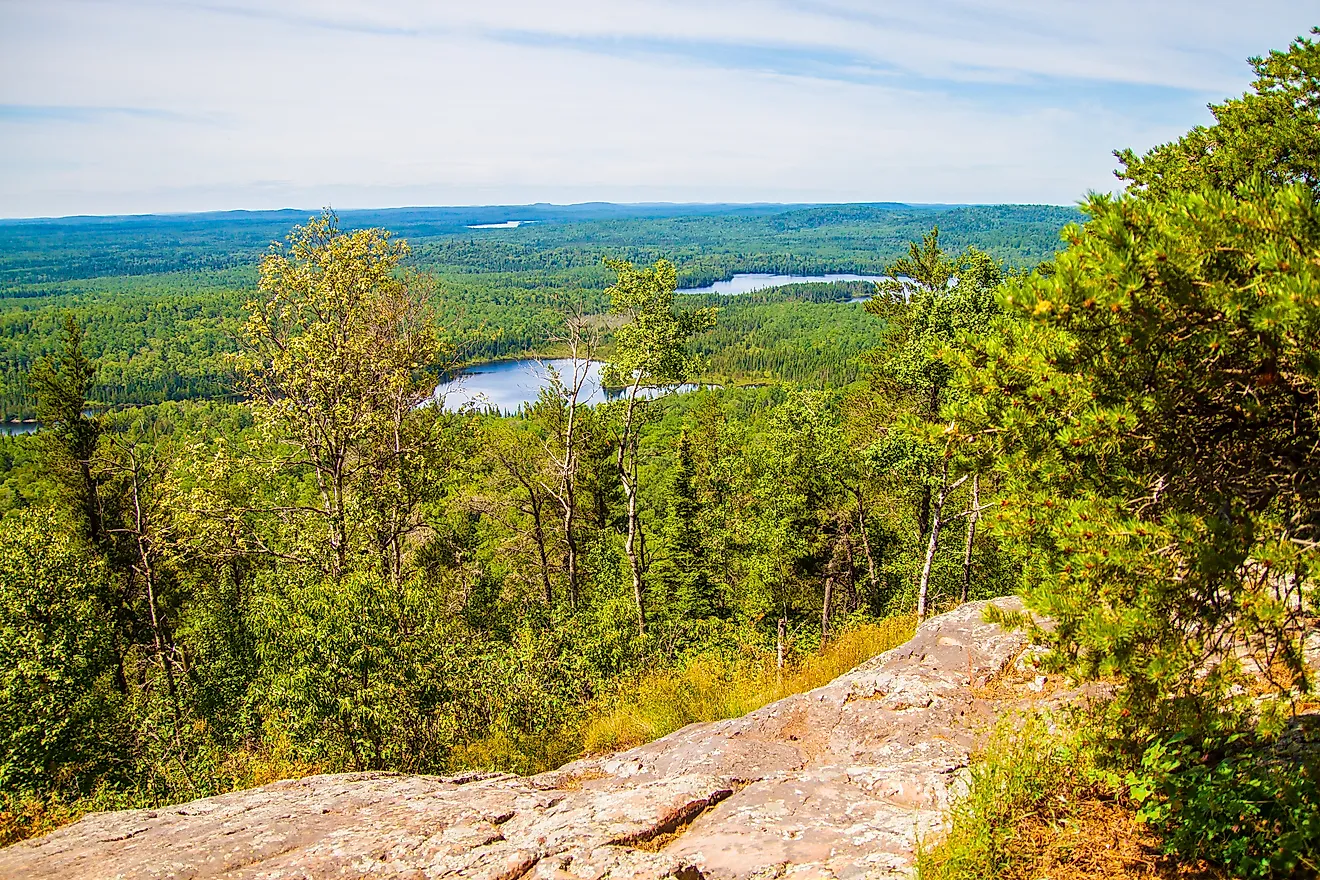
If you only have time for one hike, make it Hurricane Hill. The trail runs about 1.6 miles each way from near the Hurricane Ridge Visitor Center, climbing around 700 feet as it goes, and the payoff is enormous: on a clear day the view takes in the Olympic Mountains, the Strait of Juan de Fuca, and Vancouver Island across the water in Canada. It is the kind of hike where you keep stopping to look, and nobody minds.
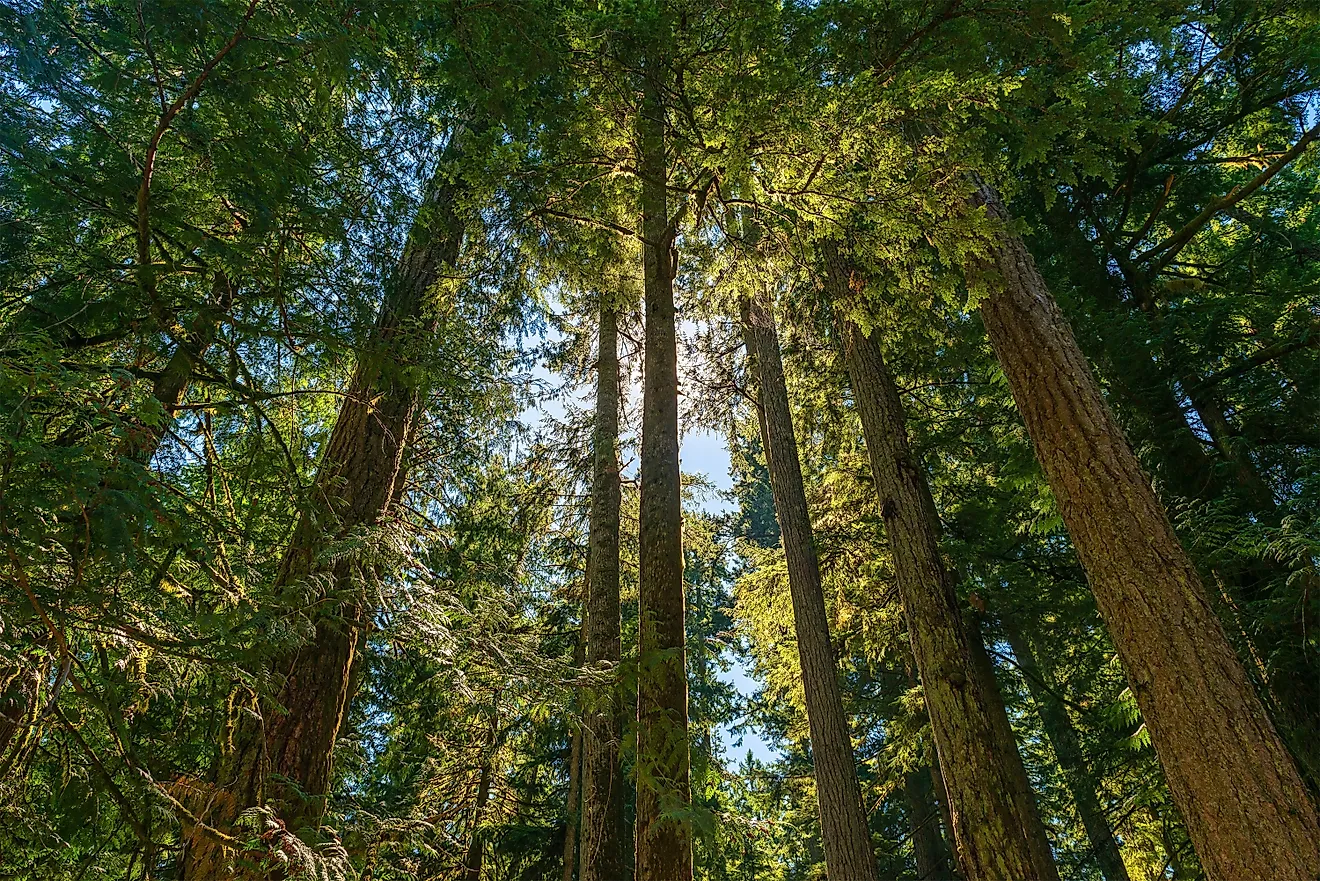
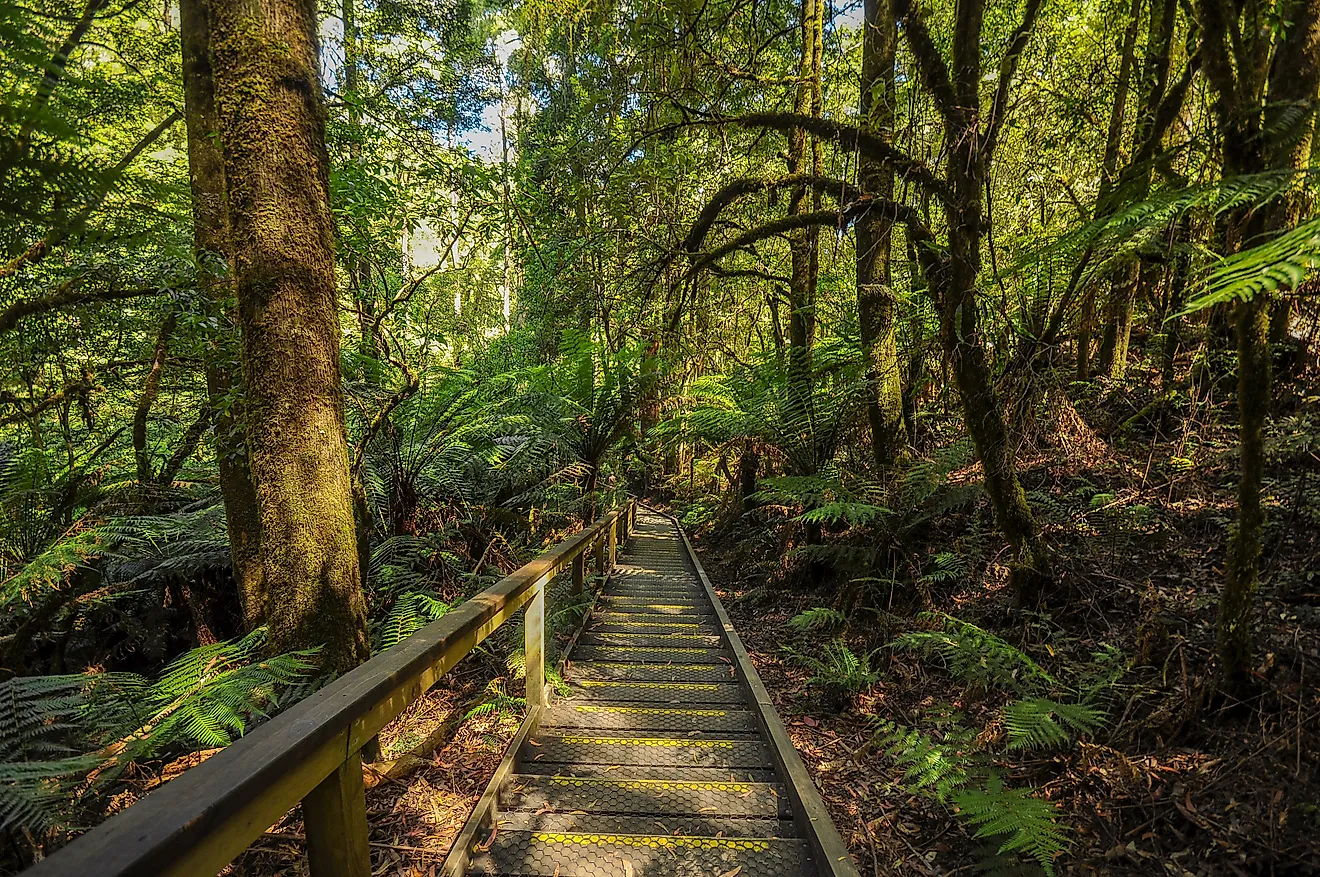
For something gentler and stranger, the Hall of Mosses in the Hoh Rain Forest is hard to beat. The loop runs a little under a mile through the heart of one of the wettest forests in North America, where hundreds of years of rain have draped every branch in moss and ferns until the whole place glows green. It is short, easy, and unlike anywhere else you will walk. Spend the night nearby at the Hoh campground to catch the forest at dawn, or head to the coast and claim a spot at South Beach Campground, where the sites sit on a bluff above the Pacific with a beach a few steps away.
Mount Rainier National Park

You see the mountain long before you reach it. Rainier stands 14,410 feet above the Cascade Range, an active stratovolcano whose last major eruption came around a thousand years ago, and it wears more glaciers than any peak in the Lower 48. Congress protected it in 1899, making this the fifth national park in the entire country, and the reason was never in doubt: the whole 236,000-acre park orbits that one enormous, snow-heavy summit. All that ice feeds a web of rivers and streams that run hardest in May and June, when the melt hits its peak.
Around the mountain lie subalpine meadows, ancient forests, and enough waterfalls to fill a weekend. Roughly two million people come each year to hike, drive, camp, and watch for the elk, black bears, and nearly 200 bird species that live here. A few thousand go further and attempt the summit itself, a serious two-day climb that demands real mountaineering skill. Most of the park's 275 miles of trail and 120 miles of road open from late May through early October, and once the snow returns, skiers and snowshoers take over.
Top Adventures In Mount Rainier National Park

Waterfall hunting is one of the great warm-weather pastimes here, and Narada Falls is the easy place to start. The two-tiered drop plunges about 168 feet, and you can catch a glimpse right from the parking area before a short, steep path leads down to the base. Narada sits along the road to Paradise, the most scenic drive in the park, which starts at the Nisqually Entrance and passes Longmire on the way up. Longmire served as the park's first headquarters and now holds a small museum, plus a lodge and dining that stay open all year.
Paradise itself earns the name. This subalpine basin sits at 5,400 feet, with a visitor center, a historic inn, wide-open mountain views, and summer meadows that fill with wildflowers before the winter snow buries everything again. It is also the launch point for some of the park's finest hiking. The Skyline Trail loops about 5.5 miles up through those meadows, and the higher you climb, the more the glaciers, rivers, and valleys of Rainier open up around you.
North Cascades National Park

This is the wild one. Fewer people make it up here than to Olympic or Rainier, partly because the scenery is so severe: more than 500,000 acres of knife-edge peaks, alpine meadows, and ice. The park holds over 300 glaciers, roughly a third of all the glaciers in the Lower 48, along with countless snowfields, and it ranks among the snowiest corners of the planet. When all that snow and ice melts each year, the runoff feeds a maze of lakes, ponds, streams, and rivers while grinding the peaks a little sharper and the valleys a little deeper.
More than 400 miles of trail thread through this landscape, past habitat for over 200 bird species, a dozen kinds of amphibian, and mammals from black-tailed deer and mountain goats to wolverines. Grizzly bears once roamed here too, and wildlife agencies began a long-term effort to return them to the range in 2024. Anglers cast for salmon and trout, paddlers and boaters take to Ross Lake and Lake Chelan on the park's edges, and climbers come for summits like Eldorado Peak, an 8,868-foot high point reached by a steep route along a narrow, ice-covered ridge with glaciers falling away on both sides.
Best Experiences In North Cascades National Park

The trails are the heart of this park, and Cascade Pass is the one to prioritize. The seven-mile round trip climbs gradually through forest and subalpine meadow, handing you views of jagged peaks and glaciers the entire way. If you would rather let the car do the work, the North Cascades Highway, also signed as State Route 20, winds about 30 miles through the middle of the park past old-growth forest and mountain walls, with pullouts at the good stuff.
Two of those pullouts are essential. One leads to a short walk toward the 242-foot Gorge Creek Falls, and the other is the Diablo Lake Overlook, where the water glows an unreal turquoise beneath a ring of forested mountains. For a genuinely unusual stay, book a cabin at Ross Lake Resort, a cluster of cabins and boat-in campsites that floats on the lake itself, reachable only by boat or trail. Just pack your own food and drinks, because there is no store or restaurant out on the water.
One State, Three Very Different Wildernesses

What ties these parks together is not similarity but contrast. Olympic gives you rainforest and saltwater in the same afternoon, Rainier gathers everything around one colossal volcano, and North Cascades trades comfort for raw, glacier-carved wilderness. Between late May and early October, the high roads and trails open up and the rivers run full with snowmelt, which makes that stretch the sweet spot for seeing all three. Still, none of them truly closes for the year. Rainier in deep winter, with the meadows under snow and the crowds gone home, might be the most memorable version of the park there is.