The National Parks With Waterfalls You Can Swim Under
At the country's most photographed waterfalls, the ranger's warning is usually the same: stay out of the water. Yosemite's Emerald Pool, Haleakalā's Pools of ʻOheʻo, and the base of Zion's Lower Emerald Pool are all now closed to swimmers after deaths, rockslides, and hard experience. Yet of the 63 national parks, a handful still pair a real waterfall with a pool where getting in is sanctioned, or at least tolerated as a long-running local tradition. These five make that short list, with what you need to know about access, hazards, and whether each lives up to its name.
Great Smoky Mountains National Park: Midnight Hole on Big Creek

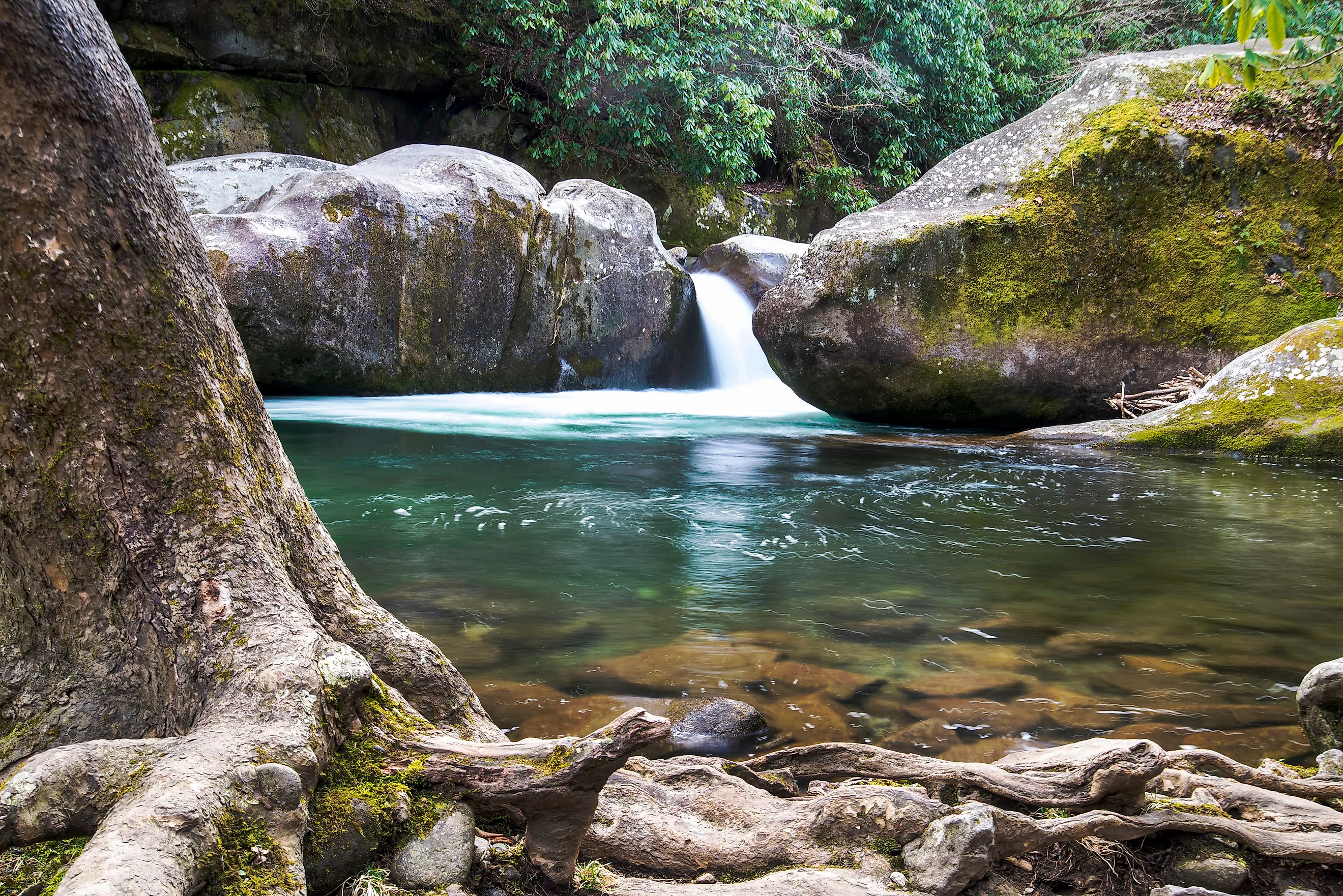
Midnight Hole sits along the Big Creek Trail in the far northeastern corner of Great Smoky Mountains National Park, reached from the Waterville community just off Interstate 40 near the Tennessee-North Carolina line. The creek narrows between two boulders and drops a few feet over a rock ledge into a deep, nearly circular pool so shaded by hemlocks it is dark enough to earn its name. Reached by a walk of less than two miles, it is one of the most consistently recommended swimming holes in the entire park system.
Great Smoky Mountains National Park drew more recreation visits than any other national park in 2025, according to National Park Service statistics released in March 2026, and, unlike most national parks, it charges no entrance fee. That popularity cuts both ways at Midnight Hole: the pool gets crowded on summer weekends, and the park's official water-safety guidance cautions that swimming anywhere in the Smokies carries real risk from slick, algae-covered rocks and currents that are stronger than they look, particularly for anyone tempted to jump from the surrounding boulders. Adventurers can continue another half mile up Big Creek Trail to Mouse Creek Falls, a taller cascade better suited to viewing than swimming. Neither waterfall has lifeguards or posted depth markers, so wise hikers check current conditions before diving in.
Shenandoah National Park: Cedar Run Falls in Whiteoak Canyon

The Cedar Run-Whiteoak Circuit, off Skyline Drive near Syria, Virginia, is a two-waterfall loop through one of Shenandoah's steepest canyons. Six named falls run down the Whiteoak Canyon side of the loop, popular with photographers but generally too rocky and fast for swimming. Cedar Run Falls, on the return leg, is the side hikers come back for: the creek slides over smoothed granite into a swimming hole deep enough for a cooling dip, with a natural rock chute above it that locals enjoy as a water slide.
The full circuit is a demanding, multi-mile day hike with a steep climb back out of the canyon, and Shenandoah's granite stream beds are notoriously slippery when wet. The National Park Service has documented fatal falls from waterfall overlooks elsewhere in the park, and it does not designate Cedar Run as an official swimming area. Visitors wade and swim there at their own risk rather than under any formal park endorsement. An entrance fee applies for Shenandoah, and the trailhead parking lots fill early on summer and fall weekends. For a shorter outing, hikers can turn around at Cedar Run Falls without finishing the full loop.
New River Gorge National Park and Preserve: Glade Creek Falls

Glade Creek flows through a quieter, less-visited corner of New River Gorge National Park and Preserve, which was redesignated from a national river to a full national park in December 2020. The National Park Service describes the creek plainly: it "has several small falls, cascades, and pools that are local swimming holes." The largest of them, Glade Creek Falls, spills down tiered sandstone steps that span the width of the stream before collecting in a pool below.
Access runs along the Glade Creek Trail, with the shortest route to the falls about a mile from the campground trailhead; hikers starting from the upper trailhead near Kates Falls face a much longer round trip of close to nine and a half miles. Because it sits away from the park's famous New River Gorge Bridge and its whitewater rafting runs, Glade Creek sees far fewer crowds than the park's headline attractions, which makes for a calmer swim but also fewer other hikers around if something goes wrong. There is no entrance fee. Water levels shift with rainfall, though, so a creek that is a gentle wade in late summer can run high and fast after storms.
Grand Canyon National Park: Elves Chasm

Elves Chasm is a travertine grotto set into a side canyon along the Colorado River, roughly 116 miles into a typical rafting trip through Grand Canyon National Park. A short waterfall pours over layered travertine into a turquoise pool shaded by maidenhair fern and cottonwood, and river-runners have made a tradition of climbing the ledge beside the falls to jump or slide back into the water below.
The catch is access. Elves Chasm has no road and no maintained day-hike trail; it is reached almost exclusively by multi-day Colorado River trips, either with a commercial outfitter or through the National Park Service's noncommercial river permit system, which allocates launch dates through a competitive weighted lottery. A punishing, unofficial cross-country route called the Royal Arch Route does connect to the chasm on foot, but the National Park Service does not maintain it, and it demands canyoneering skills and river-crossing experience well beyond typical backcountry hiking. For nearly everyone who swims at Elves Chasm, the trip there is the larger commitment. The pool itself is a brief, well-earned stop along a river journey that can take a week or more.
Virgin Islands National Park: Reef Bay Falls

Virgin Islands National Park on St. John was established in 1956, largely on land donated to the federal government by conservationist Laurance Rockefeller. The park's Reef Bay Trail descends through dry forest to the coast, passing Taino petroglyphs carved into rock beside a freshwater pool partway down, before reaching Reef Bay Falls itself.
The falls are ephemeral, fed by rain rather than a spring, so the waterfall, and the swimming pool at its base, can run dry for stretches of the year, especially outside the wetter late-fall and winter months. When it is flowing, the shaded pool below is a genuine reward after a hot, humid descent. Many hikers arrange a boat pickup at Reef Bay itself rather than retracing the uphill hike back to the trailhead, and the National Park Service occasionally offers ranger-guided hikes along the route that include stops at the petroglyphs. Because flow is unpredictable, anyone hoping to swim under the falls should check recent rainfall and trail conditions before setting out, and treat a dry streambed as the likelier outcome.
Check Conditions Before You Pack the Swimsuit
What separates these five from the waterfalls that are now off-limits is not that they are safer in any absolute sense. Swift water, slick rock, and cold temperatures are real hazards at every one of them. It is that none is currently under an outright swimming ban, and each has a local track record of visitors getting in the water without incident. That status can change with a single rockslide, drought, or drowning, the way it already has at Zion and Haleakalā. Before planning a trip around any of these, it is worth checking each park's current alerts page for closures, and treating a park's general water-safety cautions as sound advice.