The National Parks With Ancient Cliff Dwellings
America's National Parks may be best known for preserving the unique and beautiful landscapes that span various parts of the country, but there's a lot more in some of these parks than just scenery. That's particularly true out west, where numerous national parks are home to history that dates back hundreds or even thousands of years. Native Americans built their settlements into the walls of cliffs, creating a functional and fascinating place to live and an enduring legacy generations later. Here's a closer look at the parks where you'll find cliff dwellings.
Mesa Verde National Park

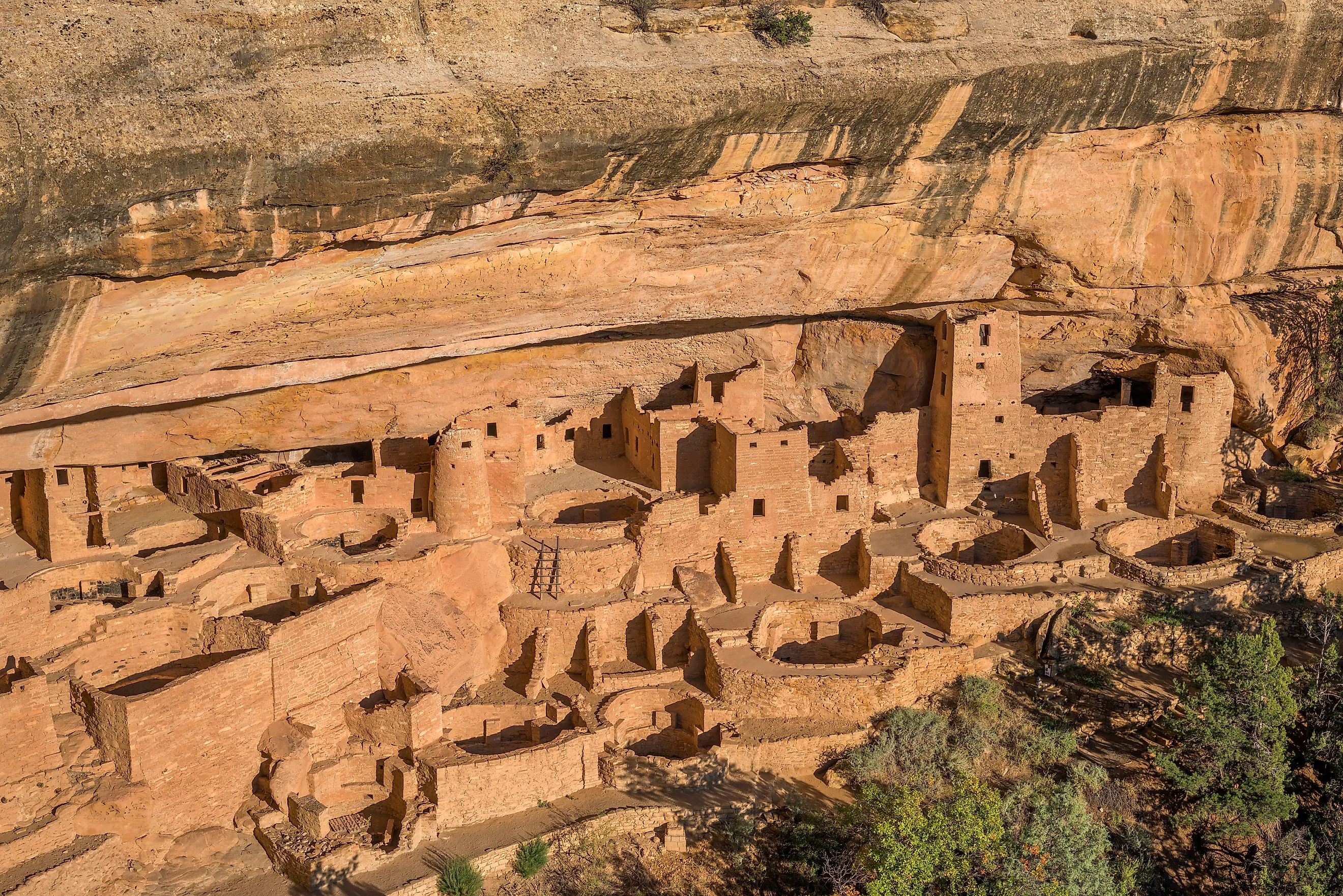
There's no better example of how the National Park Service protects these unique pieces of history than Mesa Verde, a park that doesn't just feature cliff dwellings. It's centered around them. It's located in southwest Colorado, not far from the Four Corners region where the state meets New Mexico, Utah, and Arizona. All of these states are rich in Native American culture and heritage, so it should be no surprise that one of the best remaining examples of cliff dwellings would be located nearby.
Humans have inhabited the area for over 12,000 years, but only built these dwellings around roughly 1200 CE. They were constructed by the Ancestral Pueblo people, who first established permanent communities around 500 CE. After initially living atop the mesas in the area, the tribes relocated to the protected alcoves in the cliffs to take advantage of protection from the sometimes harsh weather and other hazards.
Hundreds of dwellings are spread throughout the park's 52,000 acres. Some of the most impressive include Balcony House, a 38-room dwelling that housed around 30 people, and Cliff Palace, which wasn't a true palace but instead a sprawling cliff village of over 150 rooms. Some, like Long House, are easy for visitors to get a look at up-close on guided tours, while others, such as Spruce Tree House, remain remarkably intact but inaccessible due to instability in the surrounding cliffs.
Most of these cliff dwellings were vacated by the 1300s, when a variety of social and environmental pressures caused inhabitants to migrate to other parts of the region. The area was protected as a National Park in 1906, making it one of the system's earliest, decades after it was "rediscovered" by pioneers exploring the region.
Canyonlands National Park

Across the Utah border and a bit to the north of Mesa Verde, Canyonlands National Park also preserves some of the best Native cliff sites within any national park. Built around the same time, the structures are less well-preserved, meaning it's tougher to know whether the remnants visible today were simple alcoves and granaries or part of more elaborate multi-room construction. Present-day visitors will find fewer residential spaces remaining, and are encouraged to keep their distance from visible remains of storage areas to help preserve them for future sightseers. Salt Creek Canyon is among the best spots to explore with this in mind, home to sites like the multi-room Tower Ruin. However, those interested in the region's Native American history won't be disappointed by their trip, particularly if they catch a glimpse of the ancient rock art that's visible in some areas. It's worth noting that, compared to Mesa Verde, many sites are quite remote, requiring longer hikes or off-road drives to access.
Beyond these unique ancient sites, Canyonlands serves as a lesser-known treat for those interested in the region's one-of-a-kind landscapes. It's separated into a number of districts with varying accessibility and landscapes, including the popular Island in the Sky and the remote but beautiful area known as The Maze. A wide variety of outdoor recreation is available within the park, including hiking, boating, camping, climbing, horseback riding, stargazing, and more.
Grand Canyon National Park

Most people are at least somewhat familiar with the Grand Canyon. After all, it's one of the most-visited national parks in the entire country. Offering distinctive experiences on the amenity-rich South Rim and wilder North Rim, it's well-known for its scenic drives, hikes, camping opportunities, and more. However, fewer know that it's also the site of some of the National Park System's better Native cliff ruins.
Ancestral Pueblo people lived, farmed, and traveled throughout the canyon centuries before it became a national park. Rather than the large residential villages found at Mesa Verde, the Grand Canyon's surviving cliff sites are mostly smaller and more widely scattered. They include masonry structures, shelters, and granaries built beneath natural overhangs or into protected sections of the canyon walls. These locations provided shade, shelter, and secure places to store corn and other food.
Among the top examples are the Nankoweap Granaries, a row of small structures set beneath an alcove high above the Colorado River. Their dramatic setting has made them one of the canyon's most recognizable archaeological sites, although reaching them generally requires traveling through the canyon by river and completing a steep hike. Many other ruins are similarly remote, and the locations of some are not widely publicized to protect them from damage and looting.
Other National Parks With Smaller Cliff Sites
Although these three sites have the best examples of cliff dwellings in true national parks, it's worth noting that there are other examples within the park system in other types of protected lands. These include New Mexico's Gila Cliff Dwellings National Monument and Bandelier National Monument, and Canyon de Chelly National Monument and Montezuma Castle National Monument in Arizona.
In addition, two other true national parks have some cliff ruins worth checking out for those interested in Native history.
Zion National Park

Archaeological sites linked to the Ancestral Puebloan and Southern Paiute people are scattered throughout Zion, some carved into the park's impressive cliffs and canyons. Homes, granaries, and other small alcoves and shelters are the most common remnants. Use discretion and caution when visiting these important sites. Only some are open to the public, and even accessible sites should be treated with care to preserve them for the future. They're just a small part of the overall Zion experience, which is focused on hiking, biking, camping, and canyoneering in some of the nation's most breathtaking trails and public spaces.
Capitol Reef National Park

Capitol Reef protects some remaining historic sites related to the Fremont culture, whose members built small granaries and other storage sites into the cliffs of the park. They also left behind distinctive petroglyphs, as well as evidence of agricultural settlements in the area. Today, the park offers some of the region's best hiking, scenic drives, and camping.
The Best Cliff Dwellings in National Parks are Waiting
Those visiting America's national parks have several opportunities to explore impressive and well-preserved ancient cliff dwellings. Although Mesa Verde might offer the most impressive experience among true national parks, all of the places on this list are fascinating and scenic destinations that offer a glimpse into the regions' past inhabitants.