Why Snakes Get Into Basements In Winter
Most snakes that end up beside a house in autumn are not trying to get into the basement. They are trying to get down the outside of it. Settling soil alongside a foundation leaves a narrow void running vertically down the wall, and those voids work as ready-made tunnels into ground that sits below the frost line. An animal that cannot dig a single inch for itself can descend four feet without effort. The ones that appear in the laundry room took a wrong turn on the way.
The Foundation Is The Destination

Understanding this correctly changes what the problem actually is.
Garter snakes cannot dig well, so they rely on openings that already exist in soil or stone. Gaps in block or stone foundations lead downward, and the key goal is reaching soil below the frost line, which runs about three feet deep in parts of Indiana and considerably deeper further north.
Most snakes entering those gaps stay inside the wall or the soil and rarely reach the living space at all. The wall is the hibernaculum. The room is a mistake.
A Pencil-Width Gap Is Enough

The margins involved explain why sealing a house against snakes is harder than it sounds.
An adult snake needs a gap roughly the size of a pencil to pass through, and houses settle into the ground naturally, producing exactly those fractures over time. Guidance for inspections suggests measuring any gap larger than about half an inch.
Snakes also sense the temperature difference escaping from foundation cracks, so the gap is advertising itself. A crack leaking warm air in November is a signal.
Window Wells Are Pit Traps

The single most common route into an actual basement is an architectural feature nobody thinks about.
Window wells are typically 24 to 48 inches wide and 12 to 36 inches deep, with smooth metal or concrete sides. A snake traveling along the foundation drops in and then cannot climb out.
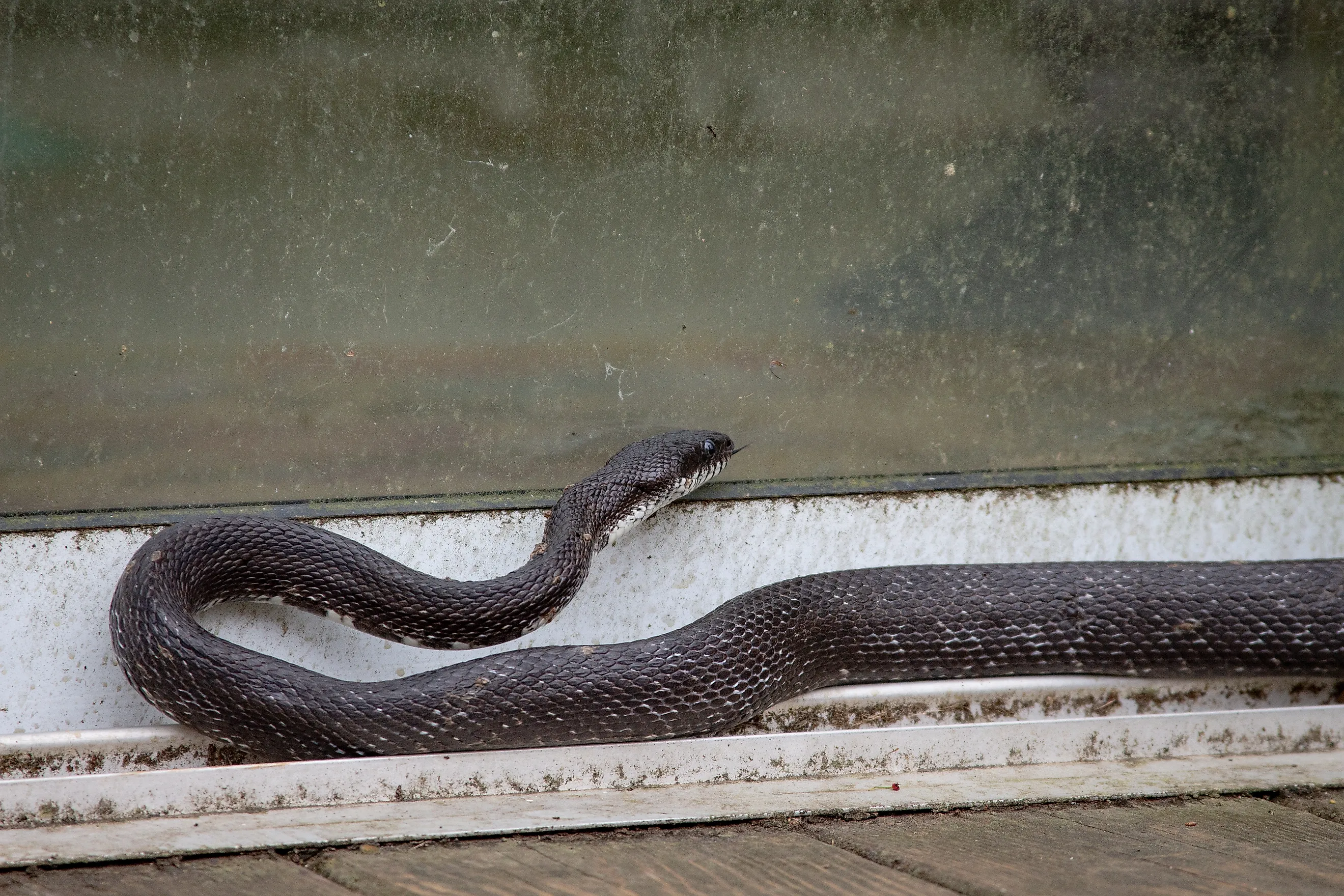
Once trapped, the only non-vertical surface available is the basement window. A loose frame, a gap under the sash or a damaged screen turns an accident into an entry.
Sump Pits And Drain Tile Lead Straight In

Drainage infrastructure creates openings that bypass the foundation entirely.
Minnesota extension guidance flags the sump pump and drain tile directly, noting these should not be open to the air and that tile draining from an open end should be covered with quarter-inch hardware cloth, cleaned of debris routinely.
Uncovered sump pits appear on every professional list of high-risk entry points. A pipe running from the yard into the basement floor is a purpose-built corridor.
Some Houses Have Ducts Under The Floor

One building practice produces a route most homeowners do not know exists.
Heat ducts run beneath the basement floor in some construction, and the extension guidance is blunt about the consequence: some ducts are not built tightly or do not stay tight over time, and insects, mice and the snakes that feed on them can enter.
A snake in a sub-floor duct is inside the thermal envelope and invisible until it emerges through a register.
The Basement Is Food As Well As Shelter

The conditions that make an unfinished basement unpleasant for people make it productive for a predator.
Unfinished basements commonly sit at 45 to 60 degrees Fahrenheit with 50 to 70 percent relative humidity, and those conditions support slug and earthworm activity along foundation edges. Garter snakes eat both.
Add mice using the same cracks and the space offers shelter and a standing food supply in one place.
A Heated Basement Is Too Warm

Finishing the basement does not help the snake, which is the detail that undercuts the whole idea of a cozy indoor winter.
Warm rooms interrupt a snake's winter rest. An indoor shelter may simply shorten brumation, producing short awakenings between long quiet periods rather than a clean five-month dormancy.
Snakes are nonetheless often found near the furnace or water heater. The animal is seeking a gradient it can regulate against, and a utility room offers one.
Warm Spells Bring Them Out Of The Wall
The timing of sightings inside a house follows a predictable daily pattern.
Activity during warm spells peaks from late morning through early afternoon, when sun-warmed foundations and wall voids improve temperature regulation. Indoor brumation can last one to six months depending on species and how warm the hiding place stays.
So a snake appearing in February has not just arrived. It has been in the wall since October and the weather changed.
Finding One Means A Sealing Problem

The diagnostic value of a winter sighting is higher than a summer one.
Finding a snake indoors in winter usually indicates a foundation sealing issue rather than a wandering animal, because the route it used is the route the cold air and the mice are using too.
The fix is masonry caulk or mortar repair for thin cracks, expanding foam for small gaps, hardware cloth over drain openings, and covers on window wells. Done in midsummer, when the snakes are out in their hunting range.
The Short Version

Snakes get into basements because the void alongside a settling foundation is the easiest route below the frost line available to an animal that cannot dig, and because window wells, sump pits, drain tile and under-floor ducts all breach the wall at exactly the depth they are aiming for.
Most never reach the room. The ones that do are usually in a window well with no way out, or following mice, or drawn to the slugs and earthworms along a damp foundation edge. A finished warm basement is actually a poor place for them to spend the winter, which is why they are so often found by the furnace rather than in it.