The American Towns Inside A Caldera
An upscale California ski resort town, a Colorado silver mining town, and a Hawaiian beach community have something unusual in common. All three were built inside volcanic calderas. A caldera is a large depression formed from the ground collapsing into a magma chamber after a volcanic eruption. Some span many miles, and millions of years of erosion and geological activity can make their original shape difficult to recognize.
People settled in these areas for economic and practical reasons, with or without knowing the volcanic history. Prospectors were enticed by the mineral deposits, and farmers found fertile soil for agriculture. Towns sprang up to serve these communities. Later the forests and mountains attracted vacationers. Some of these volcanoes have been extinct for millions of years, but at least one remains active.
Mammoth Lakes, California

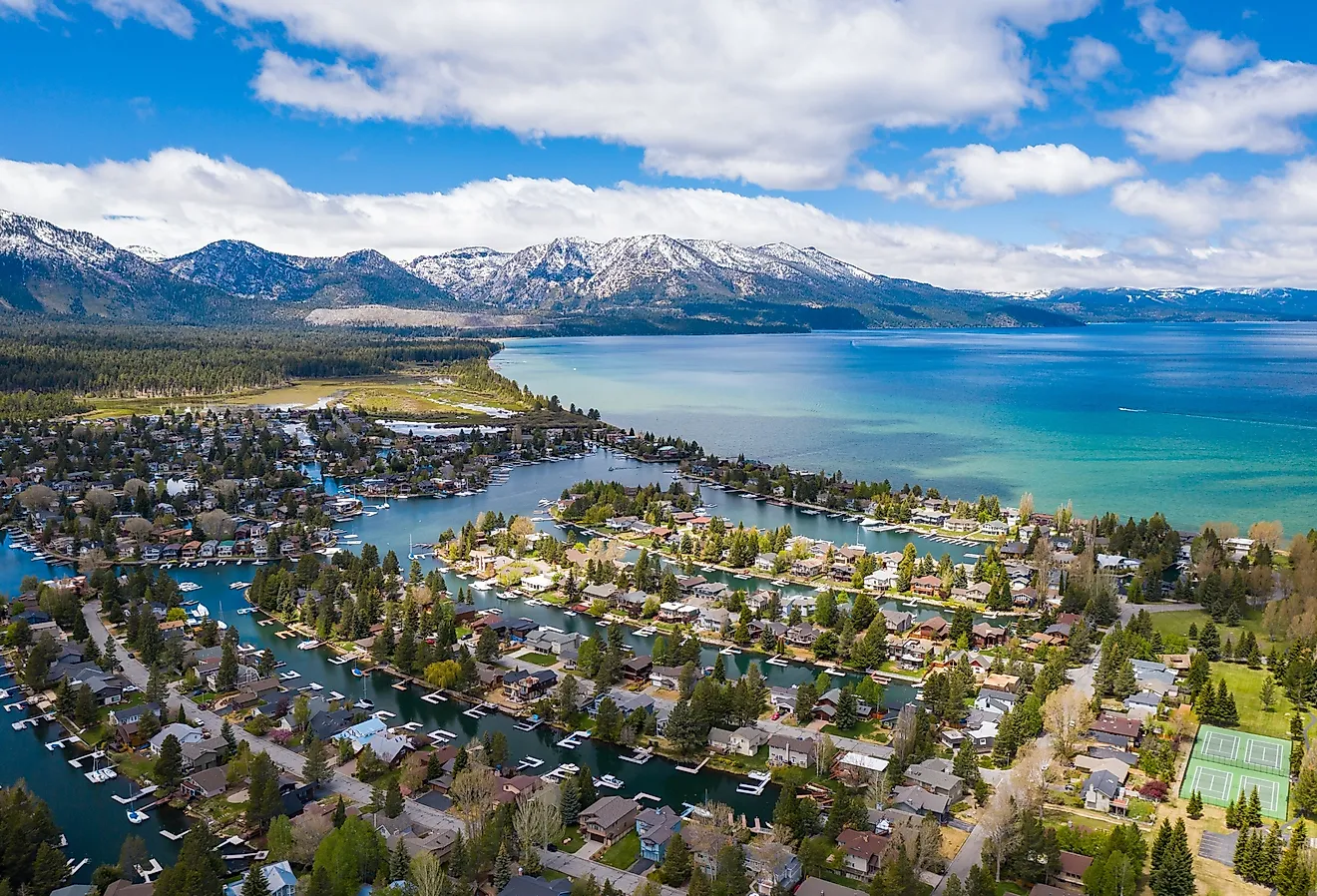
Mammoth Lakes is known for skiing, not volcanoes. The resort town has ski slopes, high-end restaurants, and million-dollar properties in the eastern Sierra Nevada mountains, southeast of Yosemite National Park. The town is inside the Long Valley Caldera, the remains of a vast volcanic eruption 760,000 years ago. Unlike many ancient calderas, this volcanic system is still active.
The eruption released about 150 cubic miles of magma and left behind a 20-mile-long basin. Later eruptions, erosion, and sediment deposits created the landscape seen today. The caldera is now so large with such varied terrain that it is barely recognizable as a caldera.
The volcanic system is active, and scientists monitor earthquakes, ground movement, and gas emissions. Near Horseshoe Lake, carbon dioxide from magma deep underground rises through cracks in the rock and seeps into the soil. The gas builds up in places to concentrations high enough to affect the level of oxygen available for tree roots. Since the 1990s, it has killed large stands of trees around the lake, leaving a ghostly landscape outside the resort town.
Creede, Colorado

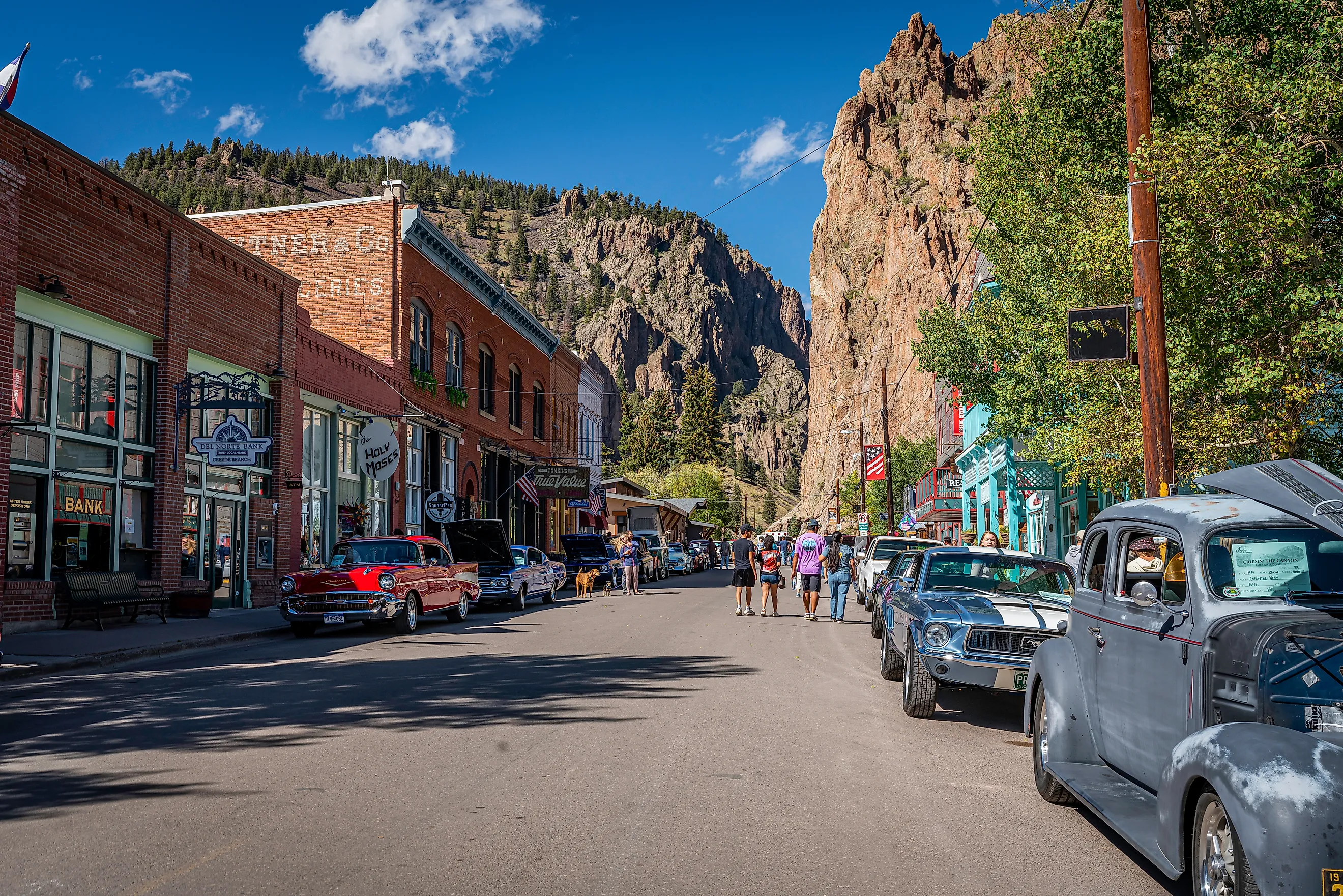
Creede lies in the Creede Caldera, part of an ancient volcanic complex formed by the eruptions that created the San Juan Mountains millions of years ago. The discovery of silver along Willow Creek in 1889 sparked a rush of prospectors to a narrow valley in southwestern Colorado's San Juan Mountains. Within two years, Creede had become a booming mining town, surrounded by steep volcanic cliffs that rose above its streets. The silver deposits formed when hot, mineral-rich water flowed through cracks in the volcanic rock, leaving silver behind as it cooled.
Today, Creede has art galleries, an Underground Mining Museum built into the canyon wall, and the 17-mile Bachelor Historic Loop, a route past abandoned mining sites and old settlements in the surrounding mountains.
Island Park, Idaho

Island Park is in northeastern Idaho, directly west of Yellowstone National Park. The town stretches for about 33 miles along US Highway 20, but in many places, the city limits only extend about 500 feet across. Instead of a traditional downtown, Island Park has homes, restaurants, and other businesses spread along the highway through the forests of eastern Idaho. The odd layout dates back to 1947, when resort owners incorporated the town so their businesses could qualify for liquor licenses under Idaho law. They drew the boundaries around businesses along the highway, creating one of the longest and narrowest incorporated towns in the country.
The town lies inside Henry's Fork Caldera, formed about 1.3 million years ago during an eruption of the Yellowstone volcanic system. Afterward, lava flows partly filled the depression, creating a broad basin of forests, meadows, and waterways. The Henry's Fork of the Snake River flows through the caldera, and trout fishing now draws people from around the country.
Prineville, Oregon

Prineville began as a trading stop for ranchers in central Oregon, about 35 miles northeast of Bend, near the confluence of Ochoco Creek and the Crooked River. Cattle ranches, agricultural fields, and the town all occupy the remains of a large volcano. Prineville sits inside the Crooked River Caldera, a 26-mile-long and 17-mile-wide volcanic depression. The caldera formed during a period of volcanic eruptions between 29.7 and 27.5 million years ago.
Over millions of years, younger volcanic deposits and erosion have obscured the ancient caldera. At Smith Rock State Park, northwest of Prineville, towering rock formations expose volcanic deposits from the eruptions that formed the caldera. The park's cliffs draw rock climbers and boulderers, and Prineville itself has become a technology center with major data centers operated by Meta and Apple.
Silverton, Colorado

Silverton stands at 9,318 feet above sea level in southwestern Colorado's San Juan Mountains, about 50 miles north of Durango, surrounded by high peaks and rugged mountain passes. The old mining town is inside two ancient volcanic calderas, the San Juan and Silverton Calderas. Both formed during eruptions millions of years ago. As with Creede, volcanic activity helped create the mineral deposits that later brought prospectors to the area.
Silverton still has many of its historical buildings, and the Durango & Silverton Narrow Gauge Railroad continues to carry passengers through the mountains. The historic district includes the entire town, along with the Mayflower Mill, its aerial tram, and other remnants of the mining industry. Hikers and off-road drivers head out from Silverton into the mountains, including Ophir Pass, a rugged, unpaved route to Telluride.
Kailua, Hawaii

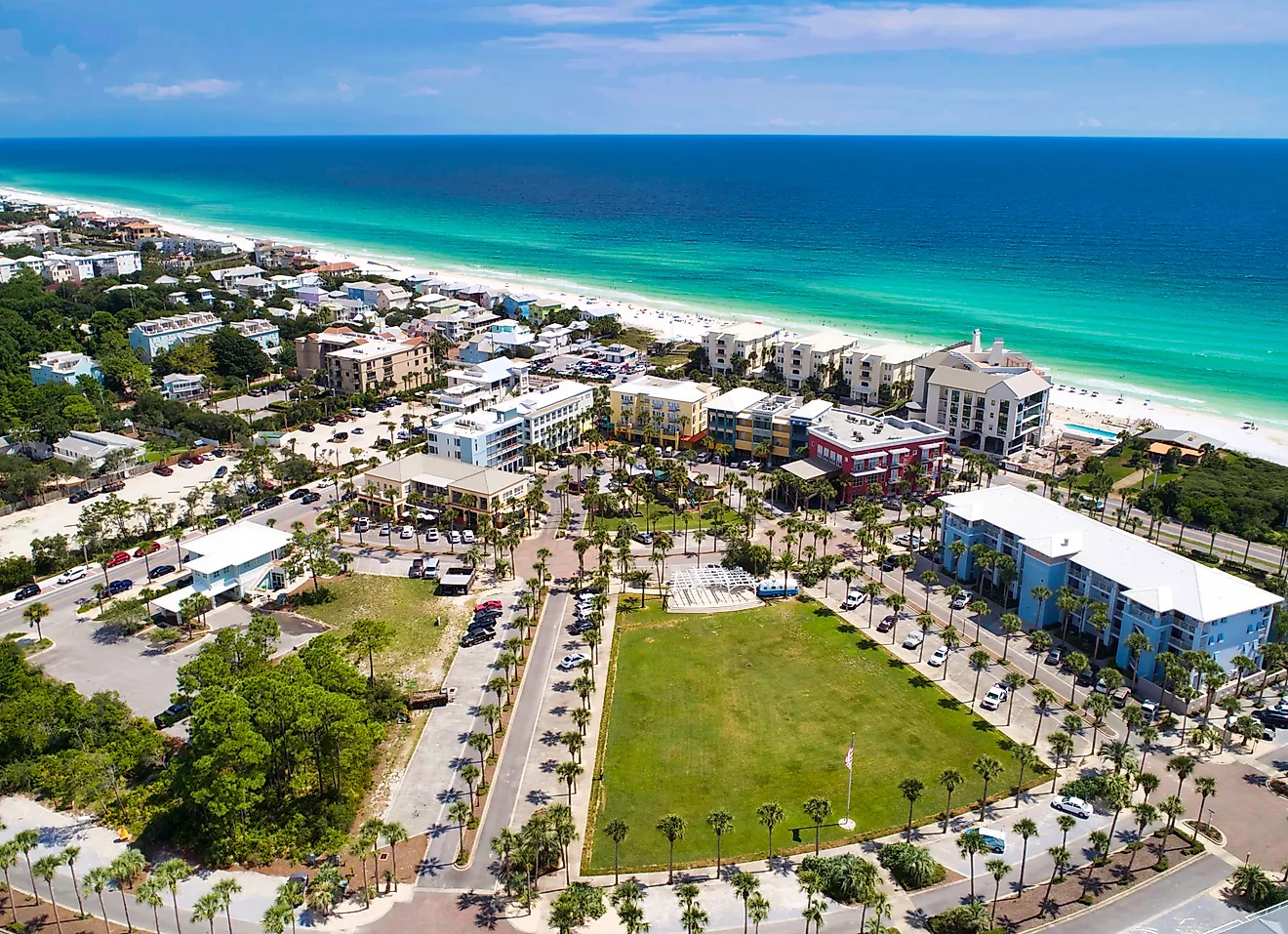
Kailua is on O'ahu's eastern coast, northeast of Honolulu. The area is known for its white sand beaches and turquoise water. The town has a commercial center, residential neighborhoods, and the Ko'olau Mountains rising behind it. The mountains are remnants of a volcano, and Kailua sits in the caldera.
Ko'olau volcano began forming about 2.5 million years ago. Over millions of years, erosion altered the landscape, and a giant landslide removed a large section of the volcano's northeastern flank. The original shape of the caldera is now difficult to recognize.
Centuries before Kailua became a modern beach town, Native Hawaiians settled along its streams and coastal wetlands, where they grew taro and other crops and fished in the surrounding waters. Kawainui, now a freshwater marsh, was once a large fish pond that provided food for the community. Today, Kailua has a busy town center and well-loved beaches, and the ancient caldera below it is barely recognizable.
The Chance Of Another Eruption

The volcanoes that formed the calderas under Creede, Prineville, Silverton, and Kailua are considered extinct. Mammoth Lakes is different. The Long Valley volcanic system is still active, and the US Geological Survey monitors it for signs of activity. Another eruption is possible. Although the eruption that created Long Valley Caldera happened about 760,000 years ago, smaller eruptions have occurred in the region since then, as recently as 600 years ago.
Island Park's volcanic history is tied to Yellowstone's. The Henry's Fork Caldera formed about 1.3 million years ago during an eruption of the Yellowstone volcanic system. The volcanic activity later shifted to what is now Yellowstone National Park, where it continues to be active. Future eruptions are possible for the Yellowstone region, but there are no signs that it will be any time soon.