These 7 Nevada Towns Have The Best Historic Districts
Nevada's boomtown history went underground when the mines went quiet, but it hasn't fully disappeared. In places such as Virginia City and Goldfield, entire blocks still preserve the hotels, courthouses, and storefronts built when fortunes could rise or collapse with the discovery of a new ore body. Elsewhere, communities such as Minden preserve a different chapter, shaped by railroads, agriculture, and one of America's largest engineering projects.
Virginia City

Virginia City's streets still follow the footprint of one of the richest silver discoveries in American history. The 1859 discovery of the Comstock Lode transformed the settlement into a major mining center and helped spur Nevada's rapid development during the 1860s. The Virginia City Historic District is now a National Historic Landmark covering about 14,750 acres and more than 400 historic buildings, along with mine workings and roads associated with the Comstock era. The district extends beyond Virginia City itself to include Gold Hill, Silver City, and Dayton.
C Street provides the easiest introduction to the surviving town, where brick commercial buildings and wooden sidewalks retain much of the old mining center's appearance. The Fourth Ward School, completed in 1876, now operates as a museum inside one of the district's most imposing buildings. Visitors can also see Piper's Opera House or ride the Virginia & Truckee Railroad, both closely connected with the period when Virginia City ranked among the West's most important mining communities.
Eureka

Eureka grew around silver and lead mining in central Nevada during the second half of the 19th century. Its location along what is now U.S. Route 50 helped make it a commercial center serving mines and settlements scattered through the surrounding mountains. The Eureka Historic District was entered in the National Register of Historic Places in 1973, with mining, commerce, and industry central to its historical significance. The gradual decline of the local mining industry helped leave an unusually large portion of the older town intact.
The district follows the town's main corridor, where 19th-century commercial buildings remain prominent along the highway. One of its standout structures is the Eureka Opera House, which opened in 1880 and continues to serve as a community venue. The Eureka Sentinel Museum occupies the former newspaper building, preserving printing equipment and material connected with the town's mining-era press. A walk along Main Street takes you past buildings that survived long after Eureka's peak mining years.
Goldfield

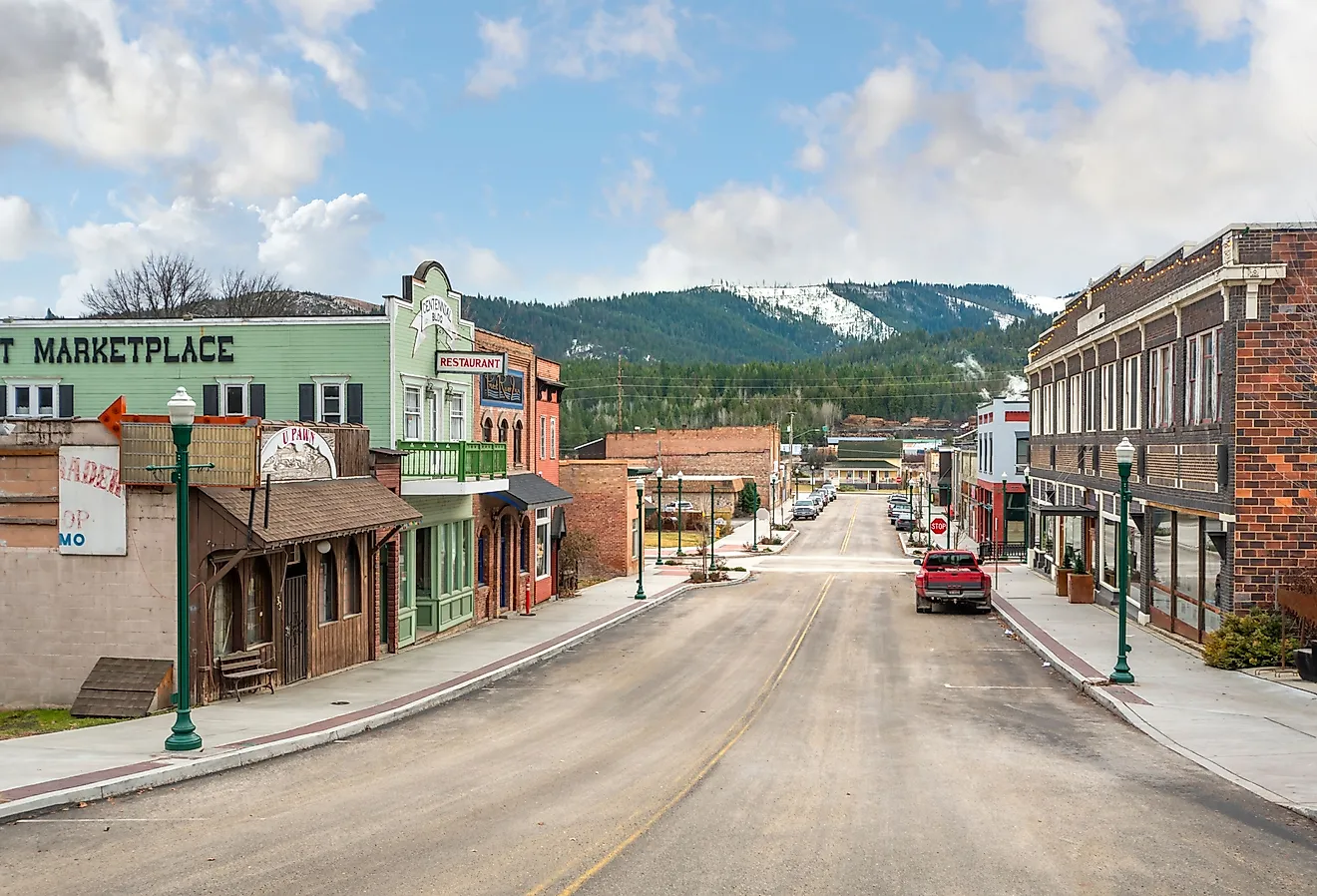
This town emerged at the beginning of the 20th century after rich gold discoveries attracted miners, investors, and businesses to central Nevada. By 1907, the community had grown to more than 20,000 people, making it one of the largest settlements in the state during its mining boom. The Goldfield Historic District preserves portions of this period, including commercial, residential, governmental, and public buildings constructed largely between 1904 and 1909. The rapid growth brought hotels, stores, banks, newspapers, and other businesses to the community within only a few years. Goldfield even became the county seat of Esmeralda County during its period of greatest prosperity.
A devastating fire in 1923 destroyed much of Goldfield, but important structures within the district survived. Among the town's recognizable landmarks are the Goldfield Hotel, the Esmeralda County Courthouse, and the former schoolhouse. With its remaining early-20th century buildings set against the surrounding desert landscape, Goldfield offers a look at the rise and decline of one of Nevada's major mining boomtowns. The Goldfield Hotel, although no longer operating as a traditional hotel, remains one of the most recognizable reminders of the community's prosperous years.
Austin

This town grew after silver was discovered in Pony Canyon in 1862. Within a few years, the settlement became a significant mining and commercial center and the county seat of Lander County in 1863. The Austin Historic District was listed on the National Register in 1971 and covers approximately 748 acres, including the town's historic civic and commercial buildings. Austin's location along the route that later became known as the Loneliest Road in America also contributed to its importance as a stopping point for travelers crossing central Nevada. During its early years, the town contained hotels, stores, churches, and other businesses serving the growing mining population.
Visitors can explore the Austin Historic District, see St. Augustine's Catholic Church, visit St. George's Episcopal Church, and take in the historic streets along U.S. Route 50. St. Augustine's Catholic Church is particularly notable for its stone construction and connection to the town's early immigrant population. St. George's Episcopal Church is another surviving reminder of the religious and cultural institutions that developed alongside the mining industry.
Minden

Minden stands apart from Nevada's mining boomtowns because much of its historic character was planned before construction began. H.F. Dangberg Jr. laid out the community during the early 1900s as the Virginia & Truckee Railway prepared to extend into Carson Valley. Streets were surveyed around a planned center, and Douglas County approved the new town in 1906. Agriculture, rail transportation, and the Dangberg family's businesses subsequently shaped its growth.
Minden's historic core centers on Esmeralda Avenue and the streets around Minden Park. A self-guided walking route passes several of the community's early homes and commercial buildings, including the Farmers Bank of Carson Valley. The Minden Inn and Carson Valley Improvement Club Hall add two more prominent early structures to the downtown streetscape.
Genoa

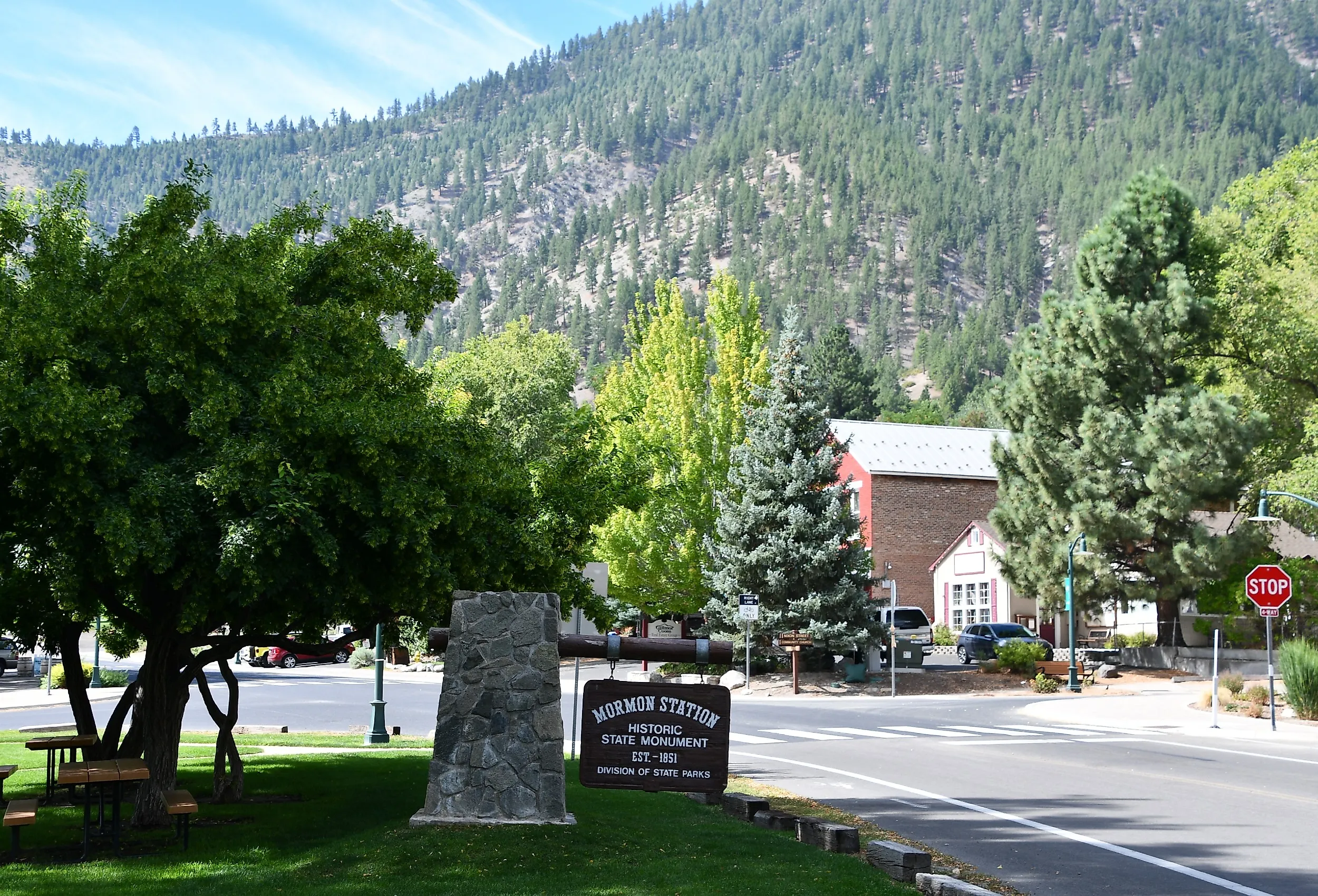
This town is one of Nevada's oldest towns and is widely recognized as the state's first permanent non-Indigenous settlement. It was established in 1851 by Mormon traders as Mormon Station along the Carson Route of the California Trail, where travelers could obtain supplies before crossing the Sierra Nevada. The settlement was renamed Genoa in 1855, and the community later became part of Douglas County. Today, the Genoa Historic District preserves much of the town's early character, with Victorian-era buildings and other structures connected to its development during the 19th century.
The compact historic district is easy to explore on foot, making Mormon Station State Historic Park a natural starting point for learning about Genoa's earliest years. The Genoa Courthouse Museum, housed in the former Douglas County courthouse, offers another look at local government and pioneer life, while the Genoa Bar & Saloon, established in 1853, remains one of the town's best-known historic landmarks. Visitors can also walk along Main Street to see preserved buildings throughout the historic district and experience how Genoa developed from a frontier trading post into a small Carson Valley community.
Boulder City

Boulder City was created for a purpose that still defines its oldest neighborhoods. The federal government developed the community beginning in 1931 to house workers connected with construction of Hoover Dam. Homes, government buildings, and commercial structures went up according to a planned layout rather than the haphazard growth seen in many Nevada mining camps. The Boulder City Historic District joined the National Register in 1983 and encompasses hundreds of properties associated with the city's early decades.
Much of the historic core remains recognizable around Nevada Way and Arizona Street. The Boulder Dam Hotel began construction in 1932 and provided lodging during the dam-building period. Nearby, the Boulder Theatre preserves another piece of the city's early commercial district. A walk through the surrounding residential streets shows the Spanish Revival, Craftsman, and other architectural styles used as the federal community took shape during the 1930s.
Different Facets of Nevada
Nevada's historic districts preserve several very different versions of the state's past. Virginia City, Goldfield, Eureka, and Austin grew rapidly around mineral strikes, leaving substantial pieces of their mining-era streets behind. Genoa reflects an earlier period of overland travel and settlement, while Minden grew around agriculture and railroad expansion. Boulder City closes the timeline with a planned community built during the Hoover Dam era. Their small populations also make these districts unusually visible. Historic courthouses, old commercial blocks, churches, and homes still occupy central streets rather than isolated heritage sites. For travelers interested in Nevada beyond its largest cities, these seven communities preserve much of the architecture that explains how the state developed.