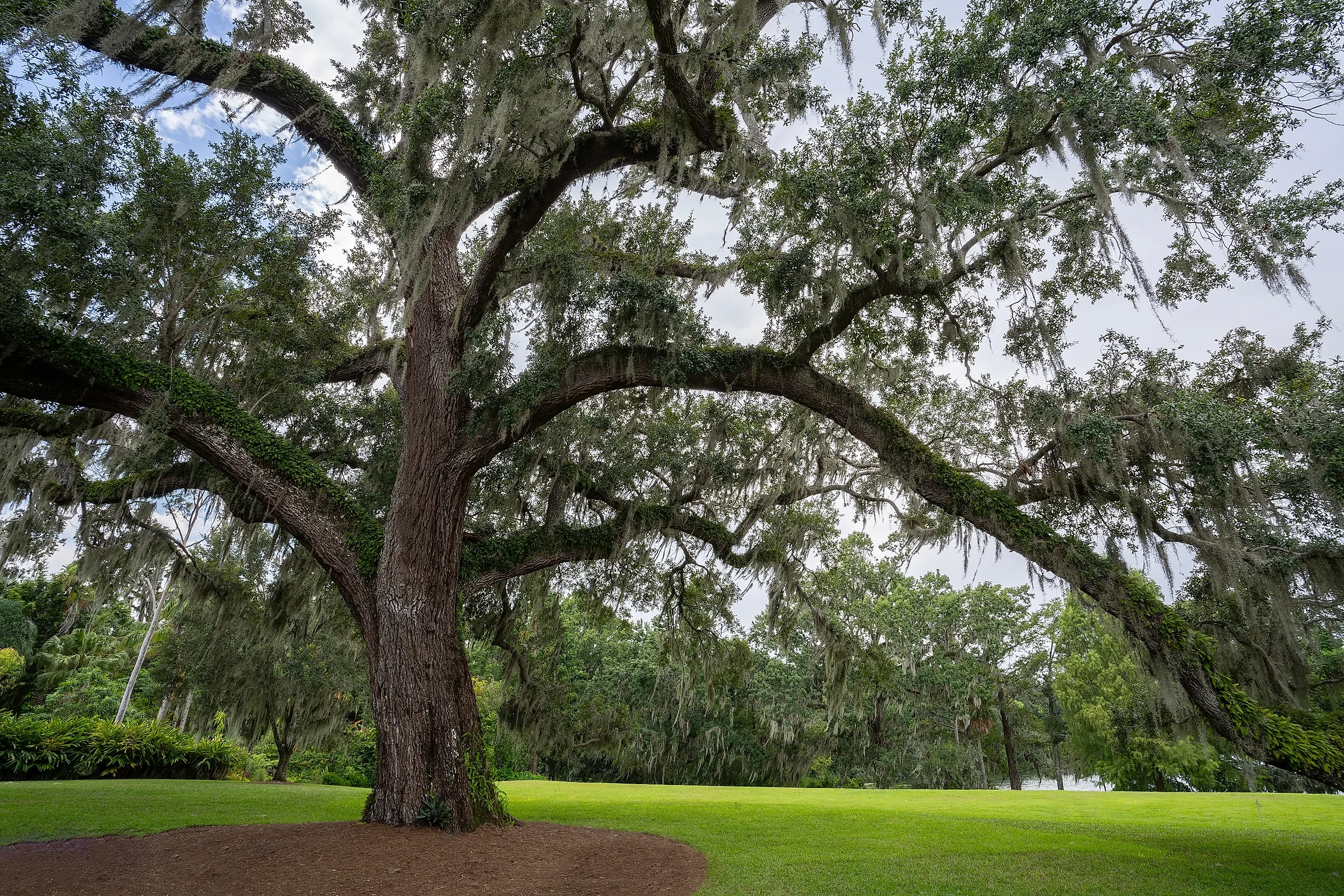
Why Live Oaks Grow Along The Southern Coast
Live oaks (Quercus virginiana) range in a narrow, nearly unbroken band from the coastal plain of southeastern Virginia down through Florida, along the entire Gulf Coast, and into central Texas. They rarely appear more than a hundred miles or so from open saltwater anywhere along that stretch.
These trees cluster mainly along the southern US coastline due to a combination of environmental conditions that occur within their range: winters mild enough to avoid hard freezes, sandy soils that drain well, and a tolerance for salt water and seasonal flooding that allow them to thrive where few other large hardwoods can.
Trees Made for Coastal Soil and Weather

Soil chemistry is part of what defines their native range. Coastal plains across the Southeast carry sandy, well-drained soils deposited over millions of years by retreating seas. Those conditions are one of the species' noted strenths and it suits a root system that is built to spread wide rather than deep, anchoring the tree against hurricane-force winds and drawing moisture from a soil layer that inland clay-based forests rarely offer.
Temperature draws the outer boundary around where these trees can thrive. Live oaks cannot tolerate more than brief dips below 20 degrees Fahrenheit, conditions that hold for most of the year across their coastal range, as they are susceptible to the damage from days long freezes. Their mild climate allows the tree to photosynthesize effectively through every season rather than shutting down growth each winter the way deciduous oaks do.
If temperatures fall below about 10 degrees Fahrenheit, ice crystals begin forming inside the tree's leaf and stem tissue, rupturing cell walls in a process the plant has no way to reverse. Sustained cold at that level kills the evergreen foliage the species depends on for its uninterrupted growing season. Extreme heat poses far less of a threat.
Built to Handle Salt Water and Seasonal Flooding

Few hardwoods native to North America tolerate salt the way live oaks do. Coastal storms routinely push brackish water across the low-lying ground where the species grows. Live oaks have evolved root tissues capable of filtering out much of that salt before it reaches the rest of the tree.
That same tolerance extends to moderate flooding. Tidal marshes and low coastal terrain flood periodically, whether from storm surge, heavy rain, or simple proximity to sea level. Live oak roots can withstand standing water for days at a time without the oxygen deprivation that damages less flood-tolerant trees.
This combination of salt and flood tolerance allows live oaks to grow in a transitional zone between dry upland forest and open marsh that few other large trees can occupy.
A Canopy Evolved for its Environment

Unlike live oaks, most other hardwoods evolved inside dense forests, where trees grow tall and narrow in a race to outcompete neighbors for sunlight. Live oaks evolved under a different set of pressures. Along open coastal plains, savannahs, and maritime forests with scattered canopy cover, sunlight was rarely the limiting factor—wind was.
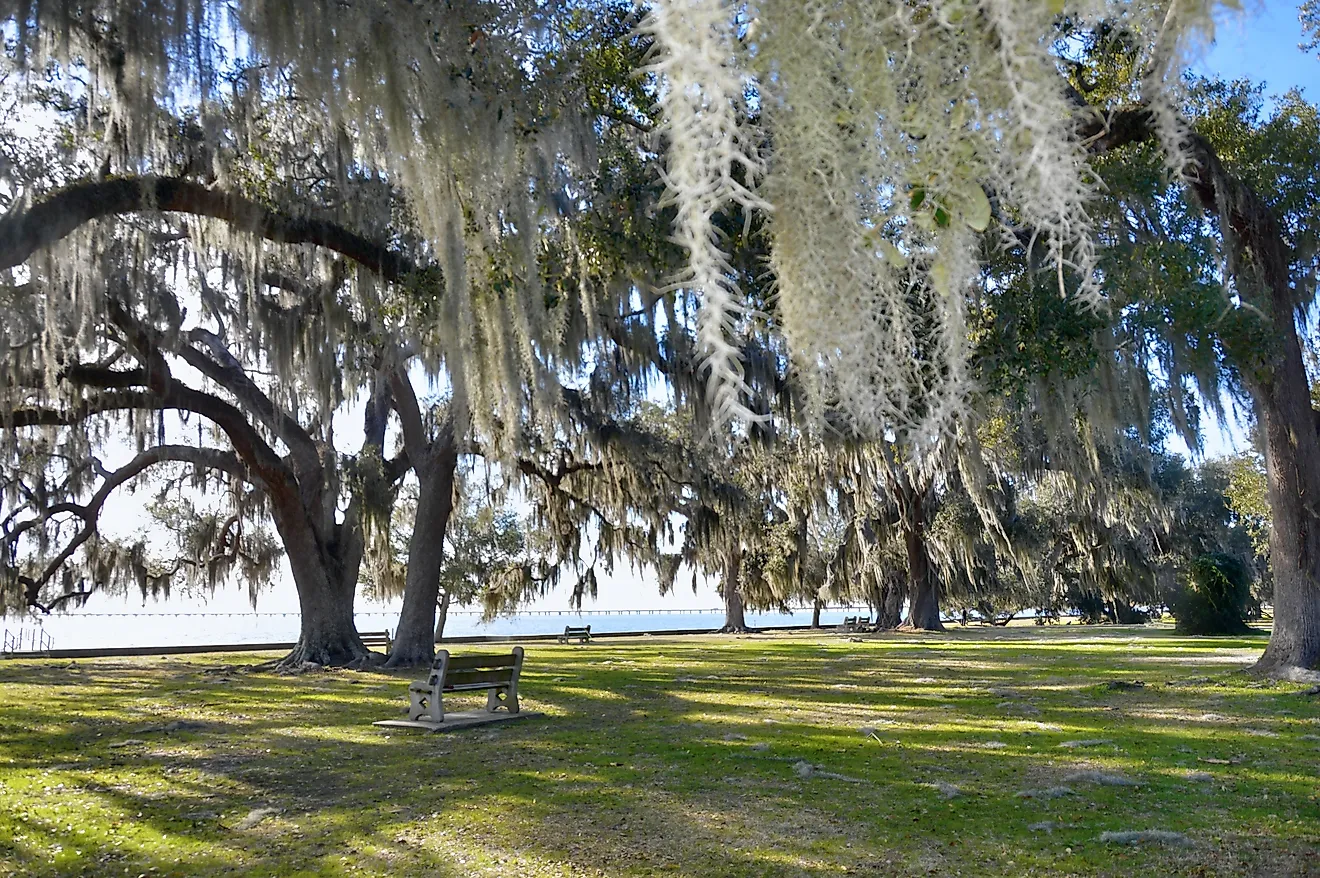
That difference in evolutionary pressure produced a tree shaped less like a spire and more like an umbrella, with limbs that spread horizontally rather than soaring upward. A trunk that can exceed thirty feet in circumference supports limbs that sometimes touch the ground before curling back upwards. Some, especially old specimens growing in open areas, have produced canopy spreads exceeding one hundred feet across.
A tall, narrow forest oak acts like a lever arm during high wind, with force multiplying toward the top of the canopy until the trunk snaps or the tree uproots entirely. A live oak's low, broad crown distributes that same wind load across dozens of thick, radiating limbs instead of concentrating it at a single point far above the ground.
Resistance to Coastal Wind

The wood itself reinforces that structural strategy. Live oak timber ranks among the densest and most shock absorbing of any oak species in North America. That toughness lets individual limbs flex and sway in hurricane winds rather than fracture outright. The tree's tendency to grow thick, buttressed limb joints close to the trunk adds structural bracing at exactly the points where failure would otherwise be most likely.
Even the leaf structure reflects coastal pressures. The leaves are smaller, thicker, and more leathery than those of deciduous oaks. They have a waxy cuticle that limits water loss during salt-laden coastal winds. This cuticle resists the kind of desiccation that would stress a thinner-leaved species growing in the same exposed terrain.
Research following major Gulf Coast hurricanes has repeatedly found live oaks among the least likely native trees to suffer catastrophic trunk failure. This is a trait tied to their dense, tough wood, spreading root systems, and their tendency to grow wide, low canopies rather than tall, top-heavy ones.
Where Coastlines Draw the Line
Live oaks don't live for more than a few hours from open coastlines, and that proximity is not incidental. Every mature population traces back to seed dispersal patterns shaped by the same mild, humid air mass that rolls in off the Atlantic and Gulf of Mexico.
Move inland past the coastal plain, and average winter lows drop quickly enough to eliminate live oaks from the landscape entirely. There, they are replaced by deciduous oaks built to survive hard freezes.