8 Ideal Mississippi Destinations for a 3-Day Weekend in 2026
Three days is an awkward length for a trip. It is too long for one attraction and too short to justify a place where the good stops sit an hour apart. The best long-weekend towns are the compact ones. In those, the museum and the good dinner and the walk by the water all sit within a few blocks. Mississippi has more of these than its reputation suggests. The eight below each give you a full, unhurried three days without a wasted afternoon behind the wheel.
Natchez

Natchez is worth a full weekend because its history runs across centuries rather than stopping with its famous antebellum mansions. At the Grand Village of the Natchez Indians, three ceremonial mounds remain on a 128-acre site tied to the Natchez people. A museum on the grounds holds exhibits on the community that the city is named for.
Longwood belongs to the 1800s. Work on the six-story octagonal mansion stopped during the Civil War, leaving its upper floors unfinished. Visitors can still see the exposed brick and wooden framework.

Melrose is a Greek Revival estate that the National Park Service preserves along with its grounds and surviving outbuildings. Between the three, a visitor sees a longer span of the town's history than the mansion tours show alone. Save the river for late afternoon. Bluff Park looks across the Mississippi, and Silver Street runs down toward Natchez Under-the-Hill. Magnolia Grill sits beside the river at the bottom of the bluff, with seafood, steaks, and Southern dishes on the menu.
Stay at Monmouth Historic Inn & Gardens, an 1818 estate with 26 acres of grounds. Instead of ending the history tour at closing time, guests spend the night on one of the estates central to the town's architectural history.
Oxford

Oxford holds its literary sites, college traditions, and one of Mississippi's strongest downtowns in a compact area. That layout is practical when there are only three days to work with.
Spend the first afternoon on the Square. Square Books has stood there since 1979, and its staff run regular readings and author events. For dinner, order chicken and dumplings, casseroles, or other Southern standards at Ajax Diner.

William Faulkner's Rowan Oak makes for a slower following morning. Faulkner lived in the Greek Revival house for more than 30 years. His office still has the outline for A Fable handwritten on the wall.
Instead of driving to the next stop, take Bailey Woods Trail from Rowan Oak toward the University of Mississippi Museum. The forested trail is roughly six-tenths of a mile. Continue onto the Ole Miss campus to see the Lyceum, built in 1848, and the 10-acre Grove.
Graduate by Hilton Oxford sits on North Lamar Boulevard near the Square. Square Books is about a third of a mile away, which makes dinner and evening shopping possible without another drive.
Ocean Springs

Ocean Springs works for a three-day Gulf Coast trip without an entire weekend built around the beach. Its strongest draws are art, Gulf ecology, and a downtown close to the shoreline.
The Walter Anderson Museum of Art is the best place in town to see that connection. Anderson documented Gulf Coast birds, fish, plants, and barrier islands in watercolors, block prints, drawings, and murals. Next door, his enormous mural in the Ocean Springs Community Center runs across the walls with plants and animals from the region.

Washington Avenue and Government Street are the commercial center. Vestige is a worthwhile dinner reservation for travelers interested in a tasting menu built around seasonal ingredients. With galleries and shops a few doors down, it is easy to stay downtown before dinner.
The following morning is perfect for the Davis Bayou, part of the Gulf Islands National Seashore. Trails and overlooks pass marshes, bayous, and maritime forest. Visitors can look for alligators, shorebirds, and other coastal wildlife without leaving the mainland.
Front Beach works best at the end of the day, when the view reaches across the Mississippi Sound. The Roost Boutique Hotel on Porter Avenue is close to downtown, the museum, and the waterfront, so most of the weekend stays within a compact area.
Bay St. Louis

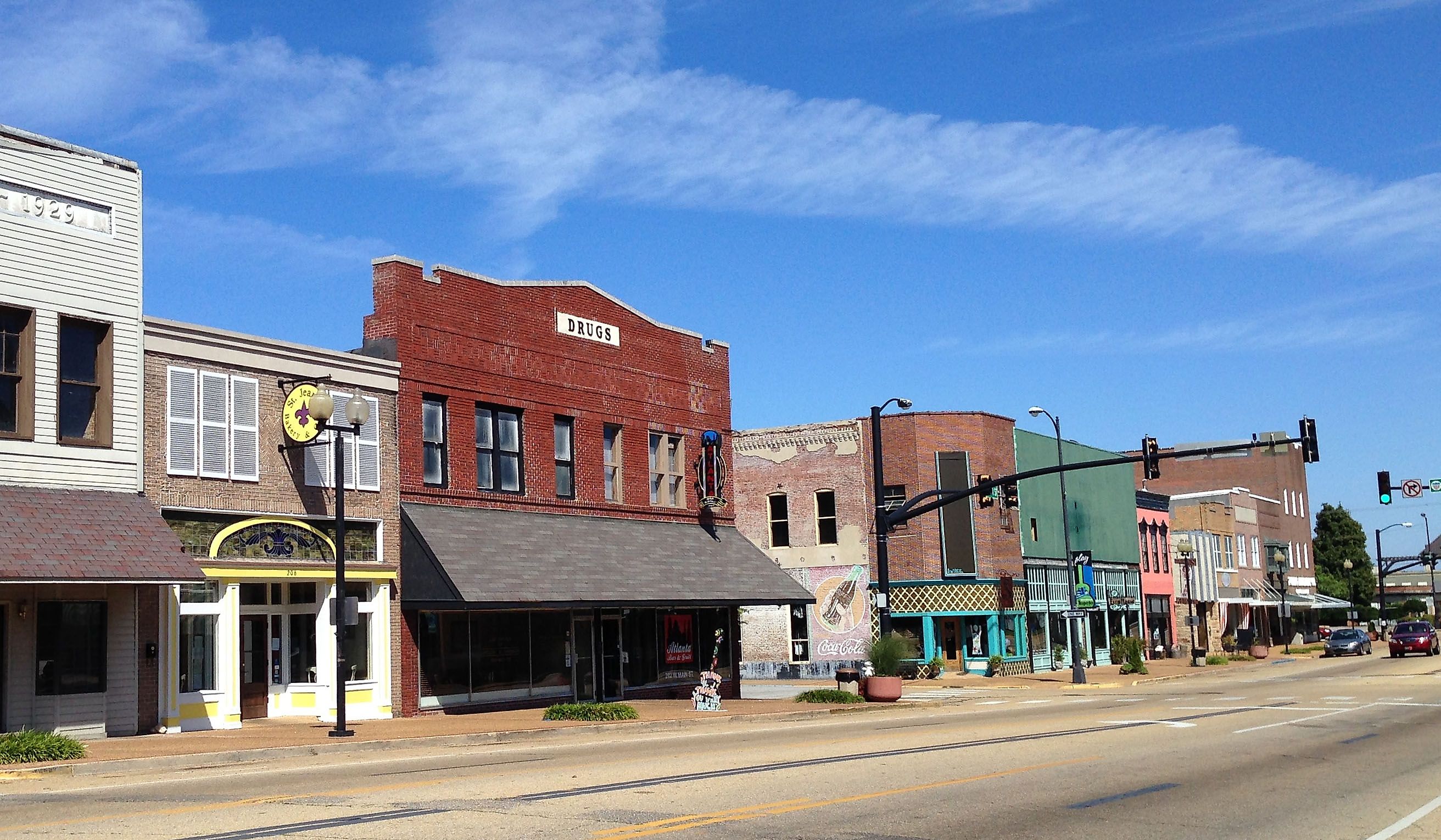
Bay St. Louis is the better Gulf Coast choice for travelers who want the beach and downtown in the same few blocks. Main Street meets Beach Boulevard beside the municipal harbor, so Old Town restaurants and shops are within walking distance of the shoreline.
Century Hall is the historical centerpiece of the shopping district. Built in 1909, the restored Second Street building now contains several merchants. Its brick exterior matches the older commercial architecture around Old Town.
Music history is a reason to stay beyond the beach. 100 Men Hall traces back to an African American benevolent organization established in 1894, and blues, jazz, and R&B performers later played its stage. The hall remains an active music venue, so checking its 2026 calendar can add a concert to the weekend.
The 1928 L&N Train Depot is one more piece of local history. Afterward, head back toward Beach Boulevard for the harbor and Mississippi Sound rather than adding another drive to the schedule.
Pearl Hotel sits on Main Street and North Beach Boulevard. From there, guests can walk to the harbor, restaurants, and Old Town businesses, which is the whole point of a short weekend here.
Laurel

Laurel is one of the better Mississippi choices for architecture and design. Lumber barons built its residential neighborhoods with timber fortunes in the early 20th century, and its restored downtown is a second area to cover on foot.
The Lauren Rogers Museum of Art is the strongest reason to stay rather than simply photograph downtown. Opened in 1923, Mississippi's first art museum holds American and European paintings, Japanese woodblock prints, British Georgian silver, and Native American baskets.
Fifth Avenue is the architectural counterpart. Large early 20th-century houses stand beneath mature trees along the avenue and surrounding streets. On these blocks, the scale of the timber boom is clearer than in any general history exhibit.
Downtown, Laurel Mercantile Co. at 414 Front Street is the place for American-made home goods. At Scotsman General Store nearby, shoppers find woodworking supplies, food, and merchandise tied to the city's manufacturing heritage. Lee's Coffee & Tea is an easy lunch stop between them.
Hampton Inn & Suites Laurel on Jefferson Street is only a few minutes from downtown. From there, the weekend stays open for the museum, residential architecture, and Front Street without much time on the road.
Tupelo

For music fans, Tupelo holds something rare: places tied to Elvis Presley before he became famous. Several of those sites remain within town, so his early life can be a thread that runs through an entire day.
The Elvis Presley Birthplace centers on the two-room house where he was born in 1935. The grounds also contain his childhood church, a museum, a memorial chapel, and an "Elvis at 13" statue.
Tupelo Hardware Company is the next stop. In 1946, Elvis got his first guitar at the Main Street store after his mother, Gladys, took him shopping for a birthday present. The store closed at the end of 2025, and the City of Tupelo bought the building to keep the site open to visitors as part of the Elvis story downtown.
Downtown's Fairpark has another bronze Elvis statue, this one based on a photograph from his 1956 Tupelo homecoming concert. With restaurants nearby, it is a logical lunch stop rather than an isolated photo opportunity.
For a break from the Elvis sites, there is the Natchez Trace Parkway. Its visitor center is near Tupelo, with historic sites and wooded stretches of parkway nearby.
Hotel Tupelo sits on East Main Street in the Fairpark District. Its downtown address is within reach of the Elvis statue, restaurants, and Main Street businesses.
Starkville

Starkville has a combination few towns its size can match: a major university campus and a national wildlife refuge close enough to share the same weekend.
Mississippi State University is where the history sits. The Ulysses S. Grant Presidential Library holds manuscripts, photographs, artifacts, and research materials connected to the Civil War general and 18th president. In its galleries, even visitors who are not academic researchers can make sense of the collection.
The Chapel of Memories is a much smaller campus landmark. Builders used bricks salvaged from Old Main Dormitory after the massive building burned in 1959. Its bell tower and wooded setting are worth the detour across campus.
For dinner, head toward the Cotton District. Two Brothers Smoked Meats is a barbecue spot a short distance from campus, and Main Street downtown has additional restaurants and shops.
Save several hours for Sam D. Hamilton Noxubee National Wildlife Refuge south of Starkville. Its roughly 48,000 acres of protected forest, wetland, and lake are home to alligators, bald eagles, deer, and waterfowl. Bluff Lake has observation areas for the wetland habitat without an all-day hike.
Courtyard Starkville MSU at The Mill is beside the university, so campus attractions are easy to reach before heading south toward the refuge.
Corinth

Corinth is worth three days because, on the ground, you can still see why the town mattered during the Civil War. Active railroad tracks cross downtown near the same junction that Union and Confederate forces fought to control in 1862.
Start at the Corinth Civil War Interpretive Center for the context. Run by the National Park Service, it lays out the Siege and Battle of Corinth through exhibits, preserved earthworks, and outdoor displays near the former Battery Robinett.
At the Corinth Contraband Camp site, the focus moves away from military strategy. Thousands of people escaping slavery reached Union-controlled Corinth and built a community with homes, a church, a school, and a hospital. Bronze figures mark part of the former camp today.
At the Crossroads Museum, the focus returns to the railroad. Set in the historic Corinth Depot beside the tracks, its exhibits run through local transportation, industry, and Civil War history.
Lunch comes with its own history. Borroum's Drug Store has run since 1865 and still keeps a working soda fountain. Order a slugburger, the regional sandwich tied to northeastern Mississippi, followed by a milkshake.
Hampton Inn Corinth is about a mile from central Corinth. Travelers with time left on the third day can also drive across the Tennessee state line to Shiloh National Military Park, linking Corinth's railroad history with the battlefield that preceded the struggle for the town.
Choosing a Mississippi Weekend
Choose Natchez when the Mississippi River and layered history matter most, or Oxford for a weekend of Faulkner, independent bookstores, and Ole Miss. Ocean Springs is strongest for art and coastal nature, and in Bay St. Louis the beach is a block from Old Town.
The remaining choices are just as specific. Laurel is about architecture and design. Tupelo is for Elvis Presley's life before fame. Starkville is a major university alongside roughly 48,000 acres of protected wildlife habitat. Corinth is the history trip, where a visitor standing at the railroad junction can still read the events of 1862 in the ground.