8 of the Friendliest Towns To Retire In Switzerland
Switzerland packs so much variety into a relatively small country. Travel a couple of hours, and you can cross a language border, trade vineyards for high mountain passes, or leave a German-speaking market town for an Italian-speaking lakeside community. Some people may want the sunny vineyards and weekly markets of Valais, while others would rather have ski lifts basically in their backyard, centuries-old traditions like voting on political issues by a show of hands in the town square, or a quiet walk to the lake. Just as important is finding a place where it is easy to feel part of a community, whether through getting to know your local farmers and neighbors at the weekly markets, senior programs, or annual festivals attended by everyone in town. These towns show just how many different ways there are to retire well in Switzerland.
Sion

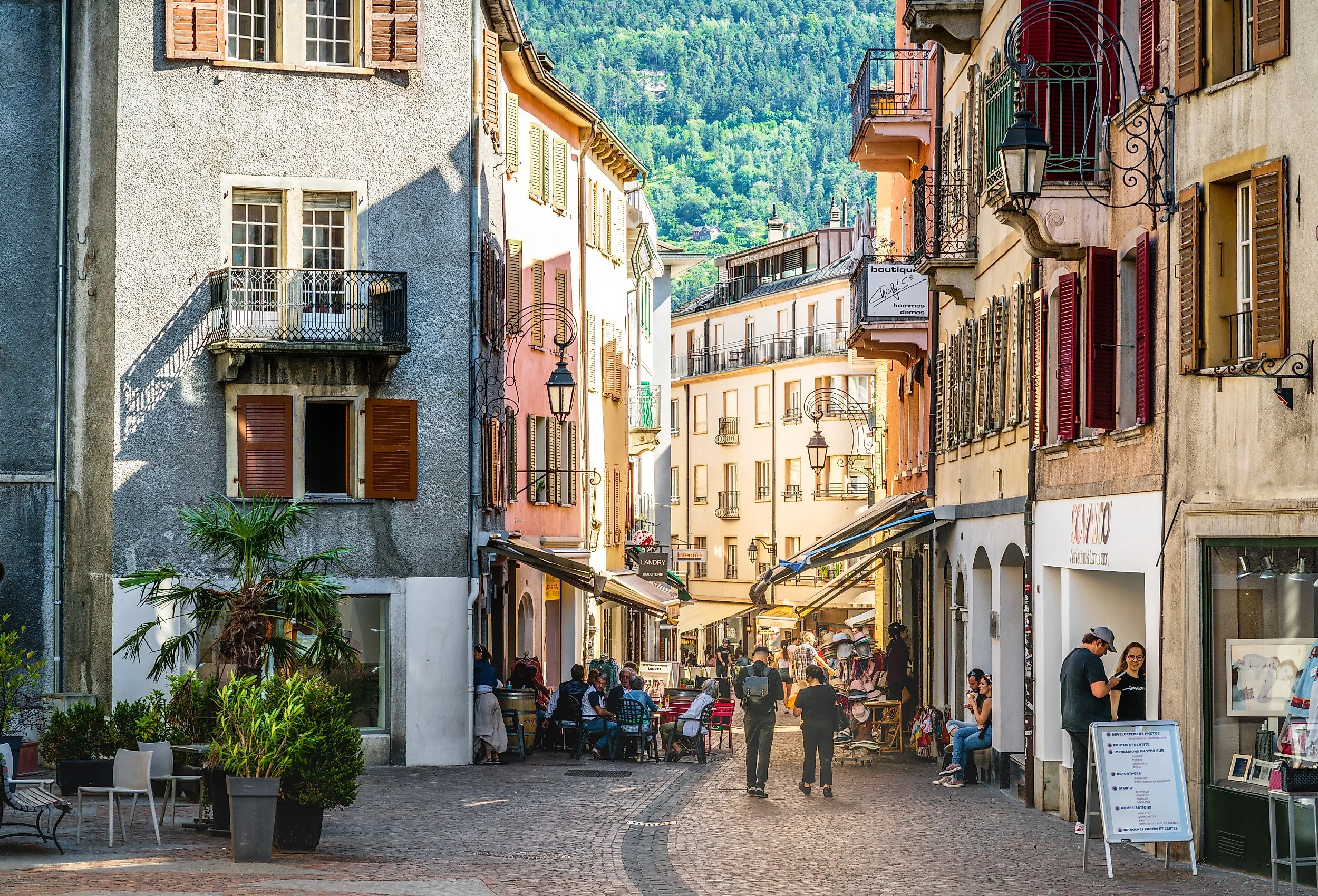
Sion is the capital of Valais. Set in the Rhône Valley, this storied town is ringed by Alpine peaks and lauded for its two hilltop landmarks: Valère Basilica, home to a fortified church, the Valais History Museum, and the world's oldest playable organ, and the ruins of Tourbillon Castle, built by a bishop around 1300, but later burned down in 1788.
But what earns Sion its place on this list is livability, not the castles. Sion sits in one of the driest, sunniest pockets of the country, with a climate closer to the Mediterranean than the rest of Switzerland. The medieval Old Town, one of the best-preserved in the country, is compact and walkable, made up of narrow streets that fill with merchant stalls every Friday for the Old Town Market, the largest weekly market in French-speaking Switzerland.
Centuries-old vineyards surround the city, and the wine culture here runs deep. Just 25 minutes away is Salgesch, the largest wine-growing community in Upper Valais, with nearly 500 acres of vineyards, over 40 cellars, and a Wine Museum.
Sion is also a gateway to world-class skiing, with over 2,000 km of pistes across Valais. The Four Valleys, the country's largest interconnected ski area, is reachable in under an hour.
Sion also looks after its older residents. It has been part of the Swiss Network of Age-Friendly Cities since 2022 and launched the Senior Citizens' Calendar in 2025, a bi-monthly guide aimed at promoting local senior-friendly activities and resources.
Murten

Just 30 minutes from the nation's capital, this town of fewer than 10,000 people is a fantastic choice for those looking to trade the busyness of Bern for a more peaceful setting close by. Murten is also bilingual, sitting on the language border between French- and German-speaking Switzerland.
A typical day here might begin with a stroll along the Lake Murten Promenade or an espresso and a slice of Nidelkuchen, a Murten specialty, at a café in Old Town. In summer, you might spend the afternoon swimming in the lake or enjoying watersports like windsurfing or stand-up paddleboarding. When the weather is cooler, take a step back in time and walk along the rampart walls that encircle the fortified city. Beginning at the Berntor gate, the 1.2-mile route passes 12 medieval defensive towers.
If you enjoy staying active, consider cycling the 17-mile Tour du Lac de Morat. This route circles the lake, passing many small towns, including Salavaux, home to one of the country's longest sandy beaches, and cutting through the Vully, the smallest of the major Swiss wine regions. With 24 wine cellars, it is the ideal destination for an afternoon of wine tasting. Consider stopping at Château de Praz, dating back to 1521.
During winter, enjoy the annual Murten Light Festival, which runs for 12 days in January, with artistic light animations projected onto buildings and towers around the city, creating a dazzling open-air spectacle.
Thun

If traveling here from Murten, Thun is approximately 38 miles southeast and about 30 minutes past Bern, or just 20 minutes by train, making it another great option for those looking to leave big-city life without going too far.
Sitting on the shores of Lake Thun, this city of roughly 44,000 strikes quite a balance between tranquility and abundant activity. It offers the amenities of a small city, but is still compact enough to be walkable. But its greatest asset may be its picturesque Old Town, where colorful centuries-old buildings with elevated terraces overlook cobblestone lanes, all beneath the watch of the 12th-century Thun Castle.
Some of the best views of the castle are from Rathausplatz, the town hall square, which was constructed around 1500 and hosts a weekly Saturday market. Rathausplatz sits along Obere Hauptgasse, the city's most distinctive street. Built on two levels, it allows you to stroll along an elevated walkway above the ground-floor shops or walk along the street below. One block over is another lively square, Mühleplatz, situated along the Aare River.
The river flows through the heart of Thun, crossed by two historic covered wooden lock bridges, the Mühleschleuse and Scherzligschleuse. Interestingly, the rushing waters beneath the bridges form standing waves, drawing surfers year-round.
Thun also hosts several festivals throughout the year, including the three-day Thunfest, Switzerland's largest annual town festival, attracting artists from around the world for open-air performances of Swiss rock and pop.
Solothurn

Solothurn is located about 42 miles north of Thun, is around 40 minutes from the capital. Home to approximately 17,000, Solothurn is often considered one of Switzerland's most beautiful Baroque towns. It was established along the banks of the Aare River and is famous for its unusual relationship with the number 11, a motif that appears everywhere: 11 historic fountains, 11 churches, and 11 museums scattered all around town. The St. Ursus Cathedral was built with 11 altars and 11 bells. Even the local beer, Öufi, takes its name from the Swiss-German word for eleven.
Going back to the cathedral, it is known as the city's most recognizable landmark. Completed in 1773, it stands tall and grandiose over the old town. It is worth climbing the 249-step bell tower for the views of the town and surrounding mountains.
For quiet walks outside town, the Verena Gorge is a locals' favorite. The 1.2-mile trail towards the gorge follows a creek through a wooded ravine before arriving at the Hermitage of St. Verena, a site that includes two chapels and a centuries-old hermit's house, which is still maintained by a resident hermit today.
A fixture in a local's schedule here is the weekly market in Old Town, held every Wednesday and Saturday morning. With stalls that offer fresh meat, cheese, bread, pastries, produce, and flowers, you can almost skip the grocery store trips entirely.
Andermatt

A little over 100 miles to the southeast of Solothurn is Andermatt, home to just 1,500 residents and offering a quiet retirement surrounded by mountains, where skiing and hiking are woven into your everyday.
Sitting in the Ursern Valley at 1,444 meters above sea level, this small village is relatively remote, but still well connected by rail, with routes leading east into Graubünden, west toward Valais, and north to Göschenen and the wider rail network.
Many are drawn here to see the Schöllenen Gorge, carved by the Reuss River along the historic Gotthard route, once a major passage across the Alps. Here, you can walk the 30-minute circular trail that follows the river and crosses the Devil's Bridge, said to have been built by the devil himself.
Another standout spot is the Oberalp Pass, sitting at 2,044 m and linking Uri with Graubünden. In summer, drive or cycle the winding road, or take the train to the top. Once there, walk around Oberalpsee, a stunning alpine lake right at the summit, or do the 90-minute hike to Lake Toma, considered the source of the Rhine.
Climbing higher still, Gemsstock is a premier ski mountain right outside Andermatt. A cable car takes you up nearly 3,000 m, with various challenging runs suited for intermediate and expert skiers.
And Andermatt is another town that truly values its older residents. Each year, the local senior team organizes a Christmas coffee gathering for Ursern seniors at Bodenschulhaus in Andermatt.
Appenzell

Heading to the northeast, Appenzell is about 90 miles from Andermatt and just 12 miles from the Austrian border.
Here, Swiss tradition runs deep. This town is known for many customs people associate with rural Switzerland, including yodeling, folk music, traditional dances, and cheese-making. Many of the buildings are brightly colored with elaborate designs, resembling something out of a fairy tale. Each autumn, cattle return from the alpine pastures during the annual cattle homecoming, a highly anticipated event. Wearing massive bells and elaborate floral headdresses, the cows are led through town by herders in traditional dress as people line the streets to watch.
Tradition extends beyond festivals, too. Every April, Appenzell hosts the centuries-old Landsgemeinde, where citizens gather in the town square to debate issues and vote by a show of hands.
Appenzell also offers easy access to pretty impressive scenery. The Alpstein massif rises just south of town, and there are endless hikes and scenic drives to be had here. The Säntis cable car departs from Schwägalp rather than Appenzell village and is suspended until late autumn 2026 for renewal work. The Wasserauen-Ebenalp cable car climbs to Ebenalp, opening access to trails that pass the prehistoric Wildkirchli caves, once inhabited thousands of years ago, and the famous Aescher guesthouse, a mountainside inn built directly into the rock face beneath a towering cliff. And another popular spot around here is Seealpsee, a swimmable mountain lake at the base of Schäfler that can only be reached on foot.
Chur

Less than 50 miles south of Appenzell is Chur, capital of the Graubünden canton and the oldest city in the country. Its car-free Old Town is one of the best preserved in Switzerland, having been continuously inhabited for over 5,000 years.
One of Chur's most distinctive areas is the Bishop's Palace district, perched above Old Town. Reached by climbing a staircase through a medieval gate tower, the district centers around a square lined with canons' houses, the Bishop's Palace, and the Cathedral of Saint Mary of the Assumption. The palace itself was rebuilt in the 18th century and stands out with its ornate exterior and distinctive Baroque design, while the cathedral has been watching over the city for more than 750 years.
Here, nature is accessible right from the city center via a cable car that carries you 1,600 m up to Brambrüesch. There you will find several different restaurants, various walking trails ranging from about 2 to 7.5 miles, a sun terrace that is perfect for taking in the impressive views, a nine-hole cross-golf course, and scooter rentals.
Chur also makes it easy to stay social, which may be especially important if you are new to town. Incontro Chur is a self-managed meeting place for seniors, with twice-weekly café afternoons for conversation, games, and getting to know other residents. Its Incontro Aktiv program also has free bocce games, storytelling sessions, knitting and crocheting groups, and group singing.
Caslano

Caslano is about 93 miles to the southeast of Chur and sits on the Italian border. Tucked along Lake Lugano in the Italian-speaking canton of Ticino, this town of around 4,400 is a good option if you envision a quieter retirement while still having plenty to do close to home.
From Caslano, you can catch the train to Lugano in just 20 minutes, giving you close access to bigger city amenities. But in the town itself, much of your free time can be spent relaxing by or on the water. Lido di Caslano is a lovely, small beach with designated swimming areas, a raft and diving board, stand-up paddleboarding, and beach volleyball. About a four-minute drive from there is the Natural Park of Monte Caslano, a protected peninsula with unusually diverse plant life and geology. The park has a relaxed 2.8-mile circular trail that goes along the outside of the peninsula, providing excellent views over the lake.
Lake life here is not limited to quiet afternoons, either. Each June, the town hosts the popular Caslano Blues event, running from Wednesday to Sunday with a lineup of 25 concerts, including blues cruises out on the lake.
Caslano also has a couple of fantastic museums, including one dedicated to a Swiss staple: chocolate. At the Alprose Chocolate Experience, you can follow the production process from cocoa bean to finished chocolate and, on weekdays, watch the factory in action. Seniors receive discounted admission, too.
More Than a Place to Visit
A town can be a wonderful place to visit and still fall short as a place to live. What makes these stand out is that their appeal does not disappear once the sightseeing is over. Beyond the landmarks, lakes, ski slopes, and museums are the things that make everyday life work: reliable transportation, regular markets and events, senior and resident-focused programming, walkable cores, and easy access to the outdoors. A good retirement town should remain enjoyable even after the novelty wears off, and these places offer plenty to make everyday life feel full.