The National Forests With The Most Wild Burros
In June 2026, federal land managers completed a roundup of 425 wild burros in Nevada's Spring Mountains, part of a landscape where Bureau of Land Management lands meet the Humboldt-Toiyabe National Forest. The animals are descendants of domesticated donkeys brought to the American West by miners, ranchers, and settlers, with some herds surviving for more than a century.
Today, wild burros occupy designated territories in national forests across Arizona, Nevada, and California. The U.S. Forest Service estimated approximately 1,200 wild burros on its lands in December 2024, although current forest-by-forest population figures are not publicly available for a reliable ranking. Four national forests have documented active wild burro territories, living in the mountains east of Big Bear Lake and all the way down to the dry slopes bordering Death Valley.
Humboldt-Toiyabe National Forest, Nevada And California

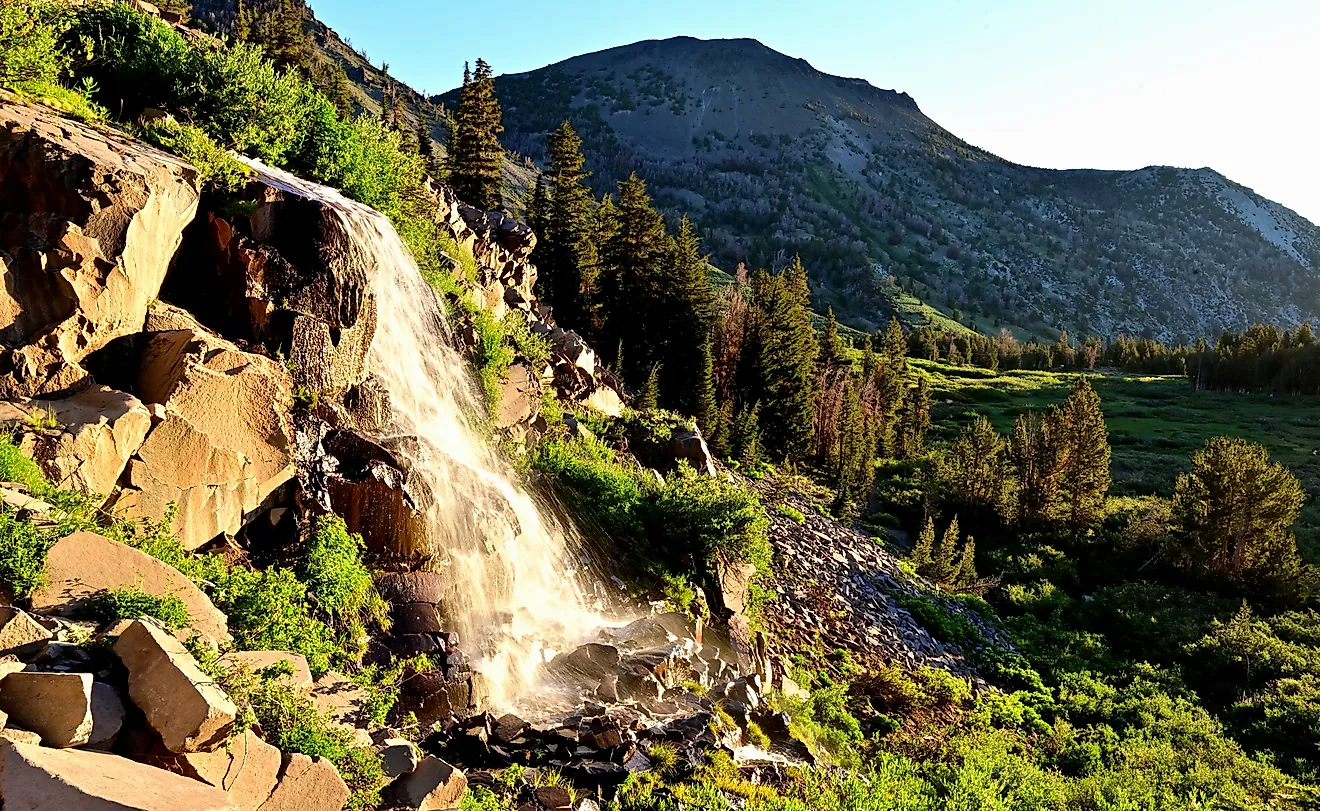
The Humboldt-Toiyabe National Forest contains several designated wild burro territories, including Hickison, Johnnie, Red Rock, and Spring Mountain. Covering approximately 6.3 million acres across Nevada and eastern California, it is the largest national forest in the contiguous United States. Its noncontiguous sections encompass mountain ranges and desert valleys where wild horses and burros share rangeland with livestock and native wildlife.
The Hickison Wild Burro Territory lies in the Toquima Range, about 20 miles east of Austin, Nevada. Its animals are believed to descend from donkeys abandoned or released during mining and ranching operations in the 1940s. The Forest Service's 2014 inventory listed 97 burros in the territory, exceeding its designated management range of 16 to 45. Burros are sometimes spotted near Hickison Petroglyphs, Toquima Cave, and Spencer Hot Springs, although the herd also moves across surrounding public and private lands.
Farther south, the Spring Mountains contain additional burro populations managed cooperatively by the Forest Service and BLM. In June 2026, the BLM concluded a gather that removed 425 burros and 97 horses from the Spring Mountains Complex, including areas around Johnnie, Red Rock, and Wheeler Pass.
Kaibab National Forest, Arizona

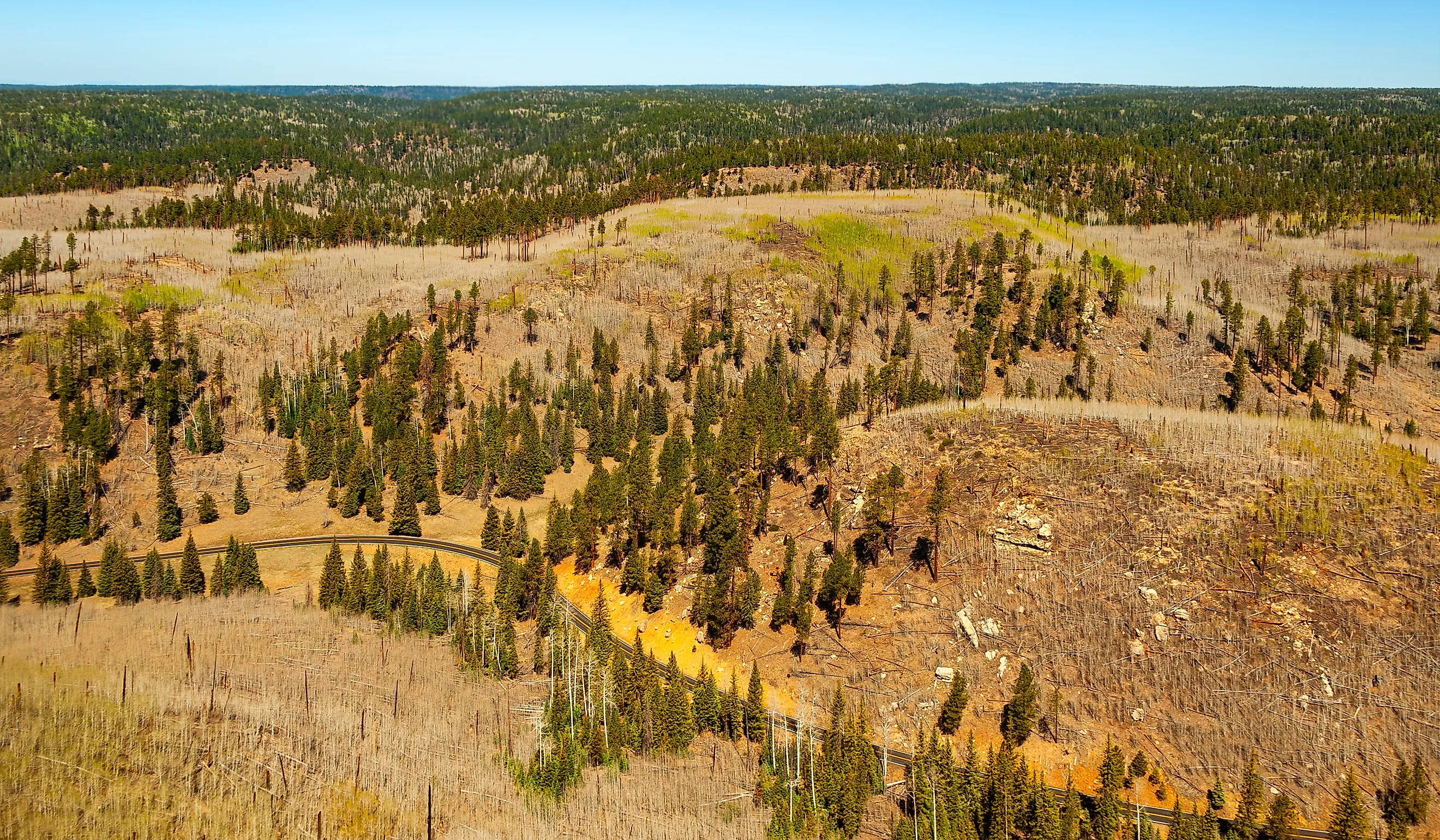
The Double A Wild Burro Territory covers approximately 27,000 acres in the Williams Ranger District of Kaibab National Forest. Established in 1984, the territory supports a herd descended from the pack animals used by miners and prospectors during Arizona's early mining industry. Its grasslands and pinyon-juniper woodlands provide forage, while scattered water sources influence where the animals gather.
A Forest Service helicopter survey conducted on May 3, 2013, counted 53 burros and estimated that between 106 and 175 occupied the territory. That was considerably above the forest's established management range of 22 to 35 animals. By June 2012, the agency had already removed 142 burros through a gather program that began in 2009, but the population subsequently increased.
The territory occupies a relatively remote section of Kaibab, where Forest Service roads provide access through grassland and woodland. Burros have historically been reported around the Double A area and Upper 6 Road, although sightings are unpredictable. Unlike Grand Canyon National Park, which lies farther north, Kaibab National Forest permits livestock grazing and other multiple uses.
San Bernardino National Forest, California

Wild burros have roamed the mountains east of Big Bear Lake for more than a century. The Big Bear Wild Burro Territory covers approximately 35,000 acres of San Bernardino National Forest, including pinyon-juniper woodland, sagebrush, and Joshua tree habitats. The animals are descendants of donkeys released or abandoned by miners, ranchers, and other settlers during the late 19th and early 20th centuries.
The Forest Service's established management range is 50 to 60 burros, although the population has periodically exceeded that number. In 2023, Forest Service wildlife biologist Julie Donnell described an overpopulation problem involving more than 100 burros around Big Bear Valley. Conservation concerns include damage to habitat supporting rare species such as Big Bear checkerbloom, slender-petaled mustard, and the endangered unarmored threespine stickleback.
The conflict has divided some local residents and wildlife advocates. Some consider the burros part of Big Bear's mining history, while biologists have raised concerns about grazing pressure, damage near waterways, and collisions with vehicles. Roundups occurred in 1997 and 2007, but efforts to reduce the population have encountered public opposition and management difficulties. Burros are commonly reported near Broom Flats, Arrastre Creek, Round Valley, and the Rose Mine area.
Inyo National Forest, California

The Saline Valley Wild Burro Territory occupies approximately 27,721 acres along the eastern slopes of California's Inyo Mountains, near the boundary of Death Valley National Park. Although the surrounding region is better known for its desert landscapes, the territory is part of Inyo National Forest and is managed under the Forest Service's wild horse and burro program.
The territory is associated with the BLM's Waucoba-Hunter Mountain Herd Management Area, which covers additional land in southern Inyo County. The animals are believed to descend from burros used in 19th-century mining operations, with others possibly introduced by sheep herders. The Forest Service's 2014 inventory listed 41 animals in the Saline Valley territory, compared with a designated management level of 11.
How The Forest Service Manages Wild Burros

Wild burros are protected under the Wild Free-Roaming Horses and Burros Act of 1971. On national forest land, management falls primarily to the USDA Forest Service, while the Department of the Interior's Bureau of Land Management oversees herds on its own public lands. Some populations move across agency boundaries, requiring joint monitoring and management.
The agencies establish appropriate management levels based on available forage, water, habitat conditions, and other land uses. When populations exceed those levels, managers may use fertility control or gather animals for removal and adoption. These decisions can become contentious, particularly where residents value the burros' historical presence but wildlife specialists identify damage to sensitive habitats.
Wild Burros Beyond The National Forests

Most of America's wild burros live on BLM-managed land rather than in national forests. As of March 1, 2026, the BLM estimated 23,943 wild burros across its western management areas, including 13,546 in Arizona, 5,146 in Nevada, and 4,933 in California.
Arizona's Black Mountain Herd Management Area is among the largest concentrations, with approximately 3,896 wild burros estimated in March 2026. The area stretches along the Colorado River corridor from Hoover Dam toward Interstate 40. Burros are frequently associated with the former mining town of Oatman, where they sometimes wander onto historic Route 66. Other substantial BLM-managed populations occupy the Lake Pleasant and Cibola-Trigo areas.
Living Alongside Wild Burros
Wild burros have survived in the American West long after the mining operations and ranches that introduced their ancestors disappeared. The national forests that support them face the continuing task of protecting federally designated herds while managing grazing, water availability, native wildlife, and public access. Although their exact numbers change with births, removals, and movement between jurisdictions, Humboldt-Toiyabe, Kaibab, San Bernardino, and Inyo remain important parts of the Forest Service's wild burro management program. Visitors encountering the animals should avoid feeding or approaching them and watch for burros crossing forest roads, particularly where herds have become accustomed to vehicles.