The National Forests With The Most Bear Attacks
Fatal bear attacks are among the rarest ways to come to harm outdoors, and the numbers behind that fact are worth keeping in mind. A visitor is far likelier to spot a black bear or a grizzly at a distance than to have any close encounter at all. Where those encounters do turn dangerous, the record points to a few national forests that hold healthy bear populations and heavy human traffic in the same acreage. The pattern in the case files is consistent, since most people were hurt near cubs or a carcass rather than stalked as prey. Forest managers ask campers to store food well away from tents, keep at least 100 yards between themselves and any bear, and never offer food directly. Those rules exist to keep bears wary of people, because a bear that learns to link humans with an easy meal is the one that stops backing away.
Shoshone National Forest, Wyoming

One of the strangest fatalities on this list followed a research operation rather than a chance meeting on a trail. In 2010, botanist Erwin Frank Evert walked into an area where a study team had trapped, tranquilized, and radio-collared a grizzly only hours earlier. The bear was still nearby when the researchers left, and it mauled Evert before he could retreat. Most grizzly attacks trace back to a startled animal or a mother guarding cubs, so a drugged and disoriented bear made for an unusually grim exception.

A second Shoshone attack came near the Yellowstone boundary in 2022. Two Northwest College wrestlers, Brady Lowry and Kendell Cummings, were hunting for shed antlers when a grizzly burst from cover and knocked Lowry down, fracturing his arm and biting him repeatedly. Cummings hauled the bear off his teammate and fought it until it broke away. He took severe wounds to his head and face, but both men made it off the mountain alive.
Shoshone runs along the eastern edge of Yellowstone National Park, and its largely undeveloped country supports one of the densest bear populations in the country. More than half of it is designated wilderness, a wide band of secure habitat inside the Greater Yellowstone Ecosystem. Grizzly numbers across that region have climbed past 1,000 after decades of recovery, and every additional bear widens the odds of a run-in. Forest managers advise a 100-yard buffer around bears and wolves, though a surprise meeting rarely leaves room for that kind of spacing.
Chugach National Forest, Alaska

The summer of 2024 brought two unsettling incidents to campgrounds in the Portage Valley. In one, a black bear tore at a tent in the small hours and injured a sleeping camper's face before fleeing. A short time earlier, another bear had climbed onto an occupied tent. Neither ended in a death, but both left wildlife officials puzzled. When a bear enters a campsite, investigators usually find human error behind it, such as open food or scraps left within reach. In this case the campers had followed the rules, and searchers turned up no food that would explain why the bear came in.

Bears are thick on the ground across this 5.4 million-acre forest, and the reasons are easy to see. Cold, sheltered rivers run through the valleys and fill with Pacific salmon, while the brush hangs heavy with berries in season. Salmon in particular pack the calories a bear needs, and the runs deliver them in bulk when the fish push upstream to spawn. Both black bears and brown bears live here, and both drift toward campsites when an easy food source is close.
Flathead National Forest, Montana

In June 2016, a fatal attack struck near Halfmoon Lake, a quieter corner than the busier trails just inside Glacier National Park. Brad Treat, an off-duty U.S. Forest Service law-enforcement officer, was riding his mountain bike on a forest trail when he rounded a bend at speed and collided with a grizzly. The bear pulled him from the bike and killed him before his riding partner could summon help. Not every clash ends with a person dead, though, and sometimes the bear is the one that loses.
In July 2024, a 72-year-old man picking huckleberries in the forest was charged by a grizzly and mauled. He shot and killed the bear with a handgun in self-defense, and investigators later confirmed it was a sow with cubs reacting to a sudden encounter. Grizzlies guard their young fiercely and turn far more aggressive with cubs at their side. In the Lower 48 the species is listed as threatened under the Endangered Species Act, yet the law still allows a person to kill one to save a human life. Sightings in Montana's towns and yards have grown more frequent, and wildlife officers have put down bears that keep raiding campsites or breaking into homes for food.
Bridger-Teton National Forest, Wyoming

September 2018 brought one of the forest's most publicized deaths. Hunting guide Mark Uptain and his client, Corey Chubon, had returned to recover an elk carcass when two grizzlies charged them. The attack killed Uptain and injured Chubon. Investigators concluded the bears were driven by the carcass rather than any interest in the men as prey, reacting instead to people standing between them and a ready meal.

Bridger-Teton covers more than 3.4 million acres, nearly 1.2 million of them designated wilderness. It sits within the Greater Yellowstone Ecosystem and joins with Grand Teton National Park, the National Elk Refuge, and neighboring forests in a vast, largely unbroken block of habitat. Grizzlies range widely across it in search of elk, berries, and other seasonal food. The region's bear population has risen steadily for decades, climbing from an estimated 270 animals in 1984 to about 1,030 in 2023. Hunting season sharpens the risk, since the scent of carcasses and gut piles pulls bears straight toward hunters.
Pisgah National Forest, North Carolina

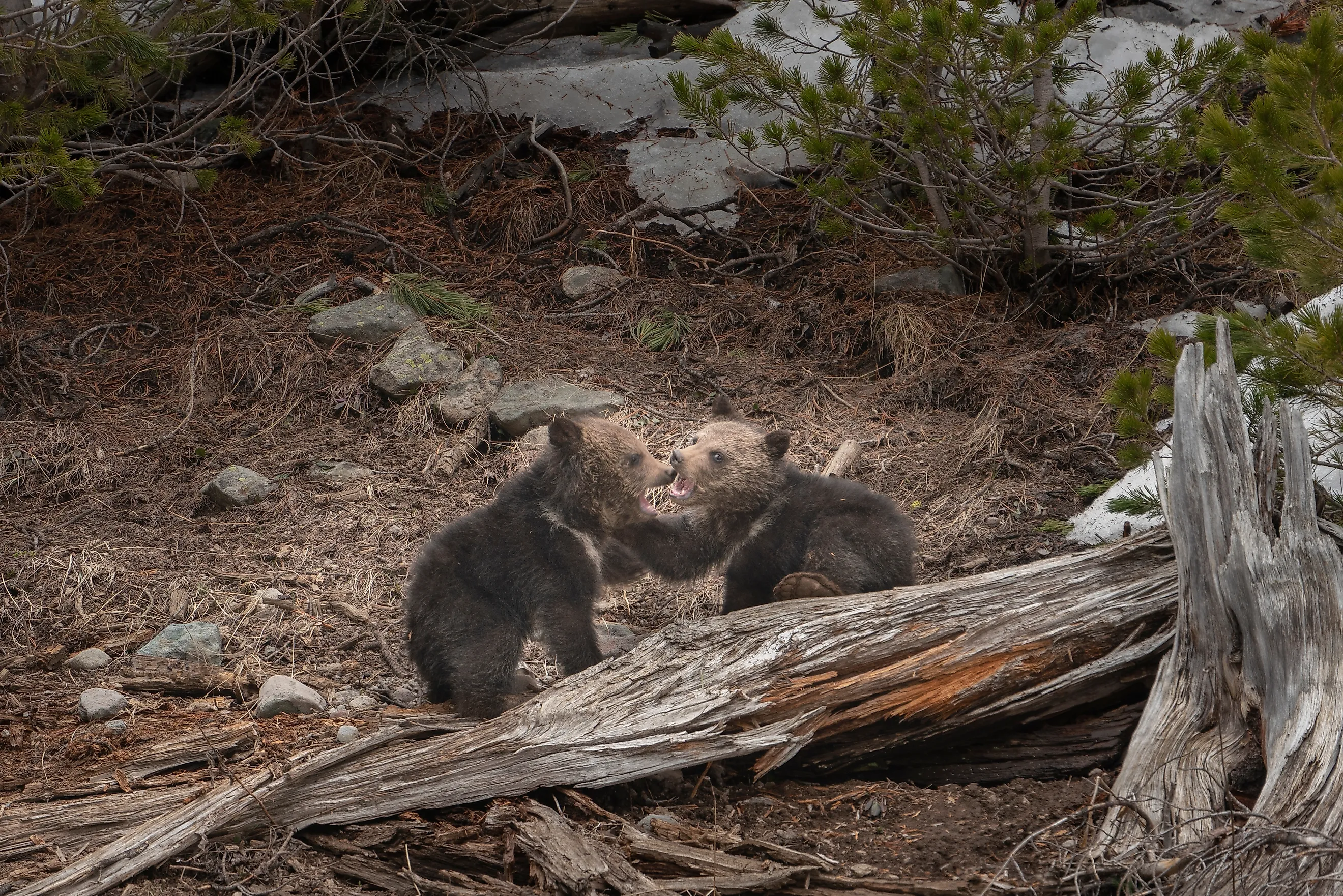
Few sights on a trail should worry a hiker more than a bear cub, and that is what Bill Palas ran into on a Pisgah path he had walked for years. He came around a bend to find a black bear cub in the middle of the trail, and seconds later the mother charged. As she clawed at his face and chest, Palas punched her in the face, and the bear clamped down on his arm with her teeth. She and the cub broke off after knocking him to the ground, and he survived. For years the same walk had shown him bears only at a distance. This time it put him in the single most dangerous spot in bear country, directly between a sow and her cub.

This Appalachian forest holds mostly black bears and draws steady crowds of hikers and campers, and that overlap is exactly what worries managers. When bears and people share ground for too long, bears risk losing their wariness and learning to associate humans with food. Careful storage and disposal matter enormously around animals that already treat campsites as a pantry. Over one two-week stretch, bears raided campsites and made off with food on six occasions. None of those encounters hurt a person, though the campers' gear did not fare as well. Each one is a small sign that the fear keeping bears at arm's length can wear thin once food enters the picture.
The Takeaway From These Forests
Bear attacks stay vanishingly rare even in forests that hold large numbers of black bears and grizzlies, where a distant sighting is the ordinary outcome and a mauling the extreme one. What these cases share is instructive. The people hurt were most often close to cubs or a carcass, or caught on ground where neither they nor the bear had a chance to back away, and a handful involved bears already conditioned to human food. That points to a set of habits worth carrying into any of these forests: pack bear spray, make noise on the trail, lock up food and garbage, and give any bear a wide margin the moment it appears. The measures are simple, and the record shows they are what separates an ordinary outing from a dangerous one.