The Densest Forest In The United States
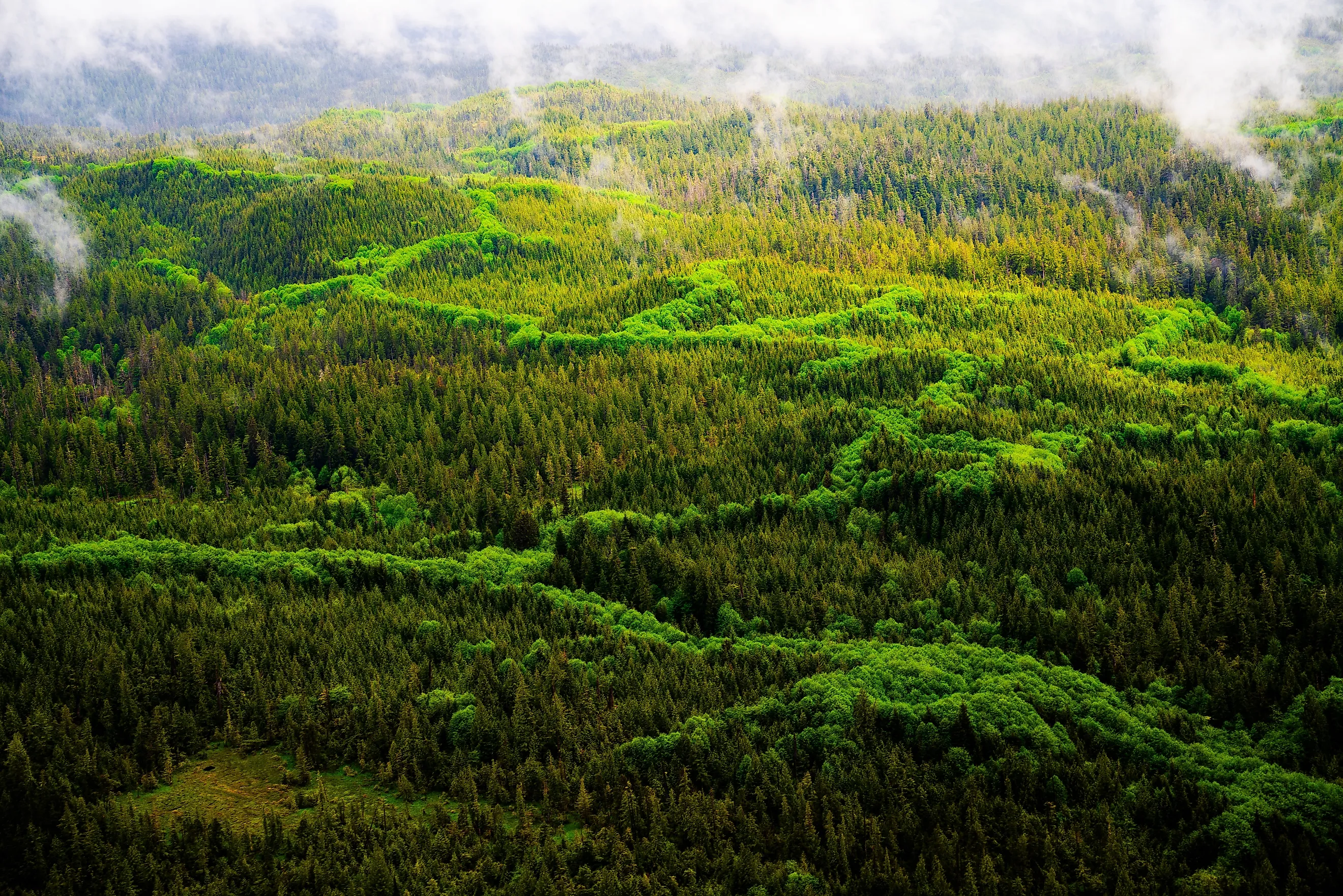
Alaska's Tongass National Forest is the kind of place that makes you rethink what a forest can be. There is no official federal ranking for the highest number of trees per acre, so "densest" is best understood here as the immense concentration of tightly layered, largely intact temperate rainforest spread across Southeast Alaska. The Tongass covers nearly 17 million acres, and western hemlock and Sitka spruce dominate huge stretches of land broken by fjords, mountains, wetlands, and islands. In place after place, trees crowd the slopes from sea level toward the alpine zone, filling a canopy that seems to claim every scrap of ground capable of growing a tree.
Nearly 17 Million Acres Make Tongass America's Largest National Forest

At nearly 17 million acres, the Tongass wears the crown as the largest national forest in the United States, sprawling across most of Southeast Alaska's panhandle. That size is the whole story, because so much of the landscape stays forested rather than fragmented by roads, farms, or big cities. Western hemlock takes the lead across extensive sections, while Sitka spruce, western redcedar, and Alaska yellow-cedar pile on height and variety. Glide along the coastal channels and you will spot trees rising almost straight from rocky shorelines and marching up the steep lower slopes. Only a small share of the forest is developed, so green cover rolls on for miles with barely a break in sight. Travelers hopping between towns like Juneau, Sitka, and Ketchikan keep passing through different arms of the same national forest, with wooded islands crowding the horizon long after the last road or settlement slips from view.
Some Tongass Trees Can Live For More Than 500 Years

Picture a tree that was already ancient when Alaska joined the United States, and you are picturing the sheltered heart of the Tongass. Some of its oldest trees have been growing for more than 500 years. Sitka spruce can go the distance even longer, with individuals reaching 700 to 800 years under favorable conditions. Those long lifespans build a wonderfully complicated forest that no orderly rows of same-age trees could ever match. A single patch might hold enormous old trunks, younger hemlocks filling the openings, standing dead trees, fallen logs, and seedlings rooted right on decaying wood. In the wettest spots, mosses drape trunks and branches while ferns and shrubs settle into the dimmer levels below. Large spruce near sea level can top 200 feet, giving whole sections of the forest a soaring vertical reach. Treefall gaps keep opening bright patches of sunlight, inviting a new generation to rise beside trees that were already mature centuries ago.
The Tongass Region Contains More Than 1,000 Islands

Here is where the adventure really opens up. More than 1,000 islands lie within the Tongass region, turning this forest into a vast coastal maze rather than one solid block of land. Much of Southeast Alaska belongs to the Alexander Archipelago, where narrow channels thread between heavily wooded islands and mountains leap straight out of the salt water. Exposed outer coasts take the brunt of strong Pacific winds and storms that can keep trees short, while protected valleys and leeward slopes nurture taller, older stands. Prince of Wales Island rolls out broad areas of productive forest, and Misty Fjords National Monument dazzles with deep waterways, sheer cliffs, waterfalls, and spruce-covered slopes. Boats and ferries hand you views that inland hikers rarely get, like entire mountainsides at a single glance, with green canopy tumbling toward coves and tidal flats. In some channels, the wooded shoreline runs on for miles before a harbor, village, logging road, or other break finally appears.
Tongass Produces More Wild Salmon Than All Other National Forests Combined

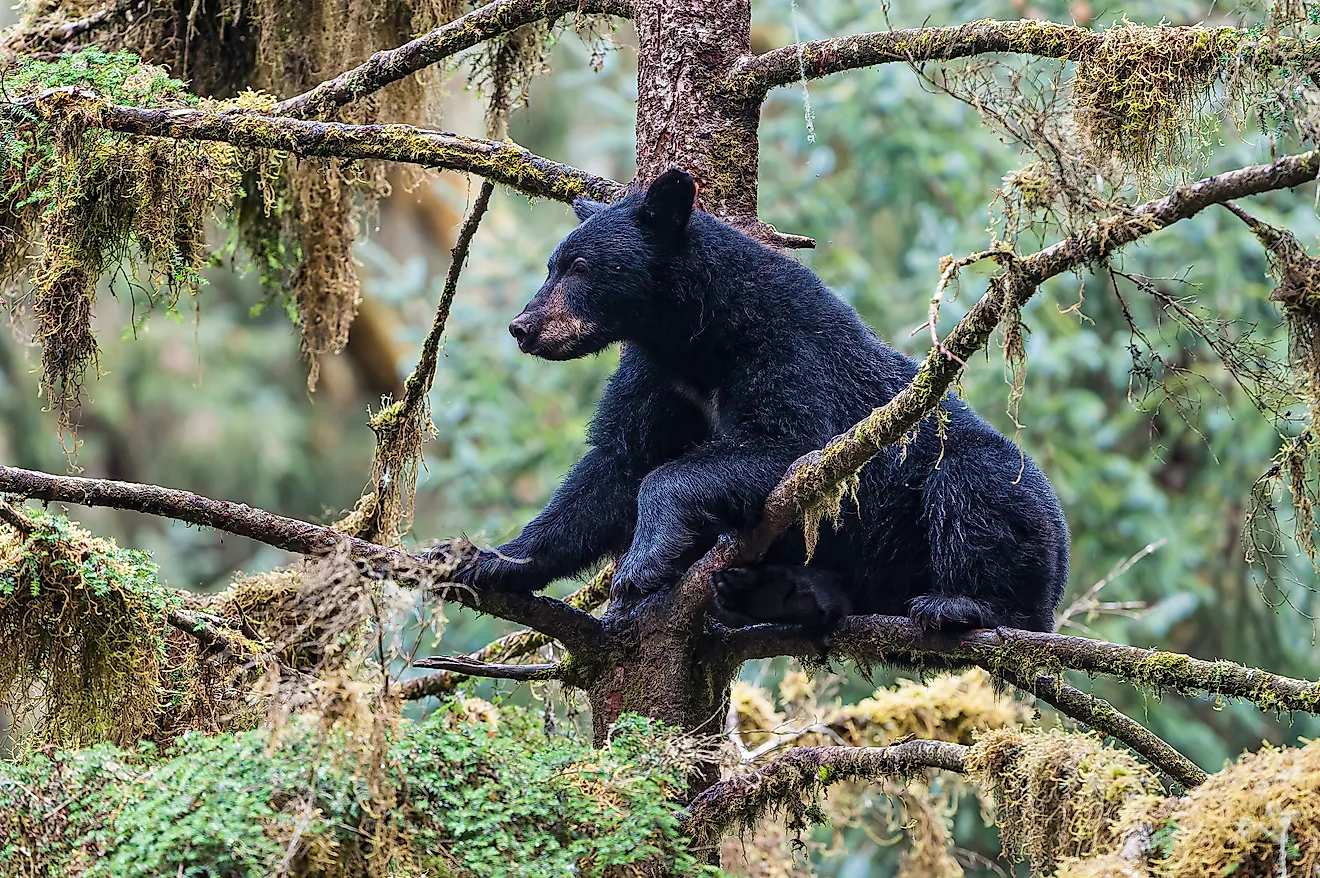
The magic here runs through the water as much as the trees, with roughly 12,930 miles of anadromous rivers and streams threading the dense forest. These waterways support all five species of Pacific salmon found in Alaska, and the Forest Service says the Tongass produces more wild salmon than all other national forests combined. Adult salmon surge back from the ocean carrying marine nutrients into freshwater systems, where bears, eagles, and other animals feast on them and haul portions of their remains into the surrounding woods. Estuaries, lakes, wetlands, cold creeks, and forest soils all get linked to the same yearly migration. Scientists have traced nitrogen from salmon in vegetation more than a quarter-mile from spawning streams, a vivid sign of how nutrients gathered at sea reach plants beneath the Tongass canopy. Along the richest salmon waterways, fish returning from the Pacific shape an ecosystem stretching far beyond the water itself.
Older Sitka Spruce Forest Can Hold Nearly 138 Tons Of Tree Carbon Per Acre

Forest inventories reveal just how much living material gets packed into the Tongass, and the numbers are staggering in the best way. U.S. Forest Service research estimated an average of about 68 tons of carbon per acre in live and dead trees across Tongass forest land, with older forest averaging around 75 tons per acre. In some older Sitka spruce forest, live trees and standing dead trees held about 137.9 tons of carbon per acre. Carbon is not the same measurement as trees per acre, but it captures the extraordinary amount of wood stacked above the forest floor, something a simple trunk count never could. Huge spruce trunks, hemlock crowns, standing snags, and fallen logs all pour into that total. Much of the carbon in mature stands has piled up over centuries of steady growth. A fallen giant may rest on the ground for decades while seedlings take root on its decomposing surface and living trees keep adding fresh wood overhead.
Why The Tongass Stands Apart
Put all of it together and the Tongass reads less like a single forest than a whole coastal world stitched from trees. The sheer acreage keeps the canopy unbroken where farms and freeways would have carved most landscapes into pieces. The five-century lifespans stack old growth, snags, and seedlings into a structure no planted stand could imitate. The thousands of islands scatter that forest across channels and fjords, while the salmon runs pipe ocean nutrients up into the soil that feeds it. Even the carbon locked in a single old spruce stand tells the same story of density measured by wood rather than by counted trunks. That combination of size, age, water, and living mass is what gives Southeast Alaska its unmatched impression of forest packed as tightly as any in the country.