9 Magical Waterfall Swimming Holes in The US
There is a specific kind of joy in floating in a cold pool while a waterfall pounds the surface a few feet away. It is loud, it is bracing, and on a hot day it beats any swimming pool ever built. The good news for swimmers in the US is that you do not have to fly anywhere to find one. The country is stitched with creeks and rivers that drop into deep, clear basins practically built for a summer afternoon.
A quick word before you pack the towel: a real waterfall swimming hole is not a water park. Currents, cold snaps, flash floods, and permit rules are all part of the deal, and the best spots reward people who check conditions first. Here are thirteen across the country that genuinely welcome swimmers, along with what you need to know before you jump in.
Havasu Falls, Arizona

Havasu Falls is the one everyone has seen on a screen and assumed was edited: a hundred-foot ribbon of water dropping into a pool so turquoise it looks dyed. The color is real, the work of calcium carbonate in the water, and the swim beneath it is the payoff for one of the harder trips on this list. The falls sit on the Havasupai Reservation deep in a side canyon of the Colorado River system, which means a tribal permit booked months ahead and a ten-mile hike to the village of Supai before you ever see blue water. Earn it, though, and you get to float under a desert waterfall that most people only ever scroll past.
Sliding Rock, North Carolina

Most waterfalls ask you to look. Sliding Rock asks you to sit down and ride. This sixty-foot slab of smooth rock in Pisgah National Forest carries Looking Glass Creek straight down into a pool that runs six to eight feet deep, and the whole point is to launch yourself down it like a kid on a playground nature forgot to childproof. Lifeguards work the pool in summer and there is a small day-use fee, which is a bargain for what is essentially the best natural water slide in the Southeast. Bring shorts you do not mind wearing out, because the rock is not gentle.
Hamilton Pool, Texas

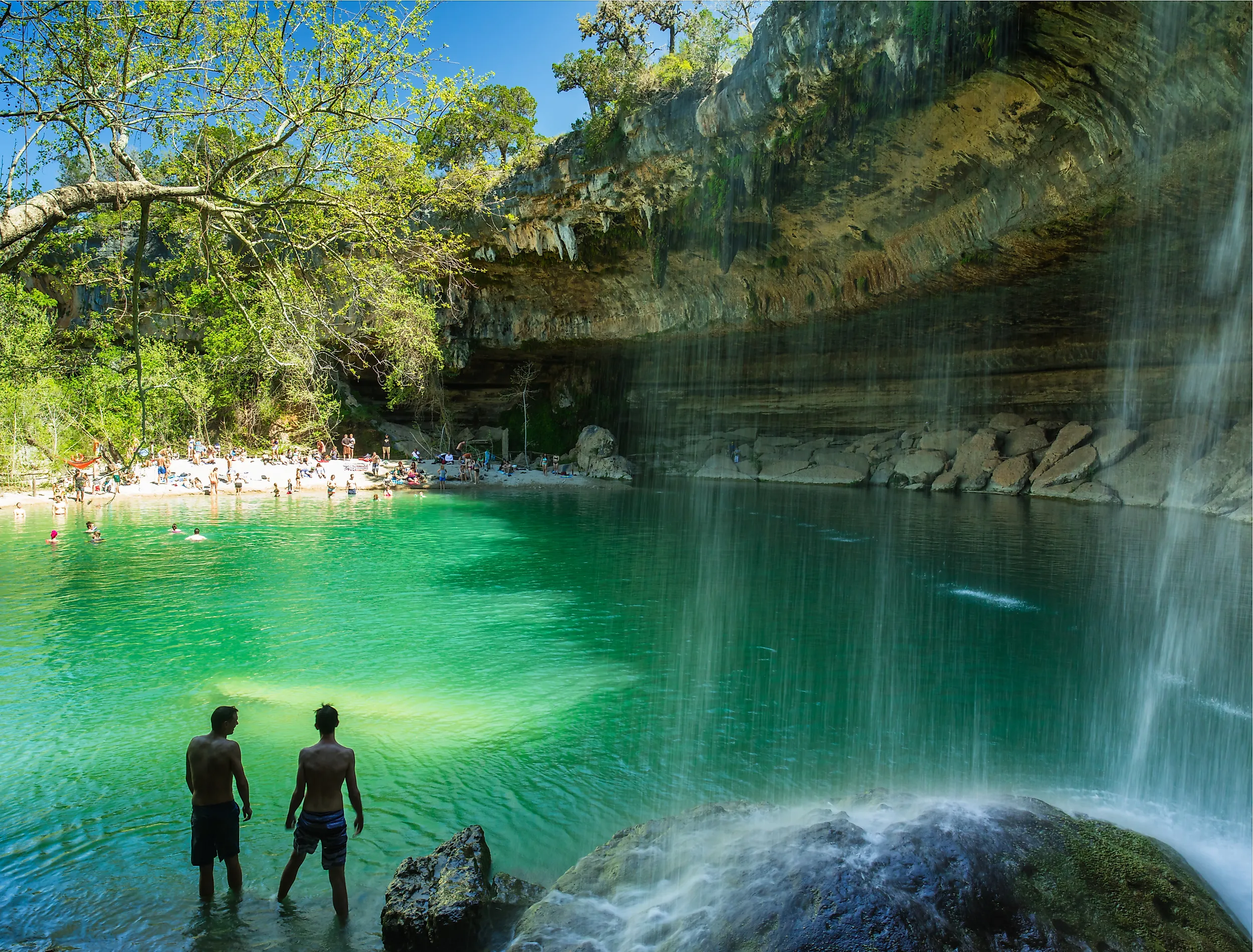
About forty minutes west of Austin, a cave roof collapsed thousands of years ago and left behind a jade-green pool ringed by a curved limestone amphitheater, with a fifty-foot waterfall spilling over the lip. It is the kind of place that looks invented. Two things to know before you go: the preserve runs on reservations, so you cannot just show up, and swimming is not guaranteed. When bacteria levels climb after rain, the water closes to swimmers and you are left admiring it from the rocks. Check the day's status, book your slot, and you might get the grotto nearly to yourself.
Punch Bowl Falls, Oregon

Punch Bowl Falls earned its name honestly. Eagle Creek squeezes through a narrow rock chute and drops into a wide, round bowl of green water in the Columbia River Gorge, and the lower pool is shallow enough at the edges to wade and deep enough in the middle for a proper, gasping-cold dip. It is more famous as a photograph than a swim, but people have been cooling off here for generations. The Eagle Creek Trail took a beating in the 2017 wildfire and has reopened in stages, so confirm the route is open and the creek is calm before you commit to the walk in.
Cummins Falls, Tennessee

Tennessee's worst-kept secret is a seventy-five-foot wall of water on the Blackburn Fork that tumbles into a broad pool people have been swimming in for over a century. Reaching it means a short but genuinely rugged scramble down into the gorge over wet rock and boulders, so wear shoes you can swim in. Two non-negotiables here: you need a gorge-access permit, which is capped daily and sells out for summer weekends, and you must respect the flash-flood rules. This gorge floods fast and hard, the park monitors for it, and when staff close access for the day, they are not bluffing.
Carlon Falls, California

Everyone funnels into Yosemite Valley and walks right past one of the best swims in the region. Carlon Falls sits just outside the park boundary on the South Fork of the Tuolumne River, a forgiving few-mile round trip through ponderosa pine to a modest waterfall and a pool that holds water and stays swimmable year-round, even when the marquee falls have dried to a trickle. It is shady, it is quiet, and it is the rare California waterfall where the answer to whether you can actually swim is a flat yes.
Warren Falls, Vermont

New England knows how to do a swimming hole, and Warren Falls is the one on the postcard. The Mad River steps down through a series of emerald pools and natural rock chutes just off Route 100, with ledges for the brave and shallow shelves for everyone else. It fills up on hot summer weekends because locals have guarded this spot for decades, so go early, tread carefully on the slick rock, and ease into the water rather than launching into a pool whose depth you have not checked.
Jump Creek Falls, Idaho

Idaho keeps Jump Creek Falls behind a short canyon scramble in the high desert southwest of Boise, and the contrast is the fun of it. Sagebrush and rimrock line the way in, then a sudden green slot opens up where a sixty-foot waterfall pours into a cold pool at the bottom. The easy lower trail leads right to the water and a shallow cave you can duck into. The rock gets slick and the pool is bracing even in July, so this is a quick-plunge-and-grin kind of swim rather than a lazy float.
Turner Falls, Oklahoma

Oklahoma is not the first state that comes to mind for waterfalls, which is exactly why Turner Falls is such a happy surprise. At seventy-seven feet it is the tallest in the state, dropping through the Arbuckle Mountains into a natural swimming hole inside a city-run park near Davis. There are caves to poke around, a quirky little castle on the hillside, and picnic tables for the long haul, which makes this more of an all-day family outing than a quick dip. Pay the park entry, stake out a rock, and settle in.
Fossil Creek, Arizona

Fossil Creek is the desert showing off. Spring water loaded with travertine runs a warm seventy degrees year-round and turns the creek a milky turquoise, with a waterfall spilling into a deep pool that practically dares you to jump. It sits between Camp Verde and Strawberry on rough backcountry roads, and April through October you need a permit to get in, which keeps the crowds in check. Come for the color, and stay because the water is somehow the perfect temperature in a state best known for being too hot for anything.
Buttermilk Falls, New York

Buttermilk Falls in Ithaca got its name from the way the water froths white as it slides one hundred and sixty-five feet down a long rock staircase, and the reward at the bottom is a natural swimming pool with an actual lifeguard on duty. The season runs late June through Labor Day, parking costs a few dollars, and the pool is a short walk from the lot, which makes this the most civilized swim on the list. Bring water shoes, because the same rock that looks so silky from above is slick underfoot.
Dougan Falls, Washington

Less than an hour from Portland, the Washougal River slides over a set of low volcanic ledges and gathers into what locals will quietly tell you is the best swimming hole in the state. Dougan Falls is only about twenty feet tall, but height is not the point here. The deep, clear pool at the base is the draw, along with the warm rocks around it that are made for lounging between dips. You will need a Washington Discover Pass to park, the water stays cold even in August, and the current near the lip is stronger than it looks, so keep your swimming to the pool below.
Lower Calf Creek Falls, Utah

The last stop trades forest and granite for slickrock and desert sky. In Grand Staircase-Escalante, a flat and sandy trail of roughly six miles round trip follows Calf Creek past ancient pictographs to a one-hundred-and-twenty-six-foot waterfall that fans down a green-streaked cliff into a sandy-bottomed pool. After a hot, shadeless walk in, that first shock of cold water is the whole reason you came. It stays icy even in midsummer, so plan to gasp, grin, and then dry off fast on the warm sand.
Before You Dive In
The thread running through every one of these spots is that the water is moving, and moving water does not care how good a swimmer you are. The same falls that makes the photo also makes the current, the cold, and the slick rock. The swimmers who have the best day are the ones who check the conditions, get the permit, watch the sky for storms, and stay out of the churn directly under the falls. Do that, and a waterfall swimming hole is about the finest way there is to spend a hot afternoon in this country.