The Counties That Grow The Most Of America's Food
Ask most people where their food comes from, and they will say a farm or maybe name a state, like Iowa or California. The real answer is more specific than that. American agriculture is heavily concentrated in a small cluster of counties, most of them packed into a few hundred miles of California's Central Valley, with one notable outlier way up in Washington State.
Fresno County, California, produces more farm goods by dollar value than 23 individual states. One county, roughly the size of Connecticut, has greater agricultural sales than nearly two dozen entire states. The USDA's Census of Agriculture is taken every five years and is the most reliable way to compare counties, since every county is counted the same way. The 2022 census put the national total value of agricultural production at $543.1 billion, up from $389 billion just five years earlier in 2017.
Fresno County

Fresno grows more almonds than any other county in the country. The county typically accounts for around a quarter of California's almond crop, and close to 40 percent of the entire US pistachio crop, and virtually all US pistachios come from California in the first place. In 2022, grapes edged out almonds as the county's single highest-value crop, coming in at $1.24 billion, with almonds close behind at $1.14 billion. Pistachios, milk, and poultry rounded out the top five commodities that year. Tomatoes, peaches, garlic, and mandarins filled out the rest of the top 10. Fresno's growers ship to roughly 90 countries a year, with almonds alone accounting for thousands of export shipments annually, more than any other single crop the county produces.
Tulare County

Tulare produces more milk than any other county in America. The county's dairies put out roughly 10 billion pounds of milk a year, more than the entire state of Minnesota and slightly more than Pennsylvania. Milk alone brought in $2.7 billion in 2022, about a third of the county's total value that year, and by far its single biggest commodity. Tulare's dairies have also leaned hard into methane digesters, which capture gas from manure and convert it into fuel used to power farm vehicles and homes. That's let the county grow its milk output even as the total number of dairy cows has declined over the past decade, a detail that's become a point of local pride as much as an environmental one.
Monterey County

The Salinas Valley has been called the nation's salad bowl for decades, and the crop reports back that statement. Leaf lettuce, head lettuce, and strawberries have traded the top spot in Monterey County's crop value for years, with strawberries edging ahead most recently after years of lettuce holding the lead. Combined, lettuce and strawberries typically account for well over a billion dollars a year in the county on their own, with broccoli, spinach, celery, and wine grapes filling out the rest of the list. California grows the vast majority of the country's strawberries, and Monterey and its Central Coast neighbors grow most of California's. The valley's mild, foggy coastal climate is a big part of why: it keeps produce cool enough to grow through most of the year without the extreme heat spikes that hit the Central Valley further inland.
Kern County

Kern sits just south of Tulare and Fresno, and shares much of their crop mix; almonds, pistachios, grapes, and citrus all do well here, alongside a smaller but meaningful vegetable and hay sector. Kern regularly swaps places with its two northern neighbors for the top ag-county spot, depending on the year and the commodity prices, which is a useful reminder that these rankings shift from one Census of Agriculture cycle to the next rather than staying fixed. A dry year, a weak almond price, or a strong milk year in a neighboring county can shuffle the order of the top three noticeably. Kern is also a major oil-producing county, which sometimes leads to confusion about its economy, but its agricultural output stands on its own as one of the largest in the country.
Merced County
Merced sits between Fresno and Stanislaus in the San Joaquin Valley and runs on a similar mix of dairy and tree nuts, with almonds and milk together making up the bulk of its agricultural value. The county also has a significant poultry industry, and its dairies contribute to the same broader Central Valley milk economy that makes Tulare County, just to the south, the nation's top milk producer. Merced's farmland benefits from the same irrigation infrastructure that supports its neighbors, drawing on both surface water and groundwater to keep orchards and pasture productive through the valley's long, dry summers. Almonds in particular have expanded steadily across Merced's farmland over the past two decades as growers have converted acreage once used for row crops into permanent nut orchards.
San Joaquin County

San Joaquin County, at the northern end of the valley near Stockton, leans more heavily into wine grapes, walnuts, and cherries than its southern neighbors, alongside almonds and a substantial dairy sector. The county is one of California's top walnut producers and has a long-established wine region, Lodi, that's built a reputation well beyond the state's borders for its old-vine Zinfandel. San Joaquin's position at the delta, where several rivers converge, gives it some of the richest soil in the valley, along with easier access to water than counties further south. That combination has helped it stay consistently near the top of the national rankings even as commodity prices for individual crops rise and fall from year to year.
Stanislaus County

Stanislaus, sandwiched between San Joaquin and Merced, rounds out the string of Central Valley dairy-and-nut counties with a similar profile of its own. Almonds and milk lead the way, with poultry and other livestock filling out a meaningful share of total value. The county is home to a number of large food-processing operations that turn its raw milk and almonds into packaged products, which keeps a portion of the economic value inside the county rather than shipping out entirely as raw commodities. Together, Fresno, Tulare, Kern, Merced, San Joaquin, and Stanislaus make up the backbone of California's Central Valley agricultural economy, producing a disproportionate share of the country's fruits, nuts, and dairy products on a relatively narrow strip of irrigated land.
Imperial County
Imperial County, tucked into California's southeastern corner along the Colorado River, has a different specialty than its Central Valley counterparts. Its number one commodity, by a wide margin, is cattle, followed by alfalfa hay, both of which have topped the county's crop report for decades running. But Imperial's real claim to fame is winter vegetables. Because its desert climate stays warm through the winter months, Imperial Valley farms grow lettuce, broccoli, spinach, carrots, and onions during the very stretch of the calendar when most of the rest of the country can't grow much of anything outdoors. It's one of the reasons produce sections stay stocked with fresh greens in January, and it makes Imperial County an unusually important link in the winter produce supply chain despite ranking lower on the value list than its northern neighbors.
Santa Barbara County

Santa Barbara's ag economy leans on strawberries and wine grapes, with broccoli and other vegetables filling out the rest of the list. The county's cooler coastal climate suits both crops well, running along a similar band of foggy, moderate weather that makes the Central Coast strawberry country. Santa Barbara's wine region, centered on the Santa Ynez Valley, has built a national reputation for Pinot Noir and Chardonnay that's arguably bigger than its dollar value in the crop reports alone would suggest, thanks in part to the county's proximity to Los Angeles and the tourism that draws. Cut flowers and nursery products round out a smaller but notable share of the county's total agricultural production each year.
Grant County
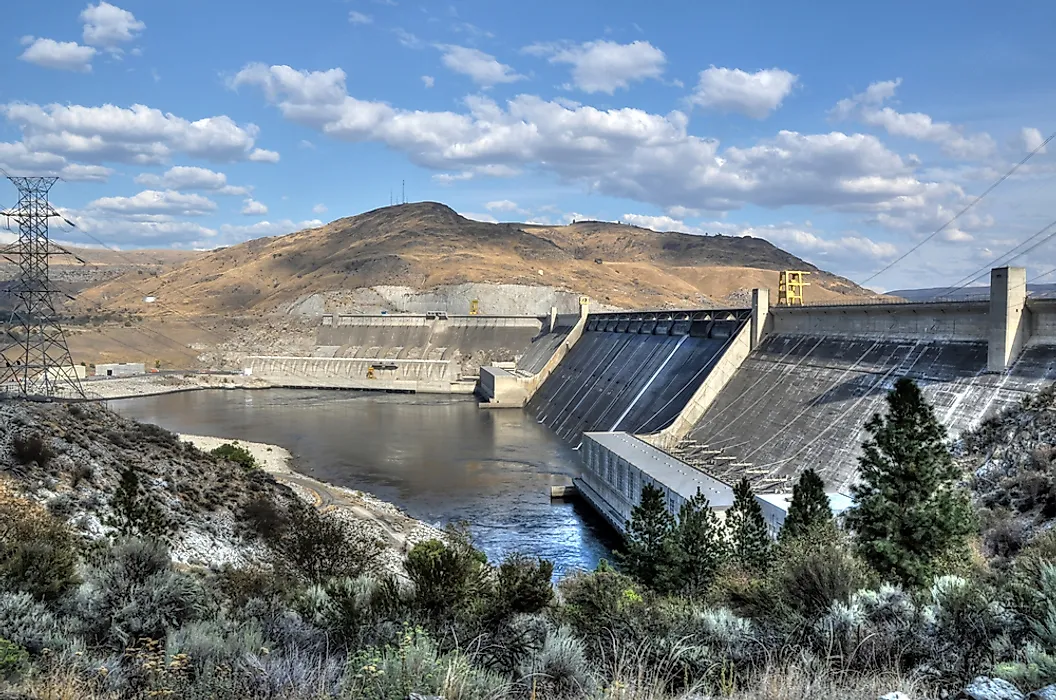
Grant County breaks the California streak entirely, and it earns its spot for a very different reason: potatoes. Grant is the number one potato-producing county in the entire United States, a fact the county's own government seal literally depicts, alongside a nod to the Grand Coulee Dam. None of this farmland would exist in its current form without the Columbia Basin Project, a massive irrigation system built around the dam that turned a stretch of semi-arid, sagebrush plateau into some of the most productive farmland in the Pacific Northwest. Grant County today grows potatoes, corn, and hay across land that a 19th-century government surveyor once described as "a desolation where even the most hopeful can find nothing in its prospects to cheer." Roughly 90 different crops are grown across the wider Columbia Basin region today.
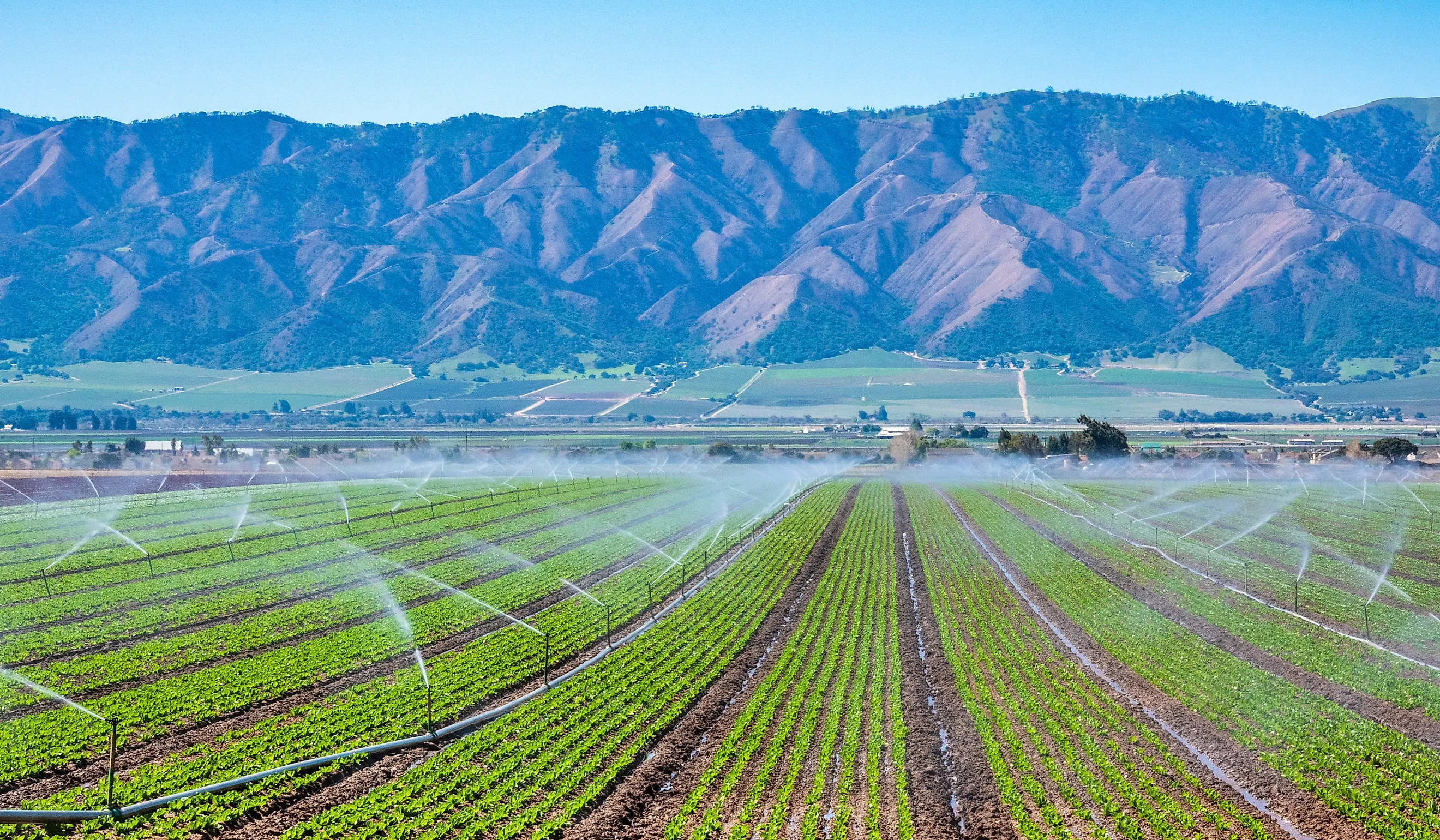
California's Central Valley has a rare combination going for it with hundreds of miles of flat, fertile land, a long growing season, and irrigation water pulled from rivers, aquifers, and mountain snowmelt. Take away the irrigation, and most of this land reverts to semi-arid scrub, which is what it looked like before large-scale water projects arrived in the 20th century. The underlying climate would never support this level of production on its own. It's the infrastructure layered on top of it, dams, canals, wells, and irrigation districts, that turned dry land into the source of a huge share of the nation's food supply.
It's worth remembering that the total value of production is a snapshot, not a permanent ranking. Prices for almonds, milk, and grapes swing from year to year, and a rough year for one crop can knock a county down a few spots in the next census. But the general shape of the list, a handful of California valley counties plus an irrigated outpost in Washington, has held steady across multiple Census of Agriculture cycles, and there's no obvious reason to expect it to change dramatically before the next one comes out.