Where People Are Moving To In West Virginia In 2026
West Virginia is shrinking overall, which makes the places that are growing easy to spot. Almost all of the gain sits in the Eastern Panhandle within reach of the Washington area, plus a few college and hospital towns holding their own. Jobs and housing explain why these towns add residents while the rest of the state loses them. The list below pairs the fast-growing Panhandle with a couple of steadier university and medical centers. These are the places people are actually moving to in 2026.
Martinsburg

Martinsburg anchors the fastest-growing county in West Virginia. The city itself holds about 19,200 residents, up roughly 2.5% since 2020, a modest gain that matters because Martinsburg is the county seat and the main hub for the Eastern Panhandle's growth. The pull is practical. The city has I-81 access, MARC commuter rail toward the Washington area, regional medical care, and a growing warehouse and logistics base, with employers like Procter and Gamble, Macy's, Rockwool, and Clorox in the mix. The Queen Street corridor and the surrounding neighborhoods give new residents more than a highway exit. Martinsburg keeps absorbing people because jobs, housing, and commuter reach line up in one place.
Charles Town

Charles Town has nearly doubled since 2000, and it is still climbing. The city reached an estimated 9,300 residents in 2025, up from about 6,500 in 2020, a gain of more than 40% that puts it among the clearest examples of the Panhandle pulling away from the state's decline. The growth tracks Jefferson County's location and housing market. Charles Town sits close to the Virginia and Maryland lines, which puts the Washington-area economy within reach while keeping residents in West Virginia. A county-seat role, steady homebuilding, the Hollywood Casino at Charles Town Races, and a historic downtown keep it from feeling like a bare commuter outpost. Its case rests on regional access, new housing, and services already in place.
Ranson

Ranson is riding the same Jefferson County wave as Charles Town, with more open land to build on. The city reached about 6,850 residents in 2025, up from roughly 5,450 in 2020, a 25% jump in a short span. Location drives most of it. Ranson sits next to Charles Town along Route 9, with access to the Panhandle's commuter routes, schools, and retail. New-build communities and townhouses have added housing stock beyond the older inventory, giving incoming households options. It is not growing on one attraction. It is growing because Jefferson County's housing demand needs places that can still add homes.
Morgantown

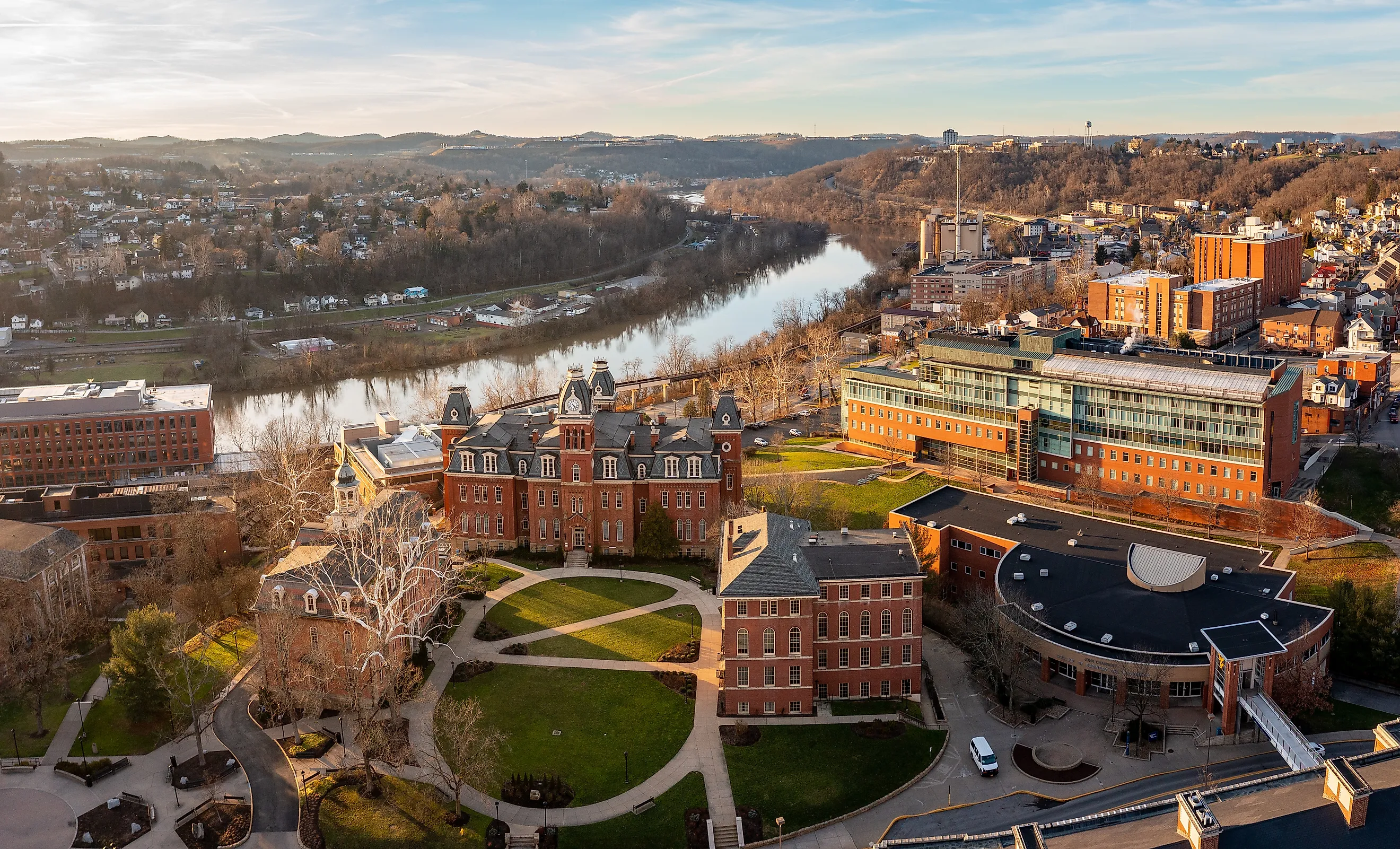
Morgantown grows slowly, but in West Virginia slow growth is still notable. The city added a few hundred residents to reach about 30,300 in 2025, less than 1% over 2020, and that is enough to stand out in a state where most larger cities are losing people. The reason is West Virginia University and WVU Medicine. The university, the hospitals, the research, the student housing market, and healthcare employment give Monongalia County a different economy from much of the state. Activity clusters around downtown, the WVU Evansdale campus, the Suncrest medical area, and the Mileground corridor. Morgantown is one of the few places in the state where students, medical workers, and professional households all overlap.
Hurricane

Hurricane is the one place on this list where the city itself has held about steady, while the growth happens around it. The city has stayed near 6,960 residents since the 2020 census, but Putnam County along the I-64 corridor between Charleston and Huntington is where the housing demand is showing up. Recent projects point the trend out, including the Woodworth Farm community with more than 400 planned for-sale homes near Hurricane. The city brings schools, parks, Main Street businesses, and quick access to Teays Valley and the wider Kanawha Valley job market. Families can stay near the state's largest metro corridor while finding more suburban space than Charleston itself offers.
Bridgeport

Bridgeport grows in a contained way, but its job base makes it matter to north-central West Virginia. The city reached about 9,400 residents in 2025, up roughly 2% since 2020, positive in a region where many places are flat or shrinking. It sits on both I-79 and U.S. Route 50, with major employers and business parks close enough to shape daily life. The bigger advantage is how much work sits nearby, with more than USD 1 billion in recent development tied to United Hospital Center, the FBI's Criminal Justice Information Services Division, White Oaks, and Charles Pointe. That gives the city a daily economy bigger than its population. Bridgeport grows because jobs, healthcare, business parks, schools, and housing sit close together.
Where West Virginia's Growth Is Heading
West Virginia's growth corridor is narrow but not random. The Eastern Panhandle gains the most because it ties West Virginia housing to the Washington-area economy, while Morgantown and Bridgeport show how university, healthcare, and professional jobs can hold population in place. Hurricane adds a smaller suburban story along the Charleston-Huntington corridor, even as the city proper stays flat. For the next few years the pressure will show up in housing, schools, roads, and services in the handful of places gaining residents while the state keeps shrinking.