8 Best Small Towns To Retire In New Zealand
Retiring in New Zealand comes with a few built-in advantages. Residents qualify for NZ Superannuation, the universal pension, at 65, and the public health system covers most major care, which takes some of the financial worry out of the later years. What varies between towns is the setting and the climate: the north is subtropical and mild, the inland South Island runs to crisp alpine winters, and the sunniest corner sits up around Nelson. The eight New Zealand towns below balance affordability, walkable daily living, community, and access to care. Pick the climate that suits you, and the rest tends to follow.
Methven

Methven sits on the Canterbury plains where they begin to climb toward the Southern Alps, best known as the gateway town to the Mt Hutt ski field. That alpine setting is the draw: clean air, big mountain views, and a quiet pace that only picks up in ski season. For retirees who like the outdoors without the crowds, the Methven Walkway threads through forest and along a canal with the peaks as a backdrop, and Lake Coleridge offers fishing and gentle days on the water within a short drive. When the legs need a rest, the solar-heated Ōpuke Thermal Pools give the town an unexpected spa. Day-to-day care comes from Ashburton Hospital, about half an hour away. It is a small, settled community, well suited to anyone who wants mountains at the doorstep.
Waikanae

Waikanae is one of the most established retirement towns in the country, a relaxed garden-suburb sort of place on the Kāpiti Coast about 50 minutes north of Wellington. Its appeal for older residents is practical: flat, walkable, full of greenery, with an uncrowded beach and native wildlife reserves close at hand. A train line runs down to Wellington when you want a city day, so you get small-town calm without being cut off. The social side is built in, too. The Waikanae Community Centre runs a regular calendar for retirees, with guest speakers and afternoon teas alongside smaller groups for cycling, walking, coffee, and gardening, an easy way to find your people after a move. For a quiet, connected retirement near the capital, few places do it better.
Motueka

Up at the top of the South Island, Motueka has a mild, sunny climate and an easygoing, slightly artistic character. It is the gateway to Abel Tasman National Park and its golden-sand coastal track, but for residents the everyday appeal is gentler: a long growing season, a strong horticultural economy, and a Sunday market that doubles as a weekly social fixture of produce, crafts, and street food. The flat terrain and walkable centre suit older legs, and the region's sunshine makes year-round outdoor time realistic. Retirement housing is part of the fabric here, with options such as the Woodlands care village offering organized activities and wellness support. Motueka works well for anyone who wants warmth, greenery, and the coast without a big-city price tag.
Kerikeri

Kerikeri is the warmest entry on this list, a subtropical town in the Bay of Islands near the top of the North Island. Often called the cradle of the nation for its place in early Māori and European history, it is home to the Stone Store, completed in the 1830s and recognized as New Zealand's oldest surviving stone building. For retirees, the pull is the climate and the lifestyle: mild winters, a busy local arts and crafts scene, orchards and cafes, and an unhurried Northland rhythm. The town has grown popular enough with retirees and lifestyle movers that its amenities have kept pace.

Markets and small makers are a big part of daily life here. The Old Packhouse Market is a weekend institution for local produce and handmade goods, and the town's food scene punches above its weight for a place this size. Purpose-built retirement housing is available too, including villa-style care suites for those who want support on hand. If a warm climate and a creative, community-minded town top your list, Kerikeri is hard to beat.
Richmond

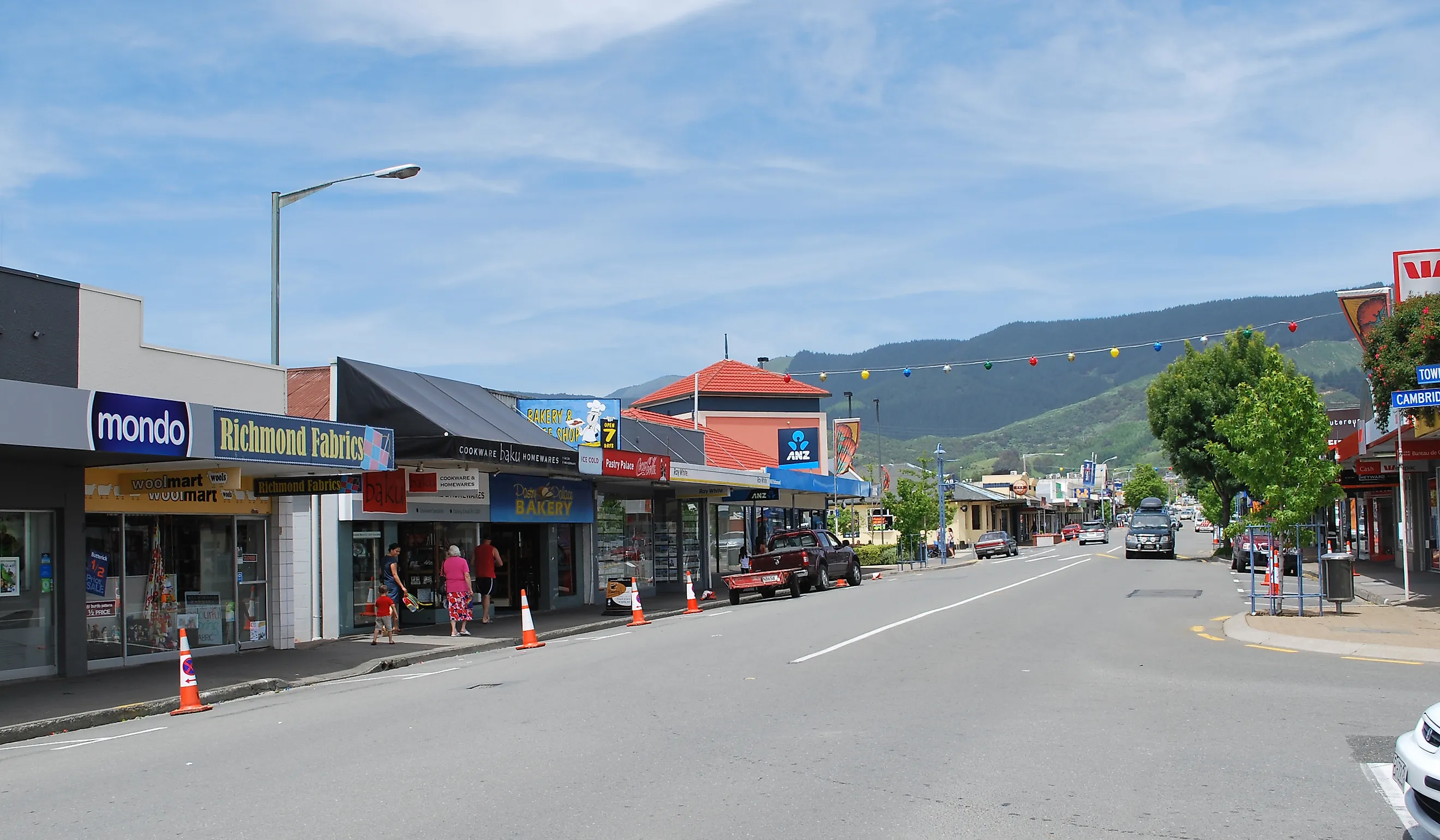
Richmond sits on the sunny Waimea Plains just south of Nelson, in what is consistently New Zealand's sunniest corner, which alone explains its long popularity with South Islanders settling down. The streets are flat and easy to walk, and the town holds the largest shopping centre at the top of the South Island, so errands and a coffee with friends are never far. Washbourn Gardens and Sundial Square give the centre green, social space, and wineries and fruit growers ring the edges of town, including nearby Appleby with its boysenberries and real-fruit ice cream.
Gentle outdoor time is easy to come by. The flat Great Taste Trail links Richmond with vineyards and estuaries for relaxed cycling or walking, and the quiet beaches of Rabbit Island sit a short drive away on Tasman Bay. The mild, sheltered climate keeps those outings comfortable for much of the year. Care is close as well, with Nelson Hospital and its full range of services about fifteen minutes up the road. For sunshine, flat ground, and everything within reach, Richmond is the standout.
Levin

Levin is the largest town in the Horowhenua District, an affordable, down-to-earth service town on the lower North Island with a strong farming backbone. For retirees, the appeal is cost and convenience: it is one of the more budget-friendly towns here, flat and easy to get around, with everyday shopping, fresh local produce, and a well-known second-hand and antique scene. Family-run Lewis Farms is a local fixture for fruit, jams, and strawberry soft-serve, and Waitārere Beach is a short drive away for a walk on the sand. The social calendar is active, anchored by the long-running 60's Up Movement, a seniors' group that organizes outings and get-togethers. A replica Dutch windmill in nearby Foxton, opened in 2003, makes for an easy day trip. Levin is a sensible, low-cost base with a welcoming community.
Ashburton

Ashburton is a flat, practical Canterbury town that serves as the hub for the surrounding plains, which is part of what makes it a steady place to retire. It is affordable by South Island standards, walkable, and well-equipped, with the region's hospital meaning care is close for the wider district. Just out of town, Lake Hood offers level walking trails and a lakeside restaurant for an easy afternoon. The well-regarded Ashburton Aviation Museum holds one of New Zealand's larger aircraft collections, including the only Hawker Siddeley Harrier GR3 jump-jet on display in the Southern Hemisphere, with restored cockpits and a flight simulator for anyone who grew up around aviation. It is not a flashy town, but it is comfortable, level, and easy to live in.
Greymouth

Greymouth is the largest town on the rugged West Coast of the South Island, with a dramatic Tasman Sea coastline, a deep gold and coal mining history, and strong Māori roots. It is affordable and unhurried, suited to retirees who want nature and quiet over bustle. Honesty about the climate matters here: the West Coast is the wettest populated part of the country, which keeps the rainforest green but means rain is a regular companion, so it best suits people who do not mind grey, damp days. The walking is excellent, with rainforest tracks and the trail to Coal Creek Falls, and the town is the western terminus of the TranzAlpine, regularly ranked among the world's great train journeys, which crosses the Southern Alps to Christchurch. For care, Greymouth has aged-care and lifecare facilities with on-site support. It is the pick for a wild, scenic, low-key retirement, weather and all.
Why Come To New Zealand To Retire?
The common thread across these eight towns is a calmer, outdoor-centered way of living, backed by a universal pension at 65 and a public health system that covers the essentials. Beyond that, the choice comes down to climate and budget more than anything else. The subtropical north around Kerikeri trades cooler winters for warmth and humidity; the sunny Nelson region around Richmond and Motueka offers the easiest all-round climate; the inland Canterbury towns bring crisp alpine seasons; and the West Coast hands you wild scenery in exchange for a lot of rain. The sensible approach is the one that works anywhere: shortlist by the weather you actually want to live in and the price you can comfortably carry, then spend real time in a place before committing. Do that, and any of these towns can make for a settled, unhurried retirement.