Where People Are Moving To In New South Wales In 2026
New South Wales added about 100,400 residents in 2024-25, but the latest figures show a split between Sydney and the rest of the state. Greater Sydney grew by 75,200 people even while recording a net internal-migration loss of 33,300, meaning overseas migration and natural increase more than offset the number of residents leaving for other parts of Australia. The strongest local growth was concentrated in Sydney's outer north-west and south-west, where new housing is adding thousands of residents each year. Outside Sydney, regional centres such as Maitland and Lake Macquarie continue to record strong internal-migration inflows, particularly from capital cities. The overall pattern is therefore less about one statewide destination and more about households moving toward new suburban housing on Sydney's edge and established regional centres within commuting distance of major employment areas.
Box Hill-Nelson

This suburb was the standout NSW growth area in the latest data. Its estimated resident population reached 26,348 at June 2025, after increasing by 3,911 people, or 17.4% during 2024-25. ABS also recorded approximately 3,500 net internal migrants, the largest net internal-migration gain of any NSW area in the latest release. That makes Box Hill-Nelson the strongest fit for this list because both its population increase and its migration component are unusually large.
The broader migration pattern is notable, as Greater Sydney itself lost 33,300 residents to internal migration. Box Hill-Nelson is therefore absorbing people even while the metropolitan area as a whole is losing residents to other parts of Australia. The area's rapid growth is closely linked to large-scale residential development across Sydney's north-west, where new detached housing has been added at a faster rate than in established suburbs. The Box Hill and Nelson growth area is the concrete anchor. Former semi-rural land is being converted into a substantial suburban community, with new homes, roads, schools, and commercial services following the population.
Marsden Park-Shanes Park

This suburb added 3,200 residents during 2024-25, giving it a population of roughly 30,500 at June 2025. Its annual growth rate was approximately 12%, making it one of NSW's three fastest-growing SA2s in the latest ABS release. The area has also appeared repeatedly among NSW's leading growth districts. It added about 3,500 people in 2023-24 and another 3,900 in 2022-23.
Unlike Box Hill-Nelson, ABS does not identify Marsden Park-Shanes Park as NSW's largest individual net-internal-migration recipient in 2024-25, so the migration claim should not be overstated. Its story is nevertheless tied to the same internal redistribution taking place across Sydney. Residents are moving into newly supplied housing on the metropolitan fringe while established Greater Sydney loses people through internal migration. Marsden Park's North West Growth Area is the key anchor, with large residential estates developing alongside retail, employment, and transport infrastructure. The result is a rapidly urbanising district that is absorbing households priced out of, or seeking newer housing than, established Sydney neighbourhoods.
Austral-Greendale

This suburb recorded the third-largest population increase among NSW's SA2s in 2024-25, adding 3,100 residents. Its estimated population rose by about 16% over the year, putting it just behind Box Hill-Nelson and Marsden Park-Shanes Park for growth rate. The latest ABS figure places Austral-Greendale firmly among Sydney's fastest-expanding residential areas.
The area's growth fits the wider southwest Sydney migration pattern. Greater Sydney's internal-migration balance was negative by 33,300 people in 2024-25, but that did not prevent particular new growth districts from adding thousands of residents. Austral-Greendale is part of the area's large-scale housing expansion, where new estates provide detached homes and other newer housing stock that is difficult to add quickly in established parts of Sydney. The Austral and Greendale growth area is the central anchor, with residential construction occurring alongside planned schools, roads, open space and commercial facilities. The distinction matters. Austral-Greendale's headline population increase is certain, but the ABS's public summary does not identify its exact net internal-migration figure, so the safest description is a migration-linked growth corridor rather than claiming it was one of NSW's largest migration recipients.
Maitland

This city has become one of NSW's strongest regional migration destinations. Its estimated resident population reached 100,439 at June 2025, an increase of 2,207 people, or 2.25%, in one year. The growth rate was nearly twice the NSW-wide rate of about 1.15% in the same dataset.
The migration evidence is particularly strong. The Regional Movers Index ranked Maitland among Australia's leading regional LGAs for net internal migration, placing it in the national top five in the year to June 2025. The data show Maitland receiving people both from capital cities and from other regional areas, an unusual combination that makes it less dependent on a single migration stream.
Housing affordability and Maitland's position within the Hunter are central to the story. The city sits close enough to Newcastle to participate in the broader employment market while offering substantial new residential development. Maitland Council reported more than 100,000 residents and around 2,000 additional residents each year, with continued development across residential, industrial, commercial, and retail areas. The Maitland growth corridor provides the physical anchor for that expansion, while the city's established healthcare, retail, and employment base gives new residents services that smaller surrounding towns cannot provide.
Lake Macquarie

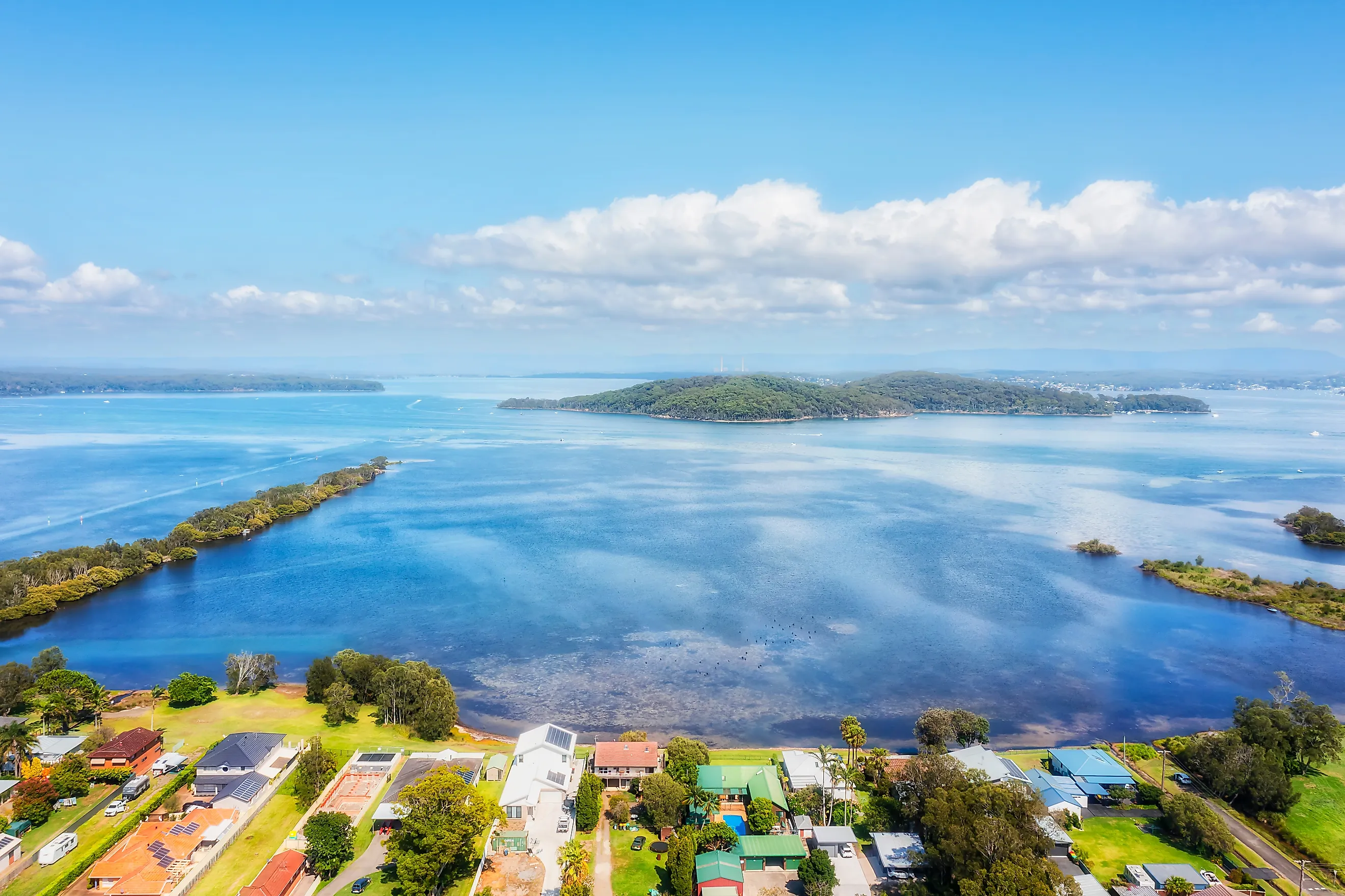
This city is another major NSW destination for internal migrants, combining population growth with a strong flow of people moving from capital cities and other regions. Its estimated resident population reached approximately 224,540 in 2025, up about 1.1% over the year. That is slower than the explosive growth of Sydney's newest suburbs, but the area's much larger population means the absolute increase remains substantial.
Migration is the stronger reason for including Lake Macquarie. The Regional Movers Index ranked Lake Macquarie third nationally among regional LGAs for net internal-migration inflows in the year to June 2025, accounting for about 4.7% of net internal migration into regional Australia. Capital-to-region movements represented the larger component, showing that the area is benefiting from people leaving capital-city locations for a regional setting rather than relying only on movement between nearby regional towns.
The area's appeal is tied to its position between Newcastle and the Central Coast, established employment and services, and a large supply of detached housing. About 84.8% of dwellings are separate houses, according to Census-based community data, while continued development is adding new housing in places such as Morisset and the western Lake Macquarie corridor. The Morisset-Cooranbong growth corridor provides a concrete example of where additional residents are being accommodated.
Two Migration Stories At Once
NSW's 2026 data point to two different migration stories happening at once. New housing on Sydney's fringe is rapidly absorbing residents, while established regional centres are gaining people leaving capital-city areas. Box Hill-Nelson is the clearest example of both population growth and internal migration occurring together, while Maitland and Lake Macquarie demonstrate the continuing pull of regional NSW. At the state level, Greater Sydney's negative internal-migration balance means the pressure is not simply about adding people to Sydney. It is also about where existing NSW residents choose to live. For residents already in the state, that shift is likely to mean continued housing construction and infrastructure pressure in growth corridors, alongside rising demand for schools, roads, and services in regional centres receiving Sydney-area migrants.