This Quiet Maryland City Is Hiding In Plain Sight
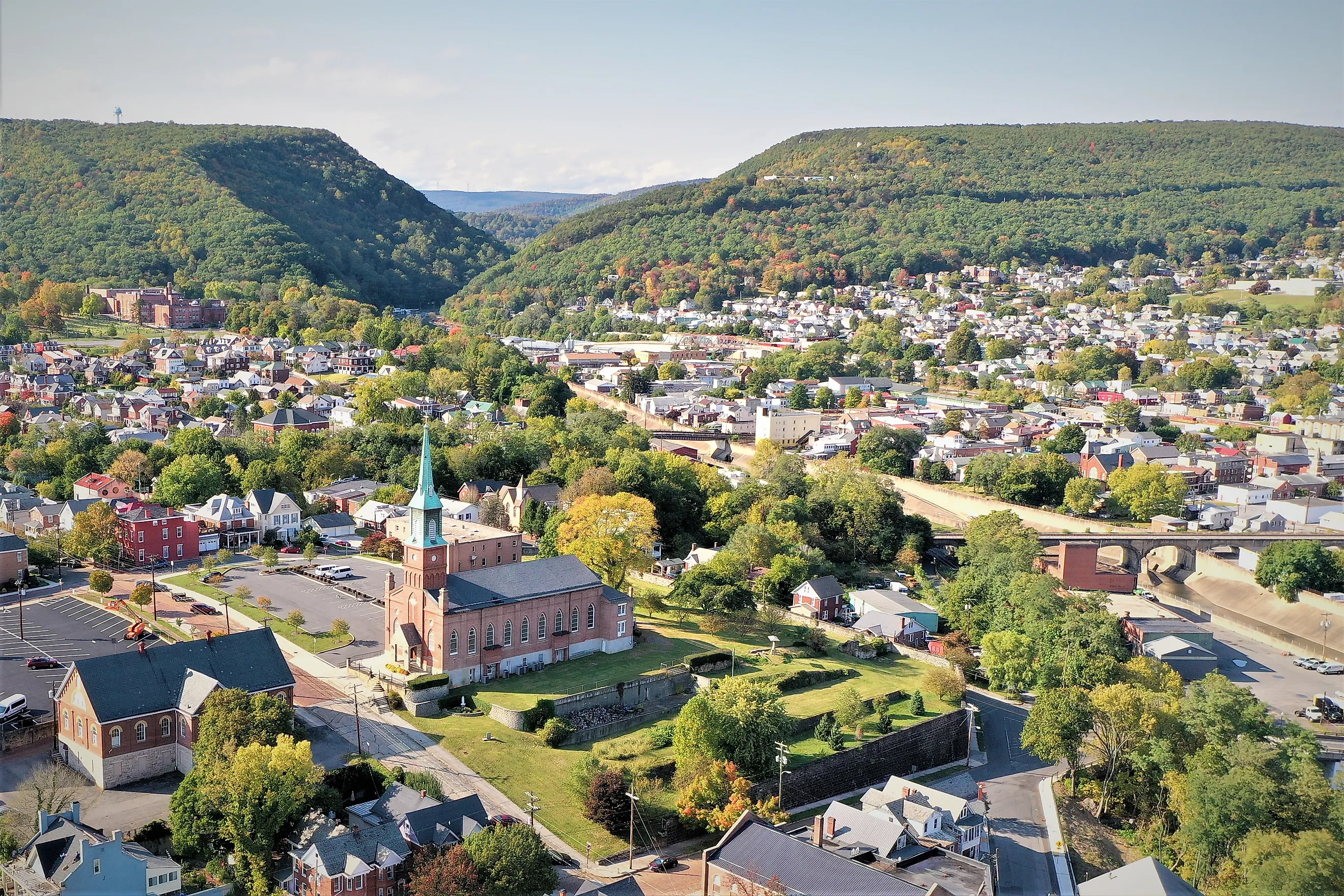
In the foothills of the Appalachian Mountains in Allegany County, Maryland, the unique town of Cumberland is the perfect blend of historic charm and contemporary culture. Once the second-largest city in Maryland, it lies at the junction of two iconic long-distance trails and ridge walks, and its downtown has made a surprising and remarkable comeback in recent years.
Visitors approaching the town of Cumberland from Interstate 68, the National Freeway, are struck by the town's placement along the mountainside. Its landscape features dense, forested hills with the North Branch of the Potomac River flowing through the city's southern side, forming the border between Maryland and West Virginia. Given its strategic location as a road, railroad, and canal junction, Cumberland's hills long provided timber, iron ore, and coal. Today, it is a classic, weathered, charming industrial town of just over 19,000 residents that has turned into a historic and cultural destination. It is cozy, compact, and self-contained, tucked away in the mountains, with ample opportunities for outdoor recreation as well as historic and artistic pursuits.
Outdoor Recreation

Those looking for chances to get outdoors in Cumberland don't need to look far. The Great Allegheny Passage (GAP) runs for 150 miles from Cumberland to Duquesne, Pennsylvania, near Pittsburgh. The section of the GAP in Maryland is made of crushed limestone and covers 22 miles, following the route of the former Western Maryland Railroad. The trail's elevation increases by 1,625 feet if you are biking or hiking it from south to north. In some of the higher areas, you will experience ridge-like walking and breathtaking panoramic, high-elevation views.

The other long-distance trail originating in Cumberland is the C&O Canal Towpath. Made of dirt and stone, this path runs 184.5 miles between Washington, DC, and Cumberland. Originally, the path was built for mules to walk beside the Chesapeake & Ohio Canal, towing boats through the waterway. Now, the path is used for hiking, biking, running, and walking. Throughout C&O Canal Historic Park, you'll find seven lockhouses that have been renovated, in which you can spend a night along the trail. The towpath also contains more than 200 rare and threatened species of animals and plants, and more than 1,000 historic structures.
The Potomac River itself is ideal for fishing, paddling, kayaking, and canoeing. Access points in the Cumberland area include the Gene Mason Sports Complex on Offut Street and the Town Creek area, 4 miles east of Oldtown, Maryland. While there, check out the Oldtown Historical Toll Bridge, the only privately owned toll bridge in the state, built in 1937. Crossing the bridge is something you must experience for yourself to believe.
Downtown Cumberland

Cumberland's downtown area recently completed a revitalization that turned formerly empty storefronts into art galleries, restaurants, shops, and hotels. Office and residential spaces were added to some buildings, sidewalks were widened to encourage foot traffic, and the historic charm of the city was preserved while adding a contemporary vibe.
A pedestrian mall on Baltimore Street in downtown Cumberland includes a fountain and a stage, as well as many boutiques and shops. Among many other unique, local businesses, you'll find Barkin' Basement, a thrift shop whose proceeds support animals at the Allegany County Animal Shelter; Fort Cumberland Emporium, a three-story, multi-dealer shop selling antiques, arts, and collectibles; and Western Maryland Music Center, selling and renting instruments of all types.
Art and History in Cumberland

The cultural scene in Cumberland is thriving and includes plenty of exhibition spaces, live performance venues, and museums. The Ferleman Gallery features visual arts exhibitions by local and regional artists, and musical performances at the Gallery Stage, while the Gilchrist Gallery and Museum is a one-of-a-kind collection of history and art housed in one of the oldest brick structures in the downtown area, built in the mid-19th century.
The Allegany County Historical Society has its headquarters in the Gordon-Roberts House in Cumberland's downtown area, and the society owns and operates other historical landmarks in Cumberland, including the F. Brooke Whiting House Museum and Union Grove School House. Visiting these historic landmarks is a great way to learn more about the area's rich heritage.
Restaurants and Inns

Hungry visitors in Cumberland will discover there are many choices when it comes to satiating their appetites. Caporale's Bakery is a family-owned local favorite serving an assortment of sweet treats. Their turnovers come highly recommended. For something more substantial, check out City Lights American Grill, serving local seafood as well as craft beer and cocktails, with a seasonal outdoor dining area.
If you're looking for a place to stay during your trip to Cumberland, the Cumberland Inn & Spa is a boutique hotel in the heart of the downtown area. Housed in buildings from the 1800s, the inn has 13 guest rooms, and spa amenities include massages and facials. The Inn on Decatur, just two blocks from Cumberland's downtown pedestrian mall, is a cozy bed and breakfast housed in a Federal-style building from the 1870s. Full breakfast is served each morning to guests staying in the inn's two private rooms, each with an ensuite bath.
Consider Cumberland for Your Next Journey
The town of Cumberland, nestled in a valley between the Potomac River and the Appalachian Mountains, beckons travelers searching for a mix of natural beauty, history, arts, and culture. Whether you are an outdoor enthusiast who wants to hike for miles, a paddler or an angler looking to get out on the river, an arts and history fan keen to check out some hidden haunts, or a casual tourist looking for some good food and drink and a quiet place to rest your head, Cumberland has it all.