4 Copperhead Snake Hotspots In New Jersey
New Jersey supports a few small populations of eastern copperheads. They live only in specific habitats, though: primarily rocky, forested regions with minimal disturbance. Local copperhead hotspots are limited in both number and geography, so encounters are uncommon but still possible for hikers, anglers, and other outdoor adventurers.
Understanding where they are most likely to occur can help reduce surprise encounters and unnecessary fear. With that in mind, we will highlight several known copperhead zones in the state, explaining why these locations support this species and when you are most likely to see them while out and about.
Delaware Water Gap

The Delaware Water Gap National Recreation Area is a scenic parkland in northern New Jersey and one of the better-documented eastern copperhead habitats in the state. This rugged landscape is part of the Appalachian Ridge and Valley region along the Delaware River. It's full of the kinds of rocky slopes and mixed hardwood forests that copperheads love.
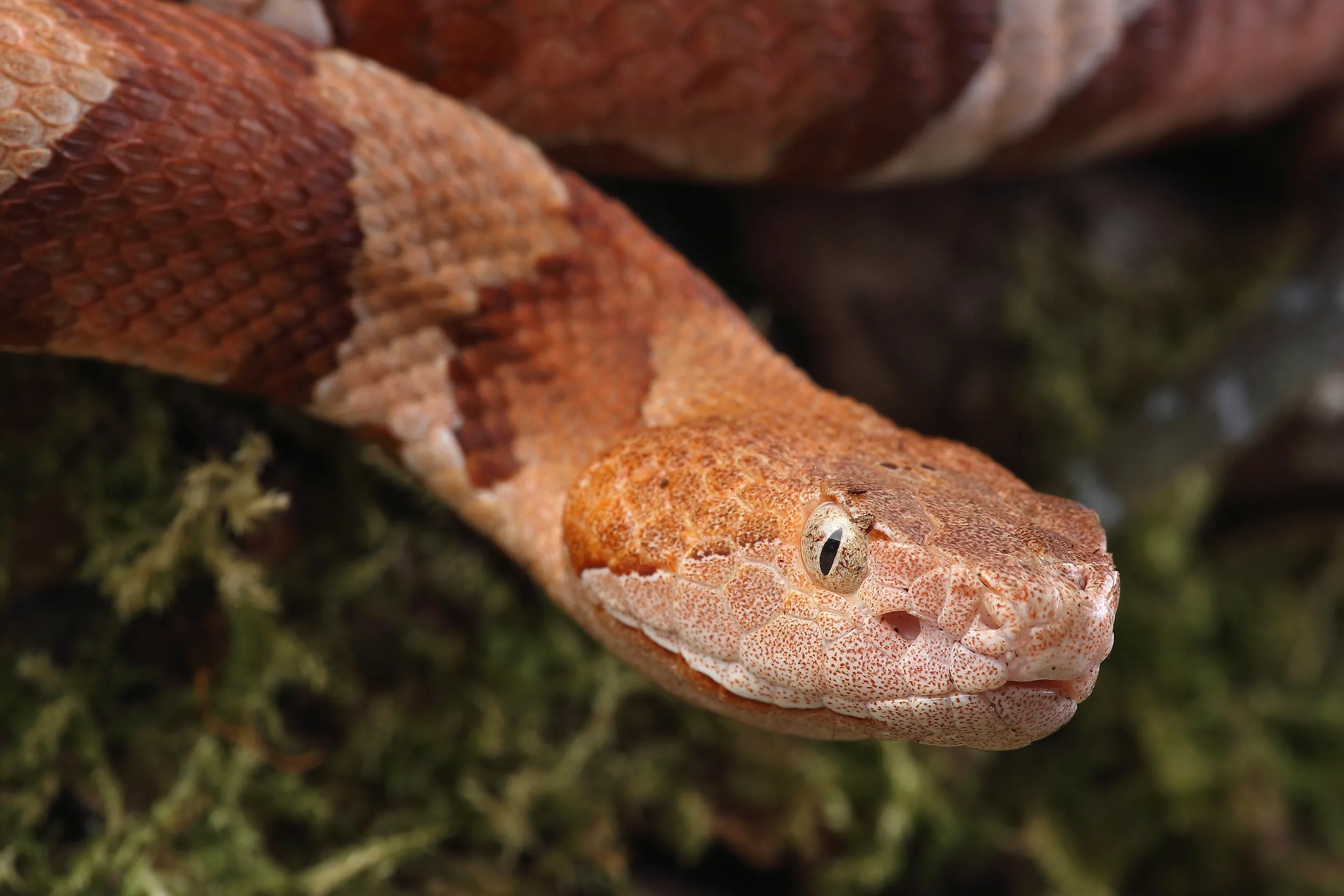
Copperheads are most active from May through October, spending much of the year concealed in leaf litter, rock crevices, and coarse woody debris before denning underground for winter. They eat mainly small rodents and amphibians, with juveniles also consuming insects. Adults typically reach 2-3 feet in length. While their bite can be medically serious, documented human fatalities from copperheads in New Jersey are extremely rare. But still, getting bitten is no fun, and you'll want to give these snakes a wide berth.
Sourland Mountain Preserve

Sourland Mountain Preserve is one of central New Jersey’s better-known areas for eastern copperhead sightings. This isolated ridge rises above surrounding farmland and suburbs, creating a pocket of boulder-strewn woodland that suits copperheads well while still receiving steady foot traffic throughout the year.
The preserve’s boulders, dry forest floor, and dense understory provide cover for ambush hunting and protection from temperature extremes. Copperheads here are most often encountered near rock piles, fallen logs, and sun-warmed slopes, with sightings more likely during warm, humid weather, especially after rainfall.
Despite the preserve’s popularity with hikers and mountain bikers, copperheads go pretty much unseen due to their excellent camouflage and generally non-aggressive nature.
Ramapo Mountain State Forest

Ramapo Mountain State Forest is another area in northern New Jersey where eastern copperheads have been documented. Its steep ridges, exposed bedrock, and extensive hardwood forests create suitable habitat, particularly along dry, rocky hillsides and forest edges. South-facing slopes and rock outcrops are especially important, as they provide warm basking sites during cooler spring and fall months when snakes are regulating their body temperature. Ramapo’s mix of wetlands, streams, and upland forest supports abundant prey, including mice, voles, frogs, and large insects. Most encounters, the rare times they happen, occur during warm, humid weather when snakes are more active near trails that pass through rocky terrain.
Palisades Interstate Park

Palisades Interstate Park is one of the more unexpected places where eastern copperheads have been historically documented in New Jersey. Located along the Hudson River near the New York border, the park’s towering basalt cliffs and wooded slopes can provide suitable habitat, even within a densely populated region.
Sightings here are rare and often noteworthy, as copperheads remain elusive and well camouflaged among leaf litter and dark stone. Occasional reports tend to come from less-traveled trails and lower slopes near the river, particularly during warm, overcast days.
As a popular destination for walking, cycling, and other outdoor activities, Palisades Interstate Park is generally safe to enjoy. Staying alert and following basic trail awareness guidelines is usually enough to avoid any unwanted encounters.
Know Where to Find these Elusive Predators in the Garden State

Eastern copperheads make up a very small portion of New Jersey’s wildlife, occupying a narrow range of habitats within a handful of protected parks and preserves. While encounters are possible in these areas, they remain infrequent and are rarely dangerous when snakes are left undisturbed. Awareness of seasonal activity and habitat preferences is the most effective way to avoid negative interactions while in the territory of some of the state’s lesser-known and lesser-appreciated native wildlife.