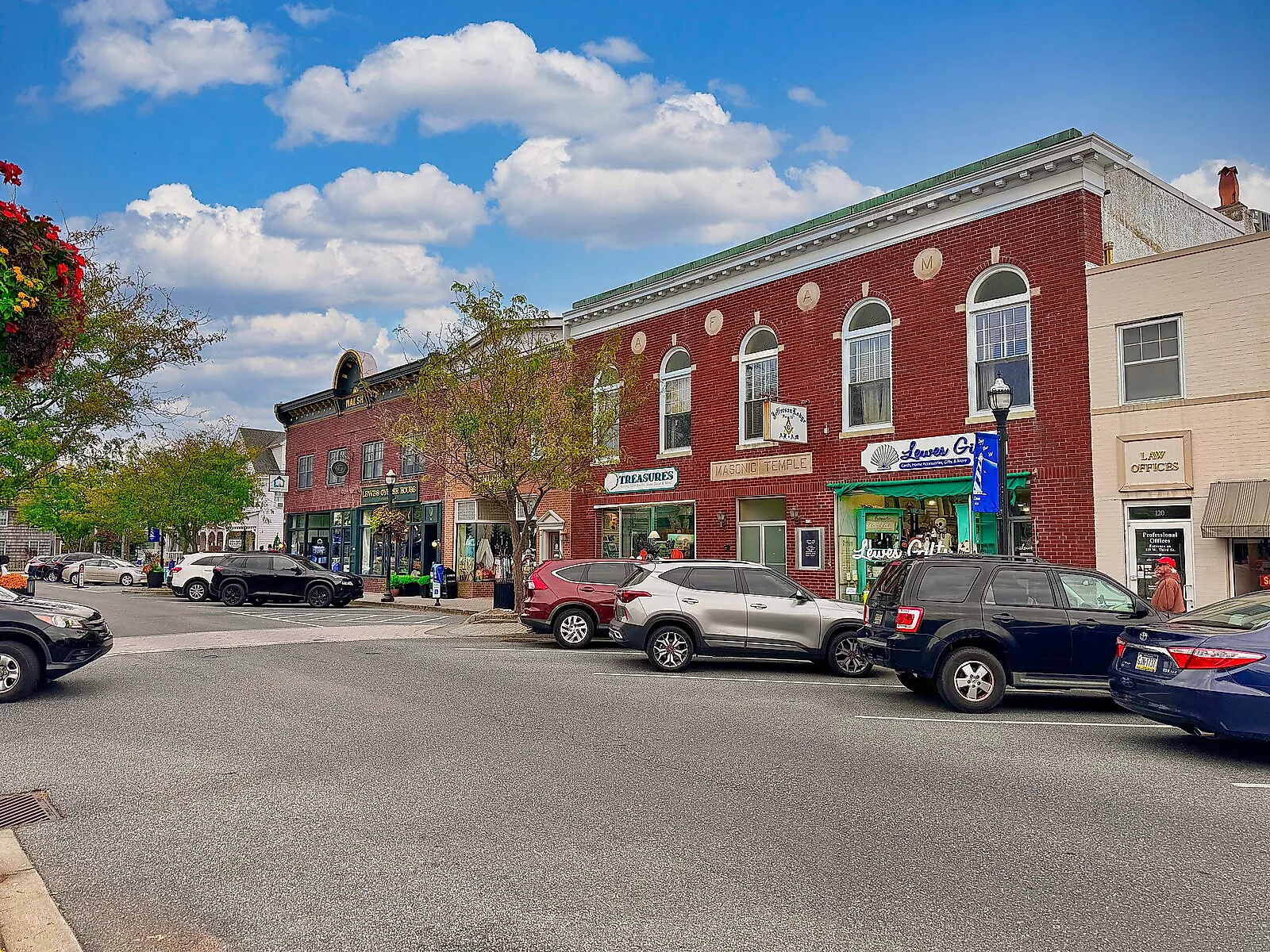
This Delaware Town Instantly Transports You To The Past
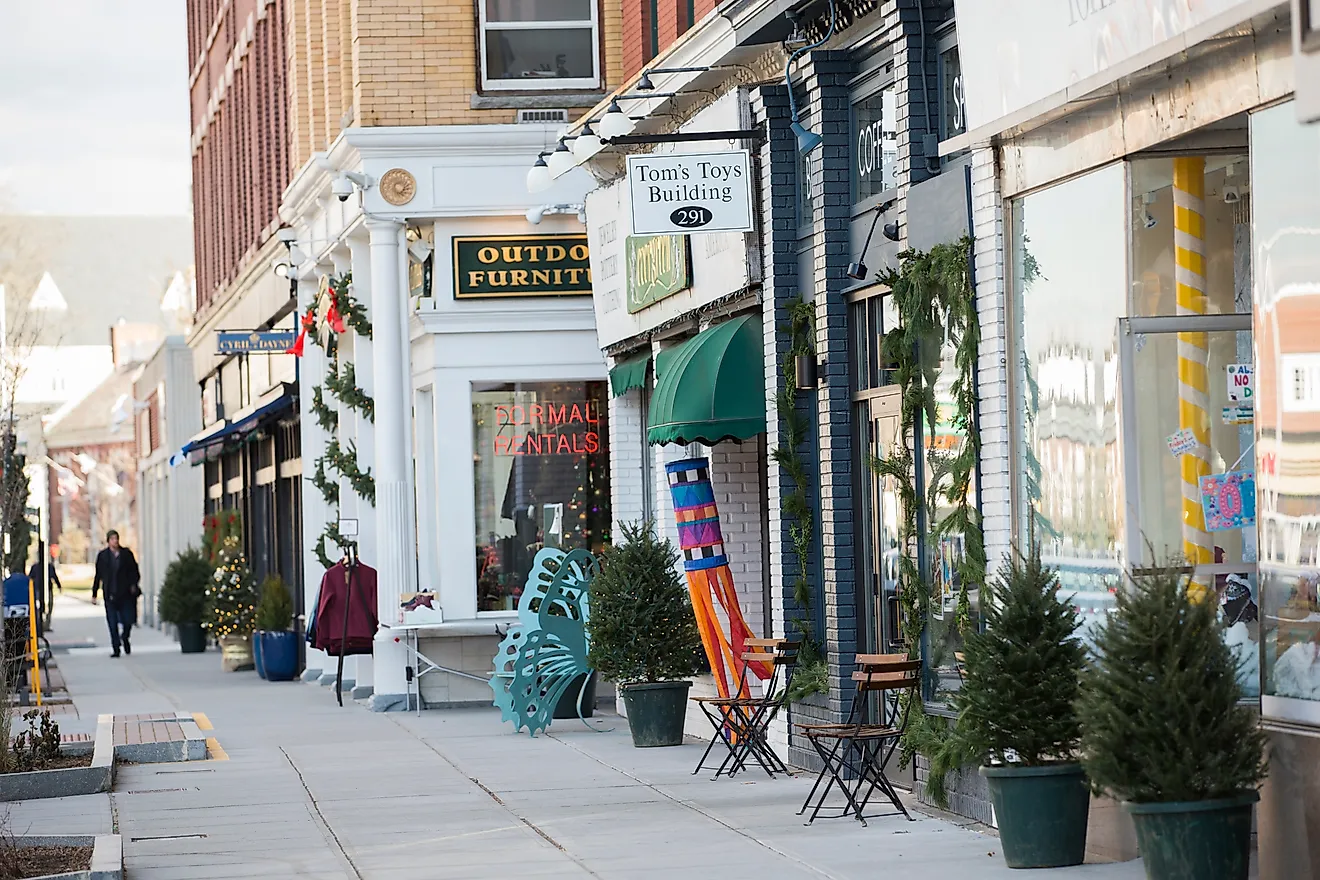
The Ryves Holt House on Second Street was standing before William Penn ever owned Delaware. Dutch colonists built the first European settlement here in 1631 and named it Swanendael, the Valley of the Swans. British warships shelled the town for twenty-two hours during the War of 1812, and one house on Front Street still carries the cannonball. Cape Henlopen holds the concrete batteries and fire control towers of a World War II coastal fort. Lewes, Delaware, with a population of 3,303 at the 2020 census, keeps all of it within a few walkable blocks near the water.
History of Lewes

Lewes, Delaware, was initially settled by an often overlooked colonial power: the Netherlands. Henry Hudson explored Delaware Bay for the Dutch in 1609 while searching for a Northwest Passage to Asia. In 1620, Captain Cornelius Jacobsen Mey sailed past and charted the southern cape, which would later be known as Cape Henlopen. The Dutch identified this cape as a potential whaling station, with the Dutch West India Company purchasing the land from the Siconese people in 1629.
In 1631, the first 28 Dutch settlers arrived and named the place Swanendael, or "Valley of the Swans." They constructed a small palisade and a cookhouse. However, this initial colony wouldn't last long, as it was destroyed by local Native Americans in 1632. The area remained largely empty of European settlers until 1655, when the Dutch made a renewed effort to settle the region, and they even supported a Mennonite colony led by Pieter Corneilsen Plockhoy in 1663. However, in 1664, the entirety of New Netherland fell under English control when English ships surrounded New Amsterdam (today New York City), and Director-General Peter Stuyvesant surrendered the entire colony.
In 1682, the Duke of York transferred the territory that became Delaware to William Penn, who administered it together with Pennsylvania for a time. By that time, the town had been named Lewes after an English town in Sussex. However, this community would face many hardships over the years, including the threat of pirates. Per local lore, the pirates would attack the town twice in 1690 and 1698. Some legends claim that the infamous Captain Kidd buried treasure near Lewes. It is also said that in 1709, 100 French privateers sacked the settlement until they were forced out by British ships.
During the War of 1812, the Royal Navy blockaded Delaware Bay, and British vessels bombarded the settlement on April 6 and 7, 1813, when Col. Samuel B. Davis refused British demands for provisions. The British fired on the town for 22 hours, hitting Lewes with up to 800 projectiles, including the Congreve rocket. The Americans fired back, reportedly damaging a British gunboat. The town would remain under blockade until the end of the conflict in 1815.
Three years later, Lewes was officially incorporated, and it has remained an important seafaring town ever since, although Americans aimed to protect it from further invasion with the establishment of Fort Miles in 1941 during World War II.
Historic Sites And Museums

The historic sites in Lewes reflect its storied history of Dutch settlement, conflict, seafaring, and even Revolutionary War figures. For example, Lewes has an 18th-century home known as the Colonel David Hall House. The house commemorates Colonel David Hall, who fought in the American Revolutionary War and commanded the Delaware Line troops at Valley Forge. He would later become a governor of Delaware. The home is preserved with original woodwork and furniture from the 18th and 19th centuries.
Colonel David Hall is buried today in the cemetery of Lewes Presbyterian Church, alongside another former governor: Ebe W. Tunnell. The church itself has had a long history. The current church dates back to 1832 and replaces two previous churches built in 1707 and 1727.
The oldest structure in Lewes is the Ryves Holt House Museum and Mercantile. It has been dated to approximately 1665, and initially served as an inn before being converted to a home for naval officer Ryves Holt, who would later serve as the chief justice of the Supreme Court of the Three Lower Counties on the Delaware in 1745.
The scars of the bombardment from the War of 1812 still exist at The Cannonball House. First built in the late 1790s, it was struck by a cannonball during the battle, thus giving it the name. Today, it features nautical exhibits and a garden.
Although no buildings remain from the Dutch period, Lewes maintains that history through the Zwaanendael Museum. The building itself is based on the Stadhuis from Hoorn, the Netherlands, and features exhibits on Dutch settlement, the HMS DeBraak, which sank off the coast of Delaware in 1798, and other historical periods in Lewes, such as the unfortunate policy of segregation on its beaches. There is a small monument known as the De Vries Monument that honors the Dutch settlement in the 17th century.
Outdoors In Lewes

In Lewes, even its outdoor spaces have historical significance, as is evidenced by Cape Henlopen State Park. This state park was the site of Fort Miles, established as a coastal defense center in World War II. At the Fort Miles Museum & Historical Area, one can walk through barracks, see artillery pieces, or climb up a fire control tower to get an aerial view of the bay and park.
As for outdoor activities at Cape Henlopen, one can visit a designated swimming beach or take nature trails through diverse environments. The Pinelands Nature Trail traverses approximately 1.5 miles alongside artillery bunkers and four species of pine trees. It's the first National Recreation Trail in Delaware. The Walking Dunes Trail, meanwhile, follows the woods and tidal marsh before ending at the Great Dune, which stands 80 feet above the Atlantic Ocean.
Several of the city parks also have historical significance, such as the 1812 Memorial Park, established on the site of a defense battery used in the War of 1812, along with a cannon said to have come from a pirate ship. Families often go to Stango Park for the playgrounds and swamp maple trees.
One fun outdoor family activity is to board a recreated pirate ship with the Pirates of Lewes Expeditions. Children can pretend to be pirates as they have water cannon battles, play with pirate swords, and dress up as the ship sails out on the coast.
Similar Towns In Delaware

New Castle is a town with a similar history to Lewes. It was originally established by the Dutch as Fort Casimir in 1651, but was briefly conquered by Sweden in 1654 through its New Sweden colony. The area would trade hands several times between the Dutch and English before firmly being established as a colony under William Penn. During the American Revolution, Delaware representatives gathered at the New Castle Courthouse to vote to break away from both the colony of Pennsylvania and Great Britain. The New Castle Court House Museum preserves this story along with the history of the Underground Railroad in Delaware. The town also has an original Georgian-style mansion at the Amstel House Museum, first built in 1738.
Millsboro is another historic community that was originally the ancestral home of the Nanticoke Indians. It was established in 1792 as a milling town by Elisha Dickerson, who dammed the Indian River at Rock Hole. Today, Millsboro stands out for having the only Native American museum in Delaware at the Nanticoke Indian Museum, which houses arrowheads, pottery, a wooden canoe, and Native American artwork. On Millsboro's Main Street, one can find the 1901 Queen Anne-style home called the Perry-Shockley House.
Echoes Of The Past
Although time erodes all things, the past still echoes. It echoes in a special way in Lewes, with its preservation of Dutch, English, Revolutionary War, and War of 1812 sites. Few places in Delaware have as many 18th-century structures, which add a degree of weight to historical events, as one can imagine cannons ripping through the town from privateer or English raids. The communities of Millsboro and New Castle offer a different kind of echo, that of the often neglected stories of Native Americans and Delaware's Revolutionary spirit. For those with an interest in early American history, Lewes is one of the best communities in Delaware to learn about the country's past.