These 8 Towns In Montana Were Ranked Among US Favorites In 2026
Montana has two national parks at opposite corners and a lot of empty road in between, and the towns travelers actually stop in tend to sit near the good parts. Some are gateways to Glacier National Park or Yellowstone National Park; others sit on Flathead Lake or at the foot of a mountain road. What they share is a reason to pull over: a mining museum, a 90-foot statue, a lake beach, a highway of switchbacks that closes for snow half the year. Here are eight Montana towns worth the stop, and what each one actually has going for it.
Red Lodge

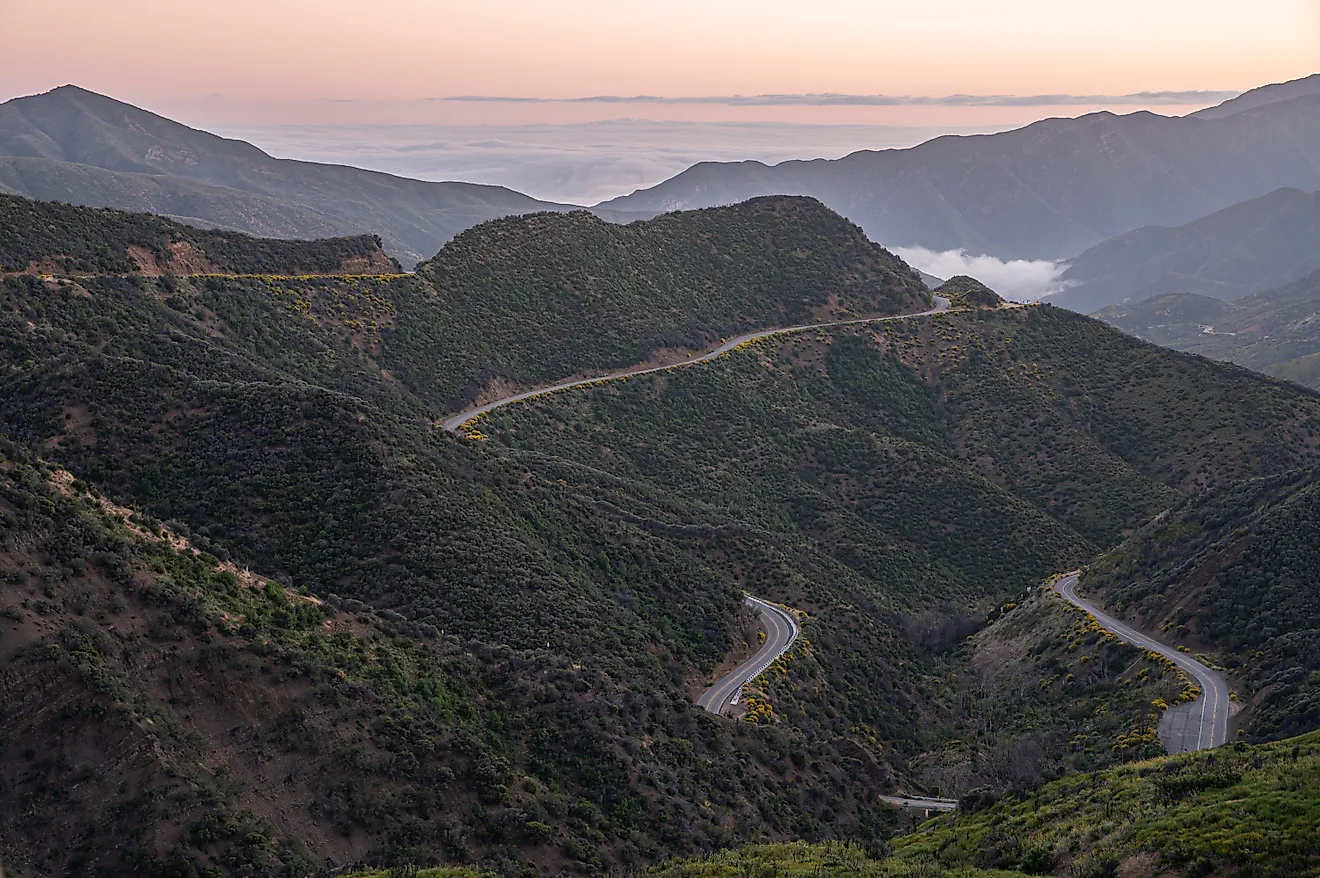
Red Lodge, population around 2,200, sits at the bottom of one of the great American roads. The Beartooth Highway climbs out of town in a series of switchbacks to Beartooth Pass at 10,947 feet, high enough that it stays open only about five months a year and can still throw snow at you in July. Charles Kuralt called it the most beautiful drive in America; crews built it in the 1930s as a Depression-era project to give the town something after the coal mines closed. Back at ground level, the Yellowstone Wildlife Sanctuary keeps rescued bears, foxes, and raptors that cannot be returned to the wild, and the Carbon County Arts Guild shows work from regional artists inside an 1889 train depot. For anyone who would rather walk than drive, the Lake Fork Trail runs about nine miles up a creek to a string of fishable lakes.
Whitefish

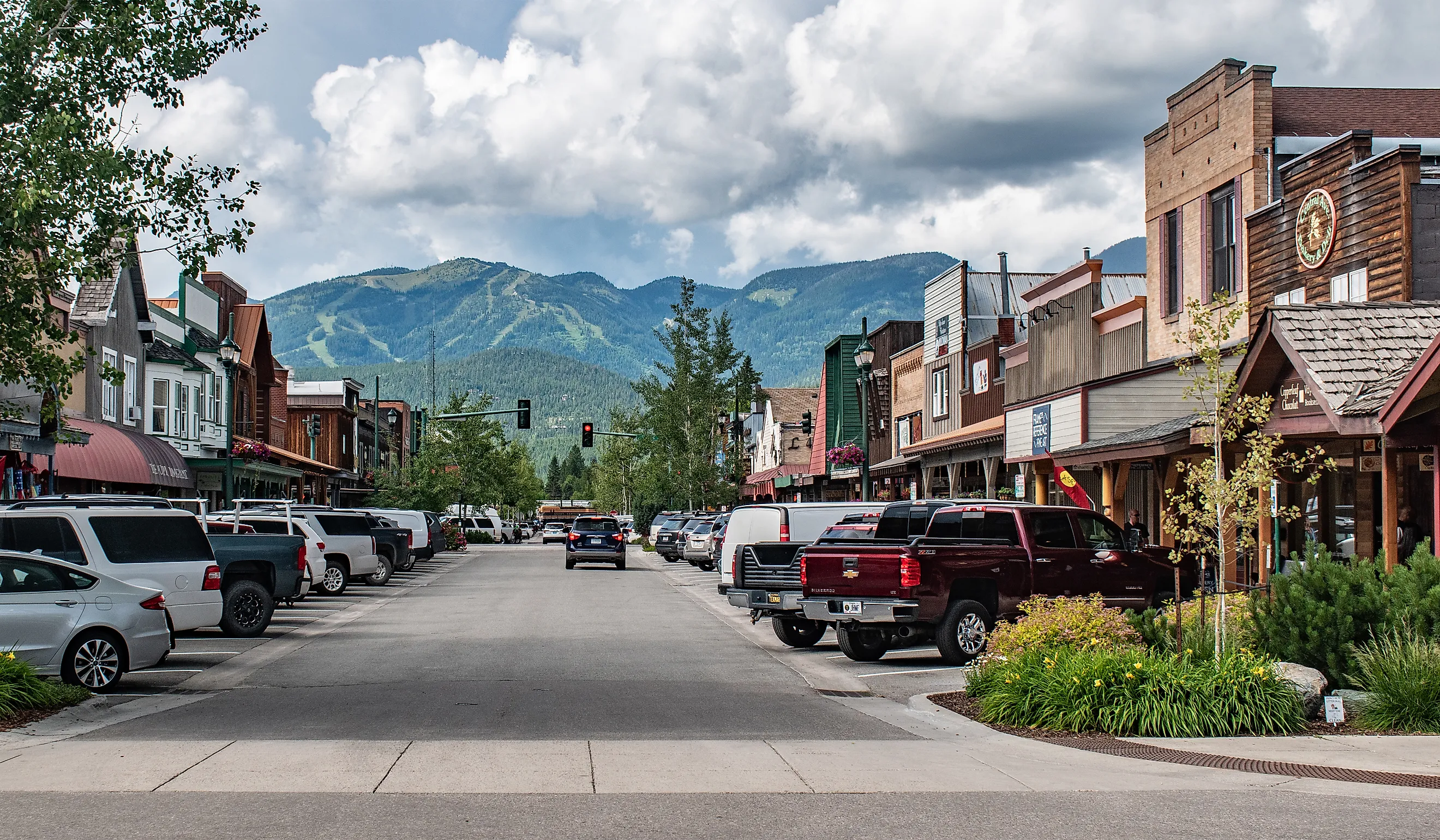
Whitefish has fewer than 9,000 residents and roughly a million visitors a year, a ratio that tells you what the town is for. Most of them are headed to Whitefish Lake, which the town sits on, or up to Whitefish Mountain Resort six miles north, which runs more than 100 ski trails in winter and the longest lift-served zip line in Montana in summer. The Whitefish Trail adds nearly 50 miles of its own paths through the surrounding forest. Mostly, though, Whitefish is a doorway to Glacier National Park, where the Going-to-the-Sun Road threads 50 miles past glaciers, waterfalls, and a fair amount of wildlife.
Kalispell

Kalispell is the seat of Flathead County and the practical hub of the valley, the place people actually live and shop between trips to everything around it. Seven miles south is Flathead Lake, the largest natural freshwater lake west of the Mississippi, with state parks like West Shore strung along its edges for boating and swimming. Closer in, Lone Pine State Park holds about 270 acres and 7.5 miles of trail above town, and Foy's Lake offers a quieter paddle. Downtown, the Conrad Mansion has stood since 1895, built on the lumber and railroad money that made the early town.
Butte

Butte was a copper town first and everything else second. Founded as a mining camp in 1864, it grew into one of the loudest boomtowns in the West, and you can still ride 100 feet underground at the World Museum of Mining, built on the old Orphan Girl Mine and packed into roughly 50 buildings of salvaged equipment. The mining left a mark that is hard to miss: the Berkeley Pit, a retired open-pit mine on the edge of town that is now a lake more than 1,700 feet deep, filled with water so toxic that it is a federal Superfund site. People pay a couple of dollars to look at it from a viewing stand. For something prettier, the Copper King Mansion lets you tour, or sleep in, the 34-room Victorian a copper baron built in the 1880s, and Our Lady of the Rockies, a 90-foot statue of Mary that volunteers airlifted onto the Continental Divide in 1985, stands as the fourth-tallest statue in the country.
Big Sky

Big Sky sits in the Madison Range of the Rocky Mountains, and its main asset is its address: about an hour from the west entrance of Yellowstone National Park, which puts the world's first national park a morning drive away. Yellowstone draws three to five million people a year to its geysers and wildlife, including Old Faithful, which erupts on a roughly 92-minute schedule that makes it the most reliable thing in government. Closer to town, the Ousel Falls trail is an easy 1.6-mile walk to a waterfall, and Big Sky Resort spreads across 5,850 acres of skiable terrain, among the largest in the country. Lone Mountain Ranch's Horn & Cantle handles dinner.
Helena

Helena's main street is named Last Chance Gulch, which is exactly what it was. In 1864, four prospectors who had struck out everywhere else agreed to try one more spot, found gold, and the camp that grew up around the claim became the state capital. Helena kept the name along with the gold-rush architecture: the 1888 Queen Anne Original Governor's Mansion, the brick lanes of Reeder's Alley where fortune-seekers once lived, and the Cathedral of St. Helena, finished in 1914 with twin spires rising 230 feet. Above downtown, Mount Helena City Park laces the hillside with trails, and the 1906 Trail climbs about three miles to the summit for a view of the whole arrangement.
Columbia Falls

Columbia Falls sits on the Flathead River about 17 miles from Glacier National Park, close enough to the west side that Lake McDonald and the park's three million annual visitors are a short drive off. The town's own draws are quieter: the Flathead River Trail runs 7.5 miles along the water through pine, with fishing access at Blankenship Bridge. Its strangest attraction is the Montana Vortex and House of Mystery, a roadside stop built around tilted rooms and forced-perspective tricks that make people appear to grow and shrink as they cross the floor. Whether the cause is a vortex or a carpenter who ignored his level is left to the visitor.
Polson

Polson sits at the south end of Flathead Lake, on the Flathead Indian Reservation, home of the Confederated Salish and Kootenai Tribes. The lake is the draw, with state parks like Finley Point offering boat slips and campsites along the shore. The town's odd treasure is the Miracle of America Museum, which calls itself one of the largest museums in Montana and has the inventory to argue the point: vintage motorcycles, horse-drawn carriages, military vehicles, farm machinery, and a wall of firearms, spread across dozens of buildings with the sorting logic of a very large attic. It is the kind of place you walk into for twenty minutes and leave two hours later.
What These Towns Share
The thread running through these towns is not a marketing ranking but proximity: each sits within reach of something worth the trip, and each has built a fair amount of its own around that. Butte has its mines and its statue, Helena its gold-rush streets, Polson its attic of a museum, and Red Lodge a road that quits for the winter. The parks get the headlines, but the towns are where the trip actually happens.