The Most Charming River Towns In Washington
In Washington, the river usually got to a town first. Tribes fished its banks for thousands of years before steamboats and sawmills arrived, and once those years passed, each town had to decide what its river was for. Leavenworth turned itself into a Bavarian-style village in the 1960s, and Winthrop did the same with Old West storefronts a decade later. Snohomish kept its 19th-century downtown. Its brick storefronts still overlook the water. Each of these seven towns took a different path, and the river still runs past every one of their downtowns.
Leavenworth

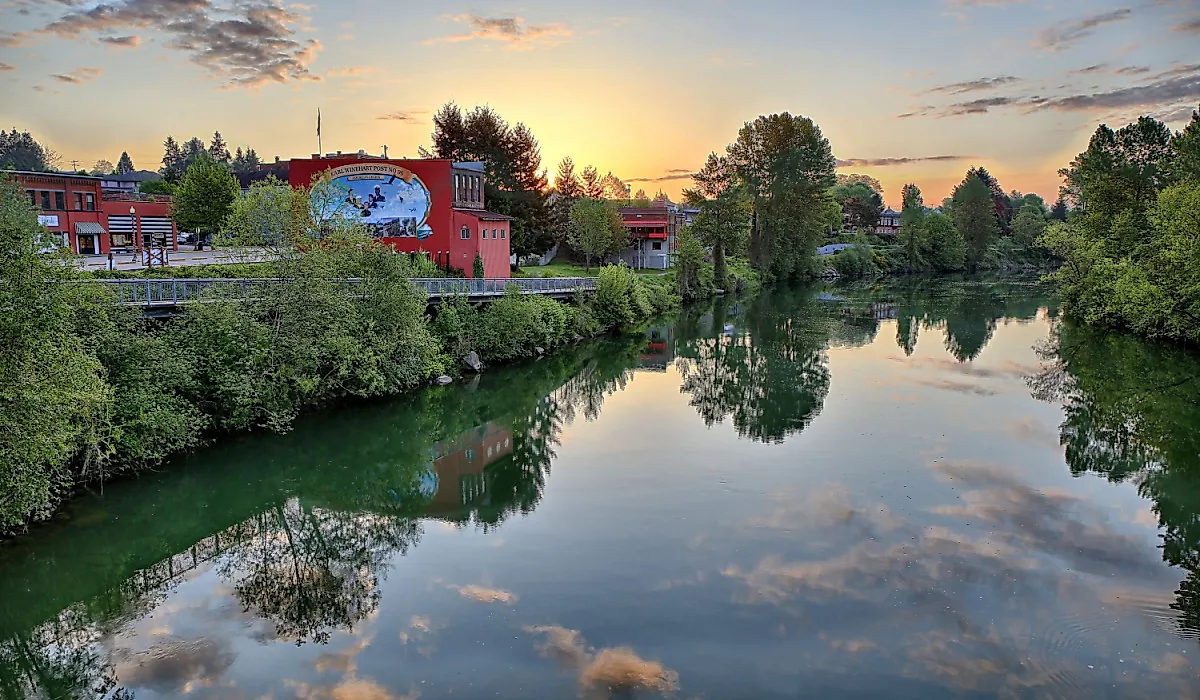
Waterfront Park runs along the Wenatchee River at the edge of downtown Leavenworth, with shaded trails, pebble beaches, and viewpoints over the water near its timber-framed storefronts. In spring, runoff pushes whitewater rafters and kayakers through the rapids. By summer, the flow slows enough for tubers and for fly-fishers working the banks for trout.
The storefronts are newer than they look. Leavenworth started as a 19th-century timber and railroad town on the eastern slopes of the Cascade Range and adopted Alpine architecture in the 1960s to revive its economy. Long before either, the river was a salmon fishery and gathering ground for the Wenatchi Tribe. The Bavarian theme now runs the town's calendar, which includes a three-weekend Oktoberfest with brass bands and keg tappings, along with the Leavenworth Mountain Film Festival and the Cascade Celtic Festival.
Winthrop

From the Spring Creek Pedestrian Bridge in Winthrop, people watch spawning salmon in the Methow River below. Those runs get help from the nearby Winthrop National Fish Hatchery, which works to sustain native salmon and steelhead in the valley.
Winthrop sits where the Methow and Chewuch rivers meet. The Methow people fished and camped here before gold seekers, trappers, and cattle ranchers staked claims in the late 1800s. The town spent the following decades as a quiet timber and farming community. In the 1970s, local merchants adopted a Western building code, which is why downtown now has wooden false-front storefronts, hitching posts, and plank boardwalks. Snowmelt keeps the river busy with whitewater rafters, paddlers, and trout anglers.
Prosser

Prosser's reputation as the "Birthplace of Washington Wine" goes back to the Yakima River. A wide horseshoe bend of the river wraps the town on three sides, and irrigation drawn from it turned the surrounding arid land into orchards, hop fields, and vineyards. Tasting rooms at Vintners Village now pour wines from across the region.
The bend was an Indigenous fishing camp before it became an 1882 pioneer settlement, and the town grew into the agricultural center of the lower Yakima Valley. Crawford Riverfront Park, in the center of town, has paved riverside paths, open lawns, and a boat launch for paddlers heading past farmland and basalt bluffs. Each autumn, dozens of hot air balloons lift off at dawn for the Great Prosser Balloon Rally and float over the river and the historic Yakima River Bridge.
Snoqualmie

Trains still leave from the 1890 Snoqualmie Depot, where the Northwest Railway Museum runs heritage excursions through the valley. The depot dates from the late 1800s, when Euro-American settlers used the Snoqualmie River's water power and corridor to build a major timber and railroad hub in the Cascade foothills, about 30 miles east of Seattle.
For the Snoqualmie Indian Tribe, the river and its 268-foot waterfall, Snoqualmie Falls, have been a sacred site for thousands of years. Below the falls, the slower stretch from Plum Landing to Fall City fills with tubers, paddleboarders, and canoeists in summer, and faster sections hold whitewater kayakers and trout anglers. Upstream, the three mountain forks that form the Snoqualmie River meet at the Three Forks Natural Area, a spread of meadows and wetlands with views of Mount Si.
Stevenson

In Stevenson, steep, forested cliffs narrow the Columbia River into a natural wind tunnel, and kiteboarders and windsurfers head out from nearby East Point when the gusts pick up. Closer to town, Bob's Beach is a sandy stretch of shoreline where residents sit by the river.
Less than an hour from Portland, Stevenson began as a steamboat landing and sawmill town and now has around 1,500 residents. Downtown, a few blocks up from the shore, has the seasonal Stevenson Farmers Market and neighborhood taprooms, and trails climb from town into the Gifford Pinchot National Forest. The Columbia Gorge Interpretive Center Museum holds the river corridor's record, from Indigenous artifacts and early settler tools to relics of the salmon canning and logging eras.
White Salmon

Downtown White Salmon looks across the Columbia to Hood River, Oregon. Its bakeries, glass studios, tasting rooms, and cafes face Mount Hood from a 550-foot bluff near where the glacier-fed White Salmon River empties into the Columbia. Upstream, that river runs through narrow canyons used by whitewater rafters and kayakers, while the windy Columbia below brings out kiteboarders and windsurfers.
For more than 13,000 years, Indigenous peoples, including the Klickitat Tribe, used the gorge as a trade route and salmon fishery, long before settlers built timber mills and planted orchards on the hillsides. Because the town sits between the wet Cascades and the drier plateau to the east, evergreen forest meets oak woodland and hillside vineyards around it. North of the river corridor, the grasslands of Conboy Lake National Wildlife Refuge provide seasonal habitat for sandhill cranes and Rocky Mountain elk.
Snohomish

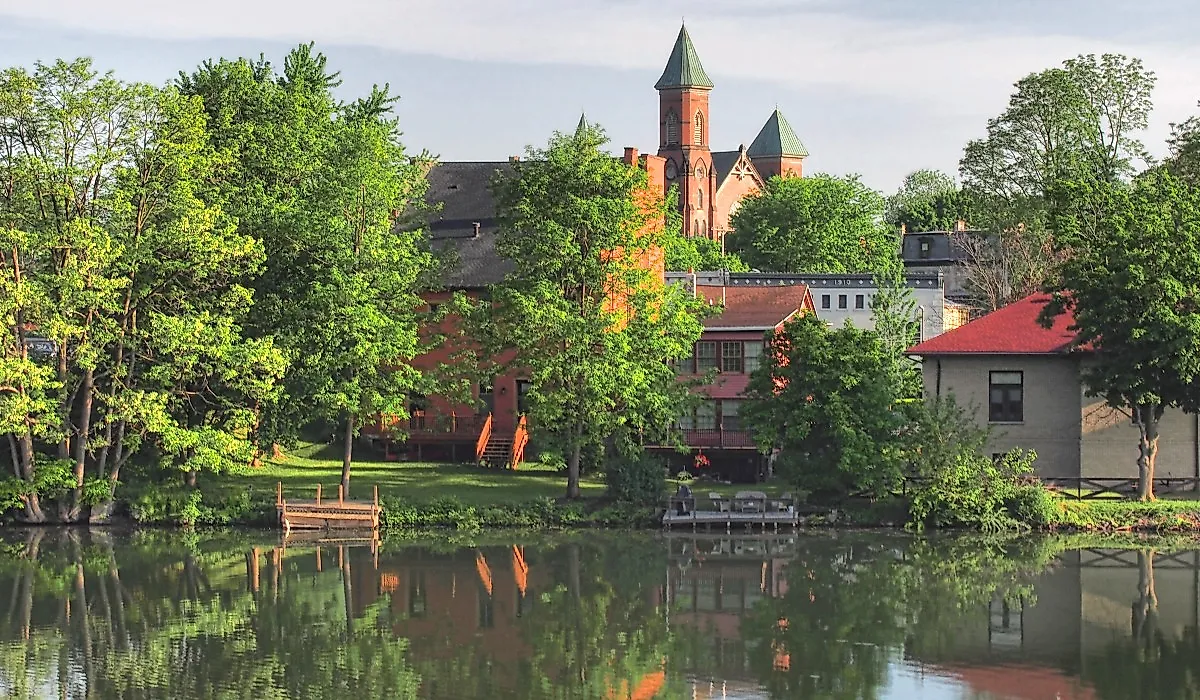
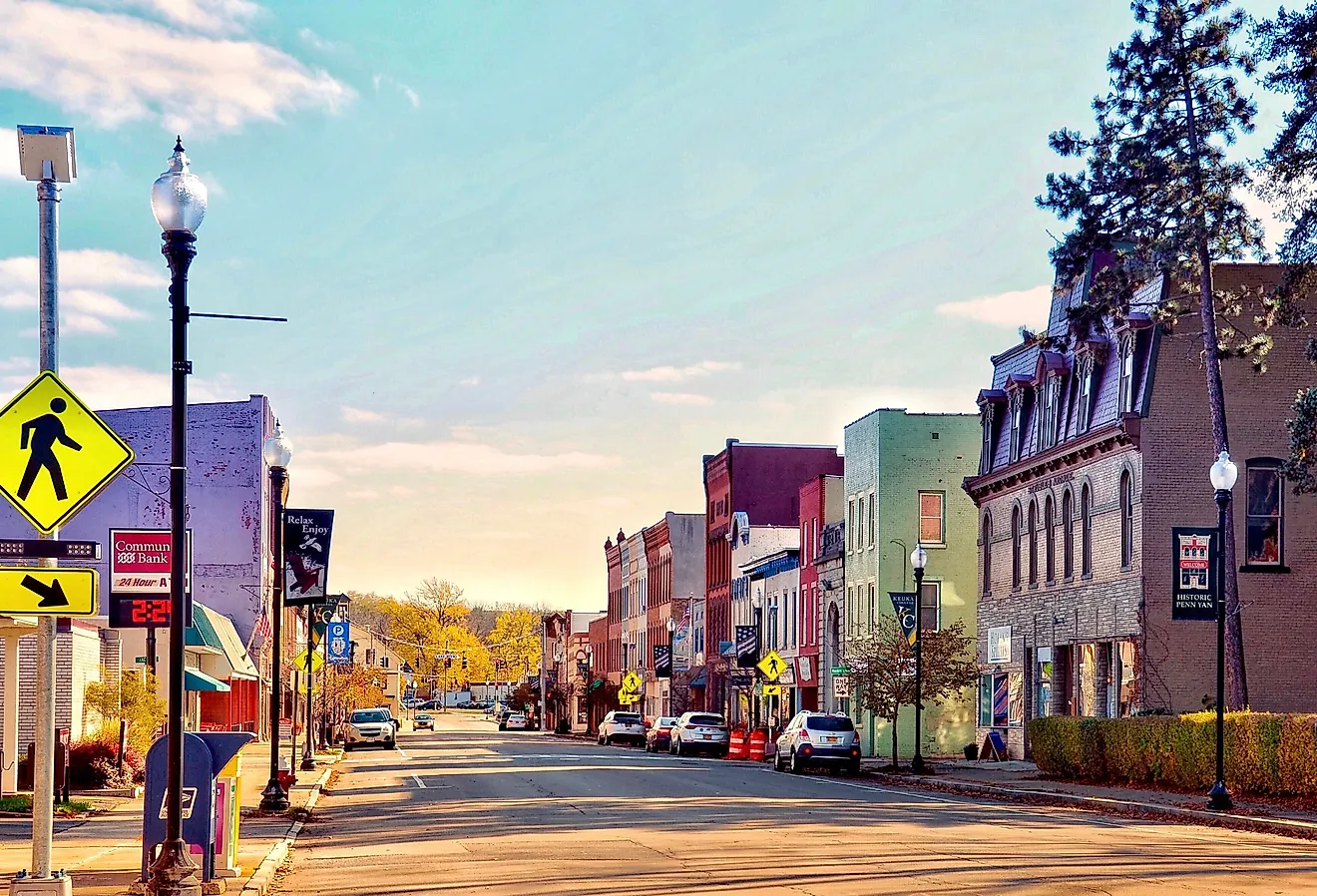
The Oxford Saloon occupies a historic First Street building that dates back to the late 1800s and has a reputation for being haunted. It stands near the water in Snohomish's 26-block downtown, which riverboat and sawmill money paid for and is now listed on the National Register of Historic Places.
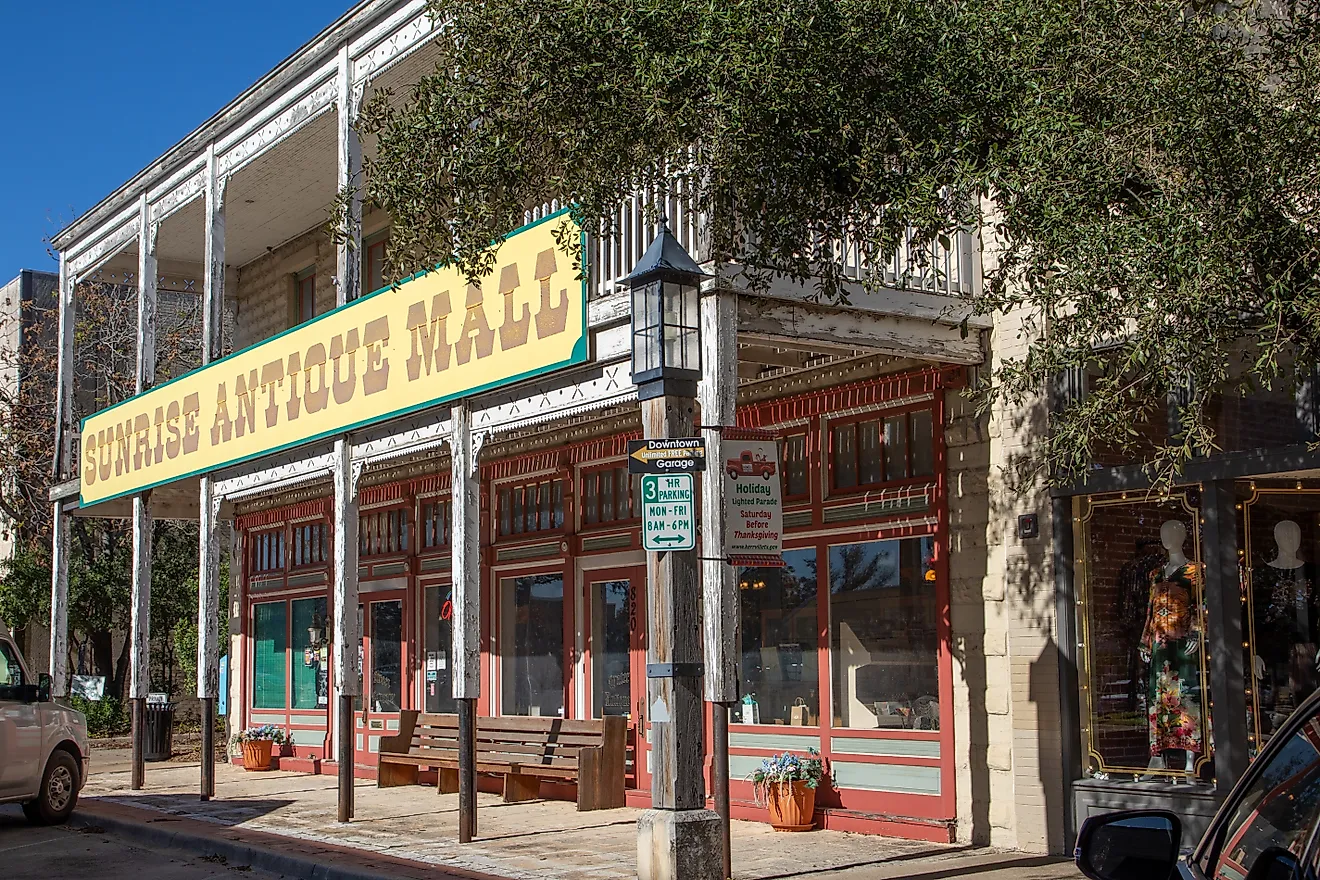
Snohomish sits on the banks of the Snohomish River, just downstream from where the Skykomish and Snoqualmie rivers merge. It grew from a 19th-century timber and steamboat hub into what is now called the "Antique Capital of the Northwest," with more than 175 antique dealers in the brick storefronts and Victorian homes overlooking the water. The old industrial riverfront is now public parkland. Kayakers and paddleboarders put in at Cady Park and Pilchuck Park, and walkers on the Snohomish River Trail watch for blue herons, bald eagles, and river otters.
Where Geography Meets Local History
Washington's river towns have handled their pasts in different ways. Leavenworth and Winthrop rebuilt their downtowns around a theme in the 1960s and 1970s, one Bavarian and one Old West, while Snohomish kept its original 19th-century blocks and put them on the National Register. In the Columbia River Gorge, Stevenson and White Salmon, both former mill towns, now draw kiteboarders when the wind picks up. Snoqualmie still runs trains out of its 1890 depot, and Prosser's vineyards grow on land irrigated from the Yakima.