What Happens To A Forest After Beavers Leave
In studies of northern forests, a drained beaver pond can sit as open, damp grassland for roughly 70 years before conifers take hold. Ecologists traced the holdup to two unlikely players, voles and fungi. That long pause is the first chapter of what happens after beavers go. It plays out across national forests, where the USDA Forest Service manages land for many overlapping uses, and the changes reach well past the dam. These are the many things that happen to a forest after the beavers leave, such as changes to the soil, the shape of the stream, how fire moves through a valley, and how the habitat comes back to life.
Why Beavers Leave
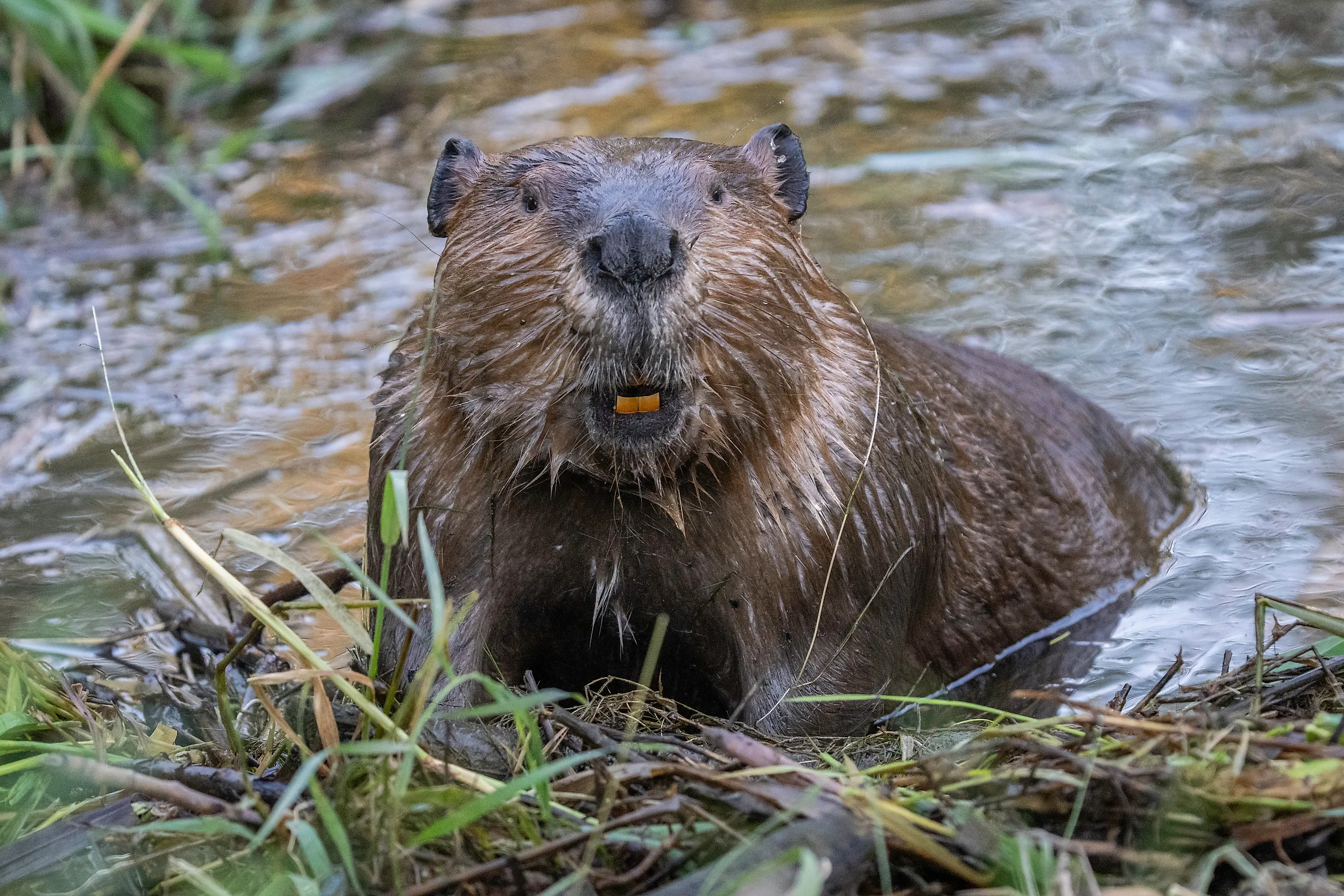
Beavers rarely leave because of trouble. They leave because they run out of food. A colony cuts the trees it eats and builds with, and a study at the Wilds in Ohio found that on-land foraging at its beaver sites was generally concentrated within about 20 meters of the water. Cut the nearby supply and the pond stops paying off.
Ecologist John Pastor describes how this plays out around small North Woods ponds, where beavers can cut every aspen near the shore. What remains is a dark wall of spruce and fir, which the animals do not prefer, and the colony moves on to greener aspen elsewhere. Forest Service stream scientists list a reliable water source and streamside vegetation good for foraging and dam building among the basic requirements for a beaver dam complex.
A Pond And A Meadow

Without beavers patching it, a dam leaks, then breaches. The pond drains, leaving a flat of accumulated silt that gets invaded by plants. What grows there is not forest. Researchers John Terwilliger and John Pastor found that old beaver ponds can remain damp grassland patches for decades, often around 70 years, before wet-tolerant trees such as black spruce establish a forest cover.
In Pastor's account of that research, voles spread the spores of fungi, the root partners that help spruce seedlings take up nutrients from the soil, and the voles control whether conifers can invade an abandoned meadow at all. Not every pond ends up as forest. A widely used model of beaver pond succession describes paths through emergent marsh, bog, meadow, and forested wetland. With the earlier stages reversible if beavers return with the later stages much harder to undo.
The Valley Floor

In two broad valleys, Beaver Meadows and Moraine Park, sediment analysis found that roughly a third to a half of the alluvial sediment in Beaver Meadows was deposited in ponds. Both valleys are in Rocky Mountain National Park, which the National Park Service manages, not the Forest Service. However, the physical process is the same one that shapes beaver country in national forests.
The dry-out afterward is gradual. A 2019 Colorado State University thesis by DeAnna Laurel, advised by Ellen Wohl, compared active and abandoned meadows in the same park, and found that soil moisture differed significantly only between active and long-abandoned meadows. Wohl's earlier work estimated that relict beaver meadows account for about 8 percent of the carbon stored in that landscape, versus about 23 percent when beavers actively maintained wet meadows.
Effects On Streams
The Forest Service describes what happens to a stream once dams are gone. Banks erode, wetlands are lost, and fresh water drains off the land quickly, which can mean spring flooding and dry ground by late summer. Willow and aspen plants that stabilize banks and feed wildlife depend on beaver-wetted ground, and drier-site plants move in when it disappears.
At Clarks Creek Meadow in the Plumas National Forest in California, that process left a deeply cut, or incised, stream channel. In October 2024, workshop participants layered conifer boughs, mud, and rock into beaver dam analogs to slow the water and spread it back across the meadow.
There Are Fewer Beavers

The beaver population has been slowly declining. Estimates of the pre-colonial beaver population ran anywhere from 60 million to 400 million, a range that goes back to naturalist Ernest Thompson Seton's 1929 figures. Later researchers have since revised the number. Sadly, the fur trade cut those numbers to a much smaller fraction. Current estimates are about 10 million to 15 million across North America, with the Forest Service noting the West once held millions more beavers than it does now. All of these are rough figures, and they differ by source.
What Happens In A Forest Fire

Fire is a natural part of many western forests. Researchers Emily Fairfax and Andrew Whittle used satellite imagery to compare streamside vegetation greenness during wildfires in California, Colorado, Idaho, Oregon, and Wyoming. The oldest fire they studied burned in 2000 in the Sequoia National Forest; the others burned between 2013 and 2018, across about 1,500 beaver dams.
The drop in greenness during fire was about three times larger where beavers had not been damming than where they had. The study also found that greenness rebounded in the year after the fire either way, so the authors concluded that beaver activity matters for resistance and refuge, not necessarily for recovery. Fairfax is clear that this is a refuge effect, not a firewall, because beaver dams do not stop fires altogether. The Forest Service describes one Idaho fire that halted at a beaver-created wetland, while the stretch of stream without a dam, reduced to a single thread, burned across the whole area.
Rebuilding The Habitat

On the Grand Mesa, Uncompahgre and Gunnison National Forests in Colorado, a Forest Service-led team built 316 beaver mimicry structures in two years, about half of them beaver dam analogs, many installed by volunteers. The project restored 45 acres of historic wetlands and improved 1.4 miles of stream.
In Washington's Methow River basin on the Okanogan-Wenatchee National Forest, a 2014 partnership reestablished beaver colonies on streams that support spring Chinook, steelhead, cutthroat trout, and bull trout. In July 2023, trainees and Tribal members built a dam analog in Troy Meadow on the Sequoia National Forest. This is multiple-use work. Forest Service researchers describe beaver-related restoration as a way to restore streamside areas, expand wildlife habitat, and improve forage for livestock.
A long-cited worry, however, is that ponds warm downstream water and trap sediment over trout spawning beds, though a Michigan State University thesis found no clear relationship between pond size or number and the degree of warming. Land managers weigh these trade-offs site by site, and the research on them is not settled. Left alone, an abandoned pond runs on a clock measured in decades. On Trail Creek in Colorado, the Forest Service tracked its restoration stretch by satellite before the work, one month after, and one year after. The agency is betting that a few hundred structures of fence posts and willow can shorten the wait for water while the beavers decide whether to come back.