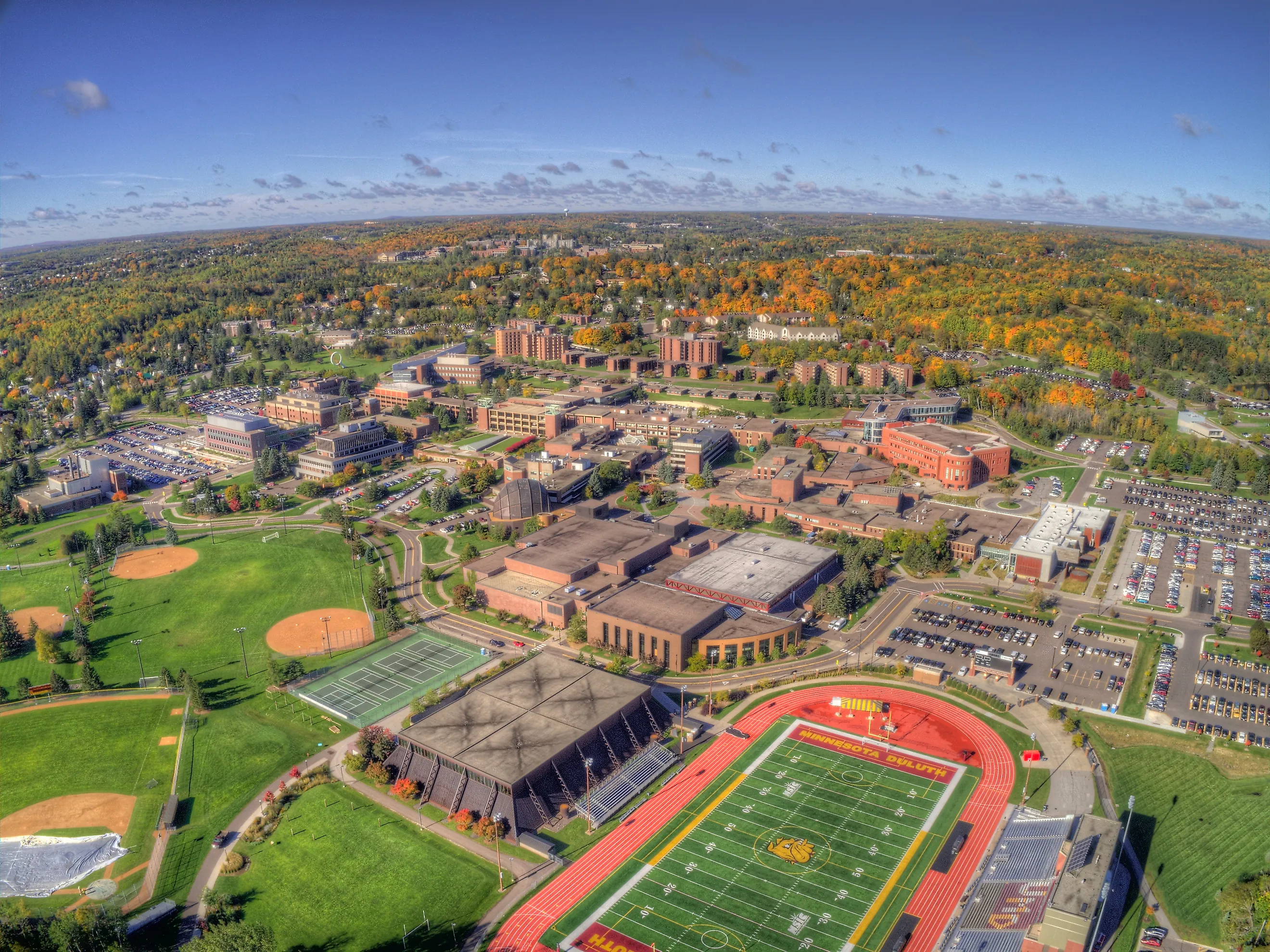
The Best College Town In Minnesota
Duluth, located on the shores of Lake Superior, is well-known across Minnesota and the Midwest for its academic excellence. Established in the mid-19th century, the town grew quickly from a modest trading post to a key shipping port that handled iron ore and grain, facilitating commerce throughout the Great Lakes region and beyond. By the late 1800s, the prosperity that came with this progress gave rise to a growing desire among Duluth’s residents to establish itself as an educational center. Fast-forward to today, and that desire has become a reality, with the continued success of the University of Minnesota Duluth (UMD) cementing the community’s reputation as the best college town in Minnesota.
The History Of The University Of Minnesota Duluth

UMD’s story began in 1895 with the founding of the Duluth Normal School by the Minnesota State Legislature. In its first year, the institution welcomed around 30 students, focusing on training the teachers needed to serve northeastern Minnesota’s fast-growing population. The choice of Duluth as the school’s location was certainly no accident; by the late 19th century, the town was well-established as a prosperous port city with leaders who recognized the need for a well-educated workforce.
Over the following decades, the Duluth Normal School transformed into the Duluth State Teachers College, broadening its curriculum in liberal arts and sciences. A significant milestone occurred in 1947 when it joined the University of Minnesota system, which included the University of Minnesota-Twin Cities in Minneapolis and St. Paul, along with campuses in Crookston, Morris, and Rochester. The institution was renamed the University of Minnesota Duluth. Today, UMD offers degrees in fields such as business, engineering, natural sciences, education, and liberal arts.

As for notable alumni, several accomplished individuals have walked UMD’s hallways. Don Ness, Duluth’s mayor from 2008 to 2016, used his background in business and public administration to foster initiatives that encouraged students and young citizens to get involved in the community. Hockey Hall of Famer Brett Hull, who played for the UMD Bulldogs in the mid-1980s before launching his NHL career, is another notable alumnus, as is Caroline Ouellette, an Olympic hockey gold medalist for Team Canada and a former UMD player.
The University’s Impact On Duluth
From its humble beginnings, UMD now has a student body of close to 10,000, a figure that includes undergraduate, graduate, and non-traditional learners. This influx has, of course, had a major economic impact on Duluth, contributing significant revenue to local businesses and service providers. Taking into account direct spending by students, faculty, and staff, as well as related investments and spinoff activities, it’s estimated that in 2020 alone the community benefitted from more than $581 million in UMD-related spending, while also adding along with over 4,100 jobs spread across the community.

Local organizations have also benefitted from partnerships with academic departments, leading to collaborative efforts in environmental science, healthcare, and engineering. Civic projects like water quality initiatives around Lake Superior have also solidified its reputation, while programs like those offered by the UMD Center for Economic Development help local entrepreneurs and small businesses with workshops on marketing, finance, and operational strategies.
Money aside, there’s also a cultural and civic dimension to UMD’s presence in Duluth, with concerts, art exhibitions, theatrical performances, and sporting events attracting students, staff, and residents. Longstanding traditions that link Duluth to its university include ice hockey, with games drawing crowds out to support the Bulldogs, as well as September’s Homecoming Parade which spills out from campus across town. The university also hosts conferences, workshops, and speaker series featuring academics, business leaders, and public figures that are open to the public.
Must-See Campus Attractions

To truly appreciate UMD’s scenic environment, consider walking around its main campus. Situated just two miles north of downtown Duluth, the Kirby Student Center serves as a social hub for students, offering meeting rooms, lounges, and dining choices. It is also a popular starting point for campus tours. Nearby, the Tweed Museum of Art is worth a visit, featuring a diverse collection from classical to modern artworks.
Interested in performance and design? Weber Music Hall's superb acoustics are cherished by musicians and audiences alike, and the venue regularly hosts a diverse array of performances, from classical recitals to jazz ensembles. If you enjoy being outdoors, Bagley Nature Area is a short walk away and features 40 acres of trails and woodland that are fun to explore, with a chance to spot wildlife including birds and the occasional fox (nature programs are also offered).

No visit to UMD is complete without stopping at James S. Malosky Stadium. Home to the Bulldogs’ football and track teams, on game days, this 4,500-capacity stadium literally buzzes with local fans and student supporters. For hockey fans, the AMSOIL Arena is where the UMD Men's and women's hockey teams lace up their skates.
Exploring Duluth’s Attractions

Duluth offers a variety of attractions for visitors, locals, and students. Its strong connection to Lake Superior is highlighted by landmarks like Canal Park, which is a must-visit. Located next to the Duluth Ship Canal and within walking distance from downtown, this waterfront spot provides stunning views of the Aerial Lift Bridge. Built in 1905, the bridge remains in operation, lifting to let large ships pass to and from the harbor, so be sure to have your camera ready.
From here, you can hike or bike along the Lakewalk, an eight-mile paved pathway following the lakeshore. Other activities in Duluth’s Canal Park include visiting the Lake Superior Maritime Visitor Center, which features interactive exhibits on Great Lakes shipping history and bridge operations, or joining a boat tour. The Great Lakes Aquarium is also within a short walk, offering fascinating displays of local marine life.

Set atop Observation Hill, Enger Park is where you’ll find some of the best views over Duluth and Lake Superior. Built in 1939 and named after a local philanthropist, the historic Enger Tower stands 80 feet tall and is surrounded by attractive gardens, making it a great spot to watch the world go by. Another historic structure, Glensheen Mansion, is set on a magnificent waterfront property just north of town and offers guided tours.

From Duluth, you can also pick up the 310-mile long Superior Hiking Trail, which threads its way through forests and along ridges overlooking the lake (keep going, and you’ll end up in Canada). And when the snow flies, skiers and snowboarders flock to Spirit Mountain, a few miles southwest of campus, to hit the same slopes they may have hiked or mountain-biked down in summer.
If You Visit: Where to Stay and Dine

There are several top-tier hotels near UMD, either within walking distance or a short drive. The Inn on Lake Superior and Fitger’s Inn, both popular, are situated in the Canal Park area, just a brief drive from campus. For guests preferring closer proximity to campus, more affordable options like Days Inn & Suites by Wyndham Duluth and Beacon Pointe on Lake Superior are also accessible by car.
Dining choices are also plentiful, with the neighborhoods around UMD featuring casual cafés that serve coffee and sandwiches, as well as family-owned restaurants offering comfort food and international menus. Burrito Union is a frequent student hangout just a few blocks from campus, while Sara's Table Chester Creek Café, a bit farther downhill, caters to both locals and university crowds with its fresh soups, sandwiches, and daily specials.
The Final Word
As shown, it’s nearly impossible to separate Duluth from the university that has profoundly shaped its identity. UMD not only boosts the local economy but also significantly influences the community's social fabric by infusing energy, curiosity, and new perspectives through each influx of students. This unique blend of academic and local life has made Duluth Minnesota’s top college town.