The 9 Friendliest Little Towns In Connecticut
In Connecticut, the friendliest little towns are often the ones where people naturally cross paths on a village green, a compact center, or a seasonal event can make a small town feel open and familiar. These quaint New England towns are the perfect places to enjoy seasonal festivals that mark the year with friendly faces, whether you're going for the autumn Great Pumpkin Run in Kent or celebrating at the Midsummer Festival in Old Lyme. The towns on this list stand out for the landmarks and traditions that bring people together again and again.
Essex

Older houses, church steeples, and river views stay close together in Essex, where the main street runs directly down to the Connecticut River. The Connecticut River Museum sits at the foot of that street on the waterfront, and the Essex Steam Train & Riverboat adds another longstanding attraction linked to the same stretch of town.
Each year, Burning of the Ships Commemoration brings a fife-and-drum parade from Essex Town Hall through town to the museum, turning the main corridor into a route lined with marchers, onlookers, and families each spring. The waterfront, the museum, and the parade route all sit within the same short stretch of town, which helps Essex feel close-knit and easy to enjoy on foot.
Chester

Chester’s center is small enough that its landmarks stay close together. Main Street runs through a compact village of older storefronts and houses, while the Chester Museum at The Mill sits just steps away on a historic mill site overlooking a mill dam and Pattaconk Brook. That short stretch of town holds much of what makes Chester feel social and easy to navigate.
The Chester-Hadlyme Ferry, in service since 1769, still carries travelers across the Connecticut River and gives the town one of its clearest links to the waterfront. The Chester Sunday Market brings produce, fish, baked goods, and live music in the warmer months, while the Chester Fair returns each August as one of the town’s longest-running traditions. At different points in the year, the center fills with ferry riders, marketgoers, and fair crowds.
Kent

Kent gathers much of its small-town life in a compact village, where older buildings, church spires, and the wooded slopes of the Housatonic River valley stay close enough together to make the town easy to take in on foot. Kent Falls State Park sits just outside the village, and the Historic Bulls Covered Bridge gives Kent another strong visual anchor tied to the surrounding landscape. The Appalachian Trail also passes through town, which keeps Kent closely linked to one of the clearest outdoor identities in this group.
The Kent Pumpkin Run, described by the town chamber as Kent’s largest one-day community event, follows one of the town’s scenic routes each fall. The Kent Farmers' Market, Daffodil Days, Kent Sidewalk Festival, and Kent Gingerbread Festival bring runners, shoppers, and festival crowds back into the village at different points in the year.
Litchfield

Litchfield centers on a broad village green edged by churches, civic buildings, and older houses that keep much of the town’s public life close together. The Litchfield Green gives the town a clear gathering place, while the White Memorial Conservation Center and nearby Bantam Lake extend that setting into woods, water, and open shoreline.
The Litchfield Hills Road Race, established in 1977, remains one of the town’s best-known annual traditions, and the surrounding weekend also includes events such as the Litchfield Marketplace on the green. The Holiday Stroll and White Memorial Family Nature Day bring runners, shoppers, and families back to the green and conservation grounds at different times of year.
Old Lyme

Old Lyme gathers much of its public life along Lyme Street, where older houses, church buildings, and cultural landmarks stay close enough together to make the town easy to take in on foot. The Florence Griswold Museum, the former home of Miss Florence Griswold and the center of the Lyme Art Colony, is the clearest anchor here, while Lyme Art Association and Roger Tory Peterson Estuary Center keep art and landscape tied to the same small stretch of town.
The Midsummer Festival fills the arts district with a free outdoor concert, art, music, food, family activities, and events spread across the museum, the art association, the estuary center, and nearby grounds. During the festival, concertgoers, art lovers, and families move through the same cluster of landmarks that shape the town the rest of the year.
Putnam

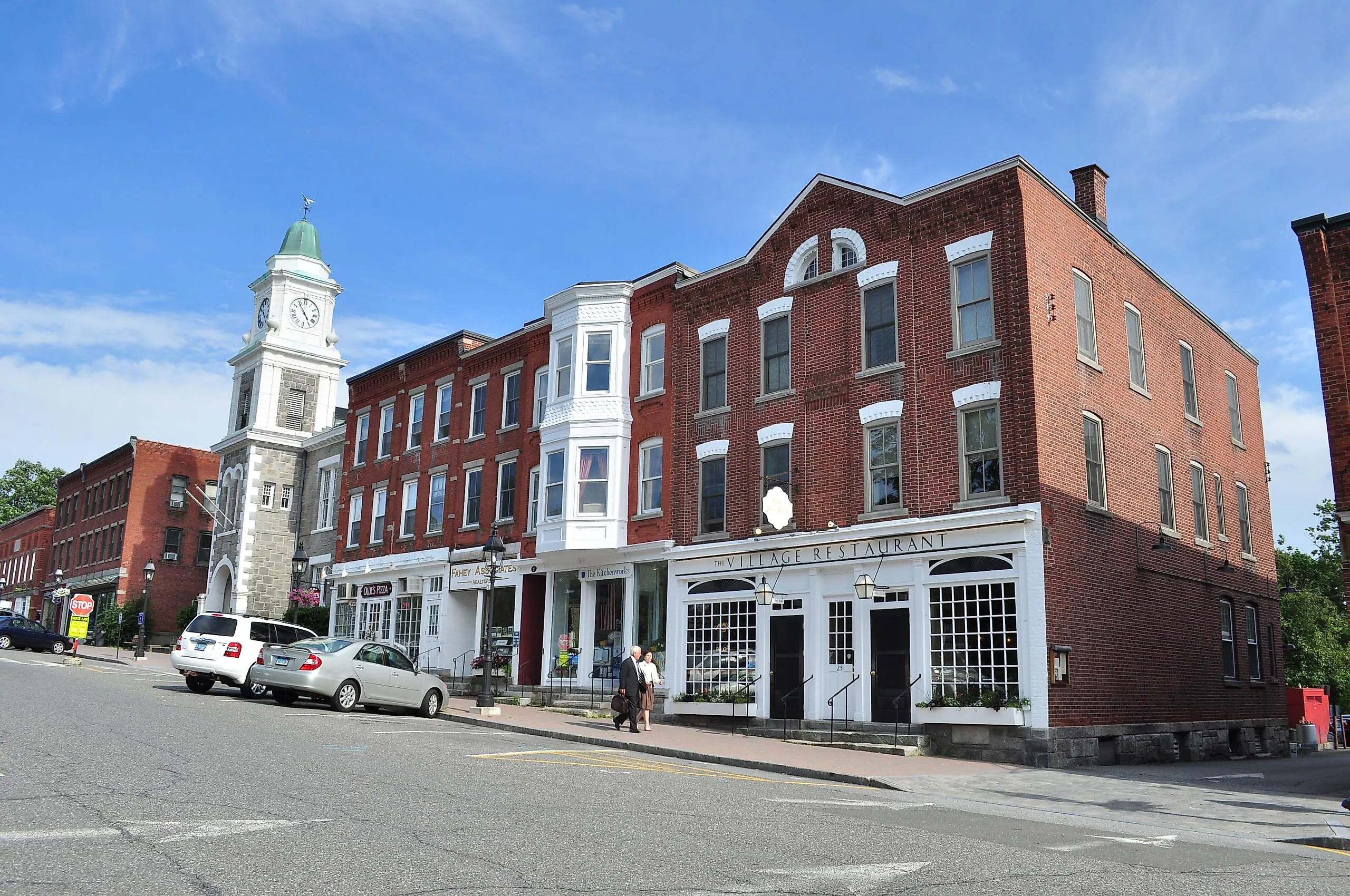
Putnam gathers much of its activity along the Quinebaug River, where brick commercial buildings, painted storefronts, and mill-era streets keep the center looking compact rather than spread out. The Putnam River Trail adds a direct public path along the water, while Rotary Park and the blocks around downtown keep the river tied closely to the town’s main gathering spaces.
The Great Pumpkin Festival fills downtown with scarecrows, craft and art vendors, music, and pumpkin displays each fall, sending families and festivalgoers through the same streets and greens. The Putnam River Trail, Rotary Park, and the downtown blocks give people other reasons to linger there through the year, but the festival is when the town’s social side comes through most clearly.
Washington

Washington spreads across a wider rural landscape than some of the other towns on this list, but much of its town life still comes back to a small number of familiar places. Washington Depot gives the town its clearest center, with older buildings and a few compact blocks that keep the village from feeling scattered. From there, Steep Rock Preserve and Hidden Valley Preserve bring trails, river views, and wooded scenery close to town, while nearby Lake Waramaug adds one of the prettiest stretches of water in this part of Connecticut.
Washington Art Association & Gallery anchors one of the town’s best-known cultural spaces, and the Spring Hill Arts Gathering each summer brings local makers, food, and visitors together. In Washington, the fair, the gallery, and the nearby preserves keep much of the town’s social life centered in the same small cluster of places.
Norfolk

Norfolk gathers much of its public life in a small center where church towers, stone and brick buildings, and the wooded slopes of the northwest hills stay close together. Infinity Music Hall, built in 1883, gives the village one of its clearest landmarks, while the Norfolk Library and the nearby Music Shed add two more cultural anchors within easy reach of the same compact area. Haystack Mountain State Park rises just outside town, giving Norfolk a second identity tied to forest, elevation, and long views from the stone tower at the summit.
The Norfolk Chamber Music Festival fills the Music Shed and surrounding grounds with summer concerts tied to a musical history that reaches back into the 1880s. Along with performances at Infinity Music Hall and public programs at the Norfolk Library, it brings concertgoers back into the same small part of town throughout the season.
Lebanon

Lebanon is arranged around one of the longest village greens in New England, and that alone gives the town a more communal shape than most places of its size. The Lebanon Green stretches for nearly a mile, bordered by churches, houses, civic buildings, and an open lawn that keeps much of the town’s public life in plain view. Nearby, the Lebanon Historical Society Museum and Visitor Center adds another clear landmark tied to the same stretch of town, while West Green Farm brings local produce, flowers, and field views into the same rural setting.
The Connecticut Renaissance Faire fills the Lebanon fairgrounds with costumes, music, food, and performances each fall, drawing crowds back into one of the town’s best-known gathering spaces. Between the green, the museum, the farm, and the fairgrounds, much of Lebanon’s shared life stays close to the same familiar stretch of road and open field.
These little Connecticut towns still make it easy to feel part of something local. Each one has familiar places that keep drawing people back, whether that means a green, a fair, a riverfront path, or a museum district. In towns like these, friendliness shows up in the rhythms of the year and in the places where people continue to gather.