The 11 Can't-Miss Towns In Netherlands
The Netherlands rewards travelers willing to wander beyond its largest cities. Whether it's the galleries of Ootmarsum, the bookstores of Bredevoort, or the harbors of Veere and Enkhuizen, each of these smaller towns preserves artistic traditions, maritime heritage, and distinctive landscapes often overlooked by first-time visitors. In places like Domburg, Zeeland's changing coastal light inspired painters for years, while communities such as Giethoorn mastered the art of life by the water. Exploring these destinations reveals a Netherlands where history remains visible in the landscape, in historic ports and castle grounds, and in canal-lined villages.
Ootmarsum

Near the German border in eastern Netherlands, Ootmarsum has developed a reputation as one of the country's quieter artistic centers. The Museum Ton Schulten showcases colorful landscapes inspired by the Twente region, while the Openluchtmuseum Ootmarsum recreates traditional farm life through historic buildings and demonstrations. The medieval Saint Simon and Jude Church anchors the center with Gothic architecture and centuries of local history. Contemporary works are on view at Galerie Lambert, one of several established galleries in town. Just outside Ootmarsum, the Springendal Nature Reserve contains walking paths through streams, heathland, and wooded scenery often described as the "Garden of the Netherlands." Together, these attractions highlight the close relationship between Ootmarsum's artistic culture and the surrounding Twente landscape.
Veere

Along the shores of the Veerse Meer, Veere combines maritime scenery with centuries of trading history. The harbor is still central to town life, and the Campveerse Toren, a fifteenth-century defensive tower turned inn, overlooks the waterfront. Nearby, Museum Veere, housed inside the Scottish Houses, explores the town’s long commercial relationship with Scotland. The immense Grote Kerk Veere now hosts exhibitions and events rather than regular services. Travelers wanting open water often head toward Veere Marina, where sailing routes extend across Veerse Meer. Veere’s mix of harbor views and preserved architecture makes it one of Zeeland’s most atmospheric stops.
Thorn

Known as the “White Village,” Thorn differs visually from nearly every other Dutch town because many of its buildings are painted bright white. Walking through the center often feels like moving through an outdoor gallery. The imposing Abbey Church of Thorn reflects the town’s earlier status as a principality governed by noblewomen. Nearby, Museum Thorn explores local history and religious influence. Around Wijngaard Square, restaurant terraces spill into the open plaza beneath historic facades. For nature access, the GrensPark Kempen-Broek wetlands lie within easy reach and support birdwatching across the Limburg landscape. Thorn’s unusual appearance remains one of the Netherlands’ most recognizable small-town scenes.
Bredevoort

Known throughout the Netherlands as a "book town," Bredevoort is home to a literary culture, evident in its compact historic center, shaped by centuries of regional history. Visitors often begin in Boekenstad Bredevoort, a network of independent bookstores and book markets that has transformed the town into a destination for readers and collectors. The St. Georgius Church rises above narrow streets lined with traditional Dutch buildings, while the Bredevoort Book Market regularly brings vendors and visitors together in the town center. Remnants of former fortifications remain visible around the outskirts, recalling Bredevoort's strategic past. Walking paths along the Slinge River add a natural element to a visit. Few towns in the Netherlands blend books, history, and small-town atmosphere quite as successfully as Bredevoort.
Zierikzee

Located on the island of Schouwen-Duiveland, Zierikzee pairs maritime traditions with medieval architecture. The towering Sint-Lievensmonstertoren dominates the skyline and recalls the town’s earlier prosperity. Around the Old Harbor, historic ships sit beside waterside restaurants overlooking moored vessels. Museumhaven Zeeland examines Zierikzee’s maritime history, while the fourteenth-century North and South Harbor Gates remain among the town’s most photographed landmarks. About twenty minutes away, Oosterschelde National Park offers seal-spotting excursions and tidal landscapes unique to Zeeland. Zierikzee balances maritime history with access to some of the Netherlands’ most distinctive coastal ecosystems.
Heusden

Heusden’s restored canals and defensive walls create one of the Netherlands’ most atmospheric small towns. Visitors can walk sections of the old fortifications before reaching the harbor near Vismarkt Square, where independent shops and terraces overlook boats. The historic Heusden windmills provide classic Dutch scenery and are among the town’s most recognizable structures. Contemporary exhibitions rotate through Galerie Lilja Zakirova, adding a cultural stop unusual for a small settlement. Nearby, National Park De Biesbosch introduces freshwater wetlands, kayaking routes, and bird habitats. Although heavily damaged during World War II, Heusden was rebuilt to reflect its earlier appearance.
Elburg

Once positioned directly on the sea before land reclamation altered the surrounding geography, Elburg retains strong ties to maritime life. The old center follows a compact grid enclosed by fortifications and gates. The National Organ Museum offers an unusual cultural stop focused on historic instruments, while Museum Elburg examines local history and religious heritage. The harbor recalls centuries of fishing traditions and remains active with pleasure boats. A short drive away, De Hoge Veluwe National Park introduces forests and heathland landscapes unlike much of the coastal Netherlands. Elburg combines maritime history with access to one of the country’s best-known natural areas.
Domburg

Among Dutch coastal towns, Domburg stands out for its artistic legacy. Painters, including Piet Mondrian, spent time here, drawn by Zeeland’s changing coastal light. The Marie Tak van Poortvliet Museum Domburg highlights local art history and rotating exhibitions, while Domburg Beach remains one of Zeeland’s best-known stretches of coastline. Nearby, the protected landscape of Manteling van Walcheren contains wooded dunes and walking paths uncommon along much of the Dutch coast. The long-running Badhotel Domburg continues the town's wellness tradition, reflecting a spa culture that has attracted visitors to Domburg since the nineteenth century. Domburg demonstrates how landscape can become inspiration.
Muiden

Just outside larger urban centers, Muiden centers around one of the Netherlands’ best-known castles: Muiderslot Castle. Surrounded by a moat, the medieval fortress features exhibits, gardens, and falconry demonstrations that reflect life in the Netherlands in earlier times. Visitors often continue toward Muiden Marina, where restaurants overlook sailboats near the mouth of the River Vecht. The nearby Muizenfort, a smaller nineteenth-century defense structure, adds another historical stop. Walking routes beside the Vecht River connect the town’s maritime setting with the surrounding countryside. Muiden’s compact scale allows you to combine castle visits, waterfront scenery, and history in a single day.
Enkhuizen

Once one of the most important ports on the Zuiderzee, Enkhuizen preserves its maritime heritage through historic waterfronts, merchant houses, and museums tied to the Dutch Golden Age. The sprawling Zuiderzee Museum recreates life around the former inland sea through preserved buildings, traditional crafts, and interactive exhibits spread across an outdoor village and indoor galleries. Near the harbor, the sixteenth-century Drommedaris gate remains the town’s most recognizable landmark and frequently appears in photographs of Enkhuizen. Visitors can stroll along the Oude Haven to see historic vessels or relax in Snouck van Loosenpark, one of the Netherlands’ earliest social housing developments and a surprisingly green corner of town. Together, these sites make Enkhuizen one of the country's most engaging historic harbor destinations.
Giethoorn

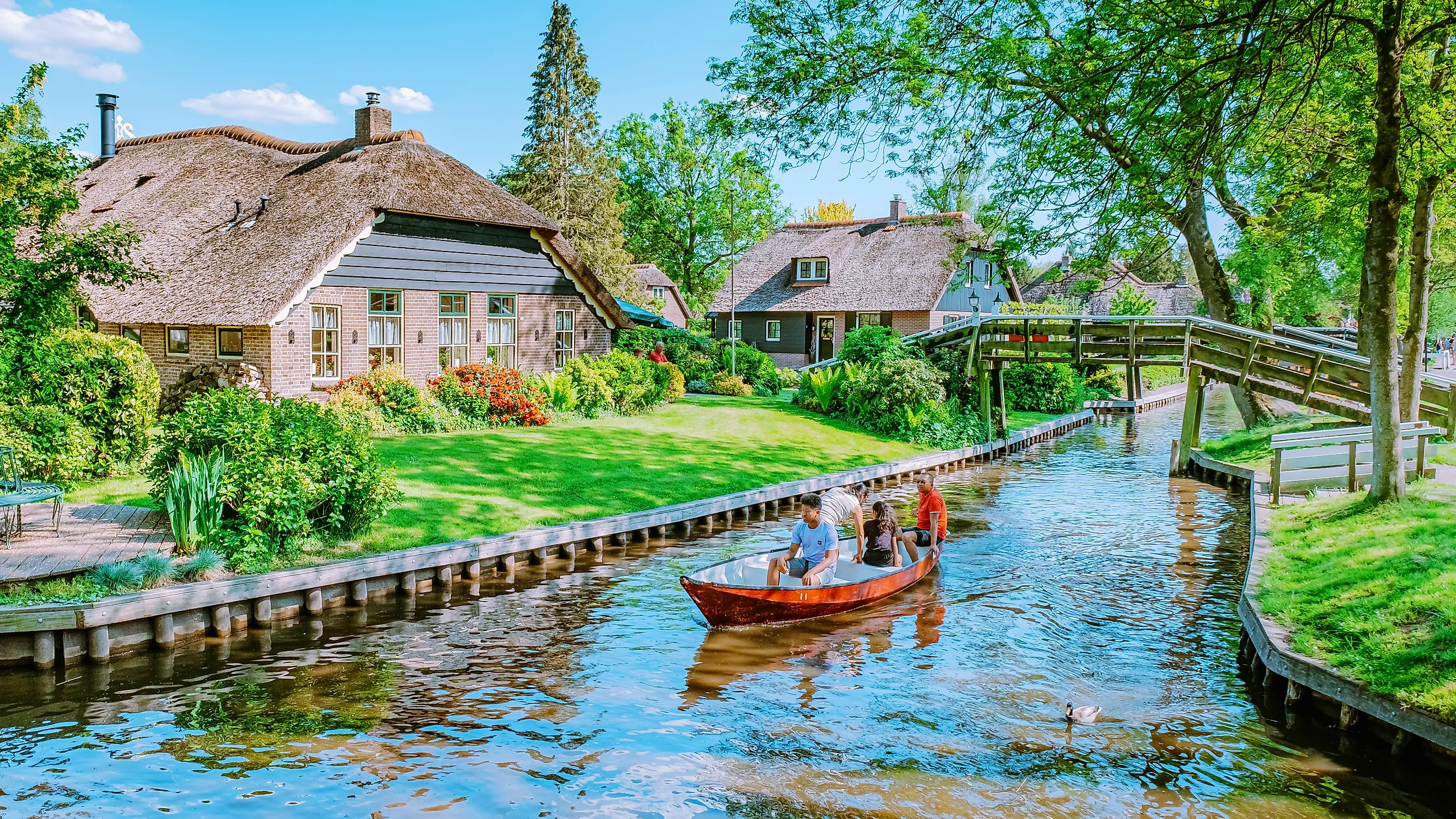
Giethoorn is often called the “Dutch Venice,” though canals define daily life more than tourism slogans. The Museum Giethoorn ’t Olde Maat Uus explains how earlier residents lived among peatlands and waterways. Visitors can rent whisper boats near Dorpsgracht Canal, the village’s main waterway, to pass beneath wooden bridges and beside thatched-roof homes. Just beyond town, Weerribben-Wieden National Park draws birdwatchers and kayakers to one of northwestern Europe's largest freshwater ecosystems. The waterside De Lindenhof, a Michelin-starred restaurant overlooking the canal, adds another dimension to a visit beyond boating and sightseeing. Outside peak travel periods, Giethoorn remains surprisingly quiet.
Where Dutch Landscapes Become Art and Culture
Coastal light inspired painters in Domburg, gallery culture emerged in Ootmarsum, and literary traditions found a home in Bredevoort. Elsewhere, harbor towns evolved around trade, castles guarded waterways, and canal communities adapted to life on the water. Together, these eleven places suggest Dutch history is not confined to museums or monuments. It remains visible in beaches, canals, market squares, bookstores, and the landscapes communities have interpreted and reinterpreted for generations.