7 Netherlands Towns Where Time Stands Still
The Netherlands has steadily transformed for centuries, with populations growing and land reclaimed. Much of the country throughout its 12 provinces is preserved. In Giethoorn, take a boat ride through age-old canals past traditional farmhouses and historical bridges. Oldenzaal features a 12th century basilica with admirable architecture and religious exhibits from ancient times. Domburg is known not only for its beaches but for centuries-old architecture throughout town. Here are the seven towns in the Netherlands where you can relive some of the past.
Giethoorn

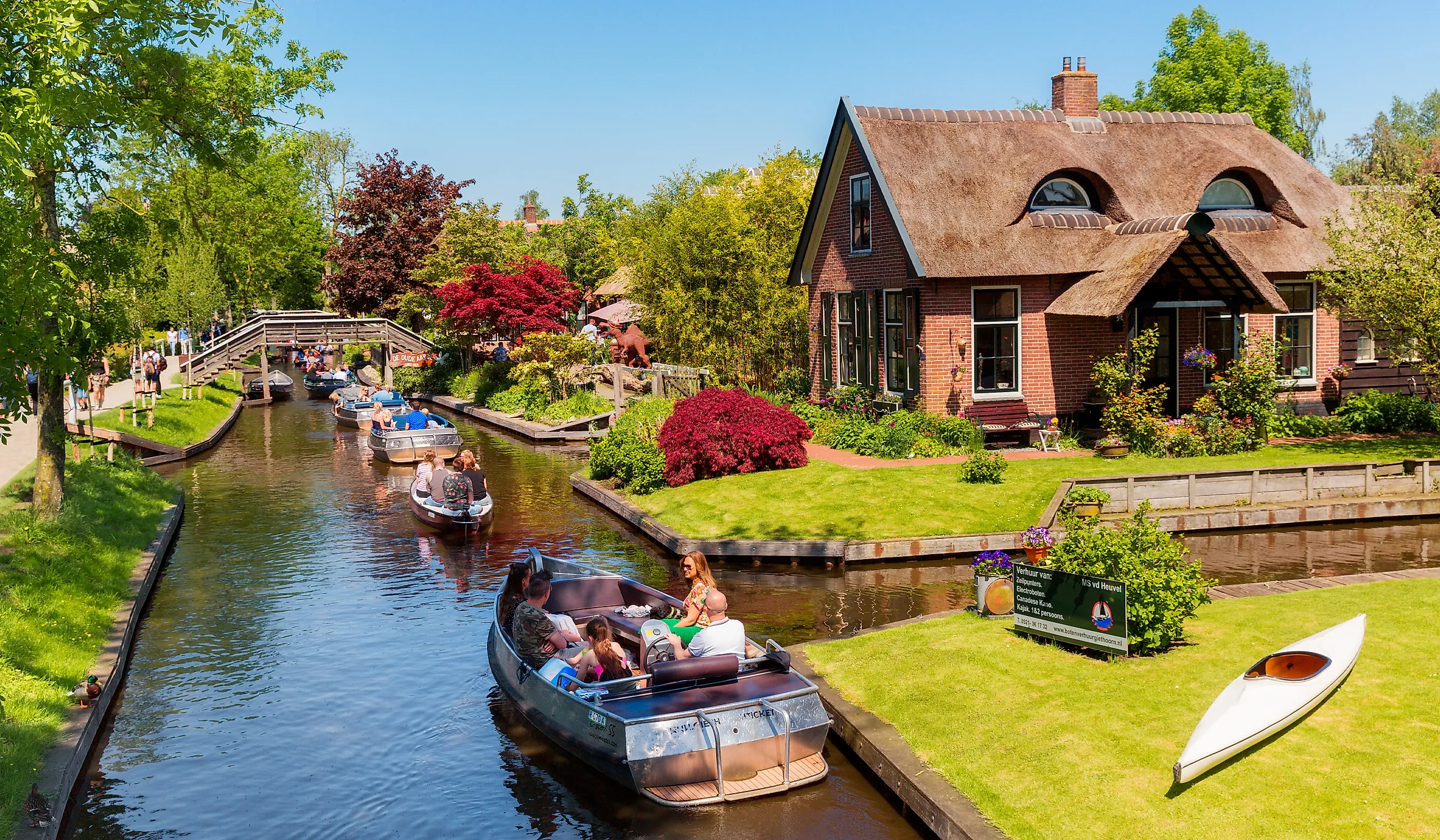
In the Overijssel province, you will find the "Venice of the North" known as Giethoorn. It started as a farming village in the 13th century. Peat removal from much of the land made the soil susceptible to two floods in 1776 and 1825, which caused a significant amount of dry land to be swept away and for several lakes to rise around the village. Over time ditches and canals were dug to create Giethoorn's current configuration of canals and land. There are no traditional roads which makes getting around possible only by foot, bicycle, or boat. Consequently, a boat tour through Giethoorn is almost a requirement. Drift along in traditional or electric boats through the canals to see 18th and 19th century farmhouses and up to nearly 180 bridges. Or travel the waterways more privately in kayaks, canoes, or paddleboards. On land you can find one of the world's most rare shells in the Gloria Maris Shell Gallery. Museum the Old Earth has minerals, gemstones, and the world's largest egg.
Muiden

This North Holland provincial town became a city in 1122. It flourished with trade and became fortified in the late 16th century due to its location in a harbor. Its castle Amsterdam Castle Muiderslot from 1280 is one of the most well-maintained castles in the country. It has customary castle features like towers, a drawbridge, and a water-filled moat. Walk inside and go back to the medieval times while seeing a preserved coffin, paintings, furniture, and the knight's hall where socializing took place. A ferry from Muiden to Fort Island Pampus will take you to a 19th century fortress that defended the capital Amsterdam. Outside the history of the fortified structures, enjoy refreshments at Café Omo Ko, a pub that has been serving since 1810. Sit right on the edge of the lock to watch the boats glide by.
Sluis

Sluis rests in the Zeeland province on the southwest corner of the Netherlands bordering Belgium. It began in the 13th century as a trading city and then became a fort town that still has its fortified walls today. Its architecture will truly give a snapshot of medieval Flanders. The historic town hall from 1390 is the only building in the Netherlands with a belfry (Flemish tower with bells). Its gothic construction encompasses preserved rooms that were used for the mayor, council chamber, and a prison. Climb the bell tower during the summer to see the town and its surrounding environment from above. Sluis has only one windmill left, the Molen de Brak from 1739. It still functions today and grinds flour that is featured in various menu items in the mill's restaurant. A climb to the upper part of the windmill will also give a broad view of Sluis. For something out of the ordinary, visit the Monnikenwerve Ostrich Farm, which has tours showing ostriches of all ages.
Oldenzaal

In the Overijssel province is Oldenzaal, the oldest city in northeast Netherlands. It officially became a city in 1249 and grew with textile trade. One cannot miss the Basilica of St Plechelm rising from the center of town. The basilica's first construction began in the 12th century with a Romanesque wing. Other parts of the church include the Gothic sections and a room with exhibits of old religious artifacts. The downtown square has plenty of shops and cafes, but its other standout attraction is the Saturday market. Rain or shine, locals come here every Saturday to buy fresh fish, local cheeses, and produce that are exceptional to the region and country. Accessible bike paths around the entire town will take you to surrounding forests and to nearby towns that have their own centers and historic churches. The preserved medieval layout of Oldenzaal and its towering basilica will take visitors back hundreds of years.
Appingedam

In the Northeast of the country in the Groningen province is this town that started during medieval times and developed from trading and silversmith guilds. The Museum Stad Appingedam exhibits much of this silver, along with Dutch paintings. The province's silver from the 17th to 20th century is also on display at De Groninger Zilverkamer. Appingedam has two medieval churches. The Nicolaikerk Appingedam, a Romanesque and Gothic church built during 1200-1560, contains an 18th century organ that will delight the ears with music from its massive pipes. Marsum Church, a 12th century brick Romanesque church, has an organ that was reconstructed from 10th-11th century texts. Tour the town through the canals on a wooden punter boat and see the famed hangende keukens, living spaces that extend out from their buildings and hang over the water.
Domburg

In the Zeeland province right on the North Sea is this town that began way back in the 1st century CE. It flourished as a fishing and trade town over the centuries until it finally became a seaside resort in the 19th century. Domburg remains special for its beaches but will also surprise visitors with different styles of architecture that spans centuries. Right off the boardwalk is the famous bath pavilion. It was a 19th century coffee and bath house that deserves a look for its distinctive Dutch neo-renaissance architecture. Weltevreden Mill from 1817 warrants a visit to witness its rare style of moving wheel. Domburg's oldest building is Johannes Church. The church's main attraction may be its 124-foot-high tower from 1250, but the structure also possesses different designs and components from medieval times up until the 20th century. Head over to the ocean and walk on Domburg's expansive beaches that have been awarded for their cleanliness. Then go up Hoge Hil, the town's highest dune that delivers brilliant views of Domburg and the North Sea.
Elburg

Located in the central Gelderland province, this is another fortified city in the Netherlands and still retains fortress walls. Elburg was once part of the medieval Hanseatic League in which merchants from over 200 towns in Northern Europe united to strengthen their economic pursuits and to build defenses against pirates. Highlights of the fortress include the 16th century Vischpoort gate and the casemates (cannon cellars) that stored artillery. The Netherlands Artillery Museum Foundation provides further history about Dutch artillery and its role in several wars. The Herb Garden De Groene Kruidhof shares history about the hospital that started in 1335 and the herbal medicine given to patients. More medieval structures in Elburg include the gothic-style St. Nicholas Church, the Gruit House beer brewery, and the Agnite Monastery that formerly housed nuns.
Walking Through Centuries Of Dutch History
These are merely a handful of towns in the Netherlands that give a glimpse of centuries past. Their modernizations provide contemporary comforts, but they still retain old layouts and various buildings spanning across the 13th-20th centuries. When visiting the wide beaches, cobblestone roads, and canals, you may truly find yourself standing still in various times. Here in the Netherlands you don't have to use your imagination to envision history. Rather, you can be placed right into it.