Safest Cities in Europe
Most safest-cities lists for Europe lean on a single survey or a crowd-sourced score. This ranking takes a different route. The WorldAtlas Safety Score combines three strands of current, official data: how much serious crime a place actually records, how safe its residents say they feel, and how well its everyday safety systems work. Each city is scored against the others on a scale to 100. The ranking covers Europe's major cities, those with metropolitan populations above one million where comparable official data exists. The ten safest are profiled below, followed by the full methodology and a table of every qualifying city.
- 1. Zurich
- 2. Oslo
- 3. Amsterdam
- 4. Rotterdam
- 5. Copenhagen
- 6. Munich
- 7. Malaga
- 8. Hamburg
- 9. Vienna
- 10. Prague
1. Zurich - 95.5

Zurich tops the WorldAtlas Safety Score, and it does so on every strand the index tracks. Switzerland recorded 0.6 intentional homicides per 100,000 people in 2023, among the lowest rates in Europe, alongside 27 road deaths per million, well under the EU average of roughly 46. On the city's own streets, 84% of residents told the European Commission's 2023 survey that they feel safe walking alone at night, and 92% are satisfied with local healthcare, the highest healthcare reading of any city in this ranking. Low violence, safe roads, and dependable public services are what carry it to the top.
2. Oslo - 86.8

Oslo's strength is the roads and the everyday-services side of the ledger. Norway recorded just 20 road deaths per million in 2023, the lowest figure among the cities scored here, and a homicide rate of 0.73 per 100,000. Within the city, 80% of residents feel safe walking alone after dark and 86% are satisfied with healthcare. Norway sits outside the EU but inside the EEA, so the same Eurostat figures apply.
3. Amsterdam - 83.3

Amsterdam ranks third on the back of strong healthcare satisfaction, at 87%, and a low Dutch homicide rate of 0.7 per 100,000. Seventy-seven percent of residents feel safe walking alone at night. The Netherlands' road-death rate of 34 per million is higher than the Nordic leaders but still well below the EU average, and the city's dense cycling network keeps most trips off fast roads.
4. Rotterdam - 80.1

The Netherlands' second city shares the national homicide rate of 0.7 per 100,000 and 34 road deaths per million, then adds solid local marks: 73% of residents feel safe walking alone at night and 84% are satisfied with healthcare. Rotterdam's postwar rebuild left it with wide, well-separated roads and a transit network that also scores highly in the same survey.
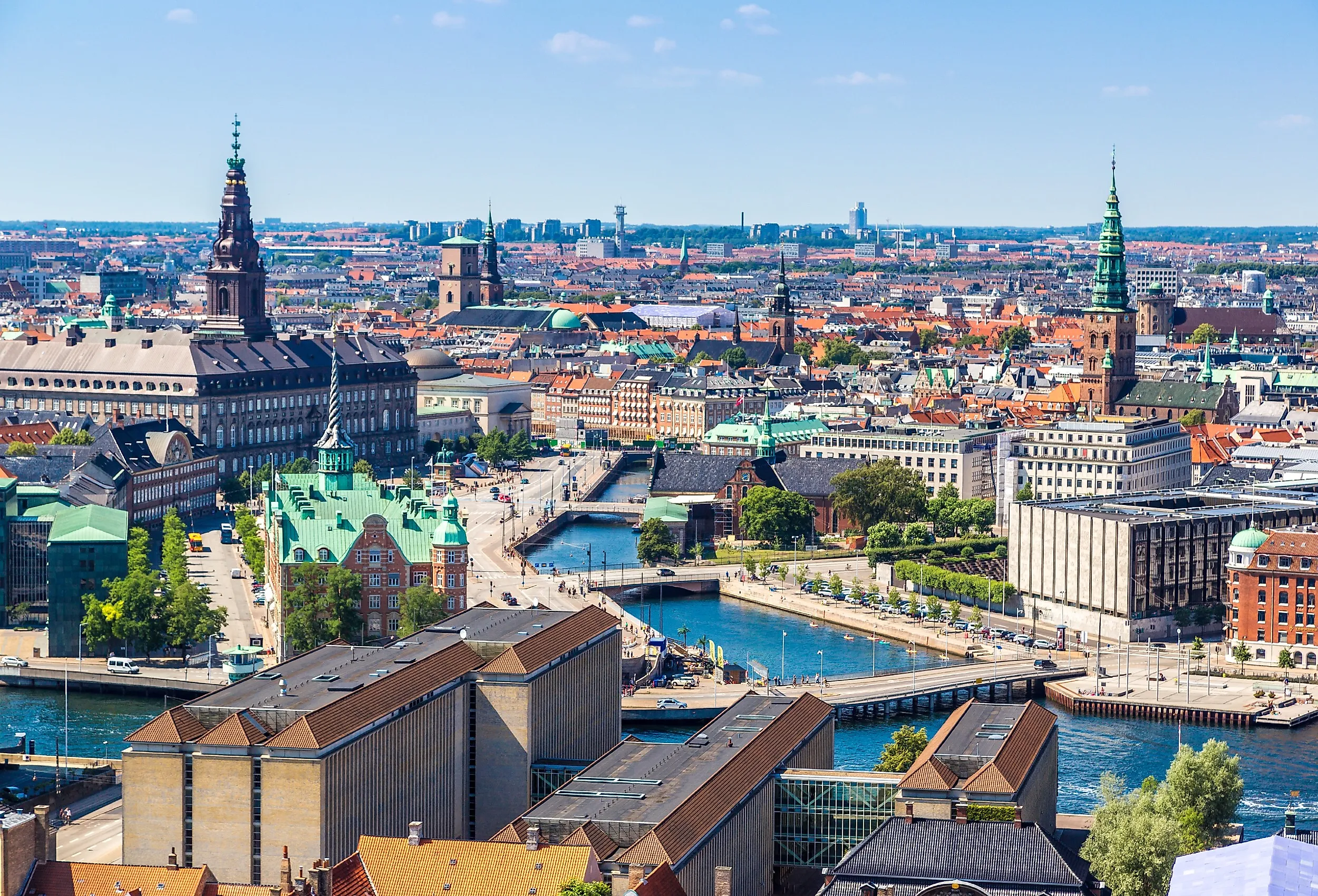
5. Copenhagen - 79.6

Copenhagen posts the highest perceived-safety figure in the entire ranking: 86% of residents feel safe walking alone at night, more than any other city scored. What keeps it off the top is the hard crime data. Denmark's homicide rate of 0.89 per 100,000 in 2023 runs above Switzerland's, Spain's, and Italy's, and healthcare satisfaction at 80% trails the Swiss and German leaders. Road deaths are low at 27 per million. The result is a city that feels exceptionally safe and largely is, edged out only on the statistical margins.
6. Munich - 78.1

Munich is the safest of the large German cities here. Germany recorded 0.8 homicides per 100,000 in 2023 and 34 road deaths per million. Within the city, 76% of residents feel safe walking alone at night and 87% are satisfied with healthcare, the latter among the highest readings on the list. The Bavarian capital consistently outscores Berlin and Hamburg on how safe residents feel.
7. Malaga - 77.9

Malaga is the smallest metropolitan area to reach the top ten, and it earns the place on low Spanish crime figures and high local confidence. Spain recorded 0.69 homicides per 100,000 in 2023, and 79% of Malaga residents feel safe walking alone at night. The soft spots are healthcare satisfaction at 63%, below the northern European leaders, and a road-death rate of 38 per million that reflects Spain's wider network rather than the city itself.
8. Hamburg - 74.5

Germany's port city carries the national homicide rate of 0.8 per 100,000 and 34 road deaths per million. Locally, 74% of residents feel safe walking alone at night and 80% are satisfied with healthcare. Hamburg sits just below Munich on perceived safety, which is most of the gap between the two German entries.
9. Vienna - 73.7

Vienna pairs a low Austrian homicide rate of 0.82 per 100,000 with strong local marks: 77% of residents feel safe walking alone at night and 82% are satisfied with healthcare. Austria's road-death rate of 44 per million is the one figure that pulls the score down, sitting near the EU average and above the Nordic and Dutch leaders.
10. Prague - 72.4

Prague rounds out the top ten on the strength of Czech crime and healthcare figures rather than street-level perception. Czechia recorded 0.63 homicides per 100,000 in 2023, one of the lower rates on the list, and 82% of residents are satisfied with healthcare. Perceived safety is more modest: 61% feel safe walking alone at night, the lowest in the top ten, while the Czech road-death rate of 46 per million matches the EU average.
How The WorldAtlas Safety Score Works
The score rests on three pillars. Serious crime carries the most weight at 40%, measured by the intentional-homicide rate, the most internationally comparable crime statistic there is; the figures are Eurostat's for 2023, reported at national level. Perceived safety counts for 30% and comes from the European Commission's 2023 Quality of Life in European Cities survey, specifically the share of residents who agree they feel safe walking alone at night in their city. Everyday safety systems make up the final 30%, split evenly between road-traffic deaths per million inhabitants (Eurostat, 2023) and residents' satisfaction with local healthcare (the same 2023 survey). Each indicator is scaled to a common 0-to-100 range across the cities in the ranking, then weighted and added together.
Two honest limits apply. Homicide and road-death data are national, so cities in the same country share those two inputs and are separated mainly by the survey measures. We use homicide rather than recorded robbery or assault because reporting practices differ too much between countries for those counts to compare fairly. The ranking is also limited to places where this data exists, which means the European Union, the wider EEA, the United Kingdom, and Switzerland. Major cities in Russia, Turkey, Ukraine, and Belarus, including Moscow, Istanbul, and Kyiv, are left out because no comparable official figures are available, and a few EU million-cities not covered by the 2023 survey, among them Milan, Frankfurt, Lyon, and Cologne, could not be scored. UK figures come from the Office for National Statistics and the Department for Transport.
The Full Ranking: Every Major European City Scored
| Rank | City | Country | WorldAtlas Safety Score |
|---|---|---|---|
| 1 | Zurich | Switzerland | 95.5 |
| 2 | Oslo | Norway | 86.8 |
| 3 | Amsterdam | Netherlands | 83.3 |
| 4 | Rotterdam | Netherlands | 80.1 |
| 5 | Copenhagen | Denmark | 79.6 |
| 6 | Munich | Germany | 78.1 |
| 7 | Malaga | Spain | 77.9 |
| 8 | Hamburg | Germany | 74.5 |
| 9 | Vienna | Austria | 73.7 |
| 10 | Prague | Czechia | 72.4 |
| 11 | Madrid | Spain | 71.0 |
| 12 | Barcelona | Spain | 70.7 |
| 13 | Leipzig | Germany | 69.9 |
| 14 | Zagreb | Croatia | 69.3 |
| 15 | Stuttgart | Germany | 68.2 |
| 16 | Bologna | Italy | 67.5 |
| 17 | Gdansk | Poland | 66.5 |
| 18 | Berlin | Germany | 65.6 |
| 19 | Krakow | Poland | 64.9 |
| 20 | Stockholm | Sweden | 63.8 |
| 21 | Lisbon | Portugal | 63.0 |
| 22 | Warsaw | Poland | 62.9 |
| 23 | Glasgow | United Kingdom | 62.2 |
| 24 | Turin | Italy | 61.9 |
| 25 | Helsinki | Finland | 58.8 |
| 26 | Manchester | United Kingdom | 57.0 |
| 27 | London | United Kingdom | 56.0 |
| 28 | Palermo | Italy | 55.8 |
| 29 | Budapest | Hungary | 53.9 |
| 30 | Naples | Italy | 51.3 |
| 31 | Rome | Italy | 51.1 |
| 32 | Bucharest | Romania | 46.4 |
| 33 | Antwerp | Belgium | 45.0 |
| 34 | Paris | France | 41.1 |
| 35 | Athens | Greece | 39.7 |
| 36 | Lille | France | 37.0 |
| 37 | Brussels | Belgium | 35.6 |
| 38 | Marseille | France | 28.5 |
| 39 | Sofia | Bulgaria | 22.3 |
Sources: Eurostat (intentional homicide rate and road-traffic deaths, 2023; urb_percep perception survey, 2023); European Commission, Report on the Quality of Life in European Cities, 2023; UK figures from the Office for National Statistics and the Department for Transport. The WorldAtlas Safety Score is an editorial composite built by WorldAtlas from these sources using the method described above.