9 Storybook Towns In Mississippi
In Mississippi, many small towns have retained their antebellum charm, literary heritage, and quietly theatrical sense of place. In Natchez, an unfinished mansion still stands with a completed exterior and an exposed interior that was never finished after the Civil War. In Ocean Springs, an art museum wraps entire rooms in hand-painted murals of coastal birds and mythological scenes. And in Oxford, a bookstore extends through a series of connected rooms where it is easy to lose track of time, just a short walk from the preserved home of William Faulkner. Taken together, these nine towns wear Mississippi history on their sleaves.
Natchez

Natchez is a town located high above the Mississippi River. The Bluff Walk runs along the bluff, providing uninterrupted views of the Mississippi River. The view is different depending on the time of day. For example, it is hazy and indistinct in the morning, but at sunset, it is burnished gold. A little away from the bluff, grand antebellum homes like Stanton Hall and Longwood are another story. Longwood, in particular, feels suspended in time, with its finished exterior enclosing an interior that was never completed, leaving raw brick and open spaces beneath its dome. During the pilgrimage season, these homes open to visitors, where original furnishings, guided tours, and preserved rooms recreate the scale and routines of 19th-century life. As visitors move from room to room, guides point out original furnishings, family histories, and how each space was used, which makes the experience feel connected to the people who lived there rather than set up for display.
Ocean Springs

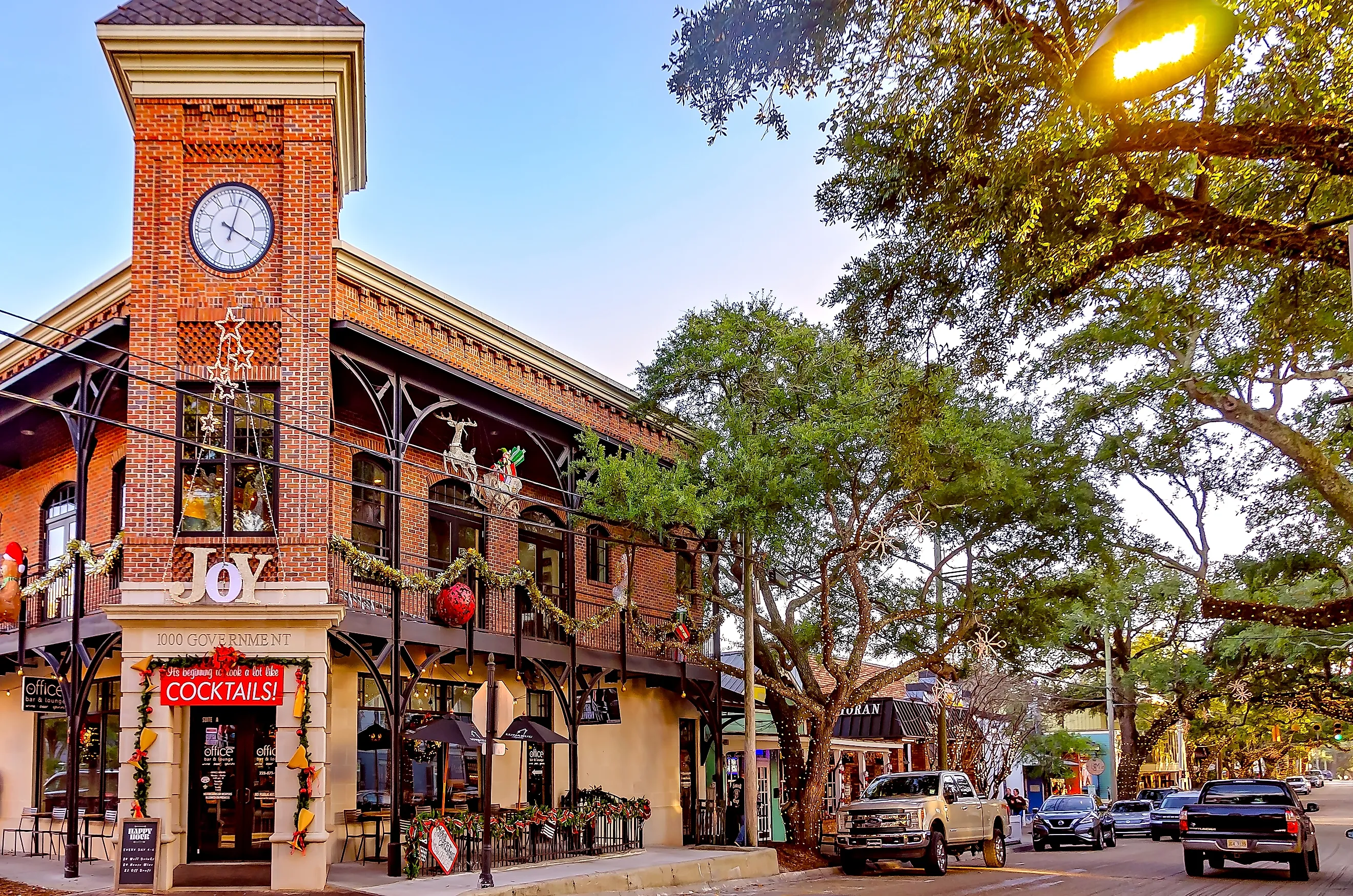
Ocean Springs is a whimsical town, with a concentration of galleries and studios along Washington Avenue under a canopy of live oak trees. The galleries and studios do not just display finished work. We can see this as many keep their doors open while artists are working, so the process becomes part of what you see. Inside the Walter Anderson Museum of Art, murals cover entire rooms with coastal birds, animals, and landscapes, so as you move through them, it feels like stepping into the scenes of the paintings themselves. A short walk away lies Front Beach, where the sea is generally calm and the view expansive. What sets Ocean Springs apart is how closely its art reflects its surroundings. The same sea birds, marsh grasses, and light appear in both the museum and just outside and it is an unobtrusive yet potent connection.
Bay St. Louis

Bay St. Louis is a city centered around its beautiful coastline. We can see this as Beach Boulevard runs parallel to a wide, open view of the sea. Just inland, Old Town is arranged in a grid of cafés, galleries, and low buildings, where each space leads easily into the next. Nearby, the L&N Train Depot speaks to the towns' past, when passenger trains connected coastal towns and carried travelers telling stories through this stretch of the Gulf. Today, we can see touches of nostalgia in Bay St. Louis as the seawall becomes an attraction in its own right, where people stop to look out over the water, talk, or simply remain still for a while. French and Creole touches appear in both food and architecture, from raised cottages and shaded galleries to dishes that reflect Gulf and European influences.
Oxford

The center of gravity of Oxford is its courthouse square, in which daily life is enacted in a routine, almost ritualistic manner. The square is surrounded by independent stores, restaurants, and balconies, but it is Square Books that gives the town an intellectual and imaginary character. It is a place of many rooms and staircases, encouraging wandering from one space to another without a clear path. Just outside downtown, Rowan Oak, where William Faulkner once lived, still has a sense of occupation, with notes on the wall written by hand and details left as they were. It feels like someone still lives there, or has only just stepped out. Because of this, Oxford is a city where literary history is not relegated to a single location, but instead seeps into everyday conversation and into an understanding of how stories matter.
Vicksburg

Vicksburg follows the rise and fall of the land above the Mississippi River, with streets that climb and dip and occasional views of the water appearing between buildings. Along Washington Street, places like Lorelei Books add a quieter, more personal layer, with narrow aisles, stacked shelves, and handwritten staff notes tucked between titles. From there, the town opens outward into the Vicksburg National Military Park, where this quieter setting changes. For example, open fields stretch between lines of trees, monuments stand where events once unfolded, and cannons remain positioned along the ridgelines. Since there are preserved trenches, one can envision the past and how soldiers might have used the ground for protection. In the park, you move from one section to another, passing cannons, markers, and open ground, so each part feels like you are part of a film set.
Laurel

Laurel is a town rooted in its past, as many efforts have been made to preserve it. For instance, downtown streets are lined with early 20th-century buildings that have been restored without losing their original character, and many now hold small shops and locally run businesses that fit naturally into the space, such as Lee’s Coffee & Tea, where mismatched seating, bookshelves, and hand-written menus give the place a lived-in, whimsical atmosphere. The Lauren Rogers Museum of Art sits within this area, with galleries that move from room to room and include a mix of European and regional works, giving the town a sense of depth. Beyond the center, residential streets carry that same continuity, with craftsman-style homes and deep porches. Therefore, what we can see is that Laurel is a city that has been carefully maintained, and its history as a timber town still shows in the structure of its buildings and streets. That preservation gives Laurel a storybook quality, where you notice things like hand-painted signs, worn wooden floors inside shops, and porches that feel like extensions of the street.
Port Gibson

Port Gibson is made up of streets lined with historic homes, churches, and small buildings that are still in use as part of daily life. The First Presbyterian Church stands out immediately, with a golden hand mounted at the top of its steeple, pointing upward and visible from a distance. Nearby, other churches and houses sit beneath large trees, often set back just enough to reveal their full structure from the road. The town is often described as “too beautiful to burn,” a phrase attributed to Union General Ulysses S. Grant during the Civil War, when it was spared from destruction. Because of that, many of its buildings remain intact, and walking through the town means passing from one preserved block to the next. The surrounding countryside begins just beyond the streets, with open land and quiet roads extending outward, so there is no clear break between town and landscape. This kind of setting calls to mind "To Kill a Mockingbird", where small-town streets, porches, and quiet roads are part of the atmosphere of the novel.
Corinth

Corinth developed around the crossing of two major rail lines, the Memphis & Charleston and the Mobile & Ohio, which made it a key transportation point in the 19th century. That history is documented at the Crossroads Museum, where original rail equipment, maps, and artifacts show how the lines intersected and shaped the town. Nearby, the Shiloh National Military Park extends this into the surrounding landscape, with open grounds, walking paths, and markers placed across the site. Downtown is filled with fairytale storefronts such as Borroum's Drug Store Soda Fountain, which has an old-fashioned soda fountain and a glass display case. Trains continue to pass through at regular intervals, and the sound carries across the area, linking the present-day streets to the same routes that once brought people and goods through Corinth.
New Albany

New Albany follows the Tallahatchie River, which curves through the area and provides a steady point of reference near the center of town. The Tanglefoot Trail begins here, stretching out from the trailhead and continuing for miles through wooded sections and open land, often used for walking and cycling at a consistent, unhurried pace. Downtown, painted murals add colour to the buildings, and places like Sugaree’s Bakery, known for its layered cakes and window display. References to William Faulkner appear nearby through his birthplace and local markers, providing the town with a literary presence.
The storybook quality in these towns comes from the details, in the storefronts, the porches, the streets, and the way they’re used every day. In Natchez and Vicksburg, the Mississippi River is still a source of inspiration. In the coastal towns of Ocean Springs and Bay St. Louis, art, water, and everyday life come together. In Oxford and New Albany, literature is not just a part of the towns’ identity but of their experience as well. In each town, history, landscape, and everyday life are not in competition but complement each other as they are not living museums of the past but living environments where every element contributes to the story.