11 Most Hospitable Towns In Illinois
Fulton still runs the Dutch windmill on the Mississippi waterfront. Ottawa still gathers on Washington Square, on the same lawn where the first Lincoln-Douglas debate happened. Galena keeps Grant's family home essentially as the family left it. The eleven Illinois towns in this article have all done the same thing in their own way: figured out a long time ago what made them distinct, then committed to it. That commitment is why each town still pulls a Saturday crowd to its courthouse square, its riverfront, or its opera house, often the same crowd that has been showing up for decades.
Fulton

Fulton's identity sits on the Mississippi riverfront and runs on Dutch heritage. The De Immigrant Windmill, shipped from the Netherlands and reassembled on site, runs guided tours of its working mill and grain-grinding process. The paved Great River Trail begins just past the windmill, threads along the bank, and ends at the Fulton Marina, where people stop for picnics by the docks.
Fulton Dutch Days turns the riverfront over to wooden shoe dancing, street scrubbing, and heritage parades each May. Year-round, Krumpets Restaurant & Bakery draws regulars for scratch-made soups, sandwiches, krumpets, and pastries.
Libertyville

Libertyville's Main Street runs as a walkable spine for the town's daily life. The MainStreet Libertyville Farmers Market anchors it on weekends, with vendors selling Midwest-grown sweet corn, heirloom tomatoes, fresh cheeses, cinnamon rolls, and fruit pies. Regulars return to the same stalls and get greeted by name. A few storefronts down, Improv Playhouse Theater runs small-format performances at audience-on-stage range: improv sets, musical revues, and acting workshops.
The Adler Arts Center pushes that participation further with hands-on music lessons, rotating gallery exhibits, and small community concerts that pull in learners and longtime residents alike. First Fridays bring the stretch together: shops stay open late, live acoustic sets spill onto sidewalks, and restaurants extend seating outdoors.
Geneva

The Fox River shapes how Geneva moves. The Fox River Trail carries walkers and cyclists past riverfront viewpoints and historic landmarks before feeding into downtown. On 3rd Street, Graham's Fine Chocolates & Ice Cream stays busy with handmade chocolates, caramel apples, and small-batch ice cream.
Island Park, half a mile of riverbank with footbridges, picnic areas, and shaded green space, is the other water-side anchor. In June, the focus shifts downtown to the Swedish Days Festival, when food stalls, live music, and craft vendors fill the streets for five days.
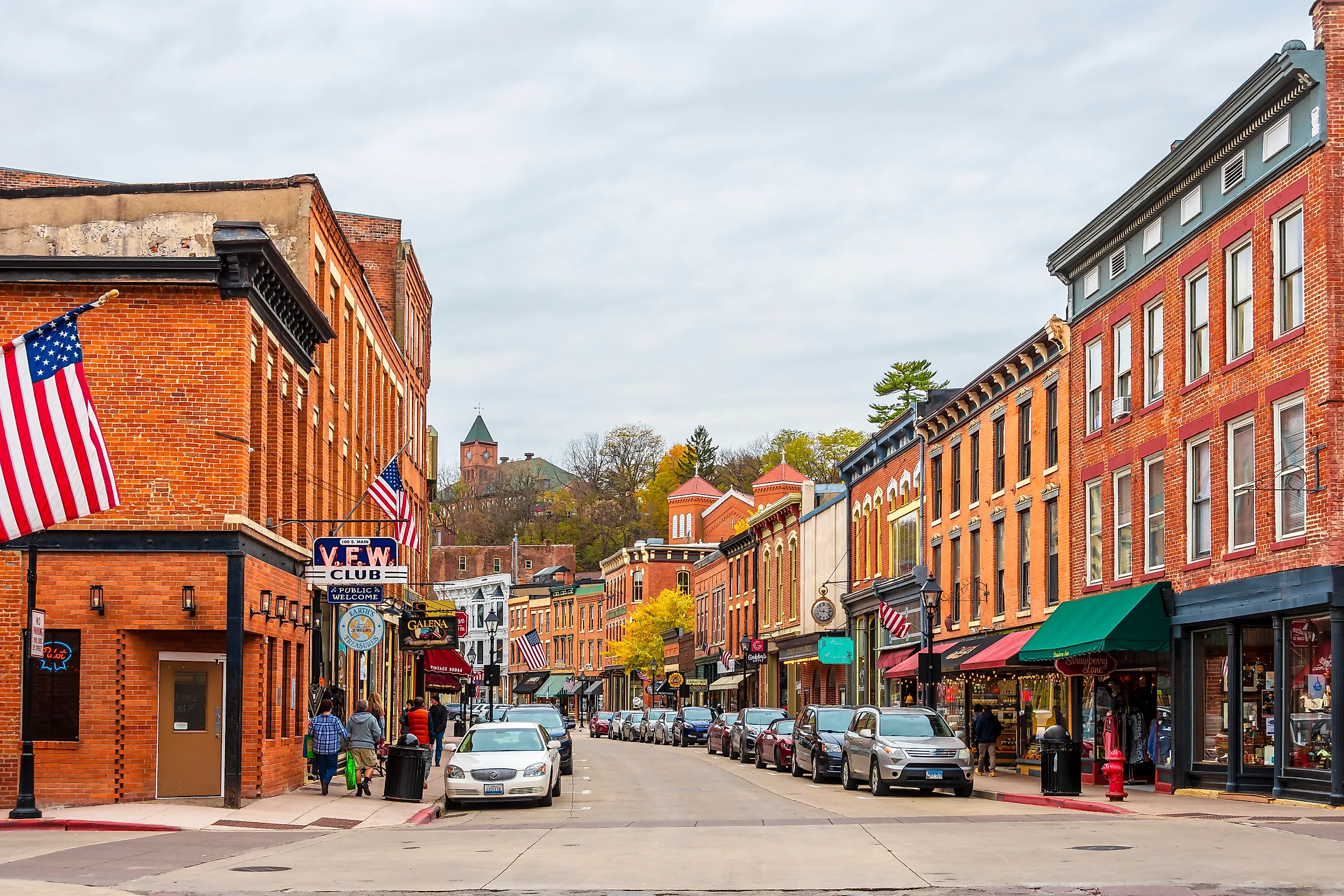
Galena

Galena's historic architecture does most of the work. The Ulysses S. Grant Home, the Italianate residence the future president occupied through the 1860s, runs guided tours through rooms preserved with original furnishings. Galena Trolley Tours loops downtown past Dowling House, the Grant Home, and Belvedere Mansion.
Bread & Vine pulls steady traffic all day for handcrafted cocktails, pastries, and coffee. The Great Galena Balloon Race, held at Eagle Ridge Resort & Spa, sends dozens of hot-air balloons up together each year and runs timed flights and ground events alongside the launches.
Mount Carroll

Mount Carroll wears its "New England of the Midwest" nickname unironically. Timber Lake Playhouse, founded 1961, runs Broadway-style musicals, comedies, and children's shows on a rotating schedule and supplies most of the town's cultural calendar. Blocks away, the 1858 Carroll County Courthouse holds the same Italianate posture.
The Raven's Grin Inn operates year-round inside a former school as a walk-through haunted house, with a maze-like layout and locally-led tours built to bring people back. Point Rock Park on the edge of town adds walking trails, a disc golf course, and creek access on the Waukarusha.
Woodstock

Mention Groundhog Day and Woodstock comes to mind. The town shot most of the 1993 film, and Woodstock Groundhog Days revisits that history every February with guided tours to filming locations, trivia events, and the central square filled with people retracing scenes. Facing the square, the Woodstock Opera House operates as a 411-seat Victorian theatre built in 1889, hosting plays, musicals, and concerts.
The Classic Cinemas Woodstock Theatre keeps the film thread going from a restored 1920s building, screening current releases. Ethereal Confections sits nearby with small-batch chocolates, house-made marshmallows, and drinking chocolate.
Winnetka

Winnetka runs on the Lake Michigan shoreline. Elder Lane Park sits steps from downtown with a small beach on the premises. A few minutes inland, Skokie Lagoons trade the beach for wooded trails and quiet waterways used for kayaking and birdwatching. The accolades line up with what residents already know: CNN Money named Winnetka one of the best places to live, and 24/7 Wall Street ranked it the top Chicago suburb.
In downtown, 501 Local keeps things casual with tacos, salads, and open-air seating. A minute away, The Book Stall is the independent bookstore the town has actually kept (and uses): author events, staff recommendations, a loyal local following.
Crystal Lake

Crystal Lake centers on the lake it's named for. Three Oaks Recreation Area runs busy all summer with kayaking, paddleboarding, swimming, and picnic spots ringing a lakeside beach. Main Beach on the original lake keeps the more traditional setup: swimming area, fishing pier, boat launch.
Evenings move to the Raue Center for the Arts, a 750-seat auditorium that runs plays, concerts, and comedy. Xtreme Wheels keeps the energy going nearby with roller skating, birthday parties, community events, and food stands.
Ottawa

Ottawa sits at the confluence of the Illinois and Fox Rivers. Washington Square Park, where Lincoln and Douglas held the first of their seven 1858 debates, still hosts concerts and public gatherings on the same open lawn. The Reddick Mansion next door runs guided tours of its 22-room Italianate interior with original furnishings intact.
Allen Park covers 21 acres with a boat launch, walking paths, and clear sightlines to two bridges crossing the Illinois River. The park hosts Hop into Spring each year with themed games, animal petting, and scavenger hunts.
Rockton

Rockton centers on the Macktown Living History Education Center, the site of Winnebago County's first settlement in the 1830s. The blacksmith shop still fires up for live forging, the one-room schoolhouse runs period-style lessons, and the log cabins hold period tools and furniture, all laid out as a working village. Old Settlers Days each June adds rides, food stalls, and live performances to heritage displays and reenactments tied back to the same 1830s settlement.
J. Norman Jensen Forest Preserve covers 112 acres of prairie, woodland, and wetland on the outskirts, with marked trails through each landscape and fishing access on the Rock River. Red Barn Golf Course keeps things local with a 9-hole layout, par-3 stretches, and an on-site bed-and-breakfast.
St. Charles

St. Charles has long called itself "The Pride of the Fox," and the river is where most of the town's social life happens. The Fox River Trail follows the river through downtown, used for longer bike rides, easy walks between sections, and pauses near the dam to watch the current. On the same stretch, the Arcada Theatre operates out of a 1926 building with working marquee and balcony seating intact, hosting touring musicians, tribute bands, and stand-up acts.
Hotel Baker sits right on the water down the riverwalk, with outdoor seating that puts diners in line with the dam and the steady foot traffic going past. Each fall, Scarecrow Weekend takes over downtown with a mapped route of more than 100 handmade scarecrows from local schools, businesses, and community groups, plus live carving demos and food stalls along the way.
What These Eleven Towns Have In Common
Across the eleven, hospitality means something specific to each: Fulton runs on Dutch heritage rebuilt brick by brick, Ottawa keeps Washington Square as it was the day Lincoln and Douglas argued there, Galena keeps Ulysses Grant's house standing as it stood, Mount Carroll holds its New England face, Woodstock anchors its identity to a 1993 movie still being filmed in its central square, and St. Charles still calls itself the Pride of the Fox. The pattern is that each town has identified what makes it itself and leaned into that, instead of building generic welcome around a generic Main Street. The Mississippi riverfront in Fulton and the Lake Michigan shoreline in Winnetka are the two geographic bookends; the nine towns in between carry their identities inland, in courthouse squares, opera houses, and farmers markets that have been doing the same thing for over a century.