9 Safest Towns In Australia For Senior Living
A horse-drawn tram has carried passengers to Granite Island since 1894. That kind of unhurried pace is exactly what draws retirees to Australia's smaller towns. The nine towns here keep their streets walkable and their traffic light. Each one sits within reach of a regional hospital that handles real emergencies. Most run weekly programs built specifically for residents over 50. Orange pours cool-climate wine. Goulburn guards the world's largest merino. Starting with Orange, here are nine of the safest small towns in Australia for senior living.
Orange

Cool-climate wine built the modern character of Orange, a city in the Central Tablelands of New South Wales about 250 kilometers (155 miles) west of Sydney. More than 80 vineyards ring the town, and cellar doors such as Rowlee, Ross Hill, and De Salis keep their tasting rooms and garden paths gentle enough for an unhurried afternoon. The food scene that grew up alongside the wine gives retirees a reason to come back to the same restaurants through the seasons.
Days fill easily here without much driving. Lake Canobolas Reserve has flat lakeside paths, picnic lawns, and birdwatching close to town, and the self-guided Orange Heritage Trail links more than 40 historic sites on a walk of about 90 minutes. The Orange Botanic Gardens cover 17 hectares of accessible paths through native and exotic plantings, with sculptures set among beds that change across all four seasons. Mount Canobolas adds graded tracks for those who still want a climb.
For health care, Orange Health Service runs a 24-hour emergency department alongside cancer care, surgery, cardiology, stroke care, rehabilitation, and mental health services, which spares residents the long trips to Sydney that smaller towns require.
Bathurst

The Bathurst region sat at the center of Australia's first gold rush in 1851, when a strike at nearby Ophir sent diggers pouring across the Great Western Road. That history still anchors the town about 200 kilometers (124 miles) northwest of Sydney, where education, tourism, and manufacturing now carry the economy. Abercrombie House, a grand Gothic Revival mansion still lived in by the Morgan family, opens its gardens and furnished rooms to visitors, with a barista on duty most weekends and year-round group tours.
Bathurst gives retirees an unusual amount to do for its size. The Australian Fossil and Mineral Museum is built around the Somerville collection of more than 5,000 fossils and mineral crystals, assembled over a lifetime by Warren Somerville. Motorsport fans have the Mount Panorama circuit, home to the Bathurst 1000 each October and the Bathurst 12 Hour each February, plus the National Motor Racing Museum and its display of more than 100 vehicles.
The Bathurst Health Service covers the medical side with an emergency department, inpatient beds, surgery, intensive care, stroke care, and community health programs. Daffodil Cottage, part of the same complex, provides regional cancer care close to home.
Armidale

At roughly 1,000 meters (3,280 feet) above sea level, Armidale runs to crisp winters and cool summers. Its wide tree-lined streets make for easy, low-traffic walking. A university town on the New England tablelands, it was home to the Anaiwan people long before British pastoralists arrived in the early 1830s. The self-guided Armidale Heritage Walk traces the town's landmarks over flat ground, and a guided bus tour covers the same route for those who would rather ride.
The arts give the town its texture. The New England Regional Art Museum holds a major Australian collection in accessible galleries, the Armidale Art Gallery shows local work and runs annual prizes open to amateurs, and the Aboriginal Cultural Centre and Keeping Place offers Indigenous art and cultural programs. Afterward, the Welder's Dog pours craft beer over pub food and conversation, while Peterson's Armidale Winery and Topper's Mountain Wines keep accessible tasting rooms nearby.
Armidale Hospital handles emergency, surgical, and general medical needs for the wider New England region, the practical backstop behind everything else the town offers.
Wodonga

Wodonga sits on the Victorian bank of the Murray River about 324 kilometers (201 miles) northeast of Melbourne, paired across the water with Albury in New South Wales. The Crossing Place Trail, a 5.1-kilometer (3.2-mile) loop, traces the river's original fords and threads past sculptures by local Aboriginal artists, giving walkers a flat circuit with something to look at. The twin-town setting means big-city services stay close without the big-city pace.
Culture has a new home in Hyphen, the town's purpose-built arts hub. Inside are gallery spaces, a humidity-controlled exhibition hall, a full library, and a set of meeting rooms and creative studios. It is an easy place to take up a hobby or sharpen an old one. Across the river, the Albury aviation collection draws retired pilots and enthusiasts with cockpit fragments, photographs, and stories gathered from across the country.
Wodonga Hospital provides 24-hour emergency care along with surgery, rehabilitation, dialysis, and medical imaging, covering the routine and the urgent alike.
Devonport

Devonport grew from two 1850s settlements, Torquay and Formby, that a public vote united in 1890 at the mouth of the Mersey River on Tasmania's northwest coast, about 47 kilometers (29 miles) east of Burnie. The Mersey Bluff lighthouse and the working harbor still set the tone of the place, and the ferry to the mainland makes it Tasmania's front door. For retirees, the draw is a compact waterfront town with serious cultural and natural assets close at hand.
The Bass Strait Maritime Museum occupies a 1920s harbor master's cottage, with ship models, local stories, and a ship simulator added in 2024 that lets visitors steer a vessel up the Mersey. The Don River Railway runs short heritage trips to Coles Beach behind Tasmania's largest collection of steam and diesel locomotives. Twelve kilometers (7.5 miles) out, the 66-hectare Tasmanian Arboretum shelters more than 80 native bird species and one of the few spots to watch wild platypus.
The Mersey Community Hospital provides emergency care for the region, the medical anchor for a town that otherwise feels pleasantly removed.
Victor Harbor

A horse-drawn tram has crossed the causeway to Granite Island at Victor Harbor since 1894, pulled by Clydesdales that eat from visitors' hands, and it remains the town's signature outing. This stretch of the Fleurieu Peninsula coast lies about 82 kilometers (51 miles) south of Adelaide, with miles of beach and a boardwalk that climbs to the island's high point for views over Encounter Bay. The pace is built for retirees who want the sea close and the crowds thin.
Wildlife is the other reason to settle here. Big Duck Boat Tours runs gentle trips to see seals, dolphins, and seasonal whales, and the Urimbirra Wildlife Park, five minutes from town in Hindmarsh Valley, spreads 70 species of native fauna across a 40-acre open range that includes 16 acres of wetland bird sanctuary. Kangaroos, koalas, wombats, and Cape Barren geese are all part of the resident cast.
The Southern Fleurieu Health Service covers medical, emergency, surgical, and mental health care for the district, keeping serious appointments off the Adelaide road.
Albany

Albany runs a calendar built partly around its older residents, which is rare for a port city of its size. The Albany Leisure and Aquatic Centre hosts the Long Live You program for adults over 50, mixing physical, social, and educational sessions, while the public library fills its weeks with free activities and talks. Western Australia's oldest European settlement, founded as a military outpost in 1826, the city sits about 418 kilometers (260 miles) southeast of Perth on the northern edge of Princess Royal Harbour.
The coast and its history fill the rest of the week. The maritime festival each July spreads a month of live music, exhibitions, film screenings, and markets across the foreshore in tribute to the town's seafaring past. Active retirees can walk the well-signed Stidwell Bridle Trail loop, which leaves the Albany Equestrian Centre on Roberts Road and runs out over sandhills toward the coast.
Albany Day Hospital, opened in 2019, is a modern facility with surgical care, recovery lounges, on-site pathology, and andrology services, complementing the regional public hospital.
Busselton

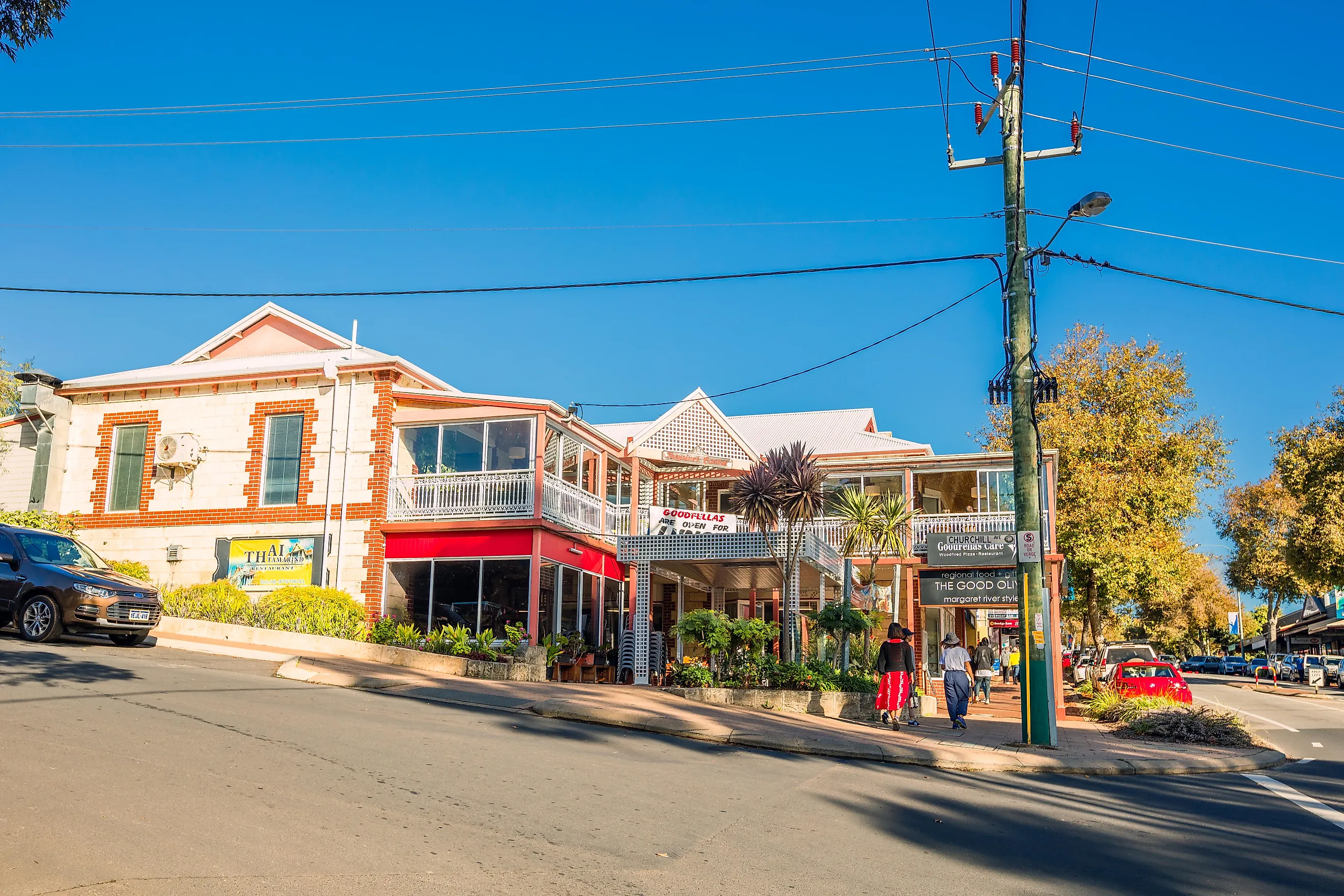
The Busselton Jetty reaches 1.8 kilometers (1.1 miles) over Geographe Bay, the longest timber-piled jetty in the Southern Hemisphere, and a solar-powered train carries those who would rather not walk the full length out to an underwater observatory at the end. First built in 1865 and restored through community fundraising completed in 2011, it is the centerpiece of a southwest Western Australia town about 220 kilometers (137 miles) south of Perth. The Margaret River wineries that revived local tourism sit just down the road.
The town keeps its cultural life close to the water. The new Saltwater complex stages art, community, and business events across three flexible levels that together seat more than 1,000 people, and its Art After Dark evenings pair exhibitions with live music and refreshments. The mild coastal climate and flat foreshore paths make for easy year-round walking.
Busselton Health Campus provides emergency care, cancer services, geriatric medicine, stroke care, surgery, and physiotherapy, an unusually broad spread for a town this size.
Goulburn

The world's largest merino stands in the middle of Goulburn, a 15.2-meter (50-foot) concrete ram nicknamed Rambo with a wool-industry exhibition inside and a gift shop full of Australian-made knitwear. The fine-wool heritage it celebrates still defines this New South Wales town about 90 kilometers (56 miles) northeast of Canberra. It is the kind of unhurried country city where a retiree can run errands on foot and know the shopkeepers.
History fills out the local map. The Rocky Hill War Memorial, opened in 1925 to honor those who served in the First World War, crowns a hill with wide views over the town. A self-guided heritage tour links the rest, including Saints Peter and Paul's Old Cathedral, St. Saviour's Anglican Cathedral, Riversdale homestead, and the Goulburn rail heritage center.
Goulburn Base Hospital provides 24-hour emergency care across a broad range of medical and surgical services, the regional health hub for the wider Southern Tablelands.
What These Towns Share
The common thread is balance rather than any single feature. Each town is small enough to walk and quiet enough to feel safe, yet each keeps a regional hospital, a stocked cultural calendar, and programs aimed squarely at older residents, like Albany's Long Live You. The coastal towns trade on mild weather and water; the tablelands towns offer cooler air and gold-era streetscapes. None of them asks a retiree to choose between a working community and a restful one, and that combination is what makes them hold up over a long retirement rather than a short visit.