9 Prettiest Small Towns In Minnesota
In Minnesota, some of the prettiest small towns rise beside Lake Superior’s rugged shoreline or near the headwaters of the Mississippi River. Ely pairs its wilderness setting with memorable adventures, from paddling the glassy waters of the Boundary Waters to spotting wolves at the International Wolf Center. Near Park Rapids, Lake Itasca offers one of the state’s most iconic sights, where you can step across the Mississippi as it begins its long journey south. Red Wing adds a dramatic change of scenery with its towering bluffs, and climbing Barn Bluff rewards you with sweeping views of the river and the surrounding valley. Below are some of the most stunning towns in the state.
Ely

A mere 16 miles from the Canadian border is the old iron ore town of Ely. Nestled in the Superior National Forest, which spans nearly four million acres, Ely is surrounded by nature on all sides, and the culture reflects the landscape. In the surrounding Superior National Forest, visitors can paddle sections of the Boundary Waters Canoe Area Wilderness, a network of over 1,200 miles of canoe routes and lakes connected by portages.
Ely is also dedicated to wildlife conservation through its North American Bear Center and the International Wolf Center. These areas protect black bears and grey wolves, respectively, and offer a chance to see how these creatures have adapted to a Northern Minnesota environment from a safe distance. On Ely's hiking trails, you can get lost in boreal forests and see remnants of the town's iron ore days, such as the Trezona Trail, a 4-mile loop that goes out to a mining pit and mine shaft headframe.
Stillwater

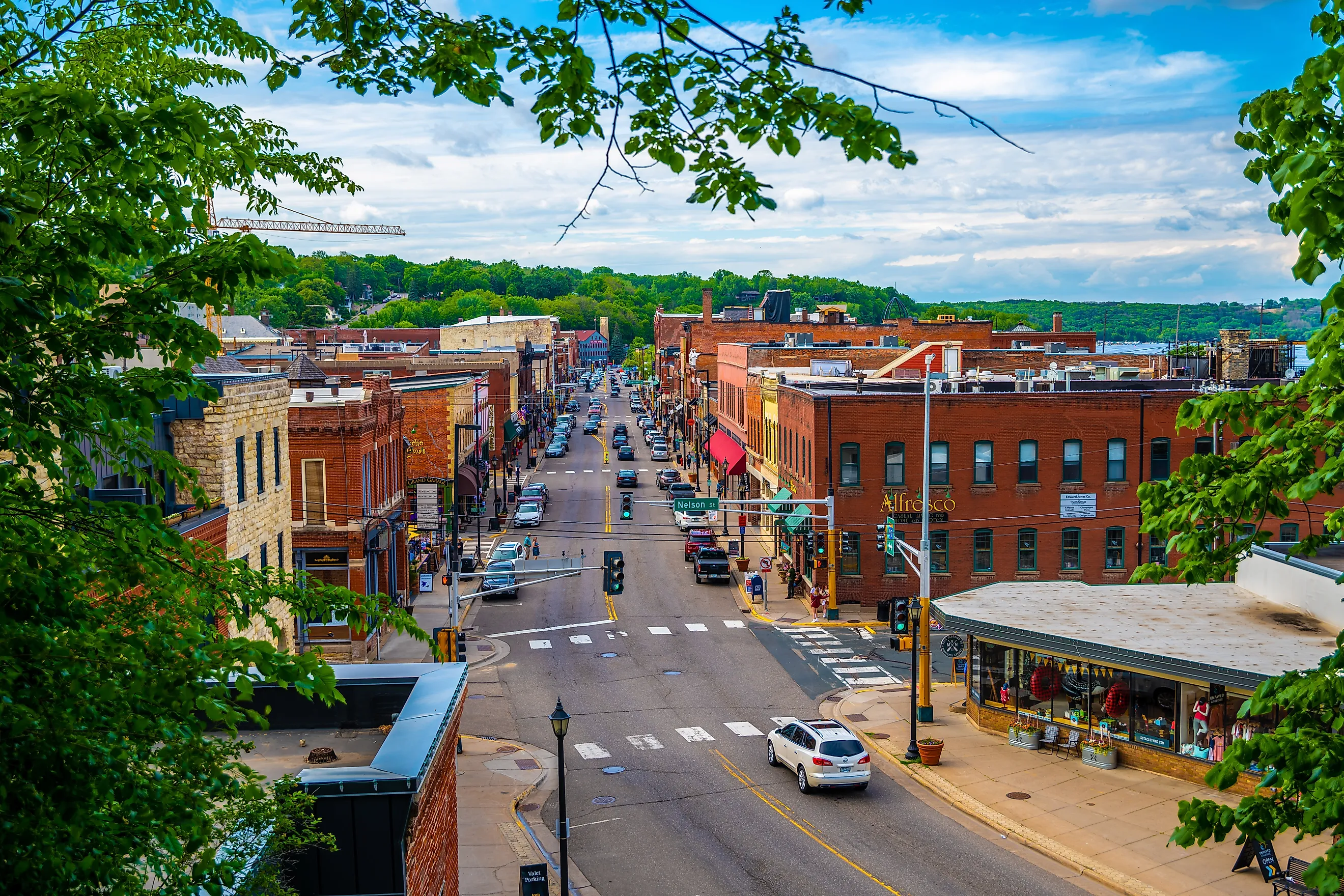
Stillwater stands tall as one of the oldest towns in Minnesota, with its founding in 1843. It's sometimes called the birthplace of Minnesota for its role in transforming the region from a territory into a state. It's easy to see why settlers came here: the St. Croix River is one of the cleanest in the state, with good water quality. You can see the water for yourself by going paddle boating or fishing in the Saint Croix National Scenic Riverway, boasting over 200 miles to explore.
The river isn't the only scenic route in Stillwater; there's also a multi-use trail over a former railroad on Brown's Creek Trail, which spans 5.9 miles along various nature areas. One can also opt for a delightful trip across two river bridges via the St. Croix River Crossing Loop Trail. Lastly, the town invites visitors not just to look at art but to make it themselves through its DIY galleries such as Kari's Paint and Create, a pottery and canvas studio.
Park Rapids

Park Rapids is the closest town to the source of the mighty Mississippi River itself: Lake Itasca. From here, the river flows down thousands of miles before emptying into the Gulf of Mexico. At Itasca State Park, visitors can walk across the Mississippi’s headwaters at the stone stepping area, where the river is just a few feet wide as it begins its 2,300-mile journey south.
In many ways, Park Rapids lives up to Minnesota's nickname, the Land of 10,000 Lakes, thanks to its location in the Heartland Lakes, ranging from Lake George, home of the Blueberry Festival in July, to Itasca State Park. Here, you can see not just Lake Itasca itself, but more than 100 smaller lakes, a vast virgin pine tree forest, and the 1937 Aiton Heights Fire Tower, offering a panoramic view of the wilderness. Before settlers came here, many Native American tribes lived near this lake, leaving behind a burial mound and other artifacts. Take some time to learn about their lives at the Giiwedinong Treaty Rights & Culture Museum in Park Rapids.
Akeley

If you head east from Park Rapids, you'll run into the delightfully quirky town of Akeley, which has a deep connection to the legendary figure of Paul Bunyan. The tall tales surrounding this giant lumberjack have delighted American and Canadian children for generations, and Akeley celebrates him with the World’s Largest Paul Bunyan Statue, which stands over 25 feet tall, along with a giant baby cradle nearby. Just behind this statue is the Akeley Paul Bunyan Historical Museum, with artifacts from the time when the town hosted the largest sawmill in America. From the town center, you can access the paved 49-mile Heartland State Trail, which connects Akeley to Park Rapids and Cass Lake. You can also go fishing at the 800-acre Eleventh Crow Wing Lake via the public access point nearby.
Albert Lea

This southern Minnesota town gets its name from a topographer who surveyed the region in 1835. It calls itself the Land Between the Lakes because it lies between six lakes. This gives the town a unique feel you won't find in many other places, as everywhere you turn is a beautiful spot to settle down for a picnic, glass of wine, or just to take in the cool breeze. Within Fountain Lake, there's a replica of the Little Mermaid found in Denmark resting on a rock on the lake.
Speaking of rocks, there's a wonderful rock garden with a castle, bridge, and grottos known as the Itasa Rock Garden, which was designed by John Christensen in 1925. It spans 14,000 square feet and seems straight out of a storybook. The most visited place in Albert Lea is the Myre-Big Island State Park, which features an oak savannah and easy walking trails, including the Big Island Trail, which winds through wetlands and forested areas. The lake itself regularly hosts the American white pelican, a migratory bird that journeys south to Central America during the winter.
Grand Marais

Grand Marais' position on Lake Superior has long inspired local artists. So long, in fact, that the town has the state's oldest art colony, the Grand Marais Art Colony, founded in 1947. One of the most iconic places in town is Artist’s Point. On this rocky peninsula, visitors can walk along a narrow breakwater extending into Lake Superior for open views of the shoreline and harbor.
For those who want to swim in Lake Superior, spots like Woodland Park Beach offer easy shoreline access, with the latter located beside a lakeside campground. Some of the beauty of this town is not found by the lake but in a quieter place that echoes the past: Chippewa City, located about 5 miles east of Grand Marais. This former logging settlement once housed around 100 families before becoming a ghost town in the early 1900s. Today, the 1895 St. Francis Xavier Church is the only remaining structure, preserved by descendants of the original community.
Lanesboro

Lanesboro is situated in the Driftless region of southeastern Minnesota. It’s called Driftless because it was missed by the melting glaciers from the last Ice Age, which flattened much of the surrounding Midwest. In Lanesboro, however, the steep limestone bluffs and river valleys still remain, creating a landscape that stands out in the region. These features are easily explored along the Root River State Trail, a paved 42-mile trail for bikes or hikers that winds through bluff country and alongside the river.
Biking is a very important part of the culture here in Lanesboro, as seen at the cute Pedal Pushers Cafe, where the tables are set on top of vintage bicycles. If you go out into the surrounding countryside of Lanesboro, you'll have a chance to really test your courage at the Eagle Bluff Environmental Learning Center, which spans over 250 acres and offers outdoor obstacle courses through the trees, along with hiking trails across prairie and bluff terrain.
Northfield

Sitting 40 miles south of Minneapolis and St. Paul is the town of Northfield. Since the mid 1800s, it's been a major center for Norwegian Americans, which is why one of its colleges, Saint Olaf College, is named after a Norwegian king. What makes the town truly special is its mix of rural berry farms like Silkey Gardens, its history, and its nearby forests. On the St. Olaf campus, for example, the Norwegian-American Historical Association showcases diaries, newspapers, and artifacts that document how these Scandinavians found their new home in Minnesota.
The town also maintains its history as a railway hub through the restored 1888 Northfield Depot, which today serves as a community center. Just outside town, the 2,900-acre Nerstrand Big Woods State Park features miles of hiking trails through hardwood forests, waterfalls such as Hidden Falls, and rare plant species, including dwarf trout lilies.
Red Wing

Although Minnesota is more known for its lakes, the state also has a sizable shoreline along the Mississippi River. The best place to experience the river in Minnesota is at Red Wing, due in no small part to its majestic bluffs overlooking the water, with Barn Bluff rising about 340 feet above the river and offering sweeping views of the Wisconsin border.
The town has two main trail systems: the Hay Creek Trail, which offers views of the Mississippi River, and the Cannon Valley Trail, a 19.7-mile route connecting Red Wing to Cannon Falls. The beauty doesn't end with the river; it continues through the artistic community that calls this town home. Artist Charles Biederman brought abstract art here in the 1940s after leaving New York City, and his influence can still be felt through the Red Wing Art Walk, which features over 30 art stops from the Sheldon Theatre to Central Park.
These Small Towns In Minnesota Are No Tall Tale
Paul Bunyan himself is an American tall tale, but these gorgeous towns are as real as can be. It might feel like you've stepped into a storybook scene, whether passing old mining equipment along Ely’s trails or watching artists paint along the shores of Grand Marais. Scenic routes connect many of these towns, making them just as enjoyable to explore as they are to arrive in. Pictures can't do these pretty towns justice; you'll have to drive to them yourself to see what all the fuss is about.