6 Best Natural Wonders To Visit In New Hampshire This Year
The defining geographic feature of New Hampshire is the White Mountains, an ancient and rugged mountain range that runs about 87 miles from north to south. This iconic mountain range anchors many of the state’s most spectacular natural wonders, from the summit of Mount Washington, renowned for its extreme weather conditions, to the scenic trails of the stunning Franconia Notch State Park. Here are six of the most remarkable natural wonders that make New Hampshire and the White Mountains one of New England’s most popular outdoor destinations.
Mount Washington

Mount Washington is the tallest peak in the Northeast at 6,288 feet, famous for its diverse ecosystem, unpredictable weather, and spectacular, sweeping views from the summit, especially during the fall. In 1819, the first people to blaze a trail up to the summit of Mount Washington were Abel and Ethan Crawford, two members of a well-known pioneering family for whom the scenic mountain pass, Crawford Notch, is named. That trail later became a bridle path, the precursor to the famous 7.4-mile Mount Washington Auto Road that is still one of the most popular ways to reach the summit, and inspired the iconic “This car climbed Mt. Washington" bumper sticker.

Another way to reach the mountain’s summit is as a passenger on the circa 1869 Cog Railway, the first mountain-climbing railway ever built, which chugs steadily uphill for about 3 miles until it reaches the Sherman Adams Visitor Center. Finally, the hike up the mountain is a bucket-list trip for many outdoor enthusiasts, who make the 8.4-mile out-and-back trek up the Tuckerman Ravine Trail. Today, this natural wonder attracts more than a quarter of a million visitors annually.
https://www.shutterstock.com/image-photo/blue-sky-colorful-fall-foliage-dusting-2217060595
Flume Gorge

The Flume Gorge is an awe-inspiring natural wonder inside the 6,440-acre Franconia Notch State Park, accessible from Lincoln, New Hampshire. The Flume was discovered in 1808 by 93-year-old “Aunt” Jess Guernsey, who reportedly stumbled upon the dramatic gorge while out looking for fishing holes. Located near the base of 4,459-foot Mount Liberty, a prominent peak in the White Mountains and part of the scenic Franconia Ridge hiking area, the Flume is a narrow granite gorge stretching about 800 feet, with towering walls up to 90 feet high, cascading waterfalls, and elevated boardwalks that wind through the dramatic canyon.

Start your visit to the Flume at the Visitor Center with a fully-charged camera phone because you won’t want to miss the gorgeous scenery along the 2-mile loop trail, including the photogenic red Flume Covered Bridge over the Pemigeswasset River, the 45-foot cascading Avalanche Falls, and the pretty Sentinel Pine Bridge. It takes about 1.5 hours to walk the entire gorge, following a combination of wooden walkways, stone steps, paved trails, and dirt forest paths, suitable for the whole family. The best seasons to visit the Flume Gorge are summer and autumn.
Diana's Baths

Near North Conway, Diana’s Baths is a series of small waterfalls with a 75-foot total drop into smooth granite pools in the White Mountain National Forest. The baths are fed by nearby Lucy Brook, which originates near the summit of Big Attitash Mountain, a four-season mountain destination offering skiing and snowboarding in the winter, hiking and sightseeing in the summer. The history of Diana’s Baths dates back to 1863, when George Lucy bought 5 acres of land at the site and built a small house, a barn, and later added a sawmill. By 1890, the site began attracting tourists. Over the years, the land changed hands several times until it was sold to the U.S. government and became part of the national forest.

Diana’s Baths are accessible by a 1-mile out-and-back hike over a gravel path from a small parking lot on West Side Road between Bartlett and North Conway. The optimal time of year to cool off, splash, or wade around in the cold shallow pools is summer, but the natural wonder is a four-season destination.
Arethusa Falls

Arethusa Falls is one of the tallest single-drop waterfalls in the state, boasting a 160-foot vertical drop. Discovered in 1875 by botanist Edward Tuckerman, the name “Arethusa” refers to a nymph in Greek mythology who morphed into a river spring. Visitors can access the stunning waterfall from the parking lot on Crawford Notch Road (US Route 302) by hiking up Bemis Brook Trail before joining the 3-mile out-and-back Arethusa Falls Trail. For a longer adventure, hikers can take the Arethusa Falls and Frankenstein Cliff Loop from the same parking lot and enjoy additional sights, such as Bemis Falls and Coliseum Falls, along the way. The best time of year to visit the falls is in the spring and early summer when the rushing water flow is at its peak.
Lost River Gorge & Boulder Caves

Truly one of nature’s wonders, the Lost River Gorge & Boulder Caves were carved roughly 300 million years ago by massive glaciers during the Ice Age, creating deep crevices and valleys in New Hampshire’s granite bedrock landscape. When the glaciers melted, water rushed through cracks, forming channels and the boulder caves visitors explore today. Lyman Jackman is generally credited with being the first unofficial spelunker in the area when he disappeared into a 15-foot pool of water during a fishing trip in 1852, now known as the Shadow Cave.

A popular natural attraction in the state’s Kinsman Notch, visitors to the Lost River Gorge & Boulder Caves follow a 1-mile wooden boardwalk through the gorge, surrounded by rock walls, waterfalls, and 11 glacial boulder caves. Optional experiences include Lost River Mining Sluicing, where families with children can mine for gemstones, or guided Lantern Tours at dusk, which let visitors discover the caves and boardwalk by headlamp, followed by s’mores by the campfire. The gorge and caves are seasonal, with the 2026 season running from May through October. From May to June, water levels in the gorge tend to be higher, making the experience a bit more dramatic, but the changing autumn scenery enhances the beauty of the gorge.
Mount Monadnock

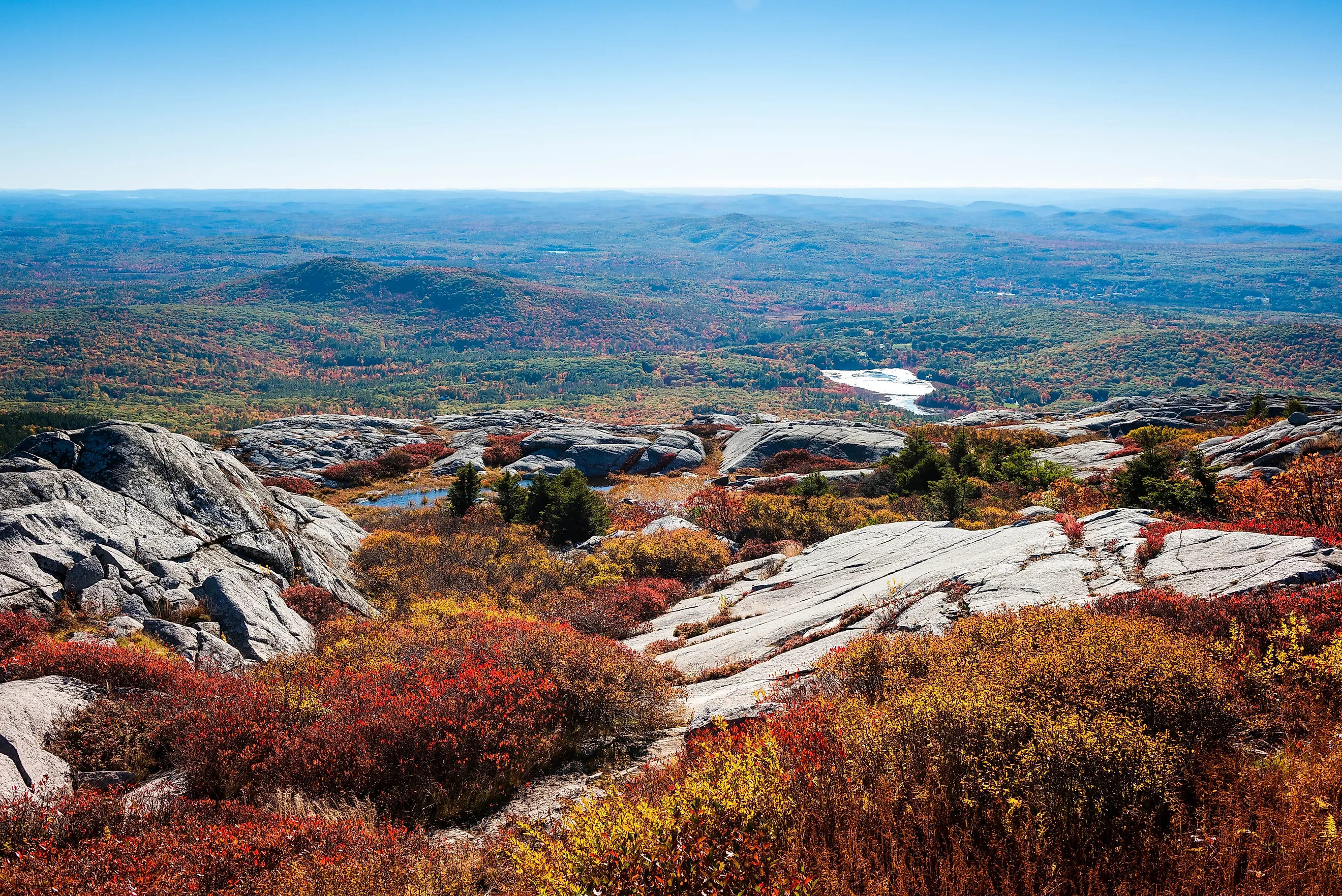
Mount Monadnock is one of the most climbed mountains in the eastern U.S., attracting hikers and nature lovers from all over the globe. The mountain rises 3,165 feet above sea level, and from the summit, visitors can see 100 miles in all directions and see all 6 New England states. The first recorded ascent of Mount Monadnock was in 1725 by Captain Samuel Willard and 14 other rangers. The name “Monadnock” comes from the Native American Abenaki people and means “mountain that stands alone,” and the landmark inspired writers Henry David Thoreau and Ralph Waldo Emerson, as well as numerous paintings and songs.

Today, the longest hike up the mountain is the 4.5-mile Pumpelly Trail, which starts with 1.5 miles of flat hiking through mixed forest before beginning its uphill ascent. Adventurers looking for a challenge can try the hard-rated 7-mile round-trip Birchtoft Trail, which starts from the 41-site Gilson Pond Campground in Jaffrey. The mountain can be hiked year-round, but it can be hazardous in winter due to snow accumulation, and dangerous on exposed trails in the summer, putting hikers at risk for dehydration and heat stroke. The best time of year for a trip to Mount Monadnock is from May to June and from September to November.
Six Must-See Natural Wonders in New Hampshire
New Hampshire is home to some of the most spectacular natural scenery in the Northeastern United States, from towering mountains to spectacular cascading waterfalls and glacial gorges. A few highlights include Mount Washington, famous for its incredible summit views and historic Auto Road. In Franconia Notch State Park, visitors can walk through the narrow granite walls of Flume Gorge, while water lovers can explore the cascading pools of Diana's Baths or hike to the state’s tallest waterfall, Arethusa Falls. Enjoy walking the boardwalk trails and glacial caves of Lost River Gorge & Boulder Caves, or hike Mount Monadnock, one of the most frequently summited mountains in the world. Together, these six natural wonders showcase the rugged beauty and outdoor adventure that make New Hampshire a must-visit for nature lovers.