9 Nicest Small Towns In Hawaii
In the taro valleys of Kauai and on the Big Island's ranching plateau, the communities that formed around taro farming and cattle ranching never stopped doing either. The Haraguchi family has farmed taro in Hanalei Valley for more than a century, and Makawao's paniolo rodeo has run every Fourth of July weekend for over fifty years. Across these nine towns, the taro farms are still working, the rodeos still run, and the storefronts that have been there longest are still the ones worth stopping for.
Hanapepe, Kauai

Hanapepe sits on Kauai's south shore between Koloa and Waimea, its plantation-style storefronts dating back to the 1930s and 1940s. The town earned the nickname "Kauai's Biggest Little Town" during World War II, when soldiers stationed nearby filled its bars, bowling alleys, and rollerskating rinks.
Today, those same buildings house more art galleries than anywhere else on Kauai, and on Friday evenings, painters and sculptors open their studio doors for Hanapepe Art Night. The Hanapepe Swinging Bridge spans the Hanapepe River and remains a favorite photo stop, even if it sways with every step. For a beach break, Salt Pond Beach Park sits a short drive away with calm water that suits families and bodyboarders, plus tide pools worth poking around at low tide.
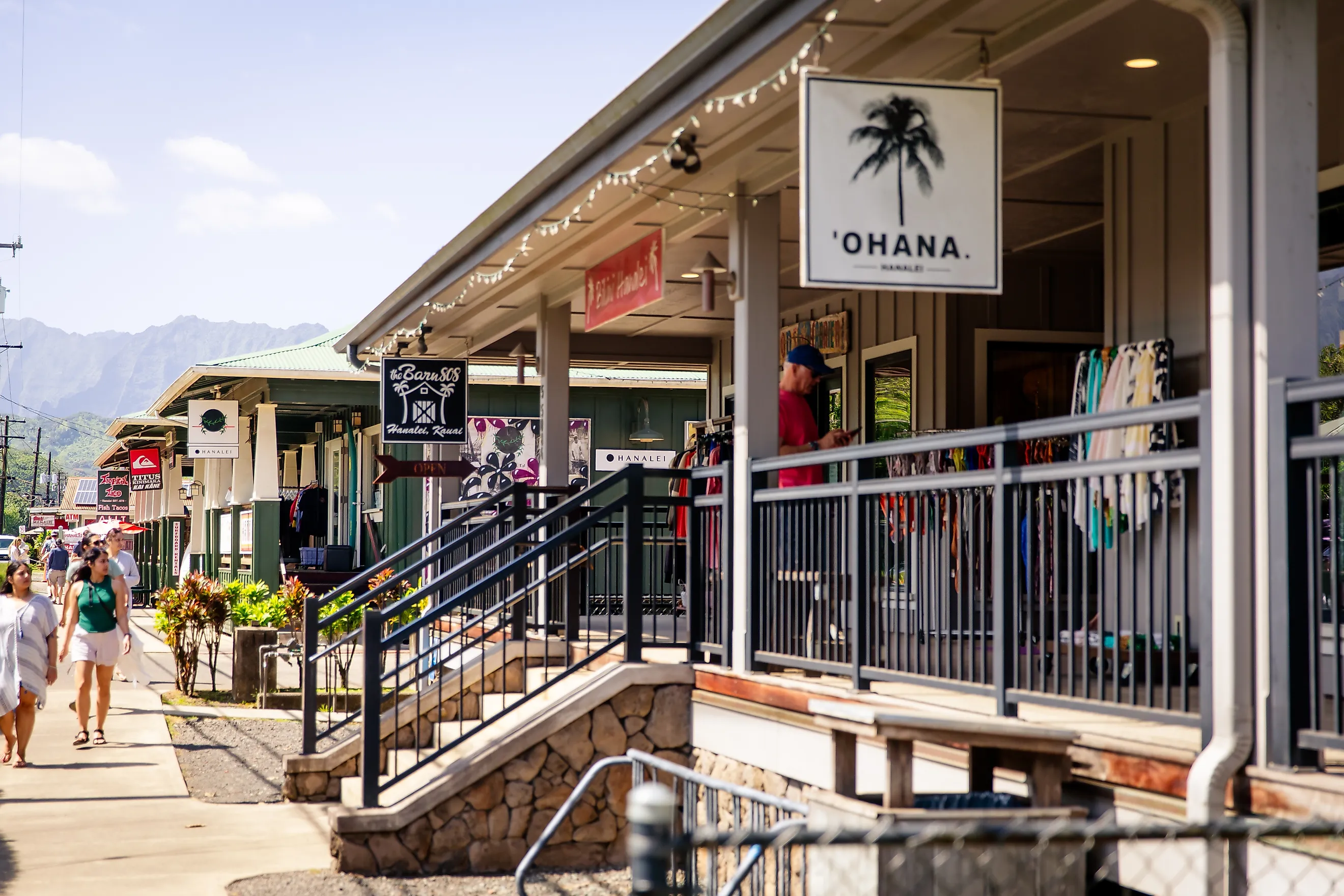
Hanalei, Kauai

Crossing the Hanalei Bridge, a one-lane crossing built in 1912, sets the pace for Hanalei before visitors even reach Main Street. The town wraps around Hanalei Bay, a crescent-shaped stretch of sand framed by the Namolokama and Hihimanu mountains, with surf that draws experienced riders through the winter months.
Behind the bay, the Hanalei Valley unfolds into a patchwork of taro fields visible from the Hanalei Valley Lookout off Highway 56. The Hoʻopulapula Haraguchi Rice Mill, listed on the National Register of Historic Places, has more than a century of taro farming by the same family. Waioli Hui'ia Church, known locally as the Green Church, dates to 1834 and stands out against the misty backdrop of the valley.
Hanalei Pier, built in 1912 and also on the National Register of Historic Places, gives a clear view down the bay and doubles as a launch point for stand-up paddlers heading out at sunrise.
Koloa, Kauai

Koloa holds a specific distinction in Hawaii's history: the first successful sugarcane plantation in the islands was founded here in 1835 by Ladd & Company. The Old Sugar Mill of Koloa, a National Historic Landmark, remains near the junction of Maluhia and Koloa roads, but the fenced property is not open for public access.
Old Koloa Town's wooden storefronts now house shops and restaurants along the Koloa Heritage Trail, a 10-mile route connecting more than a dozen historic sites. Saint Raphael Catholic Church, the oldest Catholic church on Kauai, sits within walking distance of the main strip. Each July, the town hosts Koloa Plantation Days, a weeklong festival marking its sugar-era roots.
A short drive south leads to Spouting Horn, where waves force seawater through a lava tube and send spray into the air with a roar that visitors can hear from the parking lot.
Wailua, Kauai

Wailua spreads along Kauai's Coconut Coast, named for the groves of palms that line the shore near Lydgate Beach Park. The Wailua River runs through town and is Kauai's largest navigable river, making boat tours to the Fern Grotto possible.
That grotto, a lava-rock cave draped in ferns, was once reserved for Hawaiian royalty and now welcomes visitors via a roughly 80-minute round-trip cruise that includes hula and live Hawaiian music. Upriver, ʻOpaekaʻa Falls drops into a forested valley and can be viewed from a roadside lookout without a hike. The Wailua Complex of Heiau, a National Historic Landmark within Wailua River State Park, preserves the remains of temple sites tied to Kauai's chiefly history.
Lydgate Beach Park adds a protected snorkeling lagoon that stays calm even when the open ocean does not.
Waimea, Big Island

Set on the saddle between the Kohala Mountains and Mauna Kea, Waimea has a cooler, mistier climate than much of the rest of the Big Island's coastal areas. The town grew up around Parker Ranch, founded in 1847 by John Palmer Parker and once among the largest privately owned cattle ranches in the country.
Visitors can tour the historic homes of Puuopelu and Mana Hale, where Parker family heirlooms, koa woodwork, and artwork trace nearly two centuries of ranching history. Every Fourth of July, Waimea hosts the Parker Ranch July 4th Rodeo and Horse Races, a nod to the paniolo culture that Mexican vaqueros helped establish here in the 1830s. The Isaacs Art Center, housed in a 1915 schoolhouse, displays works by Hawaii-based artists alongside rotating exhibits.
After dark, Waimea's elevation and distance from coastal light make it a base for stargazing programs tied to the observatories atop nearby Mauna Kea.
Kapaau, Big Island

At the northern tip of the Big Island, Kapaau holds the original King Kamehameha statue, which sank off the Falkland Islands in 1880, was later recovered, and was placed at the Kohala Courthouse in 1912. It now stands in front of the old courthouse, across from the town's public library.
The statue sits near Kamehameha I's birthplace, marked by a stone monument that draws history-minded visitors. Each June, Kapaau celebrates the king with a parade, lei-draping ceremony, and Hawaiian cultural program at Kamehameha Park. Restored plantation buildings along the main road now house art galleries and small shops selling handcrafted goods.
From Kapaau, the road continues to the Pololu Valley Lookout, where steep cliffs drop toward a black sand beach and the Kohala coastline stretches out below.
Haleiwa, Oahu

Haleiwa anchors Oahu's North Shore, its plantation-era buildings now filled with surf shops, boutiques, and art galleries. The town traces back to a Protestant mission established in 1832, though its modern identity formed around the surf culture that took hold decades later.
Matsumoto Shave Ice has served the town since 1951. Haleiwa Beach Park offers calmer water than the famous breaks just up the coast, making it a spot where beginner surfers and paddleboarders can practice without dodging the big winter swells at Waimea Bay or the Banzai Pipeline. The annual Haleiwa Arts Festival, held each June at the beach park, brings local artists and musicians together for a weekend.
Just outside town, Waimea Valley combines a botanical garden with sites tied to Hawaiian religious history, reachable in about ten minutes by car.
Hana, Maui

Hana sits at the end of the Hana Highway, a 64-mile route lined with one-lane bridges and waterfalls that takes most drivers several hours to complete. The town itself holds fewer than 1,000 residents and retains a strong connection to the native Hawaiian language and tradition.
Hasegawa General Store has supplied the town with food, gas, and souvenirs for generations and is the default stop for anyone passing through. Wai'anapanapa State Park, just before town, features a black-sand beach formed from lava rock, along with sea caves and a blowhole; advance reservations are required to enter. The Hana Cultural Center and Museum preserves the area’s history, including its connection to Queen Kaahumanu, but visitors should check ahead, as the museum is not open on a regular schedule and is available by request for special visits.
Hamoa Beach, a short drive south, was once described by author James Michener as among the most beautiful beaches in the Pacific.
Makawao, Maui

On the slopes of Haleakala, Makawao traces its character to the paniolo tradition that took root after King Kamehameha III brought Mexican-Spanish vaqueros to the islands in the early 1830s to manage the growing cattle herds. The town's false-front shops and cooler, upcountry air give it a feel distinct from Maui's beach towns.
T. Komoda Store & Bakery has operated since 1916 and still draws lines for its cream puffs and stick donuts. A long-running Fourth of July tradition, the Makawao Rodeo brings barrel racing, calf roping, and bareback bronco riding to the Oskie Rice Arena, which has run for more than 50 years. At the Hui Noʻeau Visual Arts Center, set on the grounds of a former estate on Baldwin Avenue, visitors can watch working artists and walk through botanical gardens on the property.
For a change of scenery, Makawao Forest Reserve offers hiking and mountain biking trails through stands of eucalyptus and pine just outside town.
Small-Town Stops Across The Islands
Each of these nine towns gives travelers a different angle on the islands. Hanapepe and Koloa cover Kauai's plantation history and art scene, while Hanalei and Wailua bring the taro fields, river cruises, and bay views that define the north and east shores. Waimea and Kapaau carry the Big Island's ranching and royal history, and Haleiwa anchors the North Shore's surf culture. Hana keeps its isolated, coastal character intact, and Makawao adds the upcountry cowboy element that completes Maui's profile. Together, they make the case for adding a few small-town stops to any Hawaii itinerary.