9 Most Breathtaking Towns In Nevada
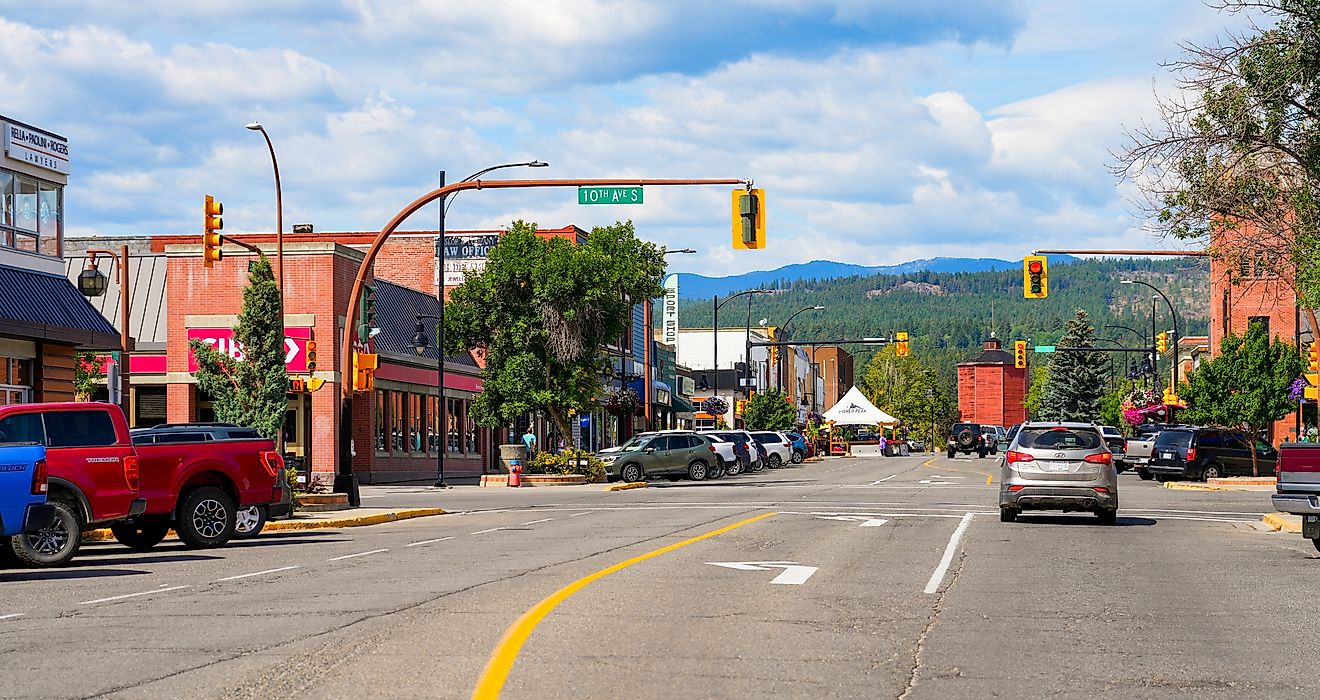
Stand in the middle of Ely and a mountain range fills the window in every direction you turn. Walk to the end of Caliente's Main Street and the pavement gives out at a canyon wall banded in red and purple. Step outside in Tonopah after dark and the Milky Way shows up without a telescope. Settlers built each of these towns against a specific piece of Nevada geology.
That is the thread running through all nine towns here. Miners, ranchers, and railroad crews built where the land let them, and what they left behind still stands against the ridges and canyons that first brought them out. Here is where to find the best of it.
Genoa

Genoa sits right against the eastern wall of the Sierra Nevada, where the mountains drop into the Carson Valley. Mormon traders built a trading post here in 1851, and the reconstructed log post stands today inside Mormon Station State Historic Park. Inside the small museum you will find an original rock fireplace, the skis John Thompson wore carrying mail over the mountains, and tools that emigrants hauled along the California Trail. A few doors down at the Genoa Courthouse Museum, a restored courtroom and a 19th-century jail sit among Pony Express relics and territorial records.
Trade the museums for the mountain and you reach the Genoa Trail System, where paths climb the granite ridges and pine slopes behind town and gain close to 3,800 feet along the way. When the walking is done, drop by the Genoa Bar and Saloon, open since 1853 and the oldest bar in the state. The bartenders are known for the signature Bloody Mary and a classic Picon Punch.
Gardnerville

Ten minutes south of Genoa, the same Sierra Nevada wall runs on above Gardnerville, and Jobs Peak dominates the skyline. Ranching families here spent decades handing down heirlooms to the Carson Valley Museum and Cultural Center, now on the National Register of Historic Places. Basque and Native American exhibits fill the halls of the old Douglas High School, where curators built a recreated main street of vintage storefronts to show the town as it looked a hundred years ago. Three minutes away, dirt paths at Mountain View Nature Park cut through high-desert wetlands, and red-tailed hawks and cedar waxwings work the air over the marsh with Jobs Peak behind them.
Come hungry to the J.T. Basque Bar and Dining Room. Cooks there send out stew, beans, and fries on shared platters before the entrees arrive, and everyone eats family-style down a long communal table.
Virginia City

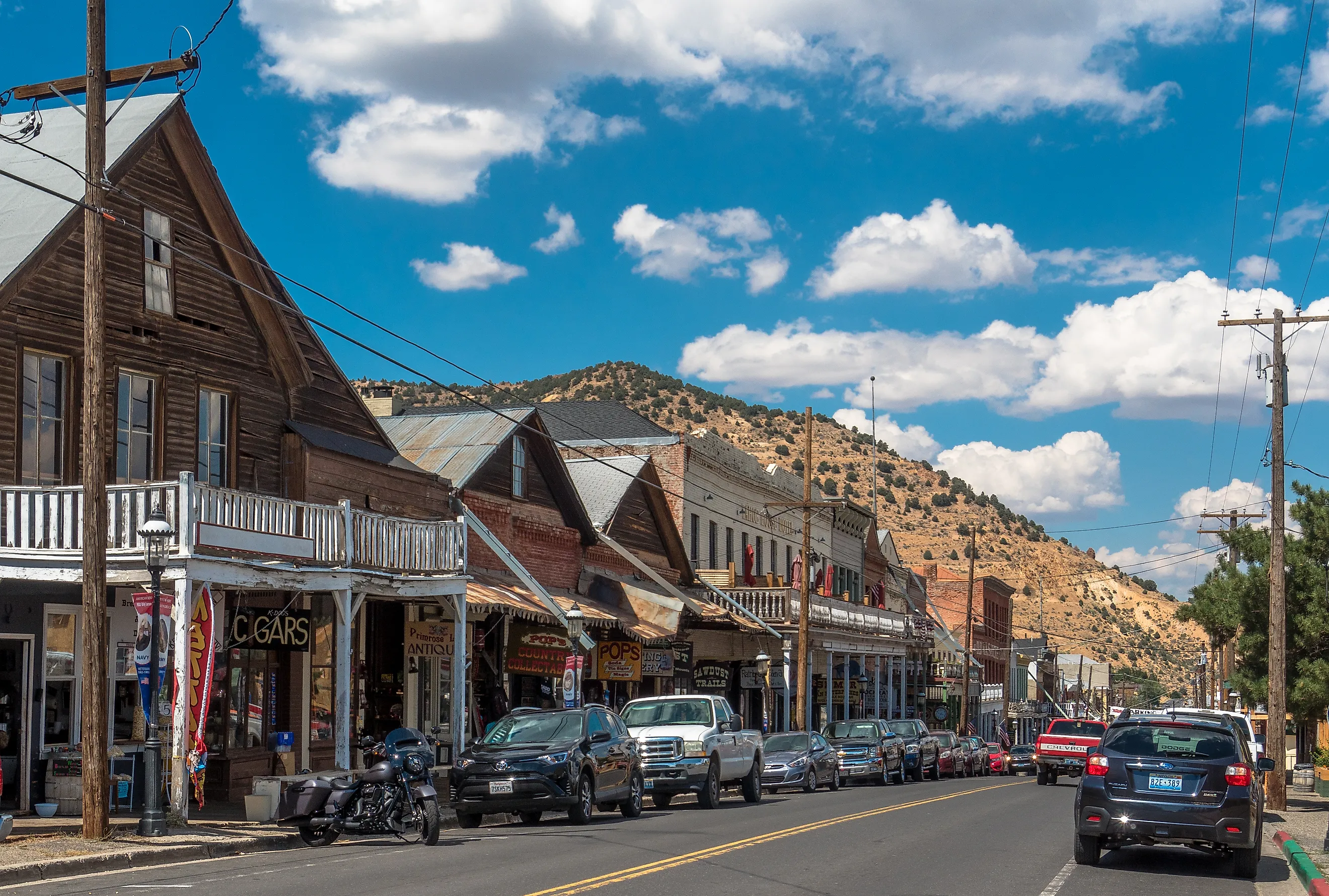
Virginia City clings to the steep side of Mount Davidson, above dry canyons that 19th-century silver crews carved into the hills below. Silver from the Comstock Lode paid for the whole town. Piper's Opera House burned twice and was rebuilt both times, and performers still stage shows under its horseshoe balcony. A few steps away at The Way It Was Museum, you can study a detailed model of the silver workings alongside chunks of raw ore hauled up from the tunnels.
Walk down to Carson Street to reach Miner's Park, with its shaded lawns and benches. Spread out a picnic there, and the Virginia Range stretches across the view while you eat.
Eureka

Limestone cliffs and piñon ridges rise straight out of the high desert around Eureka, an 1870s silver town strung along U.S. Route 50, the stretch old ad copy branded the Loneliest Road in America. The brick-and-iron Eureka Opera House stands at the center of town, and its original hand-painted curtain still drops for concerts and plays in a hall that hosted masquerade balls and vaudeville acts a century ago.
A block off Main Street, the 1879 Eureka Sentinel Museum sits in the old newspaper office. The printing presses are still bolted to the floor of the ground-floor press room, and mining tools and military uniforms fill the cases upstairs. When hunger hits, order an American or Indian plate at the Urban Cowboy Bar & Grill, a saloon-style room built for the part.
Ely

Two ranges box Ely in, the Egan Range to the west and the Schell Creek Range to the east, both of them snow-capped well into spring. You can trace the town's mixed past at Ely Renaissance Village, a cluster of restored pioneer cabins and immigrant rail-worker homes. Down on Aultman Street, a gallery called the Ely Art Bank sits inside a 1907 bank building, where aspen trunks mounted on the walls surround a rotating collection of paintings, sculpture, and photographs.
More than 70 buildings make up the Nevada Northern Railway Museum in East Ely, and a walking tour passes a coaling tower, a working machine shop, and a preserved dispatch office. Vintage steam and diesel locomotives haul passengers along 30 miles of original track, climbing into Robinson Canyon and through Tunnel No. 1, one of the few curved railroad tunnels in the world. On summer nights, crews run the Great Basin Star Train out to Star Flat, where telescopes wait in the open desert under a sky thick with planets and galaxies.
Elko

North of Ely across high-desert valleys, the Ruby Mountains rise into view and hold the horizon all the way to Elko. For a full dose of cowboy tradition, start at the Western Folklife Center inside the historic Pioneer Hotel, where handmade leather saddles and a gallery of Western art stay up year-round. Every January, performers fill its stage for the National Cowboy Poetry Gathering with music, verse, and storytelling. A few blocks over at the Northeastern Nevada Museum, a wildlife wing sits beneath a mural-sized mountain backdrop, alongside Native American beadwork and Basque immigrant pieces.
The museum grounds open onto Main City Park, 21 acres of shade trees and grass and the oldest park in Elko, with tennis courts and horseshoe pits on site. At dinner, order a family-style meal at the Star Hotel, where every entree comes with homemade cabbage soup, French fried potatoes, and green beans down a long shared table.
Tonopah

Halfway between Reno and Las Vegas, Tonopah sits far enough from either one to have some of the darkest skies in the country. At the Clair Blackburn Memorial Stargazing Park, the Milky Way spills across the whole sky, and thousands of stars and a handful of planets come out with no telescope needed. By day the story turns to silver at the Tonopah Historic Mining Park, where more than a hundred acres of ruins and underground tunnels spread across the hillside that earned the town its old title, Queen of the Silver Camps.
Downtown along Main Street, the five-story Mizpah Hotel opened in 1907, its lobby and rooms still dressed in silver-boom style. Order a full breakfast at the Pittman Cafe, then take a nightcap in the Jack Dempsey Room, named for the heavyweight champ who, as local legend tells it, once worked the floor here before he was famous.
Caliente

Caliente sits right at the mouth of Rainbow Canyon, where volcanic ash walls rise in bands of red and purple just past Main Street. The Mission Revival Caliente Station stands at the center of town, a former railroad depot with a small art gallery and a heritage museum of railroading memorabilia inside. Just outside the depot, cooks at the Side Track Restaurant turn out biscuits and gravy, hand-rolled pizzas, and Angus burgers.
Two miles south, spring-fed pools and grapevines climbing the cliff walls turn Kershaw-Ryan State Park into a green pocket in the desert. Ancient volcanoes laid down the canyon's colored rock, and springs cut the channels through it. Hiking and biking trails run the canyon floor and climb the walls, with more routes waiting in the country just beyond the park.
Boulder City

Green parks, 1930s architecture, and long views of Lake Mead set Boulder City apart from the Mojave Desert around it. The government built the town from scratch to house Hoover Dam workers, and much of that era still stands. At Hemenway Park, mowed lawns look out over the deep blue lake and the desert mountains behind it, and a herd of wild bighorn sheep comes down to graze the grass most afternoons.
The Boulder Dam Hotel housed the officials and project managers who oversaw the dam, and travelers can still book rooms there today. The town's original speakeasy is down in the basement, the restaurant menu runs to Hawaiian comfort food and American standards, and on the first floor, the Boulder City-Hoover Dam Museum walks you through what the dam workers were up against, with interactive displays, vintage gear, and rare photographs.
The Land Came First
Settlers built Genoa under the Sierra Nevada, Tonopah under a dark sky, Caliente at a canyon mouth. In each one the land came first, and the miners and ranchers and rail crews made do with what they found. That is why these towns still look the way they do, and why a weekend spent among them reads as much like geology as history.