9 Minnesota Small Towns With Unmatched Friendliness
Minnesota's small towns earn their reputation for friendliness through community festivals and welcoming downtowns. The Northern Landscapes Festival in Grand Marais each May, the Harvest Moon Festival in Ely each September, and River City Days in Red Wing each August all show why these communities pull regional visitors year after year. New Ulm runs Bock Fest and Heritagefest as longstanding German-heritage celebrations. Bemidji shows off its lumberjack roots with its Paul Bunyan and Babe the Blue Ox statues. These are nine of the most welcoming small towns in Minnesota.
Grand Marais

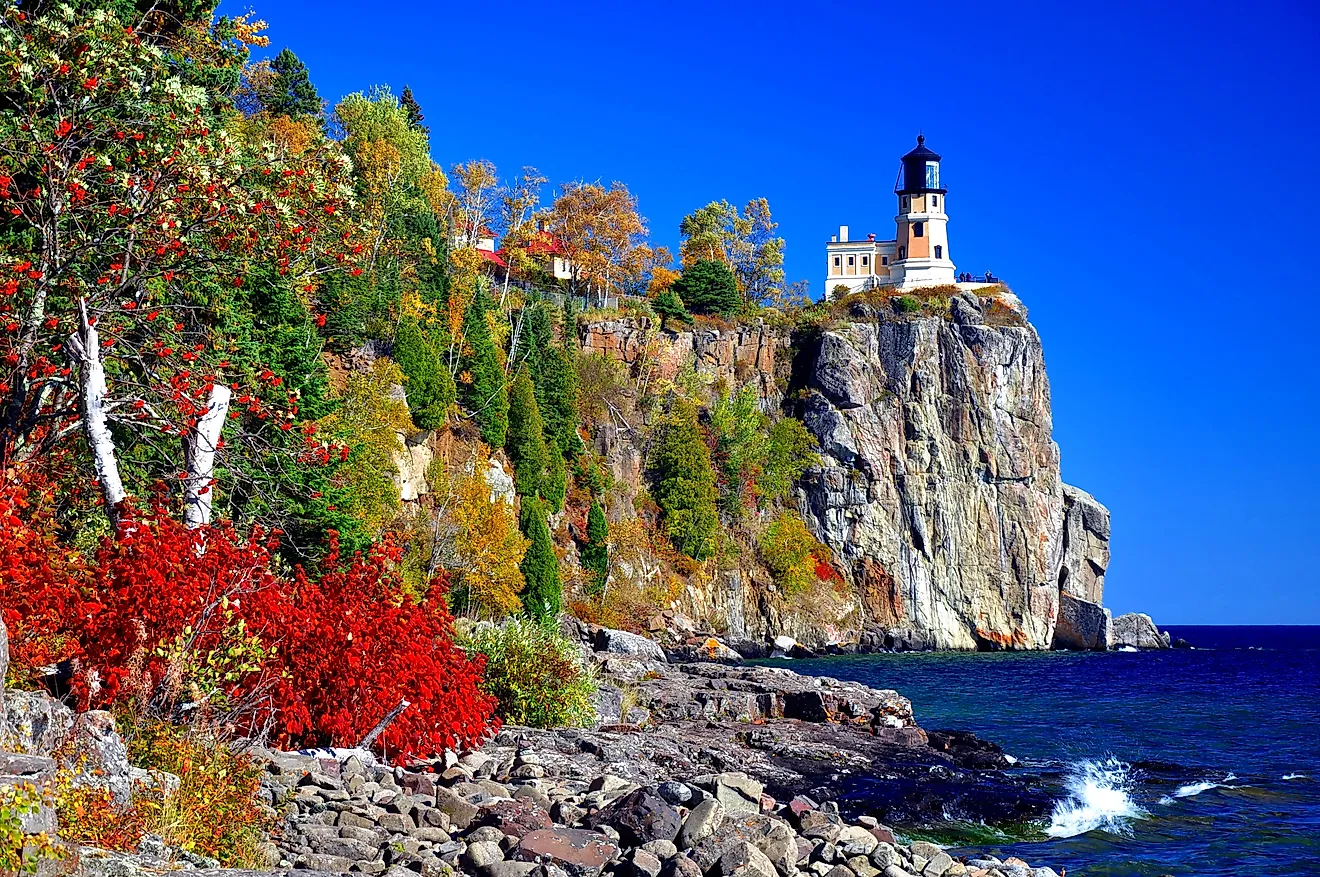
Grand Marais is the seat of Cook County, sitting on the North Shore of Lake Superior with a population of just over 1,300. Historically, the area was Ojibwe land and later a French fur-trading post (the name itself is French for "Great Marsh"). The town is home to a cluster of nonprofit education institutions including the Grand Marais Art Colony, founded in 1947 as the oldest art colony in Minnesota, and the North House Folk School, founded in 1997 as a center for traditional Northern crafts including woodcraft, blacksmithing, and timber-frame construction. The Northern Landscapes Festival each May covers field workshops in birding, foraging, geology, and beekeeping. Just south of town, Artist's Point is a small rocky peninsula formed by ancient lava flows where visitors walk and watch the lake. The Grand Marais Lighthouse and the Pickle Barrel House Museum (a working-sized 1926 pickle barrel built for cartoonist William Donahey, creator of the Teenie Weenies) round out the in-town landmarks.
Ely

Ely sits in St. Louis County in northeastern Minnesota as the primary entry point to the Boundary Waters Canoe Area Wilderness. The town was settled as a Vermilion Iron Range mining town in the 1880s and still runs a Pioneer Mine open-pit memorial site downtown. The International Wolf Center on the east edge of town houses several captive wolf packs of different ages and runs the most active wolf-education program in North America. The North American Bear Center, founded by researcher Lynn Rogers, is the only black-bear education facility of its kind in the country and houses three resident bears (Tasha, Lucky, and Holly) on a 2.5-acre wooded enclosure.
The Ely Harvest Moon Festival each September celebrates its 32nd year in 2026, with three days of artisan vendors, food vendors, and live music. The Dorothy Molter Museum preserves the cabin and personal collection of "the Root Beer Lady," who lived alone for 56 years on Knife Lake inside what is now the Boundary Waters wilderness, making and serving homemade root beer to passing canoeists.
Lanesboro

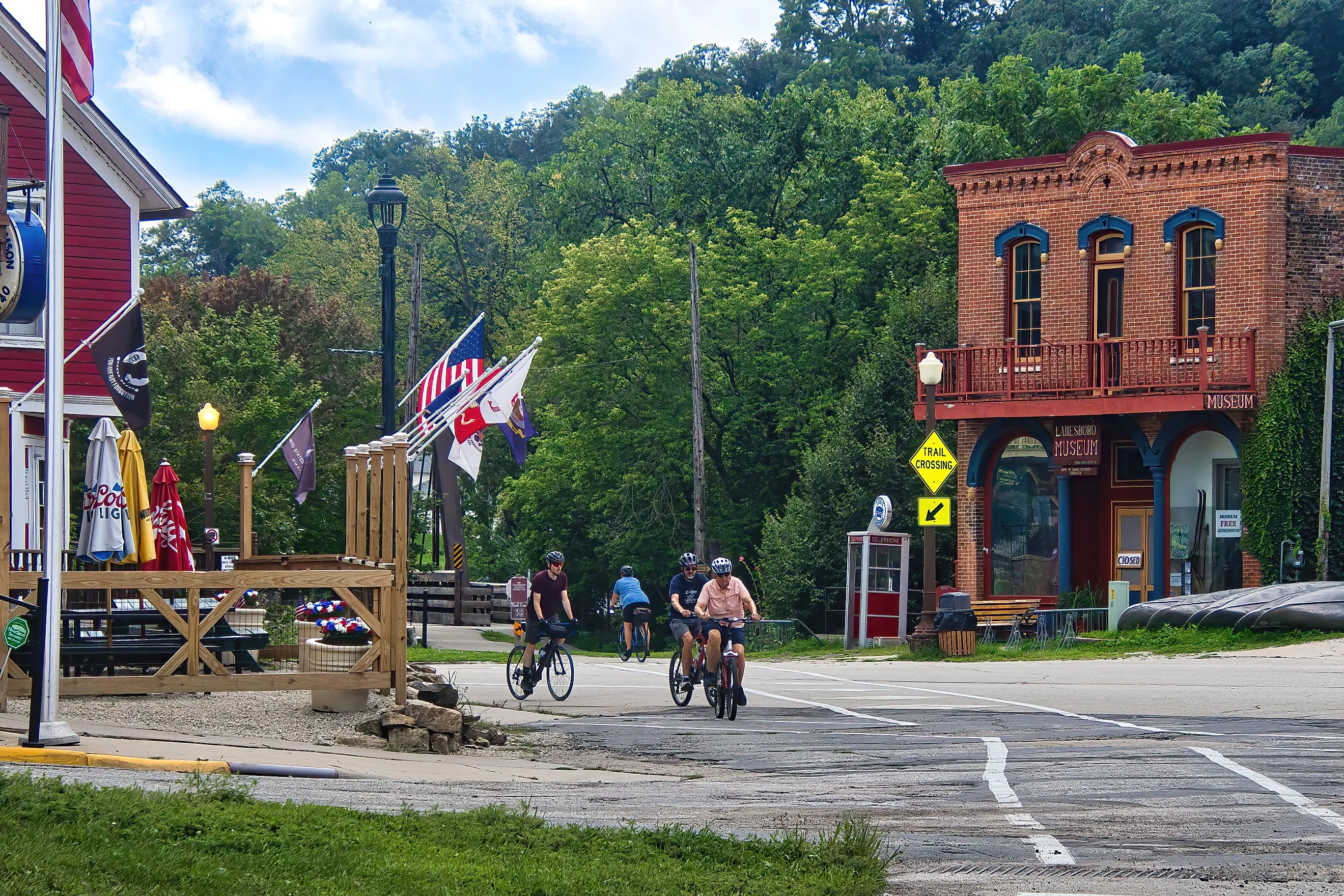
Lanesboro sits along the South Branch of the Root River in the heart of the Driftless Area in southeastern Minnesota. The town has just under 800 residents and is named for an early landowner, F. A. Lane. The Root River State Trail, a paved 42-mile rail-trail conversion, runs through downtown Lanesboro and connects the town to Fountain, Preston, and Houston. The Commonweal Theatre Company, an Equity-affiliated professional theatre, runs a year-round season from a downtown campus.
The surrounding Lanesboro-Harmony area is home to one of the largest Amish settlements in the upper Midwest, with about 130 Amish families farming the surrounding countryside. Several local outfitters run respectful guided Amish tours that include visits to working farms and craft shops. The annual Lanesboro Art in the Park festival each June fills Sylvan Park with regional artists, music, and food vendors. The Sylvan Park Rhubarb Festival each spring includes a baking contest and a costume contest.
Stillwater

Stillwater calls itself the Birthplace of Minnesota because the 1848 Stillwater Convention, held here, organized the territorial government that would become the state of Minnesota in 1858. The town sits on the St. Croix River along the Wisconsin border and runs a historic downtown of preserved 19th-century commercial buildings. The Lift Bridge over the St. Croix, built in 1931 and converted to pedestrian-and-bicycle use in 2017, anchors the south end of downtown. The Midsommar Festival each June at the Gammelgården of Scandia (just north of town) celebrates Swedish midsummer traditions with maypole dancing, traditional music, and Scandinavian food. Downtown Stillwater holds the Lowell Inn (1930), the Washington County Historic Courthouse (1870), and a working brewery and distillery scene along Main Street.
Red Wing

Red Wing sits along the upper Mississippi River as the seat of Goodhue County. The town is named for a Mdewakanton Dakota chief, and the Mdewakanton Sioux Community was federally recognized as the Prairie Island Indian Community in 1934. River City Days each August fills downtown Red Wing with a beer garden, live music, a medallion hunt, a car show, river duck races, and trolley rides. The Red Wing Shoe Company runs its flagship store and museum downtown, with the World's Largest Boot (a size 638½ working replica of the company's classic Iron Ranger boot) on display. The Goodhue County History Center covers regional history, and Memorial Park on Sorin's Bluff above town gives the best view of the river and downtown.
New Ulm

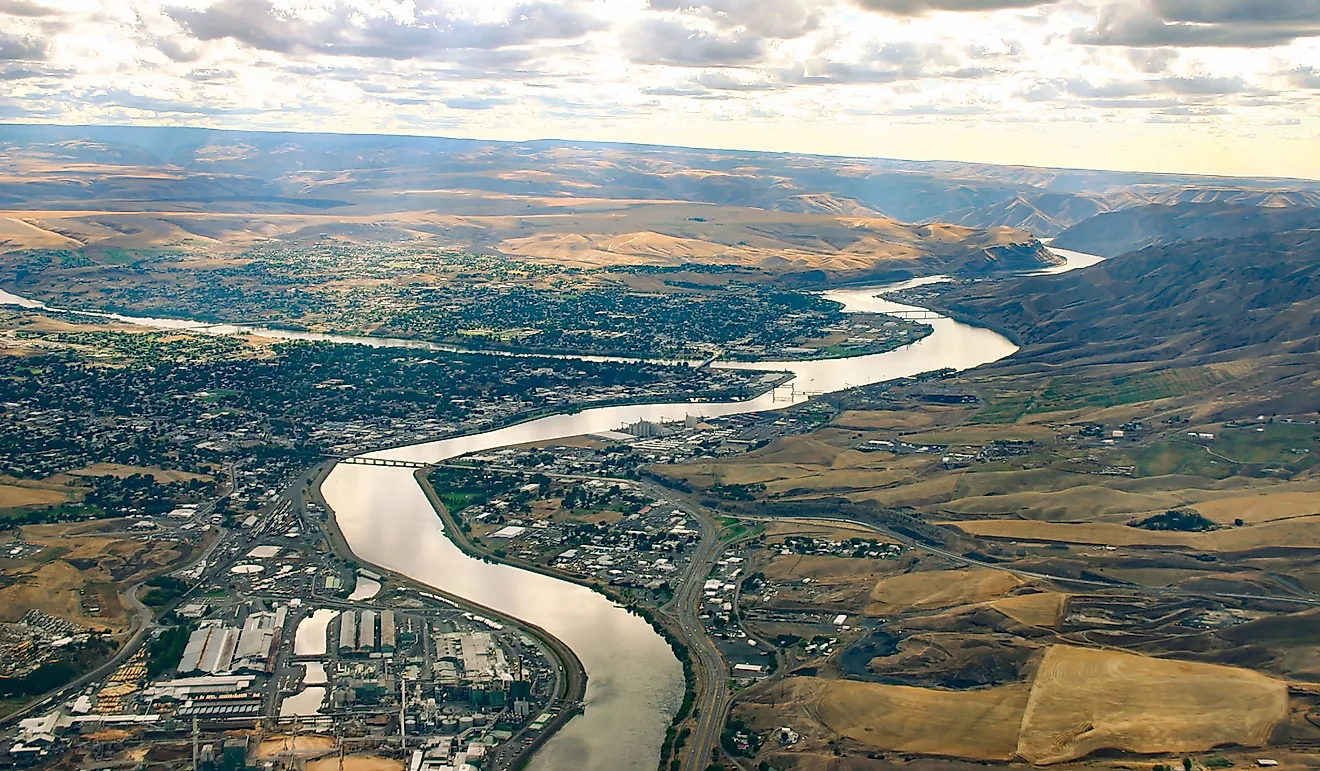
New Ulm was established in 1854 by the German Land Company of Chicago and named for the city of Ulm in southern Germany. The town sits at the confluence of the Minnesota and Cottonwood Rivers and runs the largest concentration of German-American heritage in Minnesota. The Brown County Free Fair each August, running since 1867, includes demolition derbies, tractor pulls, livestock shows, and free admission throughout. The August Schell Brewing Company, founded by German immigrant August Schell in 1860, is the second-oldest family-owned brewery in the United States and runs gardens, a brewing museum, and a gift shop on the original grounds. The Hermann Heights Monument, a 102-foot copper-and-iron statue of Hermann the Cheruscan completed in 1897, stands on a bluff above town as one of three Hermann monuments in the world.
Bemidji

Bemidji sits on the southwest shore of Lake Bemidji, one of the first lakes the Mississippi River flows through after leaving Lake Itasca. The town calls itself the "First City on the Mississippi" and is closely associated with the Paul Bunyan folklore tradition. The 18-foot Paul Bunyan and Babe the Blue Ox statues, dedicated in 1937, are among the most photographed roadside attractions in the country and are listed on the National Register of Historic Places. The adjacent Tourist Information Center holds the Fireplace of States, a 1937 stone fireplace built from one rock contributed by every state in the U.S. and every Canadian province at the time. The Watermark Art Center on the lakefront runs four galleries including a rotating Indigenous Artists Gallery. Three Ojibwe reservations (Leech Lake, White Earth, Red Lake) sit within an hour of Bemidji, and the town runs strong Indigenous-arts and Indian Health Service programs.
Winona

Winona sits along the Mississippi River as one of the most architecturally distinct small cities in the upper Midwest. The downtown holds two National Register Historic Districts with concentrated Beaux-Arts, Italianate, and Prairie School buildings. The Minnesota Marine Art Museum is a genuine surprise with a wide variety of exhibitions on display, ranging from classically trained fine artists to contemporary exhibitions, with a key focus on 'what is marine art, and what can it be. The 500-foot Sugar Loaf bluff rises above Lake Winona on the southwest edge of town. The Winona County Fair, running since 1858, fills the county fairgrounds each August with livestock shows, tractor pulls, and a midway. Ecker's Apple Farm 15 minutes south of town has been family-owned since 1945 and grows 20 apple varieties.
Park Rapids

Park Rapids serves as the closest town to Itasca State Park, Minnesota's oldest state park (established in 1891). The park covers 32,690 acres of old-growth pine and glacial lakes around Lake Itasca, the headwaters of the Mississippi River, where visitors can walk across the start of the 2,340-mile river on a few stepping stones. The Heartland State Trail, a 49-mile paved rail-trail conversion, runs through Park Rapids and connects the town to Walker and Cass Lake. The historic Park Theatre on Main Street, opened in 1939, still runs first-run films from its restored single-screen auditorium. The Park Rapids Art Leap each fall opens local artist studios and galleries to visitors for a self-guided regional art-and-craft tour.
Why Minnesota's Small Towns Leave a Lasting Welcome
Minnesota's small towns balance natural settings with strong community calendars. Each of the nine communities above carries a distinct identity. Grand Marais and Ely anchor the Lake Superior and Boundary Waters wilderness gateways. Bemidji and Park Rapids hold the headwaters and lumberjack-folklore identities of the north-central lake country. Stillwater, Red Wing, and Winona run the Mississippi-and-St.-Croix river-town versions. New Ulm preserves the strongest German-American heritage in the upper Midwest, and Lanesboro carries the Driftless-Area arts-and-Amish character. Together they make a strong case for small-town Minnesota as one of the friendliest regions in the country.