8 Tiny Off-Grid Towns In Iowa
Iowa is a wide state, full of individual, unique places. Tiny towns like Eldon, home of the American Gothic House, and Elk Horn, where the Danish Windmill spins, prove that off-the-grid doesn't mean void of personality. In fact, some of these American towns are oddly specific, diving headfirst into their niche history and downright peculiar traditions. They don't bring the big crowds of larger spots like Cedar Rapids, and instead capture those with specific interests. The thing is, you need to venture off the beaten path to find them.
Orange City

Orange City can be found up in the state's northwest corner, surrounded by farmland rather than highways or lakes. The town commits fully to its Dutch roots in ways most places abandoned generations ago. Building codes require Dutch-style facades, which means stepped gables, bright shutters, and brick detailing show up everywhere. Every May, the Tulip Festival takes over the streets with thousands of blooms, wooden-shoe dancers, daily parades, and the Dutch Dozen performing in period costume. Windmill Park doubles as a visual centerpiece and gathering space, complete with working windmills, reflecting ponds, and dense tulip beds. City Center operates like a European plaza, hosting events beneath another windmill rather than traffic lights. Many of the businesses embrace the Dutch roots of the town, including Brad's Breads & Bakery and Woudstra Market.
Eldon

Eldon isn't this major tourist hub that every highway leads to, or some lake getaway spot that luxury travelers flock to. Instead, it's instantly recognizable for one thing. Eldon holds the white farmhouse with the pointed Gothic window that Grant Wood used for his famous 1930 American Gothic painting. The house still stands. People stop, match the pose, and snap their own version of a painting they saw long before they ever learned the town's name. The American Gothic House Center sits next door, keeping the painting grounded in real timelines rather than lore. Walk a few blocks, and the theme shifts from brushes to railcars.
The former Rock Island Depot has been converted into a railroad museum, leaning into Eldon's early connection to the rail network. Another remnant of local persistence, the McHaffey Opera House, made it out of the 1890s and into the present after residents refurbished it and returned it to use for plays and concerts. The Chippewa Creek trail runs near town and adds a stretch of green with river access and a disc golf course. The month of June delivers Gothic Days, a weekend of art events and music that brings people into a village that most travelers never notice on a map.
Clear Lake

A 3,600-acre, spring-fed lake defines the town of Clear Lake. Downtown meets the shoreline at Clear Lake City Beach, where swimming happens steps from Main Avenue, and the splash pad and bathhouse keep the scene busy all summer long. South along Lakeview Drive, Clear Lake State Park Beach is a longer, quieter, 900-foot stretch of sand. On the water, Lighthouse Boat Rentals sends pontoons and jet skis straight out into the lake. While those in the know take advantage of the vacation vibes of Clear Lake, the town remains very much off the grid, partially due to its location up north, surrounded by marsh and farmland.
Elk Horn

Elk Horn pulses with a distinctly Danish rhythm in the rolling hills of southwestern Iowa, standing out as one of the country's largest Danish-American settlements. The Danish Windmill, shipped piece by piece from Nørre Senede, Denmark, and rebuilt in 1976, isn't just a photo stop; it's fully functional and open for tours, letting visitors see history in motion. A stroll from the windmill leads to the Museum of Danish America, sprawling across 35 acres, where exhibits shift between New Nordic Cuisine, Viking-era artifacts, and Danish immigration stories. May brings Tivoli Fest, a weekend festival of folk dancing, craft fairs, and authentic Danish bites. Sweet-tooths gravitate to The Kringle Man, where flaky kringles and stroopwafels offer literal bites of Denmark without leaving the Midwest. With its Danish architecture lining quiet streets, Elk Horn feels off the mainstream radar. It's not a highway hub or a lake retreat, but a concentrated pocket of Scandinavian history and culture firmly rooted in rural Iowa.
Britt

The town of Britt in north-central Iowa has an unusual obsession with hobos. Every August, the National Hobo Convention and Hobo Days festival brings together nomadic workers and their admirers and has done so for over a century. Streets fill with live music, craft vendors, food, and the coronation of a King and Queen Hobo, a tradition unique to this town. Anchoring the celebration year-round, the National Hobo Museum chronicles the life of hobos, showing tools, photos, and artifacts of a lifestyle rarely understood elsewhere. Given the transient lifestyle of hobos, it's fitting that Britt is far from any densely populated area, with the closest well-known spot being the Eagle Flatts Wildlife Management Area. Britt also preserves a slice of Victorian color with the Armstrong House, a candy-painted mansion that's somewhat reminiscent of Victor Creel's house in Stranger Things and is available for tours by appointment.
Riverside

There are a lot of famous Riversides in America, but none so popular among die-hard Trekkies. Riverside, Iowa, embraces its title as the fictional birthplace of Star Trek's James T. Kirk, with a bronze statue of the captain at Railroad Park and a plaque outside City Hall. The Voyage Home Museum brings together props, cast cutouts, and local history, making it both kitschy and surprisingly grounded in place.

Streets come alive in late June for TrekFest, where costumed parades, trivia contests, and the Intergalactic Pet Show at Butler Park turn this small, out-of-the-way community into a galaxy of fans. Beyond the sci-fi spotlight, Riverside offers an experience rooted in the present. This includes the Riverside Casino & Golf Resort, which brings Vegas-style gaming, dining, a spa, and a Blue Top Ridge golf course, all within town limits.
Marquette

Marquette perches along the Mississippi River in northeast Iowa, a small town threaded into the bluffs of the Driftless Area, far from major state hubs. The river is the center of activity, with a boat launch, marina, and riverfront boardwalk that let you step directly onto the water. Anglers line the handicapped-accessible fishing pier, while riverboat tours carry visitors past the town. At the heart of downtown, the Marquette Depot Museum preserves railroad history with artifacts and exhibits that trace the town's history with the rails. Eagles Landing Winery puts a modern twist on river life, offering locally produced wines. Families and nature lovers can explore the Driftless Area Wetlands Center or check out the seasonal Flea Market Under The Bridge.
Winterset

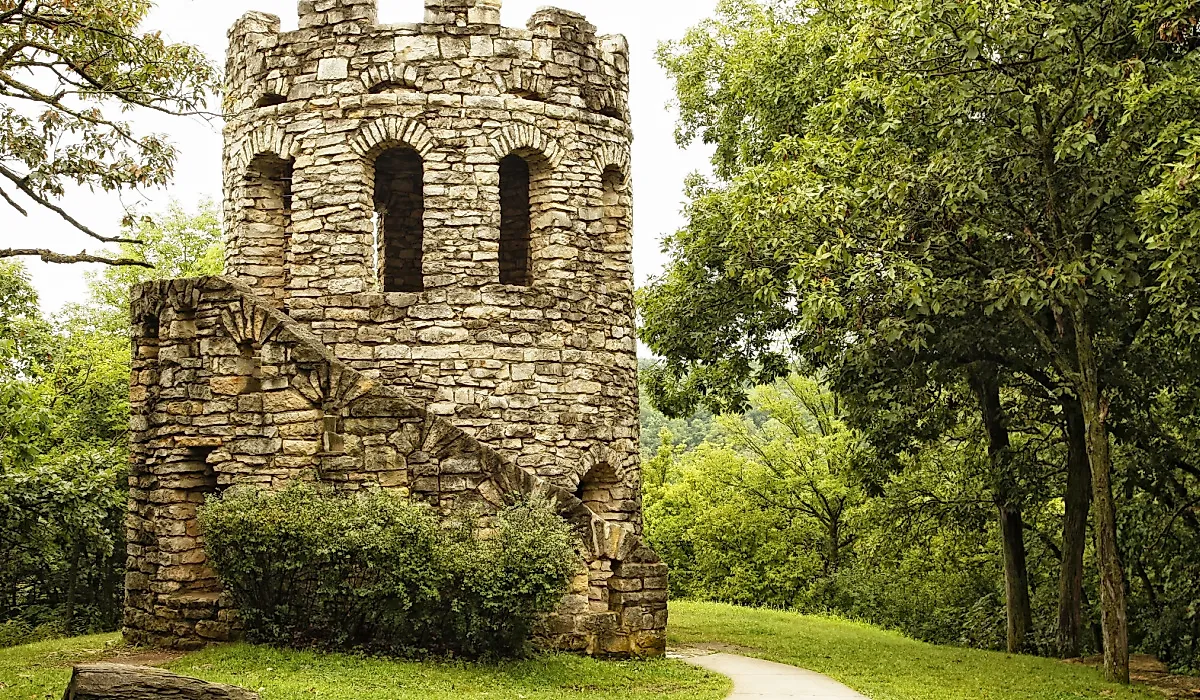
Winterset is far from a typical Iowa pit stop, located roughly 40 minutes southwest of Des Moines. It's not exactly on any major highway, but those in the know make the effort to travel a little off the beaten track to visit. Six covered bridges punctuate the landscape, including the Roseman and Holliwell, where roads dip into tree-lined hollows that make snapping a photo feel like stepping back a century. Downtown, the Madison County Courthouse dominates the square with its 1880s stonework and functioning clock, while nearby, the John Wayne Birthplace Museum preserves the actor's early life and personal memorabilia. Cafes and shops cluster around the square in restored 19th-century buildings. City Park adds layers of local activity with its Play for All playground, live English hedge maze, whimsical wooden sculptures, and Clark Tower rising overhead.
Exploring Iowa's off-the-grid towns means skipping the highways and embracing the unexpected. From Eldon's iconic Gothic farmhouse to Britt's hobo heritage, Riverside's sci-fi devotion, and Winterset's cinematic covered bridges, each town offers something singular despite having a tiny population. Each place is alive with local traditions, unusual attractions, and stories that don't fit neatly into a travel brochure. Iowa's quiet corners prove that you don't need a big city to find history, culture, or personality.