8 Tiny Off-Grid Towns In Hawaii
Off‑grid towns across Hawaii show a very different side of island life. Cross one-lane bridges on the Road to Hana and in the coffee country of Hōlualoa and the highlands of Lānaʻi City, you will find family‑run farms and community art studios. These villages run on farmers’ markets, community centres, and slow evenings spent along coastal trails. For more ideas and inspiration, explore the tiny off-grid towns and discover what local Hawaii can feel like when you step off the main tourist track.
Hāna (Maui)

On the far eastern tip of Maui lies Hāna, a rainforest‑fringed village reached by a 52‑mile drive that coils around cliffs and crosses 59 one‑lane bridges. Fewer than 1,600 people live here, and the journey itself sets a contemplative tone as one drives past waterfalls and dense bamboo. St. Mary’s Catholic Church, the parish at the edge of town, welcomes travelers as they arrive in Hāna along the highway. Nearby, the Hasegawa General Store, founded in 1910, stocks everything from fishing lures to papaya jam and has long served as Hāna’s hub.

Nature dominates daily life. Hamoa Beach, a crescent of gray sand tucked beneath sea cliffs, was once praised by author James Michener as one of the world’s finest beaches; its shore break offers bodysurfing when conditions allow. North of town, Waiʻānapanapa State Park protects a black‑sand cove formed by eroded lava and sea caves, and reservations are required to limit crowds. Inland, the Pīpīwai Trail in Haleakalā National Park winds through a colossal banyan, a whispering bamboo forest, and past 200‑foot Makahiku Falls before ending at the 400‑foot Waimoku Falls. Hāna’s isolation fosters a close connection with the land and sea, and its residents embrace the area’s beauty without the bustle of chain stores or large hotels.
Honokaʻa (Island of Hawaiʻi)

Perched on the windward slope of Hawaii’s Big Island, Honokaʻa retains the feel of a plantation town. A wooden boardwalk fronts a row of early‑20th‑century storefronts that once served sugarcane laborers and immigrant merchants. Official records show just 2,699 residents. The Honokaʻa Heritage Center notes that the community preserves Hawaii’s largest concentration of plantation‑era commercial buildings and that the Honokaʻa People’s Theatre, built in 1930, still hosts concerts and film screenings. At Tex Drive In, bakers craft malasadas (puffy Portuguese doughnuts rolled in sugar) that have been drawing road‑trippers since 1969.

Just beyond town, the Waipiʻō Valley drops nearly 2,000 feet to the coast. Once home to Hawaiian kings, this fertile gorge now shelters taro fields, wild horses, and a black‑sand beach. Visitors who hike or join a guided tour may glimpse waterfalls spilling from sheer cliffs.
Hōlualoa (Island of Hawaiʻi)

High on the slopes of Mount Hualālai above Kailua‑Kona, Hōlualoa overlooks the cobalt expanse of the Pacific. The population hovers around 3,000, and the town’s steep streets thread through lush coffee groves. Dozens of family‑run farms invite visitors to tour rows of glossy coffee trees, learn about roasting, and sample fresh brews. Each November, the village hosts the Coffee & Art Stroll, transforming sidewalks into an open‑air market where roasters, painters, and potters share their crafts. On the first Friday of every month, Art After Dark block parties fill the main street with music and food trucks until late.

Hōlualoa offers more than beans and canvases. Along the Mamalahoa Highway, galleries exhibit wood carvings, ceramics, and textiles that reflect both Hawaiian tradition and contemporary creativity.
Makawao (Maui)

In Upcountry Maui, Makawao blends paniolo (Hawaiian cowboy) heritage with a thriving arts scene. Around 7,300 residents reside in this hill town on the slopes of Haleakalā. Every Fourth of July, rodeo fans fill the town for the Makawao Parade and Rodeo (Hawaii’s largest), where cowboys compete in barrel racing and roping events. The town’s paniolo roots trace back to the 19th century when Mexican vaqueros taught Hawaiians cattle ranching.
Between rodeos, visitors line up at T. Komoda Store & Bakery, founded in 1916, for cream puffs and stick doughnuts. Galleries and glassblowing studios line Baldwin Avenue, and the Hui Noʻeau Visual Arts Center, housed in a 1917 estate, offers classes and exhibitions. Outside of town, trails ascend through eucalyptus and pastureland; horseback tours on private ranches reveal sweeping views of Maui’s central valley.
Kapaʻa (Kauaʻi)

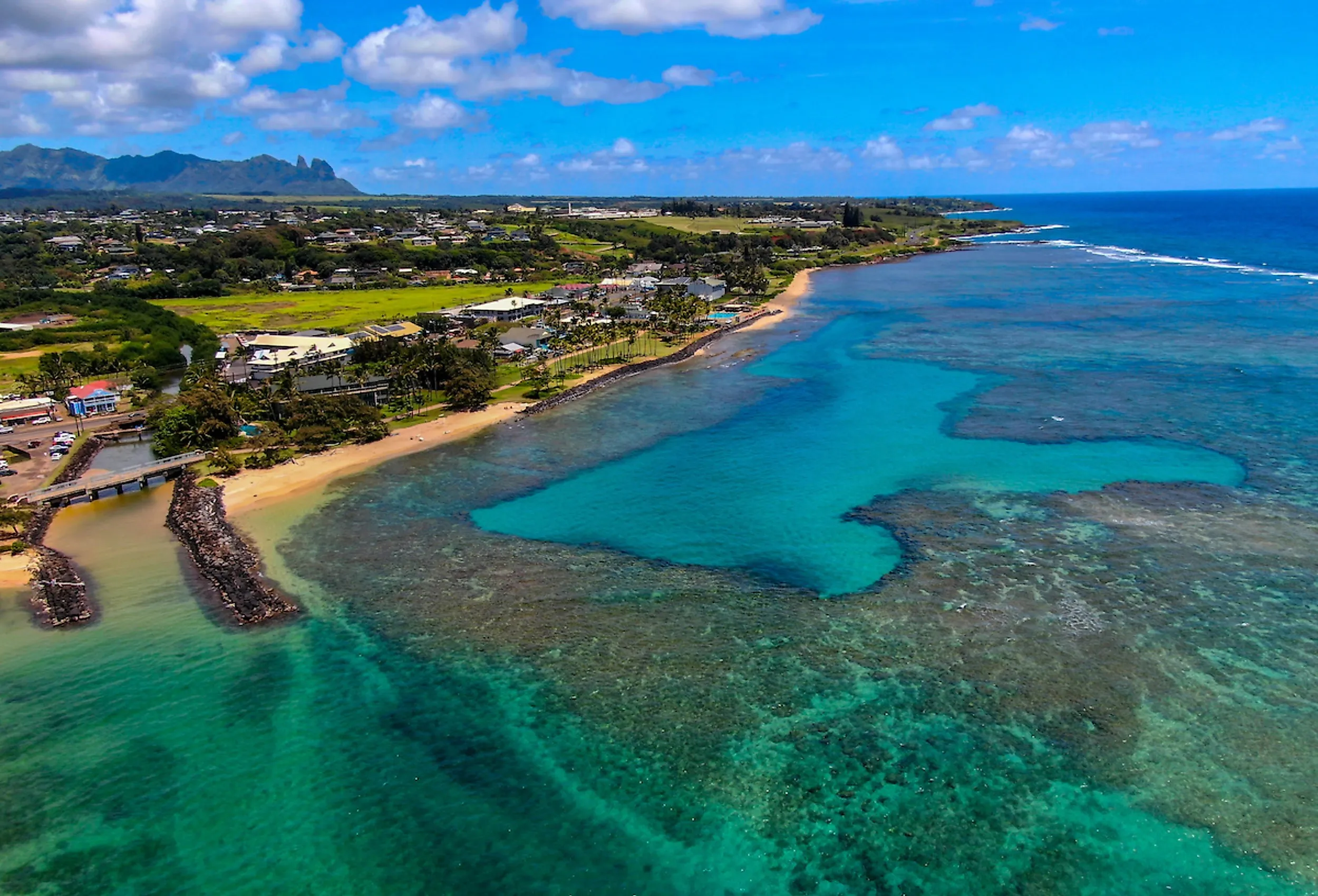
On the east coast of Kauaʻi, Kapaʻa serves as both the island’s largest town and a relaxed seaside base. The 2020 census recorded about 11,652 residents. The Ke Ala Hele Makalae (roughly “The Path that Goes by the Coast”) is an eight‑mile paved trail hugging the shoreline. Walkers and cyclists move past tide pools and beach parks, reading interpretive signs that recount local history and legend. In winter, migrating whales sometimes breach offshore.
Downtown Kapaʻa features surf shops, ukulele makers, and eateries serving plate lunches and shave ice. On the first Saturday evening of each month, the Kapaʻa Art Walk turns the main street into a festival of food trucks, live music, and local artisans. For those seeking elevation, the Sleeping Giant Trail climbs Nounou Mountain through a forest of ironwood and wild guava to a panoramic lookout over Wailua River and the ocean.
Hāwī (Island of Hawaiʻi)

At the northernmost tip of the Big Island, Hāwī sits on Kohala’s green slopes where breezes carry the scent of plumeria. Once home to the Kohala Sugar Mill, this tiny community of fewer than 2,000 people has evolved from a clutch of dilapidated buildings into a lively two‑block downtown. Plantation‑style wooden façades house cafés, galleries, and boutiques. The Kohala Welcome Center, staffed by volunteers, offers local history exhibits and personalized travel advice. Nearby, the Puʻukoholā Heiau National Historic Site features massive stone temples commissioned by King Kamehameha I in the early 1790s and tied to his quest to unify the islands.

Hāwī’s culinary scene reflects its agricultural roots. The Kohala Coffee Mill serves espresso drinks alongside ulu (breadfruit) burgers and local ice cream, while Bamboo Restaurant, the town’s oldest eatery, occupies a former hotel and general store and serves fish caught by Kohala fishermen. Art thrives here too: at Ipu Kane, craftsman Michael Harburg revives the traditional Niʻihau art of gourd staining, etching designs, and dyeing gourds with natural pigments. Just east in Kapaʻau stands the original statue of Kamehameha I, cast in the 19th century.
Lānaʻi City (Lānaʻi)

Perched 1,700 feet above sea level in the cool highlands of Lānaʻi, Lānaʻi City began as a company town for James Dole’s pineapple empire. By the 1930s, the island supplied 75 percent of the world’s pineapple crop. Today, about 3,300 residents live among the Cook pine trees that circle Dole Park, a grassy square where locals picnic and children play. The town’s grid of plantation‑era buildings holds boutiques, coffee shops, and the Lānaʻi Art Center, which showcases local ceramics and watercolors and offers classes. A short walk away, the Lānaʻi Culture & Heritage Center chronicles everything from early Hawaiian settlement to ranching and plantation history.
Adventure extends beyond town. The Lānaʻi Cat Sanctuary near the airport shelters hundreds of rescued felines and welcomes visitors daily. Thrill seekers head to the Lānaʻi Adventure Park for e‑bike tours, aerial ropes courses, and ziplining. Off‑road enthusiasts can explore hundreds of miles of red‑dirt trails, while hikers trek down to Puʻu Pehe (Sweetheart Rock) for sunset views over the ocean.
Pāhoa (Island of Hawaiʻi)

Tucked in the Puna District of the Big Island, Pāhoa looks straight out of an old Western film. Its raised wooden sidewalks and false‑front stores recall 19th‑century frontier towns. Once a timber and sugarcane center, Pāhoa now bills itself as the “hippie capital” of Hawaii, home to an eclectic mix of residents and counterculture shops.
Volcanic activity shapes the landscape. Just south of town, Lava Tree State Monument preserves hollow rock molds of ohia trees formed by an 18th‑century lava flow. A few miles farther is the Star of the Sea Painted Church. Built in 1927 in Kalapana, the chapel was moved by locals ahead of an advancing Kīlauea lava flow in 1990; its interior murals, painted by Father Evarist Gielen, are considered folk art masterpieces.
Why These Towns Matter
These eight communities span four islands yet share common threads. All lie far from resort corridors and maintain populations under 20,000. Each town’s identity grew from its environment: Hāna’s rainforest and surf; Honokaʻa’s proximity to Waipiʻō’s fertile valley; Hōlualoa’s volcanic soils and coffee groves; Makawao’s ranchlands; Kapaʻa’s beaches and river confluence; Hāwī’s sugar legacy and wind‑swept cliffs; Lānaʻi City’s highland plantations; and Pāhoa’s ever‑changing lava fields. Visiting them reveals how Hawaiian culture adapts to geography and climate. Travelers who venture off the beaten path will find more than pretty scenery: they will encounter living history, enduring craftsmanship, and a deep respect for the land and sea.