11 Unforgettable Small Towns to Visit in Northern California
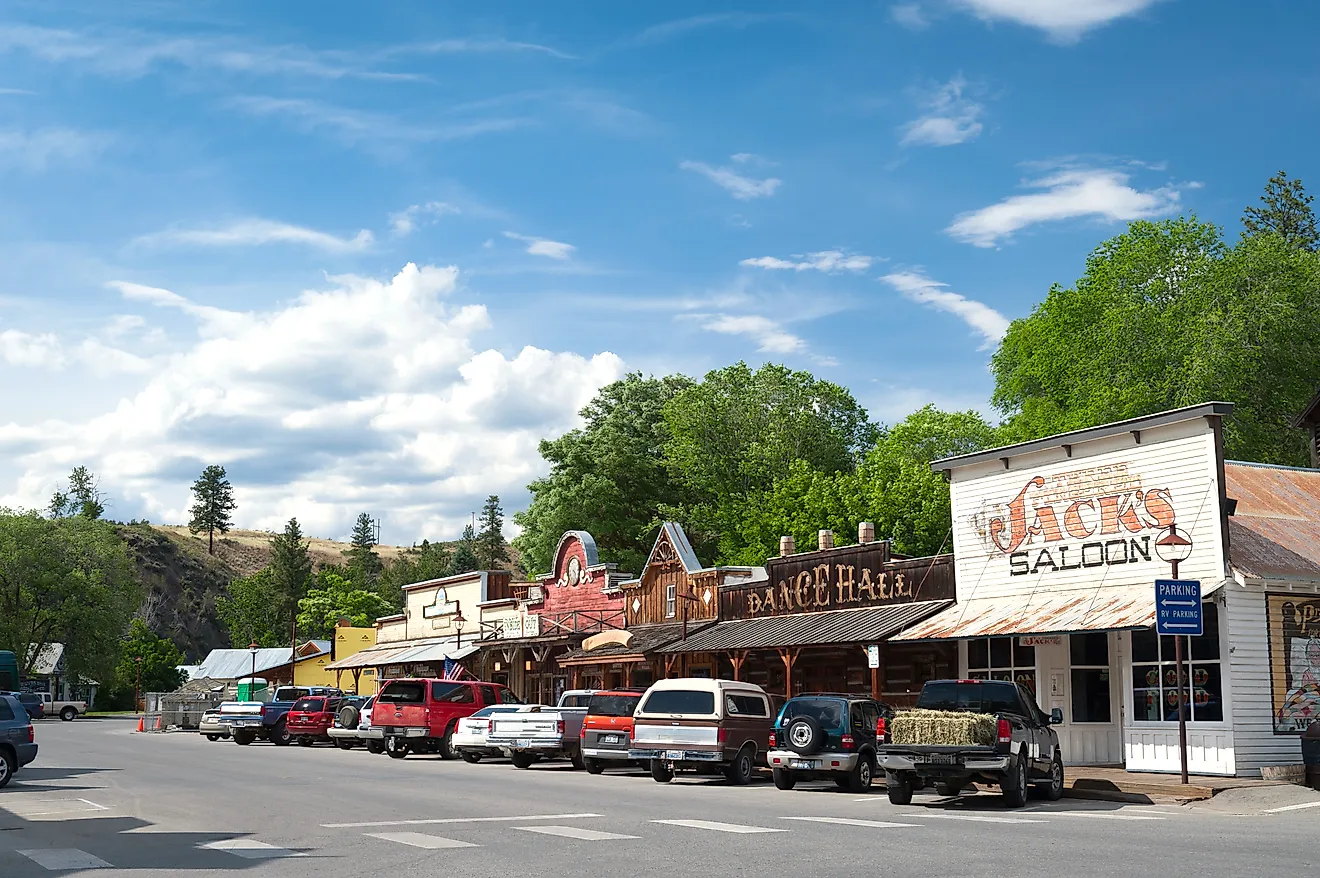
Truckee still mixes Old West storefronts with ski-town energy, a few miles from where the transcontinental railroad first crossed the Sierra. California became a state in 1850, two years after gold turned these foothills upside down, and most of its most distinctive northern towns trace back to that rush. Some still run the same hotels and theaters that opened during the Gold Rush. Others pivoted to wine, redwoods, or the Pacific shoreline. Eleven Northern California towns carry that history into a present built on adventure, art, and good food.
Truckee

Truckee sits at 5,817 feet of elevation in the Sierra Nevada, where the First Transcontinental Railroad punched through the mountains in 1868 and where most of the towns surrounding Lake Tahoe still ship their winter supplies via I-80. The Truckee Railroad Depot, built in 1900, still operates as an Amtrak station, with the California Zephyr stopping twice daily on its route between Chicago and Emeryville.
Commercial Row in downtown Truckee runs along the original Old West-era main drag, with timber-fronted bars like the Bar of America (in business since 1869) and restaurants in restored brick storefronts. Donner Memorial State Park, two miles west of downtown, preserves the campsite where the Donner Party spent the brutal winter of 1846-47, with the Pioneer Monument standing 22 feet tall, the height of the snowpack that trapped them.
Half Moon Bay

The Mavericks surf break, half a mile off Pillar Point, produces some of the largest rideable waves in the world, with sets reaching 60 feet on the biggest winter swells. The Mavericks big-wave contest has run only sporadically over the years, and only when a big enough swell lines up; some winters it does not happen at all. Onshore, the town of about 12,000 keeps a working harbor at Princeton-by-the-Sea and a downtown built around Main Street and Highway 1.
The annual Half Moon Bay Art & Pumpkin Festival in mid-October fills Main Street with around 200,000 visitors and includes the Safeway World Championship Pumpkin Weigh-Off, where giant pumpkins regularly clear 2,000 pounds. Highway 1 north of town passes Devil’s Slide, while heading south leads toward Santa Cruz and eventually the Big Sur coastline, and Highway 35, the Skyline Boulevard, runs above town through old-growth redwood groves and past Mount Tamalpais on the way north.
Auburn

The Placer County Courthouse, completed in 1898 in Renaissance Revival style with a 100-foot dome, still functions as the working courthouse and houses the Placer County Museum on its lower floor. Inside the museum, exhibits cover everything including Nisenan tribal history and the founding of Auburn in 1849 by French gold seekers, later named after Auburn, New York. Old Town Auburn, just below the courthouse, preserves Gold Rush-era brick storefronts.
The American River Canyon, a 30-minute drive northeast, hosts the Western States Endurance Run every June. The 100-mile race finishes at Auburn High School, a route that starts in Olympic Valley and crosses high country before dropping into the canyon. Hidden Falls Regional Park west of town spans 1,200 acres with 30 miles of multi-use trails through oak woodland.
Cayucos

The Cayucos Pier, originally built in 1875 by Captain James Cass as a shipping point for the surrounding ranch country, still extends 953 feet into Estero Bay and gives one of the best photo angles on the California coast. Cayucos sits along Highway 1 between Morro Bay and San Simeon, with about 2,500 year-round residents and a downtown a single block deep along Ocean Avenue.
The Brown Butter Cookie Company on Ocean Avenue has been baking original brown-butter cookies in town since 2003 and ships them nationwide. The Cayucos Sea Glass Festival in March fills the Veterans Memorial Hall with shop after shop of sea-glass jewelry, sculpture, and rough specimens. For a longer stay, the Estero Bluffs State Park trail north of town runs along the bluffs through 355 acres of preserved coastal grassland.
Carmel-by-the-Sea

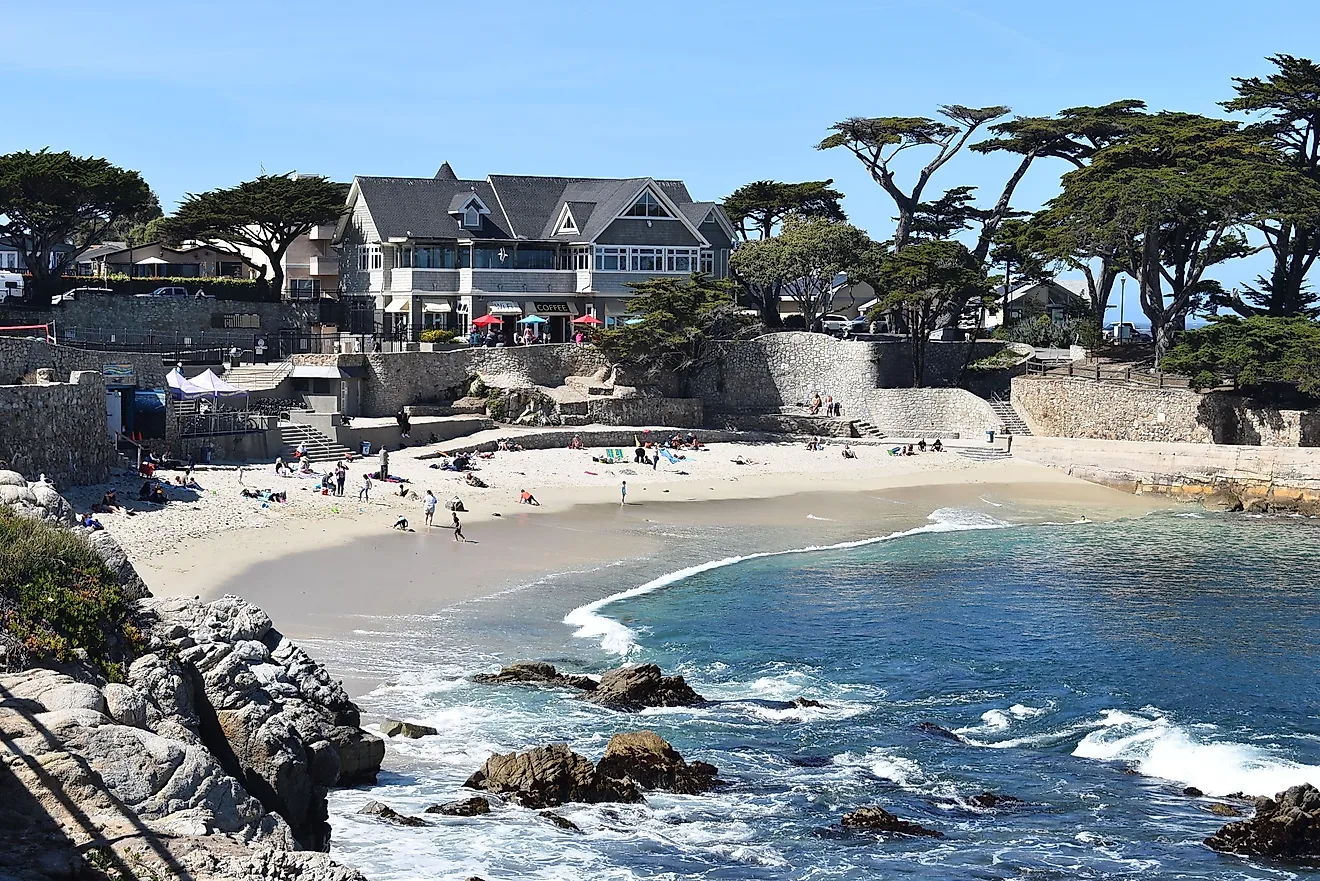
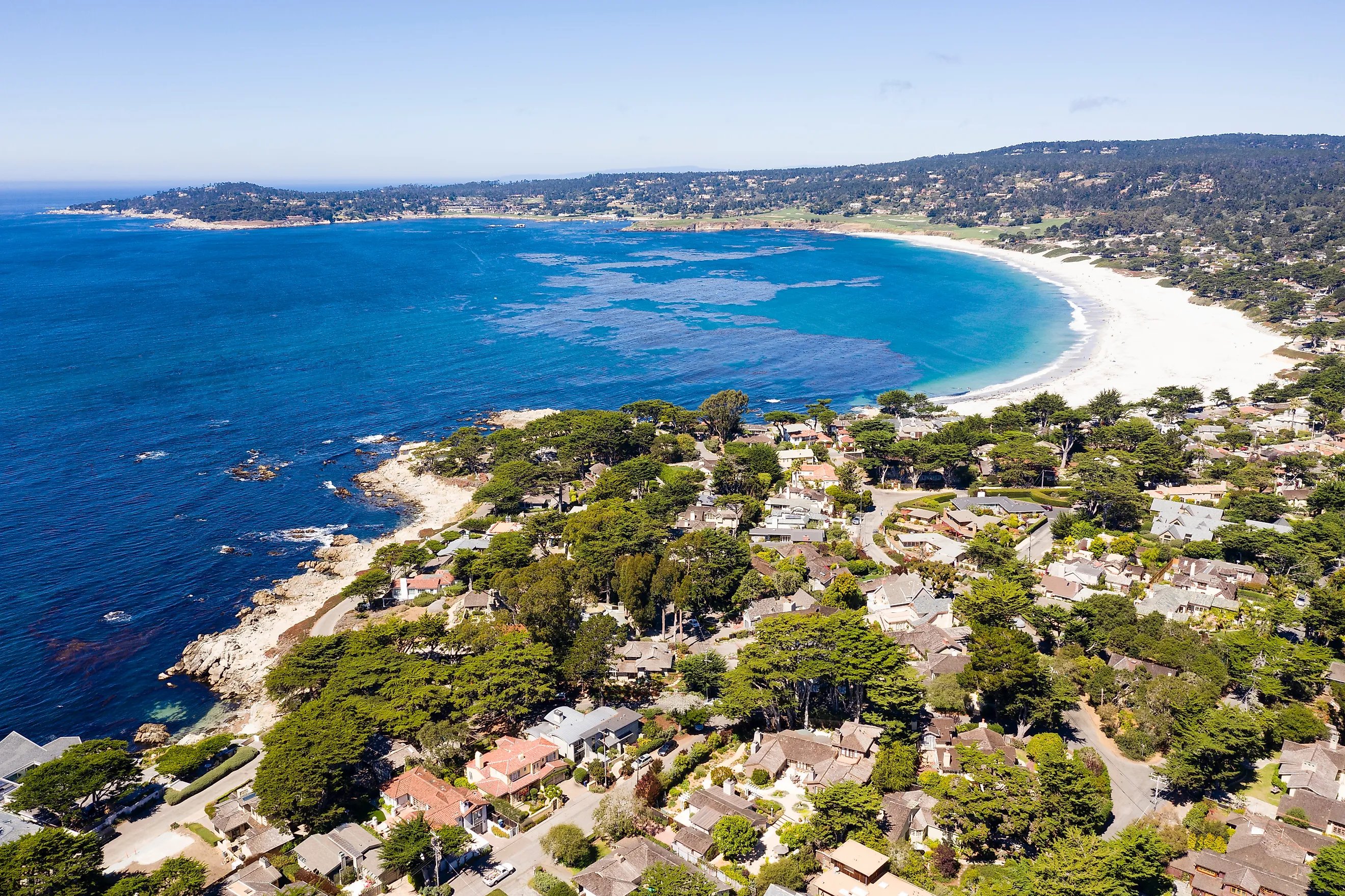
Carmel-by-the-Sea has no street addresses. Mail goes to named businesses or post-office boxes, a holdover from the town's bohemian artist-colony founding in 1903. The town spans only 1.1 square miles, and the storybook houses, with curved roofs and crooked chimneys, mostly date to the 1920s when architect Hugh Comstock built a series of cottages for his wife's doll display business.
The Carmel Mission, formally Mission San Carlos Borromeo del Río Carmelo, was founded in 1770 by Junípero Serra and is one of the most architecturally distinctive of the 21 California missions. Serra is buried in the sanctuary. Point Lobos State Natural Reserve, just south of town, protects 554 acres of coastal headlands and offshore kelp forests, with the Cypress Grove Trail loop offering one of the most photographed coastal scenes in the country.
St. Helena

The Cameo Cinema on Main Street has shown movies continuously since 1913, making it one of the oldest single-screen theaters in the country still in operation. Napa Valley's appellation runs through St. Helena, with several of the region's foundational wineries including Beringer (founded 1876), Charles Krug (1861, the oldest continuously operating winery in Napa), and V. Sattui all within a few miles of downtown.
The Culinary Institute of America at Greystone occupies an 1889 stone château originally built as Greystone Cellars. The school runs the Gatehouse Restaurant where students serve a constantly rotating menu open to the public. Bale Grist Mill State Historic Park, three miles north of town, preserves an 1846 water-powered grist mill with a 36-foot diameter overshot wheel that still operates on demonstration days.
Sonora

Founded in 1848 by Mexican miners from Sonora state who arrived ahead of the official Gold Rush, Sonora earned the nickname "Queen of the Southern Mines" for its outsized share of gold production from the southern Mother Lode. Saint James Episcopal Church on Washington Street, completed in 1859 in red wooden Carpenter Gothic style, is one of the most photographed buildings in the Mother Lode and still holds Sunday services.
Columbia State Historic Park, four miles north of Sonora, preserves an entire Gold Rush town with 30 brick and frame buildings dating to the 1850s. Visitors can ride a stagecoach down Main Street, pan for gold in working flumes, and watch costumed living-history demonstrations. Columbia came close to being named the California state capital in the 1850s, reportedly losing the vote to Sacramento by a narrow margin.
Dunsmuir

Dunsmuir's tap water comes directly from springs on Mount Shasta and consistently ranks among the best municipal water in the United States, blind-tasted against bottled brands at industry competitions. The town of about 1,500 sits in the Sacramento River canyon and was named in 1886 for Alexander Dunsmuir, the British Columbia coal baron who donated a fountain in exchange for the name change.
Hedge Creek Falls, accessible from a short trail off Interstate 5, drops 35 feet into a basalt grotto that visitors can walk behind. Castle Crags State Park, 14 miles south, protects a series of 170-million-year-old granite spires that rise 6,000 feet above the Sacramento River. The Pacific Crest Trail runs through the park, and the Castle Dome Trail to the granite formations climbs 2,500 feet over 2.7 miles.
Ferndale

Ferndale's Main Street is the most intact Victorian commercial district on the California coast, with virtually every storefront dating to the 1880s and 1890s when Danish, Swiss-Italian, and Portuguese dairy farmers built it as their commercial hub. The entire downtown is a California Historical Landmark and a registered historic district, one of the best-preserved Victorian streetscapes in the state. Hollywood productions including The Majestic and Salem's Lot used Ferndale's Main Street as a stand-in for small-town America.
The Ferndale Museum on Shaw Avenue keeps a working seismograph and one of the most complete dairy-history collections in the state. The Lost Coast, the most rugged stretch of California coastline, begins about 30 minutes south of Ferndale at Cape Mendocino, where the King Range National Conservation Area protects 35 miles of beach inaccessible by road.
Calistoga

Hot springs were the original draw to Calistoga, with Sam Brannan opening the first resort in 1862 and trying to call the place "the Calistoga of Sarafornia" (a slip-of-the-tongue mash of California and Saratoga that supposedly stuck). The mineral hot springs and mud baths from volcanic ash still operate at properties including Dr. Wilkinson's Backyard Resort (in business since 1952) and Indian Springs (1862, the oldest continuously operating resort in California).
Old Faithful Geyser of California, just north of town, erupts every 15 to 35 minutes from a 350-foot underground hot-water reservoir. Castello di Amorosa, on Diamond Mountain Road, is a 121,000-square-foot reproduction of a 13th-century Tuscan castle, built brick by brick over 14 years by winemaker Dario Sattui and opened in 2007 with five towers, a drawbridge, and a torture chamber.
Nevada City

The Nevada Theatre on Broad Street, built in 1865, is the oldest continuously operating live theater in California and one of the oldest in the country. It still hosts plays, films, and concerts year-round. Nevada City sits in the Sierra foothills at 2,500 feet and held nearly 10,000 residents during the peak of its Gold Rush boom in the 1850s. The town keeps the densest concentration of intact 19th-century buildings in California.
Malakoff Diggins State Historic Park, 26 miles north of Nevada City, preserves the largest hydraulic gold mining site in California. The pink and orange cliffs that hydraulic mining carved between 1866 and 1884 remain visible today across 3,000 acres of forest and meadow. Hot Summer Nights, the town's signature event since 1993, closes downtown to traffic on the last three Wednesdays of July for street performances and food trucks.
Where The State Started, And Where It Still Slows Down
What ties these towns together is how little they have changed. The Gold Rush left its main streets intact across the Sierra foothills. The dairy and timber years built the Victorian downtowns of the North Coast. Wine country and the volcanic hot springs sit in the valleys around Napa. Each one keeps its own answer to what California looked like before the cities took over.