The Best Small Towns In The Southern United States To Chill Out
St. Augustine has Spanish forts and ghost tours. Williamsburg keeps a whole 18th century running down its main street. Gatlinburg drops you at the door of the most-visited national park in the country. The South does the slow weekend better than anywhere, and it does it eleven different ways. Beach chairs, fife-and-drum corps, mountain mornings on a wraparound porch. Take your pick.
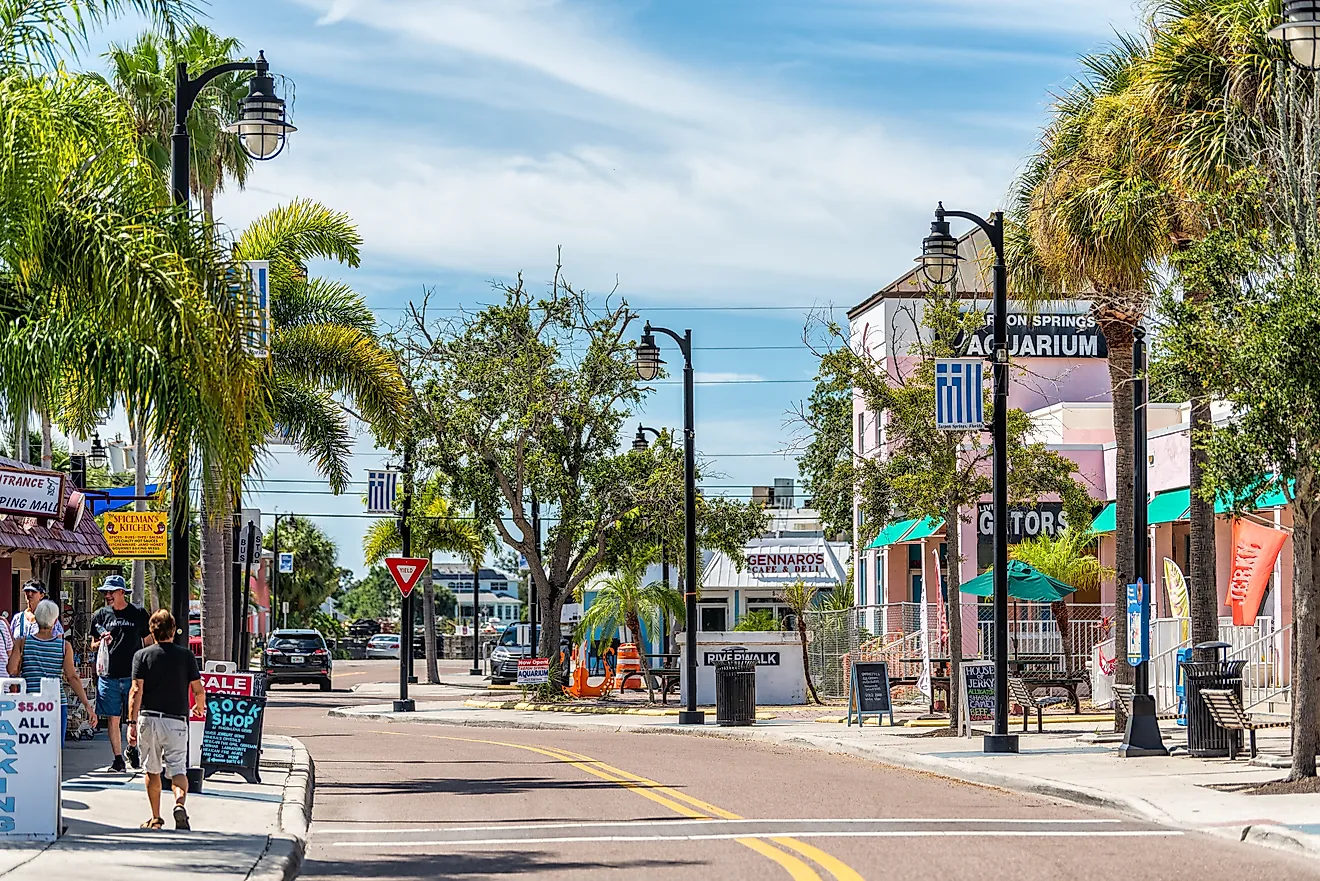
St. Augustine, Florida

Pedro Menéndez de Avilés founded St. Augustine in 1565. That makes it the oldest continuously occupied European settlement in the contiguous United States, 42 years ahead of Jamestown. The Castillo de San Marcos, finished by the Spanish in 1695, still guards the harbor as the oldest masonry fort in the continental US. History sits on every block downtown: the narrow stone lanes off St. George Street, the Lightner Museum inside Henry Flagler's 1888 Alcazar Hotel.
The Atlantic handles the rest. Vilano, Crescent, and Anastasia State Park beaches all sit within a few miles of downtown, and mild winters keep beachcombing a year-round habit. After dark, the town leans into its haunted reputation. The Old Jail tour and the lantern-lit Ghosts and Gravestones trolley run most nights.
Williamsburg, Virginia

Colonial Williamsburg is one of the largest living-history museums on earth. The restored colonial capital covers 301 acres and 88 original buildings, plus hundreds of reproductions, with costumed interpreters working forges, looms, and printing presses along Duke of Gloucester Street. Patrick Henry, Thomas Jefferson, and George Washington all walked these streets while Williamsburg served as Virginia's capital between 1699 and 1780.
About 15,400 people live here now, and the College of William & Mary, founded in 1693 as the country's second-oldest, keeps the core full of students. Dinner runs to tavern fare at restored 18th-century spots like Christiana Campbell's and Chowning's. Want a faster gear? Busch Gardens Williamsburg sits three miles east and has been voted the world's most beautiful theme park every year since 1990.
Gatlinburg, Tennessee

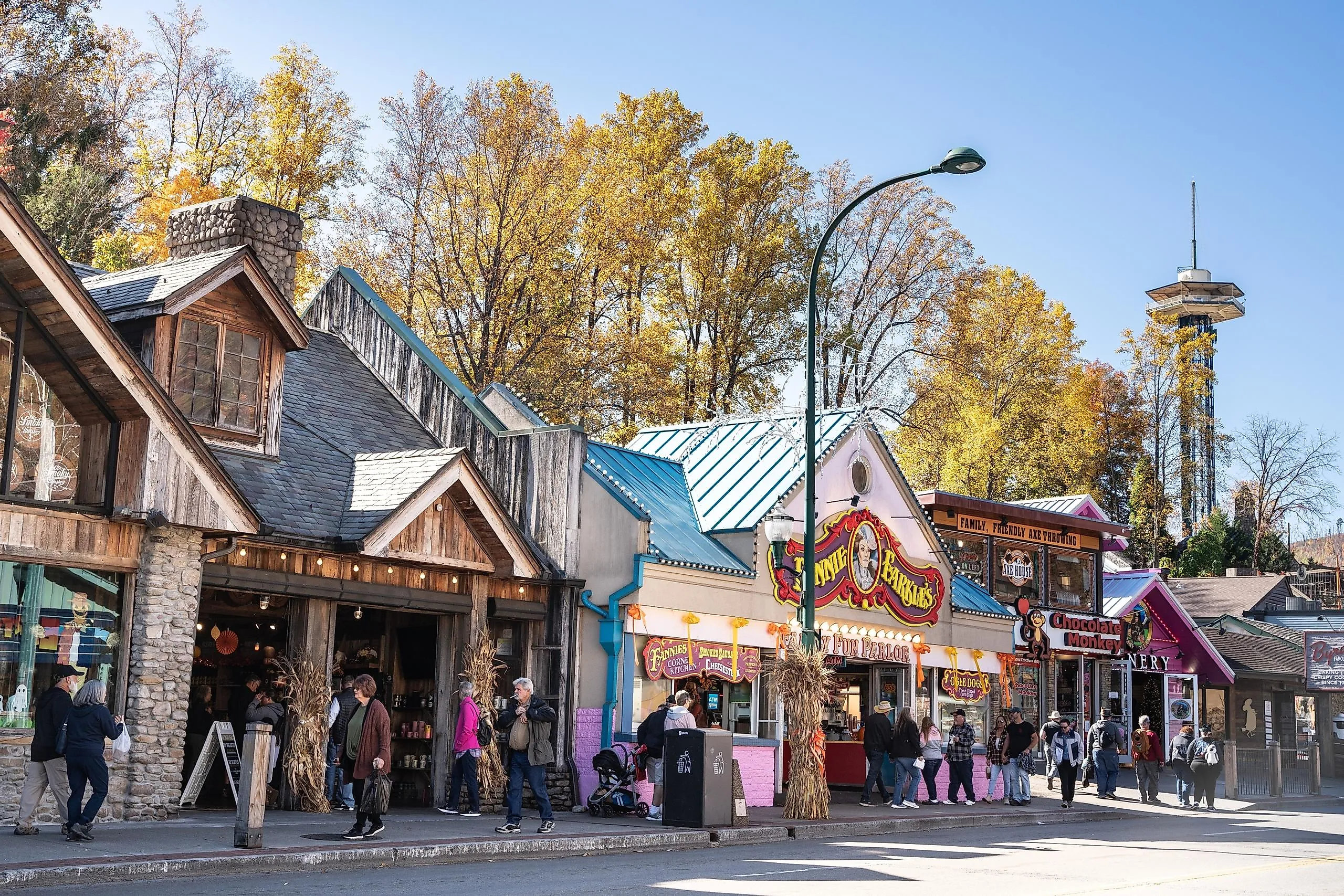
Gatlinburg sits at the northern gate of Great Smoky Mountains National Park, the most-visited national park in the country at more than 12 million people a year. The town itself is tiny, about 3,900 residents, but the parkway stays packed: pancake houses, distilleries, and the 407-foot Space Needle, where glass elevators ride up to a 360-degree deck over the Smokies.
Inside the park, the Roaring Fork Motor Nature Trail loops 5.5 miles past old-growth forest and pioneer homesteads, and Newfound Gap Road climbs to the Tennessee-North Carolina line at 5,046 feet. Back in town, Ripley's Aquarium of the Smokies holds more than 10,000 marine animals, and the Ober Mountain tramway runs up to a year-round ski and amusement complex on Mount Harrison.
Beaufort, South Carolina

Founded in 1711, Beaufort is the second-oldest city in South Carolina and one of the best-preserved antebellum towns in the South. Most of downtown is a National Historic Landmark District, all Federal and Greek Revival homes under live oaks dripping Spanish moss. Hollywood noticed: The Big Chill, The Prince of Tides, and Forrest Gump all shot here, drawn by streets that have barely moved since the early 1800s.
Henry C. Chambers Waterfront Park runs along the Beaufort River with swings, paths, and views across to Lady's Island. The Spanish Moss Trail, a 14-mile rails-to-trails route, threads the Lowcountry and crosses several tidal inlets. For a bigger day, Hunting Island State Park sits 16 miles east with a maritime forest, an 1870s lighthouse, and three miles of undeveloped Atlantic beach.
Sanibel Island, Florida

Sanibel runs east-west instead of north-south, and that one quirk turns it into a shell trap. Currents push Gulf shells straight onto its 17 miles of beach, and the island routinely ranks among the best shelling spots in the world, with more than 250 species recorded. Locals even have a name for the hunched-over hunt: the Sanibel Stoop.
Bowman's Beach is the top shelling stretch. On the bay side, the J.N. "Ding" Darling National Wildlife Refuge protects more than 6,400 acres of mangrove and seagrass, with a four-mile drive past nesting roseate spoonbills and reddish egrets. The Bailey-Matthews National Shell Museum, the only one in the country devoted to mollusks, reopened with new exhibits after Hurricane Ian hit in 2022.
Hilton Head, South Carolina

Hilton Head packs 12 miles of Atlantic beach onto an island about 20 miles northeast of Savannah, and almost nothing about it is accidental. Developer Charles Fraser master-planned the place in the late 1950s, and the strict environmental rules of his Sea Pines community still decide how it builds today. About 38,000 people call it home year-round.
Sea Pines Forest Preserve covers 605 acres of maritime forest, and Harbour Town anchors the south end under the candy-striped Harbour Town Lighthouse. The RBC Heritage has been a PGA Tour stop on the Harbour Town Golf Links since 1969. Across the bridge, Pinckney Island National Wildlife Refuge runs 14 miles of trails through salt marsh, ponds, and forested hammocks.
Dahlonega, Georgia

America's first major gold rush started here in 1828, two decades before anyone struck it at Sutter's Mill. A federal branch mint ran in Dahlonega between 1838 and 1861 and produced more than $6 million in coins before the Civil War shut it down. The Dahlonega Gold Museum, inside the 1836 Lumpkin County Courthouse on the square, shows off original ingots and one of the few surviving Dahlonega-mint coins.
These days the town of about 7,500 sells itself as the heart of Georgia wine country. More than a dozen vineyards sit within a short drive of the square, including Frogtown, Wolf Mountain, and Three Sisters, the first farm winery in north Georgia. Every April, the Bear on the Square Mountain Festival fills the courthouse lawn with string bands and cloggers.
Blowing Rock, North Carolina

At about 3,500 feet beside the Blue Ridge Parkway, Blowing Rock has pulled in summer crowds since the late 1800s, one of the oldest resort towns in the Southern Appalachians. The Rock itself, an outcrop roughly 4,000 feet up over the Johns River Gorge, funnels the northwest wind back up hard enough to return light objects tossed over the edge, the source of both the town's name and a Cherokee legend. The town of about 1,400 fills its Main Street with bakeries, galleries, and the long-running Mast General Store.
Just outside town, Moses H. Cone Memorial Park preserves textile magnate Moses Cone's 3,500-acre estate, with 25 miles of carriage trails open to walkers. Bass Lake, at the foot of the estate, has a flat 0.8-mile loop. For a rainy hour, the Blowing Rock Art and History Museum on Chestnut Street rotates regional shows.
Fairhope, Alabama

Fairhope started in 1894 as a single-tax colony built on economist Henry George's land-value theories, and that experiment still partly governs who owns what here. About 25,000 people now live on the bluff above Mobile Bay. Downtown sits up top, all brick sidewalks and flower beds, with a municipal pier that runs almost a quarter mile straight out over the water.
Fairhope has been one of Alabama's leading arts towns for decades, with galleries clustered around Section and Fairhope Avenue. Page and Palette has held down downtown since 1968. Each March, the Fairhope Arts and Crafts Festival brings 200-plus juried artists and around 250,000 people across a single weekend.
Duck, North Carolina

Duck is the northernmost incorporated town on the Outer Banks, strung along a thin ribbon of sand between the Atlantic and Currituck Sound. About 740 people live here year-round; summer rentals multiply that several times over. The town built itself around a one-mile soundfront boardwalk, with sunset views, soundside parks, and free Thursday concerts at the Town Park gazebo all summer.
Duck keeps no public ocean-side parking, so its beaches stay nearly empty while its southern neighbors fill up. In season, the Sanctuary Vineyards Voyage runs a boat-to-vineyard tasting trip across the sound. Just north, the 1875 Currituck Beach Lighthouse in Corolla opens for climbing March through November.
Fredericksburg, Texas

German immigrants founded Fredericksburg in 1846 under the Adelsverein plan, and the heritage is everywhere, in the family bakeries turning out stollen and apfelstrudel and the little Sunday Houses farmers built for weekend trips into town. Main Street still carries German names. The National Museum of the Pacific War fills the old Nimitz Hotel, once Admiral Chester Nimitz's family business, with one of the deepest Pacific Theater collections outside New Orleans.
Texas Hill Country wine surrounds the town, more than 50 wineries and tasting rooms along the Wine Road 290 trail. Twenty miles north, Enchanted Rock throws a 425-foot pink granite dome up out of the scrub. The park is one of more than a dozen International Dark Sky places in Texas, with lighting rules that keep the Milky Way out most clear nights.
Pick Your Pace
Some of these towns trade on history, some on wine and beach, some on pure small-town quiet. Spanish forts in St. Augustine, a hike out of Gatlinburg into the Smokies, a dark-sky night outside Fredericksburg. The South keeps the options open. Pick a pace and go.