The Best Small Towns In Michigan For A Weekend Retreat
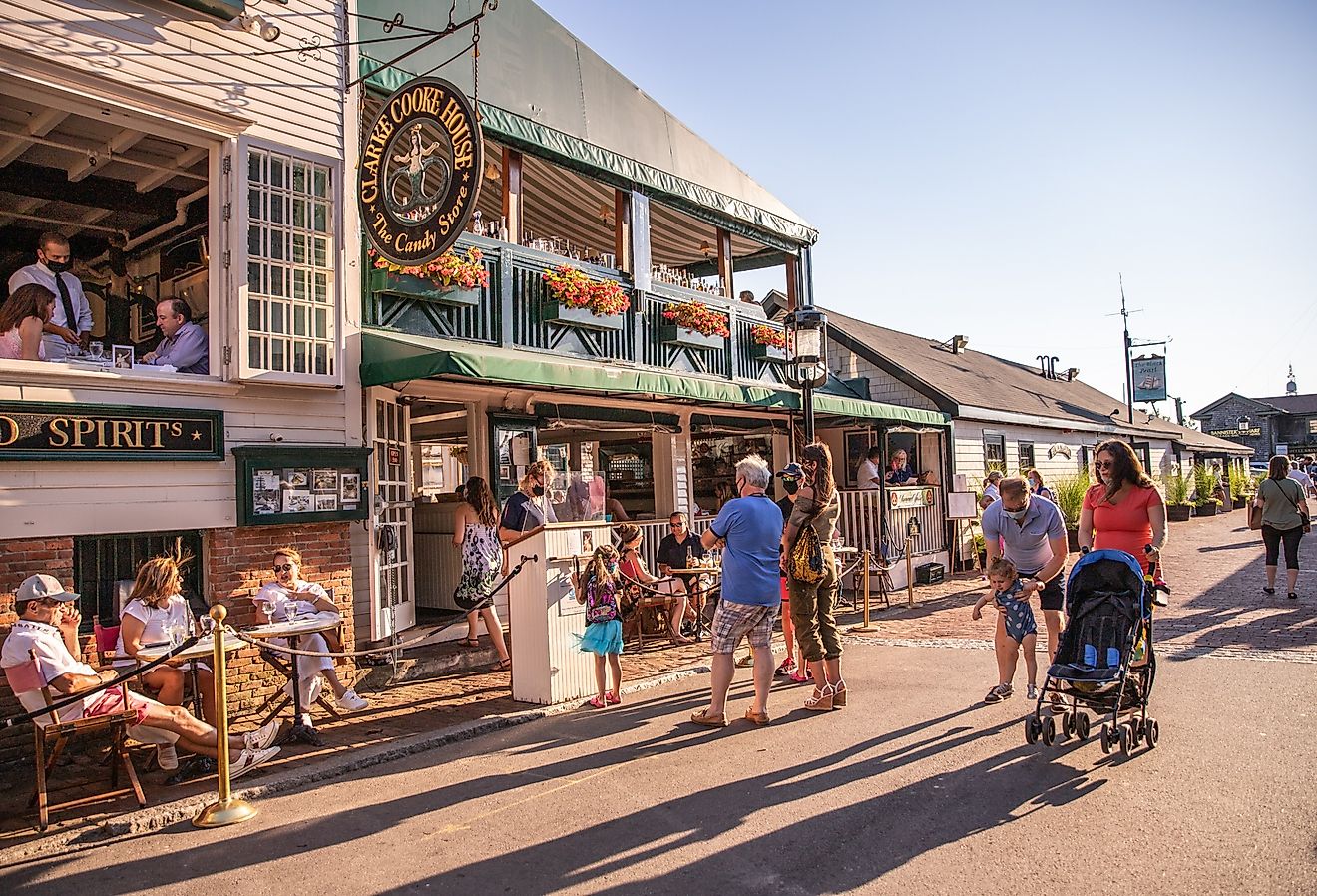
Petoskey keeps its Gaslight District up above Little Traverse Bay. Mackinac Island runs on horse-drawn carriages, fudge shops, and the cannon at Fort Mackinac. Frankenmuth holds onto a Franconian main street that earns its Oktoberfest every year. Michigan's best small towns sit between the cities rather than in them, and they fill a weekend without the traffic. Pick a peninsula and go.
Petoskey

Petoskey takes its name and its main weekend pastime from the Petoskey stone, the fossilized coral that has washed up along this shoreline for some 350 million years. Beachcombers work the gravel at Petoskey State Park, three miles north of downtown, hunting for the hexagonal pattern that only emerges once the rock dries. The town of about 5,800 sits on the south shore of Little Traverse Bay in the northwest Lower Peninsula.
The Gaslight District covers a few downtown blocks with independent bookstores, the original Symons General Store, and a handful of Hemingway sites; the writer summered nearby and set several Nick Adams stories along the bay. Stafford's Perry Hotel has held the corner of Bay and Lewis since 1899. For wine, Petoskey Farms Vineyard and Mackinaw Trail Winery both run tasting rooms minutes from the historic core.
Mackinac Island

Cars have been banned on Mackinac Island since 1898, so the sound on Main Street is hoof on pavement, not tire on asphalt. The 3.8-square-mile island sits in the Straits of Mackinac between Lakes Huron and Michigan, about a 20-minute ferry from Mackinaw City or St. Ignace. Fort Mackinac, built by the British in 1780 above the harbor, still fires cannon and rifle demonstrations through the summer.
The Grand Hotel, finished in 1887, runs what it bills as the longest porch in the world at 660 feet and remains the island's signature stay. M-185, the eight-mile highway that circles the island, is the only state highway in the country closed to motor vehicles. Fudge shops line Main Street, and the Lilac Festival in early June fills the streets with parades and carriage tours.
Charlevoix

Charlevoix sits on a narrow neck of land between Lake Michigan and Lake Charlevoix, where a drawbridge lifts on the hour each summer to let sailboats through the channel. The town is known for the work of Earl Young, a self-taught architect whose roughly 30 Mushroom Houses curve across the historic district with stone walls, wavy cedar-shake roofs, and boulders the size of small cars. Walking tours of the Young houses leave downtown most summer Saturdays.
Castle Farms, built in 1918 as a horse-breeding operation modeled on a French Renaissance château, now hosts events and opens its formal gardens, model railroad, and self-guided history tours to visitors. The red Charlevoix South Pier Lighthouse stands where the channel meets Lake Michigan, a short walk from Michigan Beach Park.
South Haven

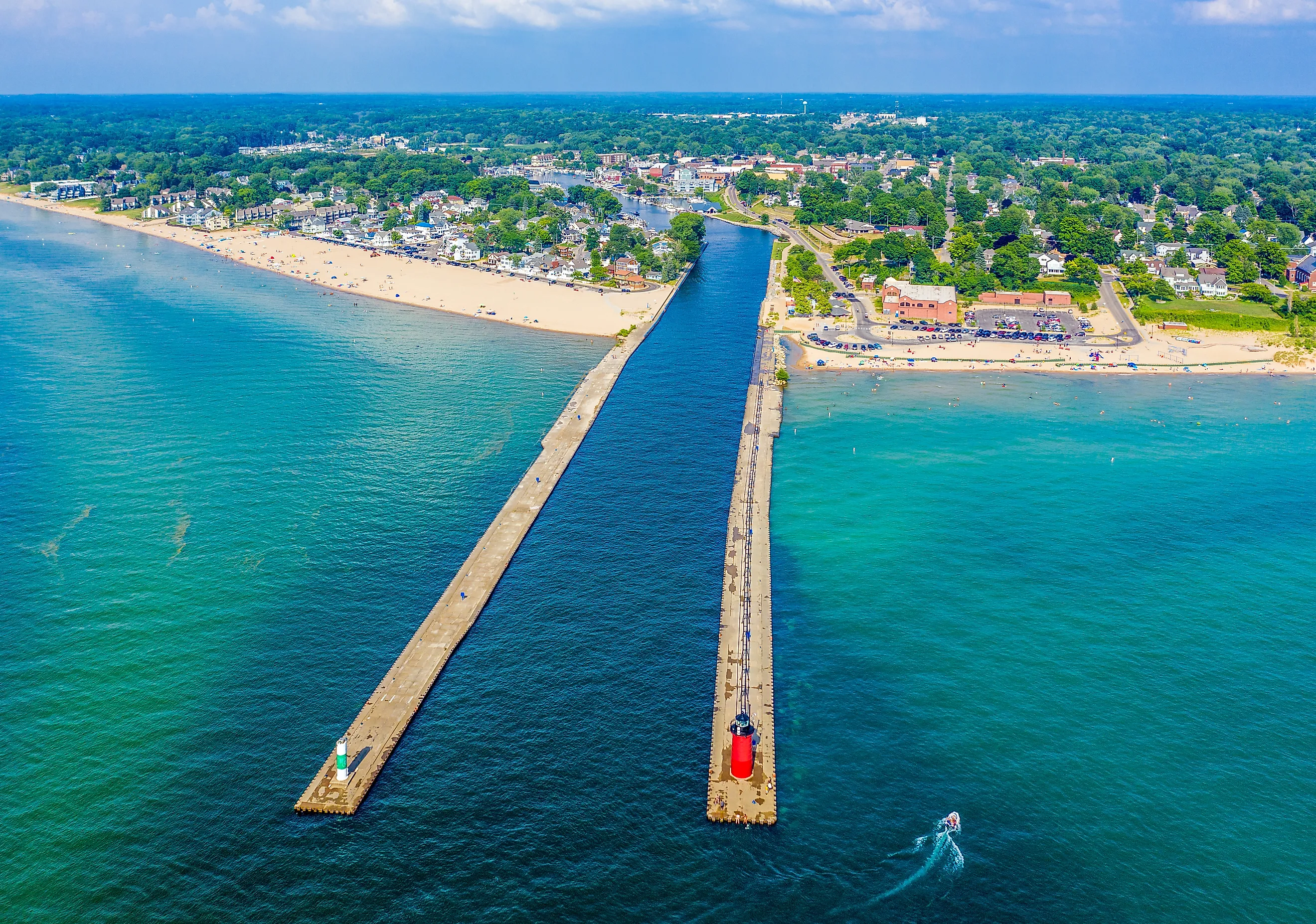
The red South Haven Lighthouse has marked the mouth of the Black River since 1903 and still operates at the end of the South Pier. The town of about 4,000 sits where the Black River meets Lake Michigan and splits neatly into a sandy beach district and a working harbor. The Michigan Maritime Museum on Dyckman Avenue covers Great Lakes shipbuilding and lighthouse history, and its schooner Friends Good Will takes passengers out onto the lake.
The National Blueberry Festival, held the second weekend of August since 1963, brings tens of thousands of people to town for a parade, pie-eating contests, a 5K, and a U-pick day at a nearby farm. Van Buren State Park, just south of town, protects a mile of Lake Michigan beach behind forested dunes.
Frankenmuth

Bronner's Christmas Wonderland, the largest year-round Christmas store in the world, spreads across 27 acres on Christmas Lane just south of downtown Frankenmuth and stocks more than 50,000 holiday items. The town around it was founded in 1845 by 15 Lutheran missionaries from Franconia, in Bavaria, who came to evangelize the Chippewa and stayed to farm. The main street still uses German-style timber-frame buildings and serves the family-style chicken dinners that made the town's name.
The Bavarian Inn and Zehnder's face each other across Main Street and serve roughly a million chicken dinners between them each year, a tradition that started at Zehnder's in the 1920s. Frankenmuth's Oktoberfest in mid-September is the largest sanctioned by Munich outside Germany, pouring imported beer brewed under the Reinheitsgebot purity law.
Traverse City

The Old Mission and Leelanau peninsulas hold about 40 wineries within a half-hour of Traverse City, the densest cluster in Michigan and one of the largest cool-climate wine regions east of the Mississippi. The Old Mission Peninsula runs along the 45th parallel, the same latitude as Bordeaux and Burgundy. The National Cherry Festival, held the week of July 4th since 1925, draws around 500,000 people to a region that grows roughly 75 percent of the country's tart cherries.
Sleeping Bear Dunes National Lakeshore covers 71,000 acres along Lake Michigan about 25 miles west of town, where the Pierce Stocking Scenic Drive loops seven miles past 450-foot dunes that fall straight to the water. In town, the Village at Grand Traverse Commons has turned the restored 19th-century Northern Michigan Asylum into a run of restaurants and shops, including the Cooks' House.
Marquette

Sugarloaf Mountain, just outside Marquette, climbs 470 feet above Lake Superior on a stepped trail to a summit that opens onto the largest freshwater lake in the world by area. Marquette is the biggest city in the Upper Peninsula and the county seat, founded in 1849 to ship iron ore off the Marquette Iron Range. Two working ore docks still load freighters in the harbor, and the Lower Harbor Ore Dock has been rebuilt into a public observation pier.
Presque Isle Park, a 323-acre peninsula on the city's north side, has a two-mile loop drive past Black Rocks, where locals leap into Lake Superior all summer. Northern Michigan University keeps the population young, and the Iron Ore Heritage Trail, a 47-mile rail-trail, follows the old mining railroad across the region with Marquette near its middle.
Saugatuck

The Saugatuck Chain Ferry has crossed the Kalamazoo River by hand since 1838 and is the only hand-cranked chain ferry still running in the country, pulled across by an operator turning a crank. Saugatuck sits on Lake Michigan's southeast shore about 12 miles south of Holland, and its arts scene earned it the "Art Coast of Michigan" label decades ago. Butler Street downtown holds about 30 galleries, with rotating shows and a First Friday art walk.
Oval Beach, named one of the country's best freshwater beaches by Conde Nast and MTV, stretches a quarter mile along Lake Michigan with dunes behind it just across the river. Saugatuck Dunes State Park, north of town, protects 1,000 acres of coastal forest and dune with 14 miles of trail to undeveloped shoreline. Mount Baldhead Park, up a 302-step staircase, gives the best combined view of the river, dunes, and lake.
A Weekend In Either Peninsula
The Lower Peninsula keeps the wineries, the cherry orchards, and Frankenmuth's German heritage within a few hours of each other. The Upper Peninsula turns quieter and wilder, with Marquette as the anchor and Lake Superior's shore opening north from there. Pick one peninsula for a long weekend, or cross the Mackinac Bridge and string together both.