8 Prettiest Downtown Strips In South Carolina
If South Carolina were a long winding porch, its finest stories wouldn't be told from the rocker. They'd be unfolding out on the street. Bluffton's downtown sits on a bluff that once hosted a secession rally. Georgetown's runs along a riverfront boardwalk where colonial rice ships once moored. The state's eight most compelling downtown strips compress three centuries of enterprise into walkable snapshots. What unites them is a stubborn devotion to authenticity through original facades and histories left deliberately visible.
Bluffton

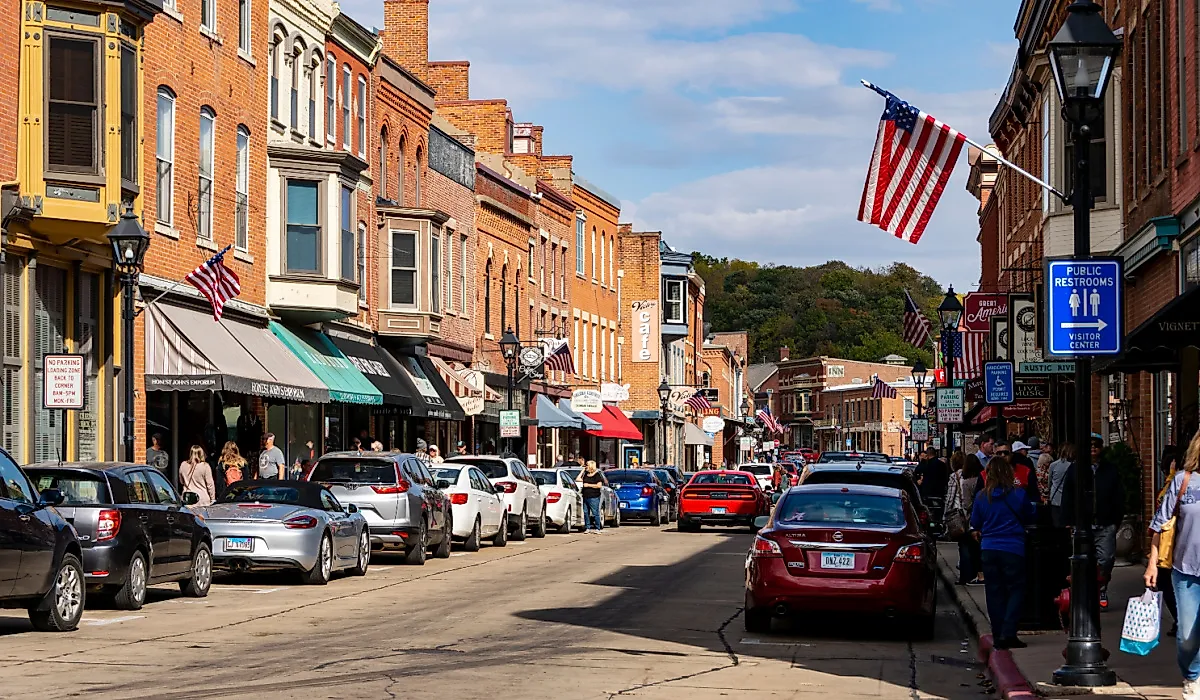
Downtown Bluffton centers on Calhoun Street in Old Town Bluffton, occupying a rare geographic position on a bluff overlooking the May River, one of the few natural bluffs on the coast. Originally settled in the early 1800s as a summer retreat for inland planters escaping the heat, it retains an unusually high number of antebellum homes, despite Union forces partially burning it during the Civil War in 1863. The Heyward House Historic Center, built in 1841, operates as both museum and visitor hub, offering guided walking tours that explain Bluffton's role in the 1844 Bluffton Movement, when local Congressman Robert Barnwell Rhett delivered the secession speech under the "Secession Oak" on July 31. This deep historical context makes Bluffton's downtown more than a commercial zone; it is a preserved artifact of Lowcountry heritage.

Along Calhoun Street, galleries like Pluff Mudd Art and Four Corners showcase regional artists working in mediums spanning sweetgrass basketry and impressionist oil painting. Church of the Cross, an 1857 Gothic Revival landmark at the street's river end, offers tours and riverfront views. The Cottage serves traditional Lowcountry dishes such as shrimp and grits in an 1868 home. Nearby, Corner Perk offers locally roasted coffee with a popular weekend brunch menu. Wright Family Park, opened in 2021, connects the strip directly to the May River with public docks and oyster roasts.
Aiken

Aiken's downtown strip, centered along Laurens Street SW, reflects its origins as a 19th-century railroad town and later as a premier winter colony for wealthy Northerners who brought horses and built training grounds. The city's unique dual street grid, designed to accommodate horse-drawn carriages, features wide landscaped medians lined with oaks and hitching posts still in use during annual equestrian events. The Aiken Thoroughbred Racing Hall of Fame and Museum, located in Hopelands Gardens just off downtown, documents the city's equestrian legacy with exhibits on champion horses trained locally. Aiken's status as an equestrian hub remains active through polo matches and the annual Aiken Triple Crown each March (Aiken Trials, Steeplechase, and harness racing).
Downtown Laurens Street offers destinations such as the Aiken Center for the Arts, hosting rotating exhibits and art classes. The Alley, a pedestrian corridor connecting Laurens Street and Newberry Street, features establishments like Whiskey Alley, specializing in small-batch whiskeys and Southern cuisine. New Moon Café serves locally roasted coffee and house-made quiche. The Hotel Aiken, dating to 1898, anchors the district's history, while Hitchcock Woods, accessible a few blocks away, provides 70 miles of riding and walking trails through 2,100 acres of urban forest.
Georgetown

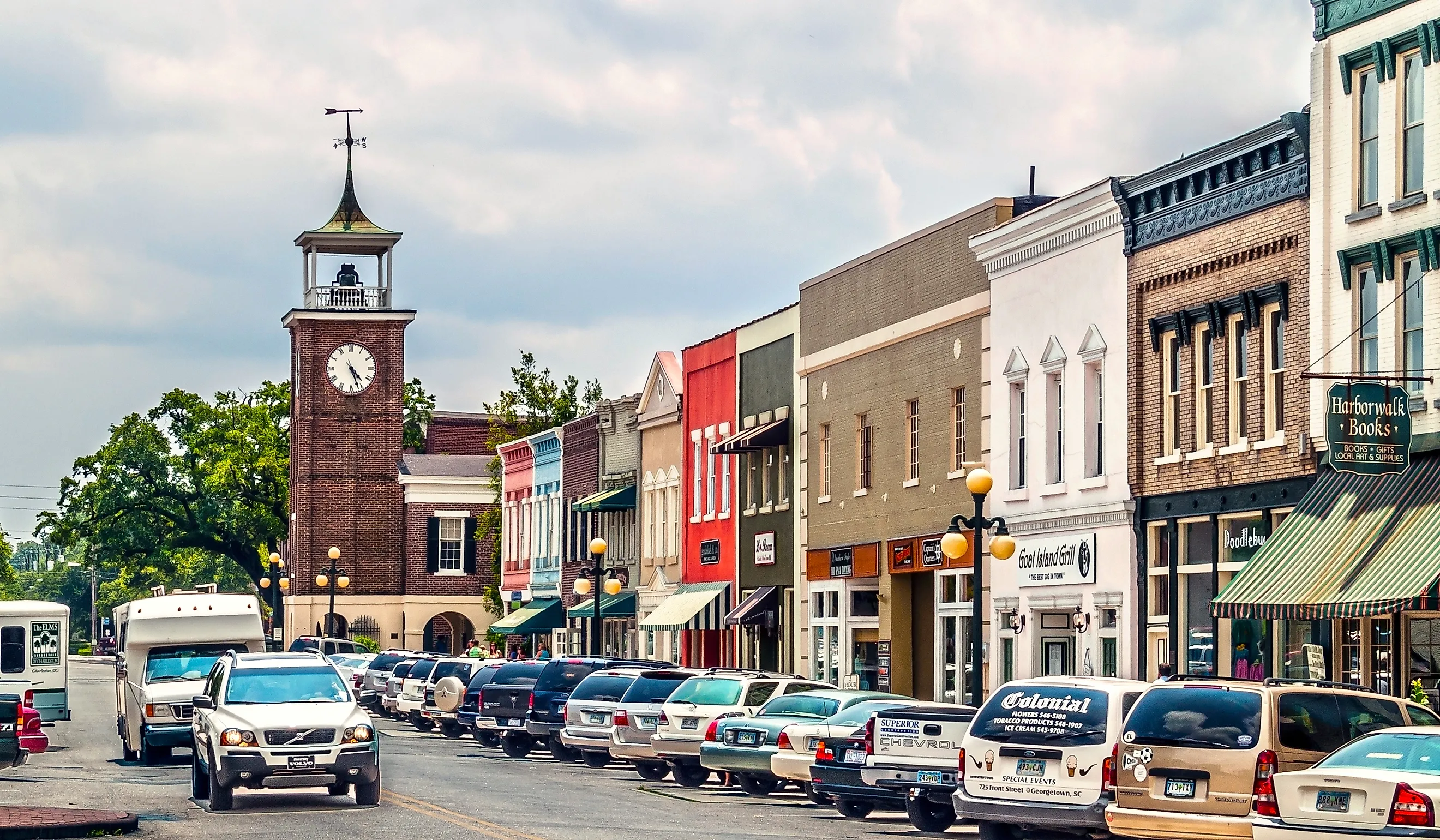
Georgetown's Harborwalk, a boardwalk spanning the waterfront, connects the downtown directly to the Sampit River, offering mooring for boats and access to maritime history. The Rice Museum, located in the 1842 Old Market Building with its clocktower, details the city's role as the largest rice-producing port in the U.S. before the Civil War and includes the Brown's Ferry Vessel, a 1730s colonial freight ship that is the oldest known colonial-era vessel recovered in the country. The Kaminski House Museum, built around 1769 overlooking the river, preserves original furnishings and offers guided tours exploring the merchant family's life and Georgetown's economic history.
Front Street features businesses such as River Room Restaurant, specializing in seafood with views of the harbor. Independent bookstores like Waterfront Books stock regional titles and maritime histories. The Strand Theatre hosts live performances in a 1941 movie house. The Georgetown Art Gallery features work from local painters, photographers, and artisans, contributing to an active arts presence along the downtown strip.
Camden

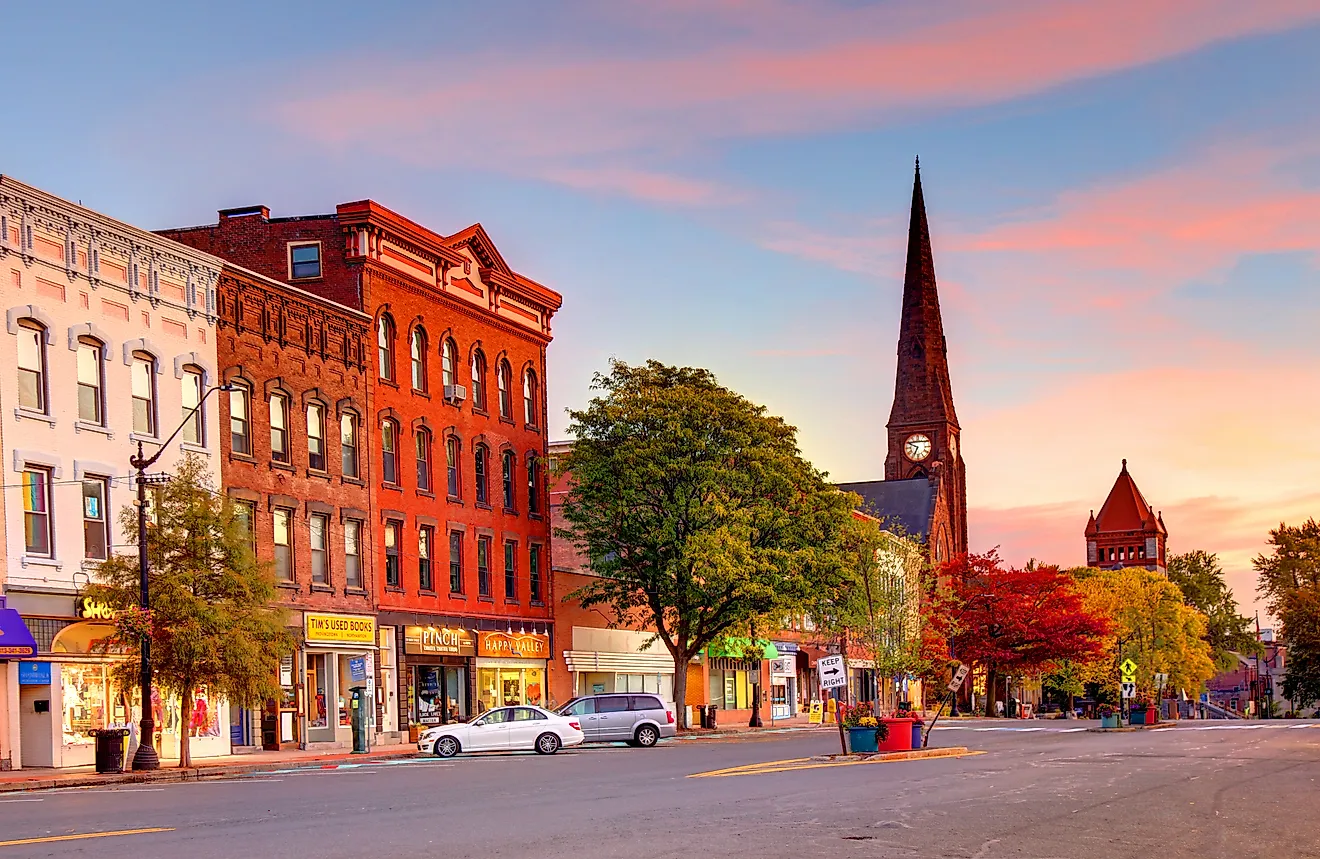
Downtown Camden is anchored on Broad Street, reflecting its status as South Carolina's oldest inland city, founded in 1732, and its role as a major Revolutionary War site. The 1779 Kershaw-Cornwallis House, located within the Historic Camden Revolutionary War Site just off downtown, offers guided tours and exhibits on the Battle of Camden of August 1780 when British forces under Cornwallis defeated American forces under General Horatio Gates in one of the war's worst American defeats. Broad Street includes over 60 contributing buildings in the Camden Historic District, representing Federal, Greek Revival, and Victorian architecture. The 1886 Camden Opera House and Clock Tower, still operational as a civic space, stands as a prominent landmark. Camden's equestrian culture remains central, with downtown banners marking events like the Carolina Cup steeplechase and the National Steeplechase Museum nearby.
Broad Street businesses include Sam Kendall's, a restaurant housed in a 19th-century bank building serving steaks and seafood. Books on Broad provides new and used books alongside author events. Camden Art Shoppes showcases works from regional artists inside an 1880s building. Salud Mexican Kitchen and Tequila Lounge operates from a restored storefront with outdoor seating. Rectory Square Park, located within walking distance, provides green space and a historic fountain. Camden Archives and Museum preserves local genealogical records and rotating historical exhibits.
Newberry

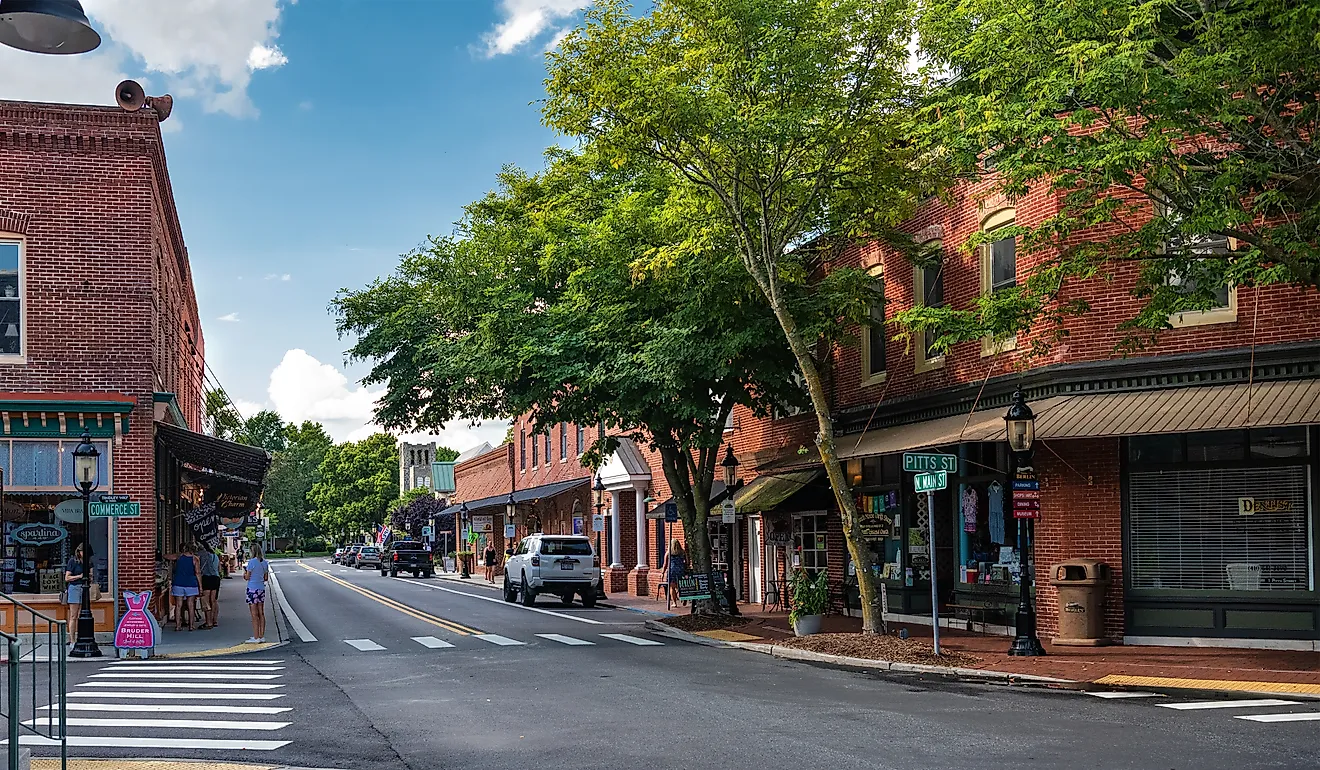
In downtown Newberry, the Newberry Opera House, built in 1881 with a 130-foot clock tower, anchors the downtown and operates as a performing arts venue hosting national touring acts, classical concerts, and community events. Wells Japanese Garden, located a few blocks from Main Street, was created in 1930 and features a torii gate and koi ponds, representing one of the few surviving Depression-era public Japanese gardens in the region. The Newberry County Historical and Museum Society maintains archives and artifacts in the Old Courthouse, a short walk from the main strip.

Businesses along Main Street include Figaro, a restaurant serving continental cuisine inside a restored 19th-century building. Genesis Hub Coffee House operates as both a café and co-working space. The Grille on Main provides burgers and pub fare within sight of the Opera House plaza. Carter and Holmes Orchids sells rare orchid varieties from its storefront nursery. Martin's Newberry Jewelry, established in 1935, continues family-owned operations. Newberry Arts Center offers pottery classes and gallery exhibitions within walking distance of retail shops.
York

York's Congress Street reflects its role as the seat of York County and its designation as a National Register Historic District with more than 180 contributing properties (one of the largest historic districts in South Carolina by building count). Known as the "White Rose City" for its English heritage, York maintains original 19th-century brick storefronts, iron streetlamps, and a preserved courthouse square. The York County Courthouse, built in 1914 in Neoclassical style, anchors the downtown and remains an active judicial building. The Sylvia Theater, a 1947 movie house converted into a live music venue, continues regular performances. The McCelvey Center, located a few blocks off Congress Street, houses the Southern Revolutionary War Institute and provides archival resources on local history including the 1780 Battle of Huck's Defeat fought nearby.

Congress Street businesses include Hoof and Barrel, offering locally sourced steaks and craft beer. Southern Touch Bakery supplies cakes, pastries, and lunch specials from a restored storefront. Garden Café operates within a historic brick building serving soups and sandwiches. Yorkville Marketplace, a collective of vendors, sells antiques and handcrafted goods inside a former grocery. The Yorkville Arts Council maintains a gallery space hosting rotating exhibitions by local artists. City Park, accessible from the strip, includes walking trails, a playground, and seasonal events such as summer concerts and holiday tree lightings.
Cheraw

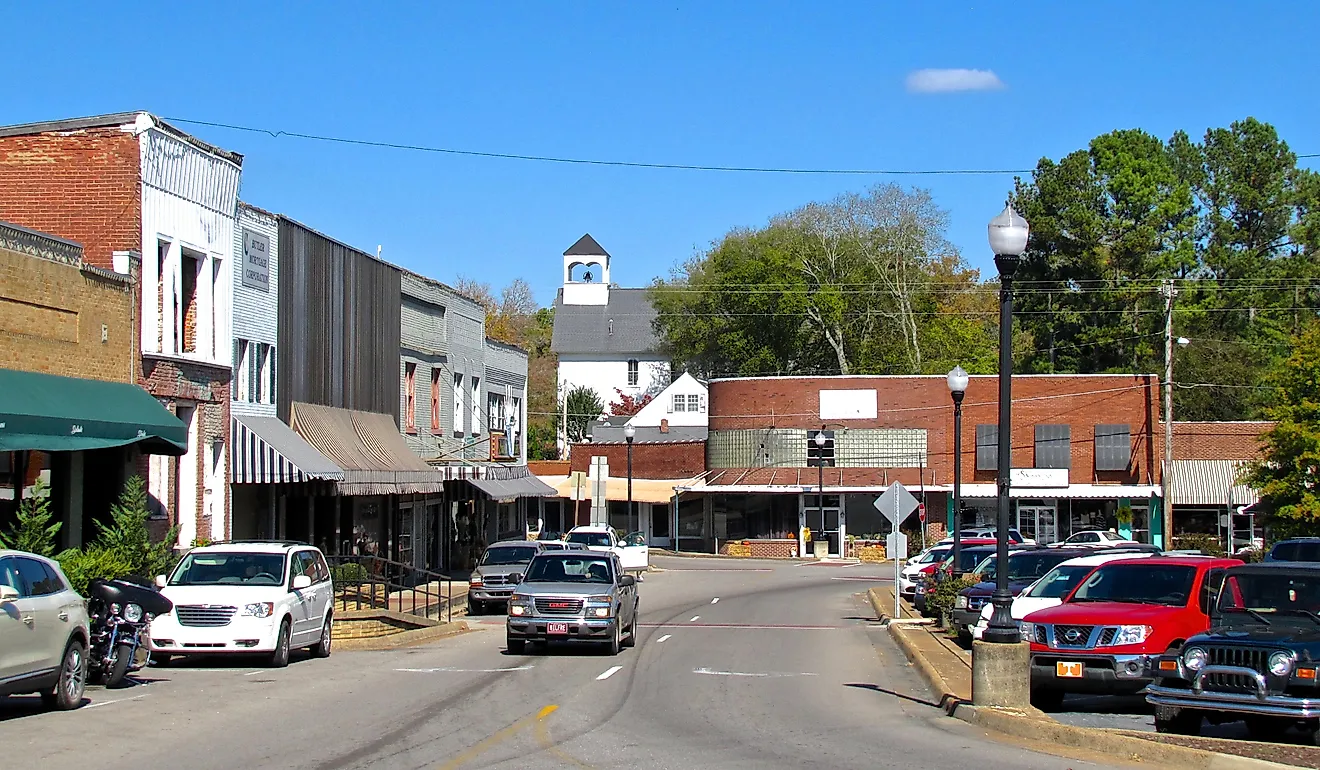
Centered on Market Street and the adjacent Town Green, Cheraw's downtown reflects its origins as a key Pee Dee River trading post and its preservation of antebellum architecture. Officially nicknamed "The Prettiest Town in Dixie," Cheraw retains more than 50 antebellum structures within walking distance of downtown. The 1837 Market Hall, featuring a distinctive open arcade and town clock, anchors the Town Green and serves as a symbol of the city's historic role in commerce. The Dizzy Gillespie Birthplace Park, located just off downtown, honors the jazz trumpeter and bebop pioneer John Birks "Dizzy" Gillespie, born in Cheraw on October 21, 1917, with a life-sized statue and interactive exhibits.
Market Street businesses include River's Edge Restaurant, offering seafood and Southern dishes overlooking the river. The Bistro on 2nd provides a menu of pasta and sandwiches inside a restored historic building. Brady's Flowers and Gifts operates from an original storefront, selling regional crafts. The Cheraw Lyceum Museum hosts local art exhibits and lecture events. Centennial Park, adjacent to downtown, includes a fountain plaza, public art, and seating areas for the annual South Carolina Jazz Festival each October.
Beaufort
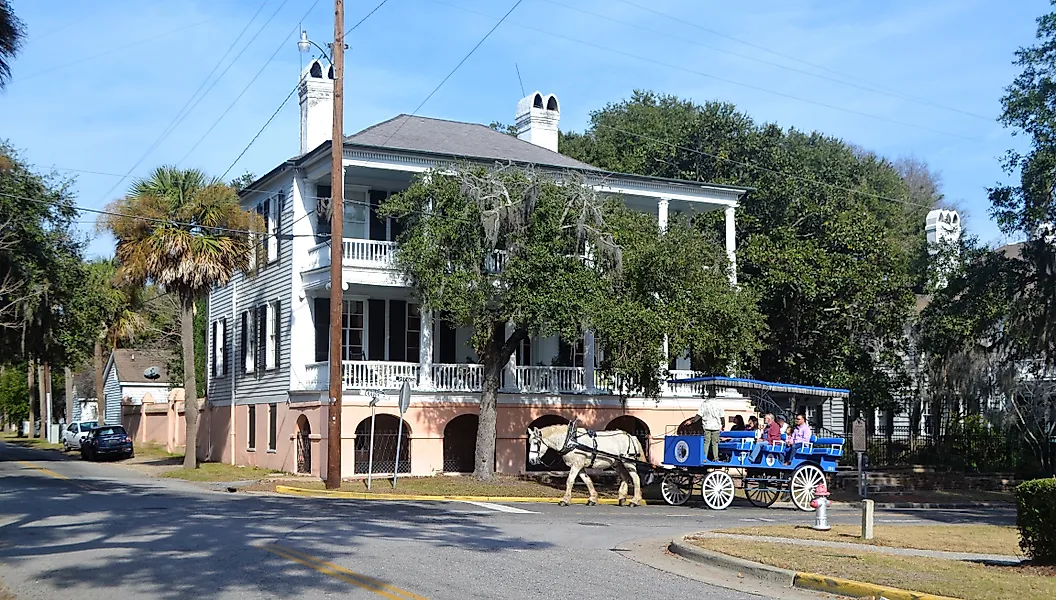
The historic district in downtown Beaufort includes more than 300 pre-Civil War buildings, many built by Sea Island cotton and indigo planters. The John Mark Verdier House, built in 1804, is open for tours and presents Federal-style architecture and plantation-era history (including the marker showing where Lafayette spoke from its portico in 1825). Beaufort played a key role in the Port Royal Experiment, the Civil War-era effort beginning in November 1861 to settle formerly enslaved people on abandoned plantations as wage labourers, making it one of the earliest sites of Black land ownership and education in the South. The nearby Penn Center on St. Helena Island, founded in 1862 as one of the first schools for formerly enslaved people, documents that legacy.

Bay Street includes restaurants such as Plums, serving Lowcountry fare with views of the riverfront, and Wren Bistro, offering regional ingredients in a renovated storefront. Rhett Gallery, family-owned since 1981, features wildlife paintings, decoys, and maps. The Pat Conroy Literary Center, located near downtown, offers exhibits and events on the author's life and work (Conroy lived in Beaufort for decades and based much of his fiction including The Prince of Tides on the surrounding Lowcountry).
Eight Strips, Three Centuries of Story
Forgo the porch rocker and follow the footpath: South Carolina's downtown ribbons display history out on the street. From Bluffton's river-breeze oysters to Cheraw's jazzy brass echoes, each main street is a live archive inviting visitors to turn its pages. Wander eight times and you'll hear one symphony of the past humming in present tense, urging every visitor to stride slower and stay longer.