8 Oklahoma Towns Where Time Stands Still
On a spring day in 1889, cannons fired to signal the start of the famous Land Run, changing Oklahoma forever as settlers raced to claim land. And today, some parts of the "Sooner State" have stayed true to their roots. These communities feel like a step into the past, filled with old-fashioned buildings, cowboy culture, and quiet streets.
Travelers looking for a break from busy life will love exploring these historic areas. You can walk down the red brick streets of Guthrie, which was the state's very first capital, or learn about the deep history of the Cherokee people in Tahlequah. From the cattle ranches of Pawhuska to the military history at Fort Gibson, these eight destinations offer a chance to see what life was like in the Old West.
Pawhuska

Pawhuska was established in 1872 as the headquarters for the Osage Nation. This community became famous during the 1920s oil boom, which brought immense wealth and beautiful architecture to the area. Today, the red brick buildings and open streets make it feel as though the Roaring 20s never ended. Visitors often start their journey at The Pioneer Woman Mercantile, a popular bakery and general store located in a restored 1910 building that serves hearty, cowboy-style food. Just outside the main district lies the Joseph H. Williams Tallgrass Prairie Preserve, the largest protected area of tallgrass prairie on Earth, where hundreds of bison still roam free. To understand the rich local heritage, a trip to the Osage Nation Museum is essential; it holds the distinction of being the oldest tribally owned museum in the United States. Finally, you can walk across the historic Swinging Bridge over Bird Creek, which has connected the community for generations.
Guthrie

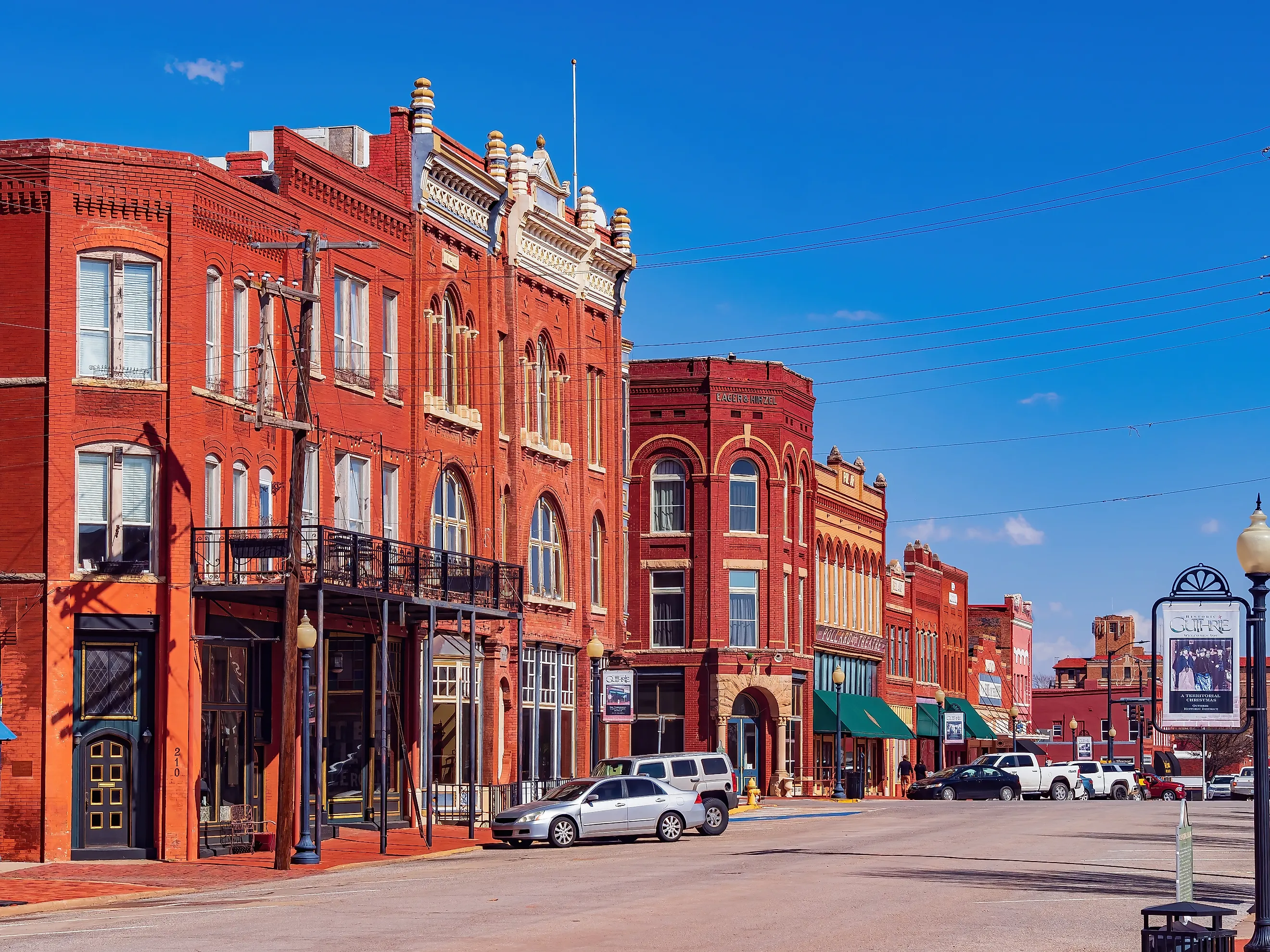
Guthrie was born instantly during the Land Run of 1889. This settlement served as the very first capital of the state before the government center moved to Oklahoma City. Because the capital left so early, modern developers ignored the area, leaving its beautiful Victorian architecture perfectly preserved for over a hundred years. The Guthrie Historic District stands as a National Historic Landmark, featuring blocks of red brick and sandstone buildings that look exactly as they did in the late 19th century. Inside one of these restored structures, the Pollard Theatre allows guests to watch live plays in a vaudeville house built in 1901. To learn about the wild early days of the region, a visit to the Oklahoma Territorial Museum is a must; it is filled with stories of U.S. Marshals and outlaws. Finally, the massive Temple of the Scottish Rite of Freemasonry impresses visitors with its stunning Egyptian and Roman designs, remaining one of the world's largest Masonic buildings.
Claremore

Claremore, originally a trading post, gained fame in the early 1900s for its "radium water" baths that visitors believed could cure illness. It is also celebrated globally as the home of the beloved cowboy philosopher Will Rogers. The Will Rogers Memorial Museum sits atop a hill overlooking the valley, housing the writings, movie posters, and saddles of the famous entertainer. For a look at elegant living from the past, the Belvidere Mansion is a three-story home built in 1907 with a unique ballroom, where guests can now enjoy lunch in a tea room. Collectors will be amazed by the J.M. Davis Arms & Historical Museum, which boasts the largest privately owned collection of firearms in the world. Finally, a drive down the local stretch of Route 66 offers a classic road-trip experience past vintage motor courts.
Fort Gibson

Established in 1824, Fort Gibson is a military outpost that holds the title of the oldest fort in the region, originally built to keep peace between trading companies and Native American tribes. It served as a vital hub for travel and communication long before the area became a state. Today, history lovers can explore the Fort Gibson Historic Site, featuring a reconstructed log stockade that looks exactly as it did in the 19th century. Just down the road stands the George M. Murrell Home, also known as "Hunter's Home," which remains the only plantation house from the pre-Civil War era left standing in Oklahoma. For a moment of reflection, check out the Fort Gibson National Cemetery, which honors veterans from the old times. Finally, visitors can enjoy fishing or walking along the banks of the Grand River, the same waterway used by early explorers.
Muskogee

Muskogee began in 1872 with the arrival of the railroad and quickly grew into the agency headquarters for the Five Civilized Tribes. It gained lasting fame in pop culture thanks to the classic country song "Okie from Muskogee," which celebrated traditional American values. Guests can explore the Five Civilized Tribes Museum, housed in a historic 1875 Union Agency building, to view art and artifacts from the Cherokee, Chickasaw, Choctaw, Muscogee, and Seminole nations. For nature lovers, Honor Heights Park offers 132 acres of gardens, including a stunning azalea festival that blooms every spring. A surprising piece of naval history sits at the Muskogee War Memorial Park, where the USS Batfish, a real World War II submarine, is open for tours. Finally, the Castle of Muskogee hosts festivals throughout the year, transporting visitors to the Renaissance era with its stone towers and jousting grounds.
Broken Bow

Founded in 1911 by the Dierks brothers, Broken Bow used to be a rough-and-tumble lumber camp in the foothills of the Kiamichi Mountains. The dense forests that surround the area remain largely untouched, giving visitors a sense of the wilderness that early loggers faced. Nature enthusiasts flock to Beavers Bend State Park, where the Mountain Fork River winds through cypress trees, offering perfect spots for fly fishing and hiking. Inside the park, the Forest Heritage Center teaches guests about the history of forestry with huge dioramas and wood art, celebrating the industry that built the region. For a look at life before statehood, the Gardner Mansion & Museum preserves the 1884 home of a Choctaw Chief, filled with prehistoric artifacts and pioneer items. Finally, the crystal-clear waters of Broken Bow Lake provide a peaceful escape for boating and eagle watching along 180 miles of natural shoreline.
Eufaula

Eufaula was named after a Creek tribal clan. This locality grew in the 1870s when the railroad arrived, becoming a busy center for trade. The main street resembles its appearance a century ago, with colorful brick storefronts and vintage signs. Guests love to explore the Eufaula Main Street District, which is listed on the National Register of Historic Places and offers unique antique shopping. The area is best known for Lake Eufaula, the largest lake entirely inside the state, where families can swim, fish, or rent pontoon boats. A 22-minute drive away leads to Honey Springs Battlefield, where walking trails guide visitors through the site of a major Civil War conflict.
Tahlequah

Designated as the capital of the Cherokee Nation in 1839 following the forced removal known as the Trail of Tears, Tahlequah stands as a testament to resilience and tradition. The deep roots of the tribe are visible everywhere, giving the area a distinct feeling of history living in the present. The Cherokee National Capitol Building, completed in 1869, still stands proudly in the public square. To truly step back into the past, visitors can tour Diligwa - 1710 Cherokee Village, a living history exhibit where guides demonstrate traditional crafts and daily life from the 18th century. Nature lovers enjoy the winding waters of the Illinois River, a perfect spot for a lazy float trip past limestone bluffs. Finally, the campus of Northeastern State University features the stunning Seminary Hall, a castle-like structure that originally served as a school for Cherokee women.
Timeless Oklahoma
Exploring these eight locations reveals that the "Sooner State" is full of hidden history waiting to be discovered. Whether walking the Victorian streets of Guthrie or floating down the river in Tahlequah, visitors can find a genuine connection to the past that is hard to find elsewhere. A road trip through these preserved communities offers more than just sightseeing; it provides a rare chance to slow down, unplug from the modern world, and experience the enduring spirit of the Old West.