8 Of The Friendliest Towns In Croatia
Friendliness can be difficult to measure, but Croatia's smaller towns provide plenty of places where visitors can experience community life firsthand. Centuries-old festivals fill streets with residents. Cafe terraces spill across central squares. Traditions involving horses and even sword fighting continue because local communities actively maintain them. These eight towns are all small, and each gives travelers several opportunities to do more than simply see the sights.
Samobor

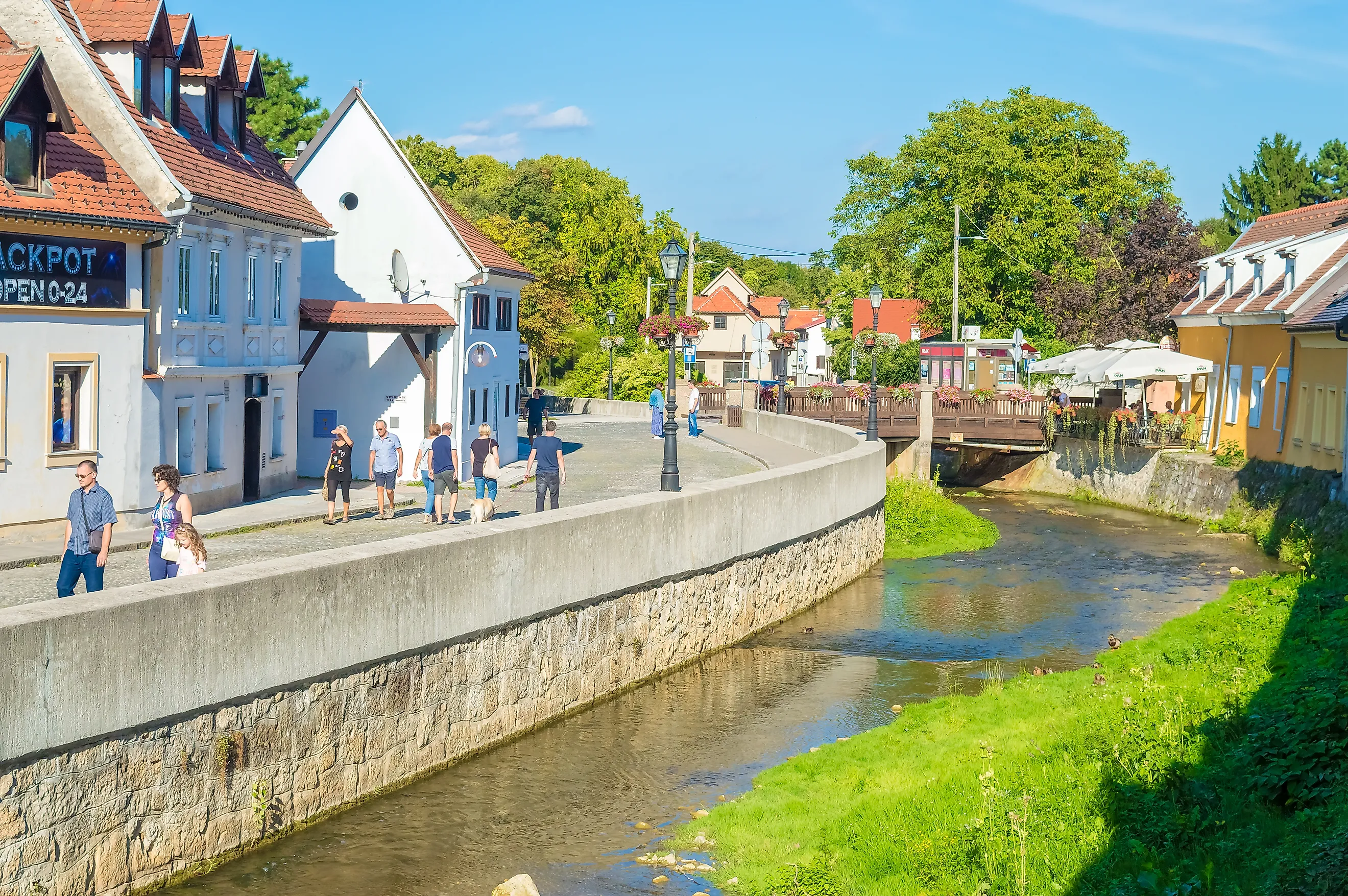
Samobor's social life revolves around King Tomislav Square, where cafe terraces occupy the historic center and provide the ideal setting for trying kremšnita, the custard-filled pastry closely associated with the town. From the square, visitors can follow Gradna Creek toward the Samobor Museum, housed in the former residence of composer Ferdo Livadić, or continue toward wooded paths around Anindol and the ruins of Samobor Castle.
The town becomes considerably livelier during Samobor Fašnik, one of Croatia's oldest carnival celebrations. Traditional carnival characters symbolically take control of the town, while street performers, neighborhood groups, cultural societies, workshops, and parades spread across several locations. Thousands of schoolchildren and members of local organizations participate rather than simply watch from the sidelines. Even outside carnival season, Samobor's compact center makes it easy for visitors to move between cafes, cultural attractions, and walking paths used by residents.
Varaždin

Varaždin's pedestrian center provides natural gathering places before any festival begins. Cafe tables fill Korzo, while nearby Franciscan and Miljenko Stančić squares connect restaurants, shops, churches, and the Old Town, the white-walled fortress that has become the city's architectural symbol. Wandering between these spaces introduces visitors to a historic center that continues to function as a social hub.
Then there is Špancirfest. During the final ten days of August, concerts, street performers, plays, exhibitions, workshops, and other events take over Varaždin's streets and attract more than 200,000 visitors. Travelers visiting earlier in summer can still encounter open-air theater, cinema, concerts, and food events through Summer in Varaždin. The combination makes the historic center more than an architectural attraction, because its streets and squares repeatedly become stages where residents, artists, performers, and visitors share the same public spaces.
Rovinj

Rovinj's harbor naturally brings people together, whether over morning coffee, an evening meal, or a walk beneath the colorful façades lining the waterfront. From there, visitors can pass through Balbi Arch and climb the car-free lanes of the Old Town toward St. Euphemia's Church. Those looking for a more active outing can cycle or walk through Golden Cape Forest Park, immediately south of town.
Rovinj's strongest expression of community, however, may be the Batana Eco-Museum. The batana is a traditional flat-bottomed fishing boat closely associated with local families, and the museum preserves much more than the vessels themselves. Visitors encounter fishing traditions, local dialect, songs, boatbuilding, and food, while traditional spacio dinners combine freshly prepared fish with music and local hosts. These activities provide a way to experience Rovinj's maritime culture through the people maintaining it rather than viewing it solely behind museum glass.
Sinj

In Sinj, the easiest way to understand the community is to experience the Sinjska Alka. Local horsemen have maintained this annual equestrian tournament for centuries, commemorating the town's defense in 1715. The event extends far beyond the competition itself, since Alkari practice throughout July and the wider season incorporates concerts, exhibitions, music festivals, performances, and gatherings throughout town.
Visitors arriving outside the main event can explore the Museum of Sinjska Alka, where historic uniforms, weapons, equipment, and a life-sized procession explain the tradition year-round. Another important gathering occurs at the Basilica of the Miraculous Lady of Sinj, particularly during the Feast of the Assumption, when thousands of pilgrims arrive and a procession moves through town. For something less ceremonial, Sinj's annual calendar also includes cycling events, rural-product fairs, carnival, and music evenings beneath Kamičak Fortress.
Đakovo

Đakovo brings people together through folklore, horses, and public spaces. Start at Strossmayer Square, dominated by the twin-towered Đakovo Cathedral, before walking into neighboring Strossmayer Park, a green space used for both everyday recreation and public events. The Đakovo State Stud Farm adds another dimension to local identity through its centuries-old Lipizzaner breeding tradition and equestrian activities.
The best time to see those traditions converge is Đakovački vezovi. Established in 1967, the annual festival incorporates Croatian and international folklore groups, traditional costumes, exhibitions, equestrian shows, music, and a procession through town. In 2026, performances spread across Strossmayer Square and Strossmayer Park before participants, including folklore societies and equestrians, processed through Đakovo's streets. Rather than keeping local heritage confined to a museum, the festival places it directly in the town's most important communal spaces.
Korčula

Korčula's walled Old Town creates plenty of opportunities for visitors and residents to cross paths. Cafe and restaurant terraces line the waterfront, while stone lanes converge around St. Mark's Cathedral and the squares of the medieval center. Local wineries and tasting rooms provide another sociable introduction to an Adriatic island with deep wine and olive-growing traditions.
Nothing expresses Korčula's communal identity more dramatically than the Moreška sword dance. Local men train to perform an elaborate mock battle with two swords each, with roles traditionally passed through generations of Korčulan families. The tourism board describes Moreška as a living expression of local identity that continues to unite the community. Visitors have numerous chances to see it, as the 2026 season schedules regular performances between April and October, alongside events such as the Korčula Sword Dance Festival. The tradition turns an evening performance into a direct encounter with something local families have collectively maintained for centuries.
Čakovec

Čakovec gives northern Croatia another strong showing. The pedestrianized center contains cafes and public gathering spaces within an easy walk of Zrinski Old Town, the historic castle surrounded by a leafy central park. Today, the castle houses the Museum of Međimurje and Treasury of Međimurje alongside a restaurant and cafe, allowing the historic complex to remain part of contemporary town life.
Community celebrations are equally important. Porcijunkulovo, traditionally held around the beginning of August, ranks among Međimurje's signature annual events. The festival brings concerts, crafts, food, entertainment, and crowds into Čakovec's center, providing visitors with an opportunity to encounter regional culture beyond museum displays. At quieter times, the surrounding park and pedestrian streets provide the everyday version of the same communal environment, where cafes, shops, cultural attractions, and green space remain closely connected.
Mali Lošinj

Mali Lošinj's long harbor functions as the town's living room. Cafes, restaurants, shops, fishing boats, and pleasure craft cluster around the waterfront, making the Riva an easy place for travelers to experience daily island life. Nearby, the Museum of Apoxyomenos tells the remarkable story of the ancient Greek bronze athlete discovered underwater near Lošinj, while coastal walking paths provide an easy way to meet walkers, cyclists, and swimmers outside the center.
Maritime traditions return directly to the waterfront during Maritime Evening, when music, folklore, local products, and seafaring heritage fill the harbor area. The broader LOSINAVA programming likewise celebrates Lošinj's relationship with the sea through boats, demonstrations, workshops, and cultural events. These occasions work particularly well because they transform the Riva from an attractive place to photograph into a shared space where visitors can participate in island traditions alongside residents.
Where Croatia Comes Together
Croatia's friendliest small towns distinguish themselves through places where participation comes naturally. A visitor can share cafe space with residents in Samobor, watch artists and performers take over Varaždin's streets, encounter fishing traditions in Rovinj, or experience festivals in Sinj and Đakovo that depend on generations of local participation. On the islands, Moreška and Lošinj's maritime celebrations keep community traditions visible rather than separating them from everyday town life.
These experiences also make friendliness something tangible rather than a claim about local personalities. Squares, parks, festivals, museums, waterfronts, food traditions, and public performances give travelers opportunities to spend time where residents gather, and, for a while, to join them.