8 Most Welcoming Towns In Washington's Countryside
In the early 1960s, with the railroad rerouted and the sawmill economy failing, Leavenworth's merchants bet the town on an unlikely idea and rebuilt their storefronts as a Bavarian village. The bet still pays out in festival weekends and a population that treats visitors as the whole point. The same playbook runs across rural Washington: Winthrop raised an Old West downtown to greet the new North Cascades Highway in 1972, La Conner turned its tulip fields into an April institution, and Sequim built a festival around lavender. The eight towns ahead sit in orchard valleys, wheat country, river deltas, and island sounds, and each one made welcoming people a working part of the local economy. It shows in how they treat a stranger.
Leavenworth

The reinvention worked because the setting backed it up: Leavenworth sits where the Wenatchee River leaves the high Cascades for pear and apple country, and the peaks above town do a convincing impression of the Alps. The calendar carries the welcome. Maifest opens the season with dancing around the Maibaum, and the town's Oktoberfest fills the Festhalle and Front Street Park across three October weekends with keg tappings, alphorns, and brats. Between festivals, the Icicle Gorge Trail loops through old-growth forest along glacier-fed water a short drive up Icicle Creek Road, and Sleeping Lady Mountain Resort scatters its red-roofed cabins through the pines at the canyon mouth. The pedestrian core means nobody is in a hurry, which is half of why conversations with strangers start so easily here.
Winthrop

When the North Cascades Highway opened in 1972, Winthrop met it with a freshly built false-front Old West downtown, and the wooden boardwalks have been greeting arrivals ever since. The town anchors the Methow Valley, working ranchland at the dry eastern base of the range, and the valley's signature institution doubles as proof of how neighborly the place is: Methow Trails, the largest cross-country ski area in North America, grooms more than 120 miles of trail that exist because over 175 local landowners allow the public across their property. Summer turns the same network over to bikes and trail runners. Pearrygin Lake State Park offers the warm-water swim two miles from town, the Shafer Historical Museum keeps the valley's mining-era cabins and wagons on a hillside above downtown, and some of the state's darkest night skies sit overhead.
Port Townsend

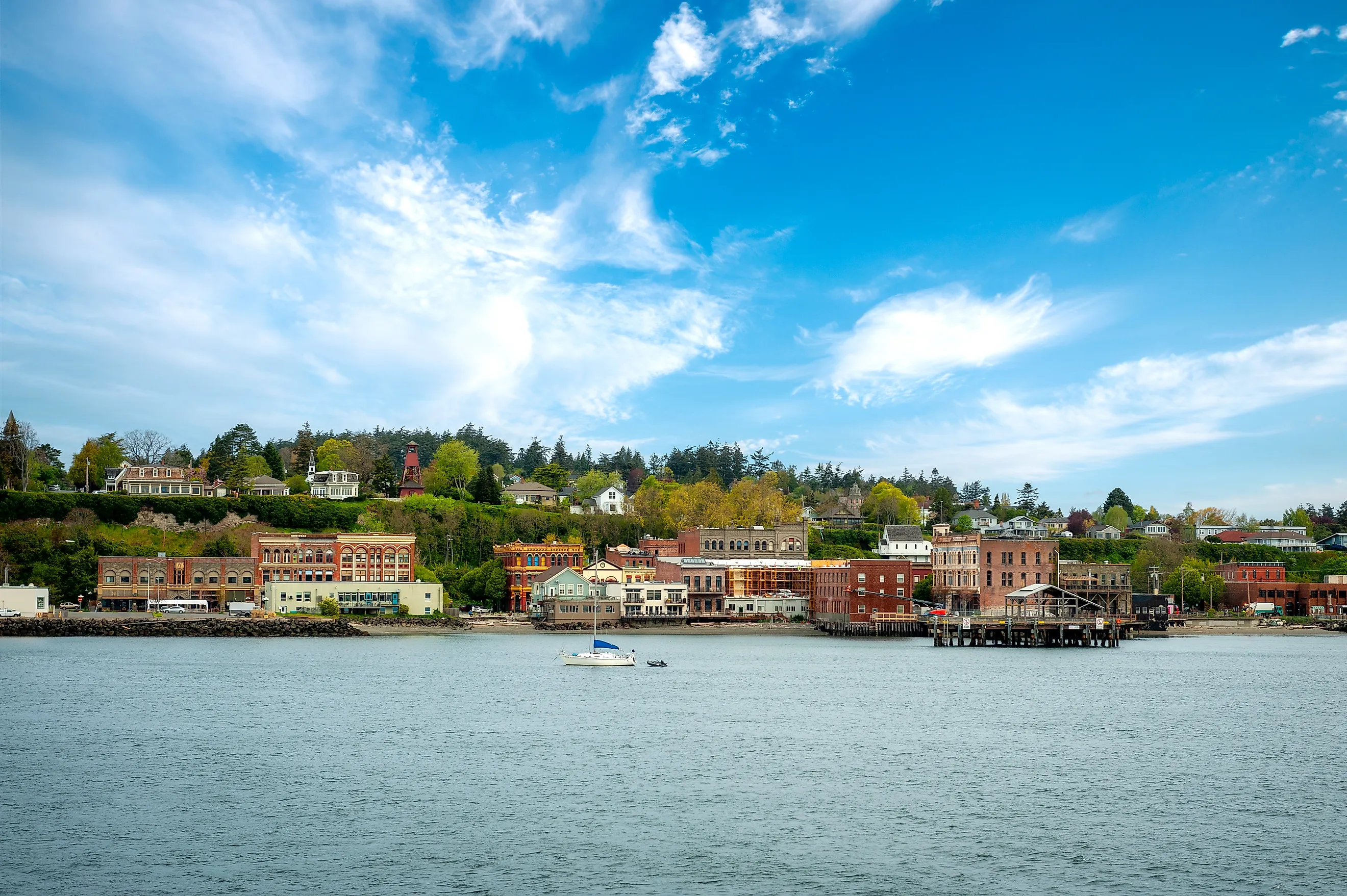
Port Townsend built its brick downtown and hillside mansions in the 1880s for a railroad that never arrived, and the Victorian seaport the bust left behind now ranks among the best-preserved in the country. The town repaid the bad luck by becoming the maritime heart of the rural Quimper Peninsula. The Northwest Maritime Center's Wooden Boat Festival, billed as the largest gathering of its kind in North America, packs Point Hudson with hundreds of vessels and their builders every September. Fort Worden State Park spreads 434 acres of bluffs, beaches, and artillery batteries where the peninsula meets the Strait of Juan de Fuca, and the Rothschild House and the JCHS Museum of Art + History keep the boom years furnished and documented. Coffee culture does the daily hospitality, with baristas who learn names fast.
La Conner

April puts La Conner at the center of the Skagit Valley Tulip Festival, when the surrounding delta farmland blooms in solid bars of color and every shop owner in town moonlights as a direction-giver. The other eleven months are the better argument for the place. The town faces the Swinomish Channel, the narrow saltwater passage separating the farm flats from Fidalgo Island, and the boardwalk along the working waterfront watches fishing boats run between the Rainbow Bridge and the Swinomish Reservation on the far bank. The Museum of Northwest Art holds the legacy of the Northwest School painters, several of whom, including Guy Anderson, lived and worked in La Conner. Farm stands ring the town through the growing season, and the channel-front restaurants treat a first visit like a return trip.
Walla Walla

Walla Walla sits in wheat country that rolls to the horizon in every direction, and the town's famous sweet onion is literally the official state vegetable, which says plenty about how agricultural the identity runs. The vineyards came later and changed the economics: more than 120 wineries now work the valley, and the tasting rooms downtown and south of town operate at a neighborly register, with pourers who talk soil and vintage like ranchers talk weather. The Marcus Whitman Hotel has anchored the skyline since 1928, its tower visible from the wheat fields outside town. The Whitman Mission National Historic Site preserves the ground where the 1847 killings at the Waiilatpu mission reshaped the territory's history, a sobering counterweight a few miles from the tasting rooms. Walawála Plaza downtown gathers the after-dinner crowd around fountains and native plantings.
Sequim

Sequim farms a meteorological loophole. The Olympic Mountains wring out the Pacific storms before they arrive, leaving the Dungeness Valley with roughly 16 inches of rain a year on a peninsula otherwise famous for rainforest. The dry, sunny prairie turned out to be ideal for lavender, and the town that calls itself the Lavender Capital of North America celebrates accordingly each July, when the valley's farms open their rows and Carrie Blake Park hosts the festival crowds. The Dungeness Spit curls more than five miles into the strait from the wildlife refuge north of town, one of the longest natural sand spits in the world, with a lighthouse at the tip for those who walk the whole way. At the Sequim Museum & Arts, the Manis Mastodon exhibit displays the bone-and-point evidence that people hunted here nearly 14,000 years ago.
Eastsound, Orcas Island

Saturdays from spring through early fall, the village green in Eastsound fills with the Orcas Island Farmers Market, and the scene captures the village exactly: growers, potters, and fiddle players all on a lawn a block from the beach, in a town with no traffic light and no need for one. Eastsound sits at the head of its namesake sound, a 15-minute drive north of the ferry landing, walkable end to end with bookstores and galleries filling the gaps between cafes. Moran State Park climbs from the village to the stone observation tower the Civilian Conservation Corps built atop Mount Constitution in 1936, the highest point in the San Juan Islands at 2,409 feet, with a view that runs over the entire archipelago toward two volcanoes. Crescent Beach, five minutes from the green, handles the quiet sunsets.
Republic

Republic hands visitors a hammer, which may be the most countryside welcome in the state. At the Stonerose Interpretive Center's Boot Hill fossil site, anyone can split shale from an Eocene lake bed and uncover 49-million-year-old leaves, insects, and fish, and the rules let finders keep up to three fossils a day while significant discoveries stay for science. The town itself was born as a gold camp in 1896 and remains the only incorporated town in Ferry County, deep in the forested highlands of the state's northeastern corner. The Ferry County Historical Museum fills a 1911 building with the mining, railroad, and lumber-camp record, and the Golden Tiger Pathway follows the old railroad grade out of town for an easy walk with valley views. The Knotty Pine Restaurant & Lounge covers dinner, where out-of-county plates get noticed and asked about, in the friendly way.
Where The Welcome Is Structural
The pattern across these eight towns is that none of them left hospitality to chance. Leavenworth and Winthrop literally rebuilt their downtowns to greet arrivals, and both reinventions outlived their skeptics. La Conner, Sequim, and Walla Walla turned crops into calendars, with tulips, lavender, and wine giving visitors a standing invitation tied to the growing season. The Methow Valley's trail network exists because ranchers and homeowners signed easements to let strangers cross their land, and Republic lets travelers keep the fossils they dig. Port Townsend and Eastsound simply kept their waterfronts human-scaled and their main streets walkable. The geography varies between wheat, tulips, salt water, and shale, but the underlying offer is the same: show up, and the town will meet you more than halfway.