8 Most Welcoming Towns In Minnesota's Countryside
A herd of bison grazes the tallgrass prairie four miles north of Luverne, on one of the state's last remnants of native grassland. Above Wabasha, more than 100 bald eagles winter along the Mississippi bluffs each year. Through the middle of Lanesboro runs the 60-mile Root River State Trail, home to some of the most scenic cycling in the state. The identity of these towns is built around state parks and historic landmarks, like the Two Harbors Light Station. It shows up too in community events like Buffalo Days and the Grumpy Old Men Festival that have run for decades. The eight towns below stretch across Minnesota's southwestern prairie to the North Shore of Lake Superior, giving locals and visitors plenty of reasons to slow down.
Luverne

In the extreme southwest corner of Minnesota, Luverne pairs prairie history with easy outdoor access. Four miles north of downtown, Blue Mounds State Park preserves more than 100 American bison on one of the state's remaining tallgrass prairie remnants. The park's 1.5-billion-year-old Sioux Quartzite cliff glows red at sunrise and runs roughly 1.5 miles along the ridge, and a paved 6-mile bike trail links the park to downtown through open prairie. On Luverne Street, the Brandenburg Gallery shows the work of Jim Brandenburg, the National Geographic photographer and Luverne native. The Hinkly House Museum, built in 1892, keeps its Victorian furnishings and an underground brick passage once used as a cyclone shelter. Each first weekend of June, Buffalo Days fills the streets with a parade, an arts fair, and a buffalo-chip throwing contest that draws families from around the region. The nine-hole Verne Country Club rounds out the town's easygoing pace.
Lanesboro

Set in the bluff country of southeastern Minnesota, Lanesboro blends an arts scene with preserved Victorian-era streetscapes. The Root River State Trail, a 60-mile paved path along the old Milwaukee Road railroad right-of-way, draws cyclists from around the Midwest on summer weekends between May and October. Parkway Avenue, on the National Register of Historic Places, follows the South Branch of the Root River past limestone storefronts in use for more than 150 years. Lanesboro also sits next to one of the largest Amish settlements in the upper Midwest, where roughly 130 Amish families farm the surrounding valleys, and local outfitters run guided tours to their farms and craft shops. Lanesboro Arts, on Parkway Avenue, programs exhibitions and performances year-round. The Rhubarb Festival, held the first Saturday in June, is one of the town's most popular events, pulling in visitors and locals from across the state.
Two Harbors

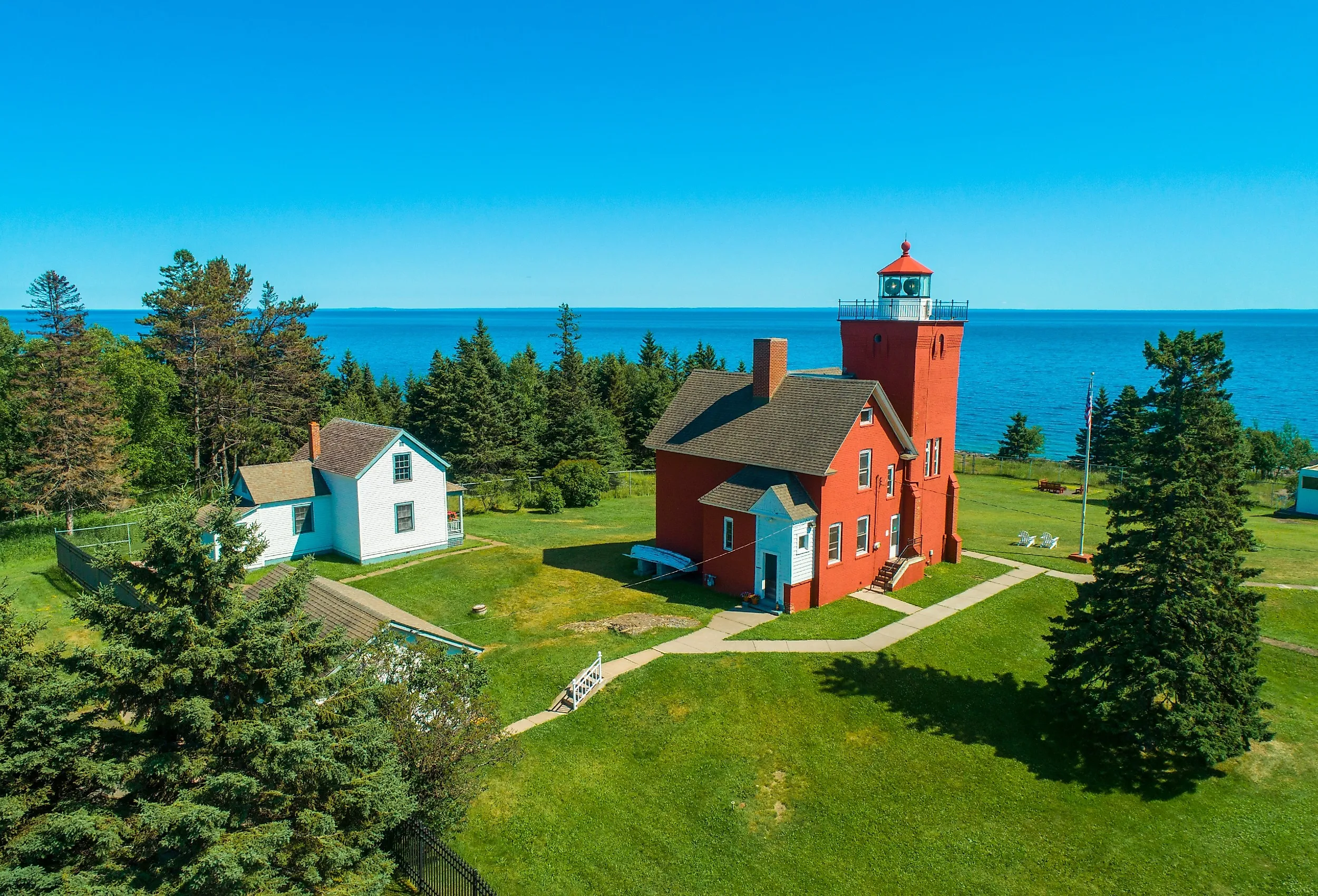
On the North Shore of Lake Superior, 26 miles northeast of Duluth, Two Harbors carries its iron-ore shipping past into a downtown of shops, restaurants, and breweries. The 1892 Two Harbors Light Station at Agate Bay is the oldest operating lighthouse and museum in Minnesota. A shoreline walk links Agate and Burlington Bays, with iron ore freighters visible out on the lake. Twenty miles up the shore, Split Rock Lighthouse sits atop a 130-foot cliff, built in 1910 after a great storm damaged 29 vessels in 1905; the site draws over 100,000 visitors a year and is open for tours through the Minnesota Historical Society from May through October. Downtown, the Duluth and Iron Range Railway Depot Museum tells the story of the ore industry that built the town. Thirteen miles northeast, Gooseberry Falls State Park packs five waterfalls into 1,682 acres of lakeshore forest, making it the most-visited state park on the North Shore. The Lighthouse B&B offers overnight stays with views of Agate Bay.
Wabasha

Wabasha, first settled in 1826 on the west bank of the Mississippi River, is the oldest city in Minnesota and sits along the Great River Road. The National Eagle Center on Pembroke Avenue is a 14,000-square-foot riverfront facility that houses resident bald eagles and runs educational programs year-round. It anchors one of the best wild-eagle viewing spots in the upper Midwest, where more than 100 birds winter along the Mississippi from November through February. Every February, the Grumpy Old Men Festival, named for the 1993 movie partly filmed here, draws crowds to ice fishing competitions, cardboard sled races, and live music. Roughly 50 of the town's buildings are listed on the National Register of Historic Places. Big Jo Pizza on Main Street is a reliable local stop, and the paved Wabasha Riverfront Trail runs along the water for biking, walking, and eagle-watching.
Mantorville

Nearly all of Mantorville's 1850s and 1860s limestone buildings are listed on the National Register of Historic Places, and its proximity to Rochester keeps the small downtown busy. Walkable streets make for an easy self-guided tour of the original limestone architecture, capped by the Dodge County Courthouse of 1871. On Main Street, the 1854 Hubbell House is one of the oldest still-operating restaurants in Minnesota, known for its Civil War-era dining rooms. The Mantorville Opera House, open since 1918, still hosts live theater in summer and fall, while the Mantorville Arts Guild sells local art, antiques, and souvenirs. Marigold Days, the town's biggest festival, brings quilt shows, a parade, live music, car shows, and fireworks to the limestone streets. Surrounded by rolling farmland and the Middle Fork of the Zumbro River, Mantorville suits walking, shopping, and unhurried afternoons.
Walker

Walker sits on the shore of 112,000-acre Leech Lake, Minnesota's third-largest lake, inside the Chippewa National Forest. A designated Trail Town on the North Country National Scenic Trail, it also has direct access to the paved Paul Bunyan State Trail and Heartland State Trail for hiking and biking. Leech Lake hosts annual walleye fishing contests every June, and anglers come for walleye, muskie, and bass. Winter shifts the town toward snowmobiling, ice skating, and competitive ice fishing, including the International Eelpout Festival in February. The Cass County Museum documents the region's Ojibwe history and military past alongside Native American artifacts. In mid-July, the Moondance Jam festival draws large crowds to Leech Lake for rock music, food, and camping.
Albert Lea

Albert Lea, the county seat of Freeborn County, sits between Fountain Lake and Albert Lea Lake, which earned it the nickname "The Land Between the Lakes." Myre-Big Island State Park offers 1,500 acres for hiking, boating, fishing, ice fishing, and winter hockey. The revitalized downtown carries local shops, restaurants, and an arts scene, and street festivals run all year along Broadway Avenue, including Wind Down Wednesdays, the Eddie Cochran Weekend, and a large Fourth of July celebration. The city holds a Blue Zones Community designation for its focus on longevity, wellness, and social connection, and it backs that up with miles of bike lanes, community gardens, and walking trails. The Blazing Star Trail is a case in point, running 8 miles from Frank Hall Park to Hayward for biking and hiking. The Freeborn County Historical Museum on Bridge Avenue is one of the largest living-history complexes in southern Minnesota, with 26 restored historic structures.
Red Wing

Red Wing sits in the Mississippi River's Bluff Country near the Wisconsin border. It is home to the Pottery Museum of Red Wing and the Red Wing Shoe Store Museum, where a Guinness-certified world's largest boot stands 16 feet tall and 20 feet long. During festivals, downtown becomes an open-air gallery, and the Big Turn Music Fest fills the snowy February streets with live music across venues throughout town. Scarlet Kitchen and Bar draws diners even when they are not staying at the St. James Hotel, while the 1886 Red Wing Barrel House pours a wide drinks menu in a dimly lit modern space. Meanwhile, the Bluff Barn Trail at He Mni Can-Barn Bluff Regional Park and the Cannon Valley Trail offer some of the area's best biking, hiking, and birdwatching, plus Fourth of July fireworks.
Countryside Towns Worth The Stop
The value of a countryside town is not measured by how remote or tight-knit it is. It comes down to connectivity, hospitality, and character, and these eight towns carry all three. Whether it is the bison outside Luverne, the eagles lining the Mississippi at Wabasha, or the limestone courthouse square at Mantorville, each place tells its own story about what a Minnesota countryside town can be.