10 Coolest Texas Towns For A Summer Vacation
The Frio River at Leakey runs cold enough in August to make you forget the parking lot you left behind, which is why generations of families have aimed the truck at Frio Canyon every time the forecast turns mean. That is the test this list applies: coolest, taken literally. Some of these towns sit on spring-fed rivers that hold 72 degrees no matter what the air does, some sit on high ground where summer nights drop into the 60s, and the rest face a Gulf breeze that knocks the afternoon down to bearable. All ten earn the word in the other sense too, with dance halls, dark skies, and dinosaur tracks waiting once you dry off. Pick a direction and go.
Fort Davis

Fort Davis sits higher than any other town in the state, right around a mile up in the Davis Mountains, and the elevation does what no patio mister can: summer nights here drop into the 60s. The other kind of cool arrives after dark, when McDonald Observatory hosts star parties several nights a week under some of the darkest night skies in the lower 48. Daytime belongs to the 75-mile Scenic Loop, the high drive that circles the range past Madera Canyon, and to Davis Mountains State Park, where Indian Lodge still rents the whitewashed adobe rooms the Civilian Conservation Corps built in the 1930s. Fort Davis National Historic Site preserves one of the best-surviving frontier military posts in the Southwest at the edge of town, and the old drugstore on the main drag still serves milkshakes that taste better at altitude.
Marfa

Marfa gets filed under art, but the practical July draw is altitude: at 4,685 feet, the grasslands cool off hard once the sun drops, and evenings outside El Cosmico's trailers and bell tents can call for a jacket. The art holds up its end. Donald Judd moved out here in the 1970s and filled two artillery sheds at the Chinati Foundation with 100 aluminum boxes that do strange, patient things with high-desert light, and the sealed Prada Marfa storefront still stands alone on US 90 near Valentine, 26 miles out. The Hotel Paisano, where the cast of Giant stayed during the 1955 shoot, anchors the courthouse district, and the viewing platform east of town fills nightly with people squinting at the horizon for the Marfa lights. Skeptics tend to stay until midnight anyway.
Leakey

Leakey, pronounced Lakey as any local will remind you, is the commercial center of Frio Canyon with fewer than 500 residents and exactly one chain business in town, a convenience store. Everything else runs on the river. Frio is Spanish for cold, the spring-fed water backs the name up all summer, and outfitters like Andy's on River Road, Josh's, and Happy Hollow handle tubes and shuttles along the canyon down through Concan. Garner State Park holds the main event: jukebox dances at the CCC-built pavilion every summer night, a ritual that has run since the 1940s, plus the short, steep scramble up Old Baldy for the canyon panorama. When the river crowd gets thick, drive the RM 337 leg of the Twisted Sisters toward Camp Wood, one of the best stretches of road in the Hill Country.
New Braunfels
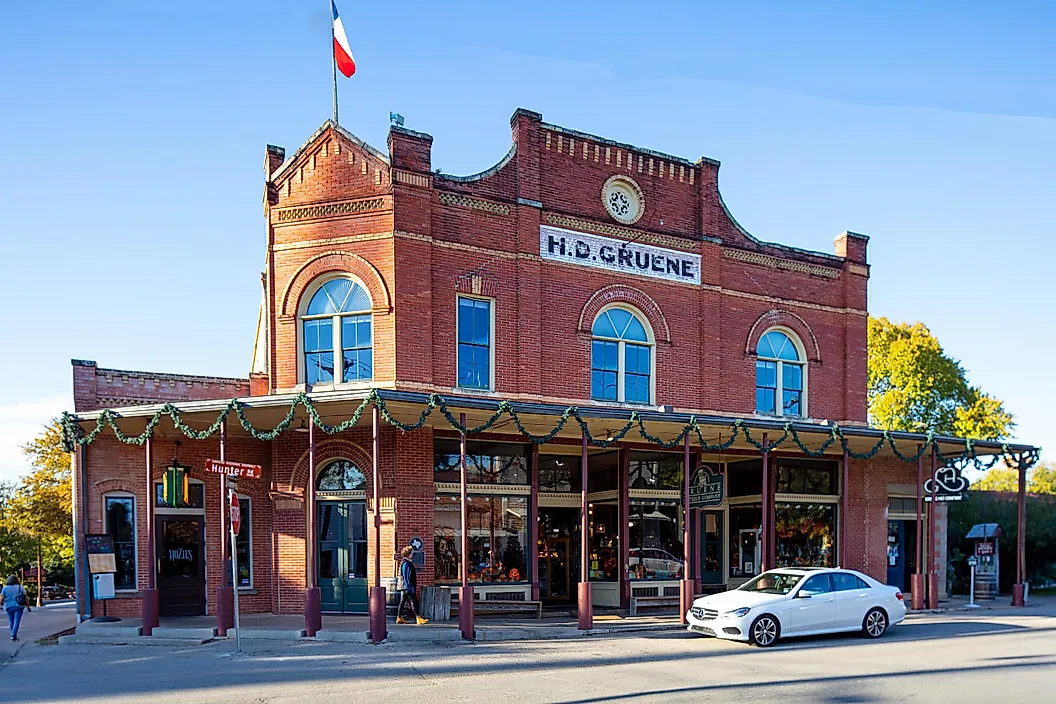
The Comal River rises from springs in Landa Park, runs all of about three miles, and holds between 70 and 72 degrees no matter how ugly the heat index gets, which is why the tube chute at Prince Solms Park stays the most efficient air conditioning in the state. Schlitterbahn opened on the Comal's banks in 1979 and grew into the waterpark every other waterpark gets measured against, and the Guadalupe below Canyon Lake handles the longer, lazier floats. The town keeps its evenings interesting in Gruene, the restored mercantile district on the bluff, where Gruene Hall has been pouring since 1878 and holds the title of oldest continually operating dance hall in Texas. A summer two-step on those worn boards, with every window and door open to the night air, counts as its own kind of cooling off.
San Marcos

The San Marcos River comes out of roughly 200 spring openings beneath Spring Lake at a constant 72 degrees, and when the air hits 105, the river simply does not participate. Glass-bottom boats at the Meadows Center have been drifting over those springs since the old Aquarena days, giving a clear look at the boils on the lake floor and at Texas wild rice, an endangered grass that grows in this river and nowhere else on Earth. The float itself is the town ritual: rent a tube at City Park, ride the current to the chutes at Rio Vista Park, run the drops a few times, and shuttle back up to do it again. Sewell Park handles the towel-on-the-grass crowd, and the courthouse square covers dinner once everybody finally dries out.
Wimberley

Wimberley holds the prettiest swim in the Hill Country and asks for a little planning in return. Blue Hole Regional Park, the stretch of Cypress Creek where rope swings hang from cypresses old enough to shade the entire swim lawn, runs reservation-only with no walk-ups; the season goes May through Labor Day plus September weekends, and the smart move is booking when reservations open March 1. Jacob's Well, the artesian spring that feeds the creek, is still worth the short hike for the look down into its blue throat, but swimming there has been canceled for the foreseeable future over low spring flow, and anyone promising otherwise is working from an old guidebook. Cypress Falls still takes walk-ups, the Devil's Backbone on RR 12 remains the best near-sunset drive around, and Wimberley Square covers the browsing in between.
Glen Rose

An hour southwest of Fort Worth, Glen Rose offers the only swim in the state where the bottom of the river is the attraction. Dinosaur Valley State Park sits astride the Paluxy, and the limestone riverbed carries 113-million-year-old theropod and sauropod tracks across five main track sites, best seen in late summer when the water drops low and clear. The same river serves up deep, shaded swimming holes between the track sites, so the wade and the cool-off are the same activity. Big Rocks Park, the free boulder field on the Paluxy in town, handles the kids who still have energy left. Save the morning for Fossil Rim Wildlife Center a few miles out, the drive-through preserve where giraffes lean into the truck window with zero respect for personal space, then hit the water for the hot half of the day.
Rockport-Fulton

Rockport-Fulton is the coast at bay-water volume. Rockport Beach curves along Aransas Bay as a calm, palm-backed crescent where small kids can actually swim, the breeze comes off the water all afternoon, and the evening cools faster than it does in the inland towns you drove through to get here. The Big Tree at Goose Island State Park has been standing for more than a thousand years, a coastal live oak with limbs propped like an old prizefighter's arms, and it makes a strange, satisfying pilgrimage between swims. The Fulton Mansion, the 1870s Second Empire showpiece on the bayfront, covers the history stop, and the town's long-running art colony keeps galleries open along Austin Street. Bay guides work the flats for redfish and trout at first light, before the day warms up enough to argue about.
Port Aransas

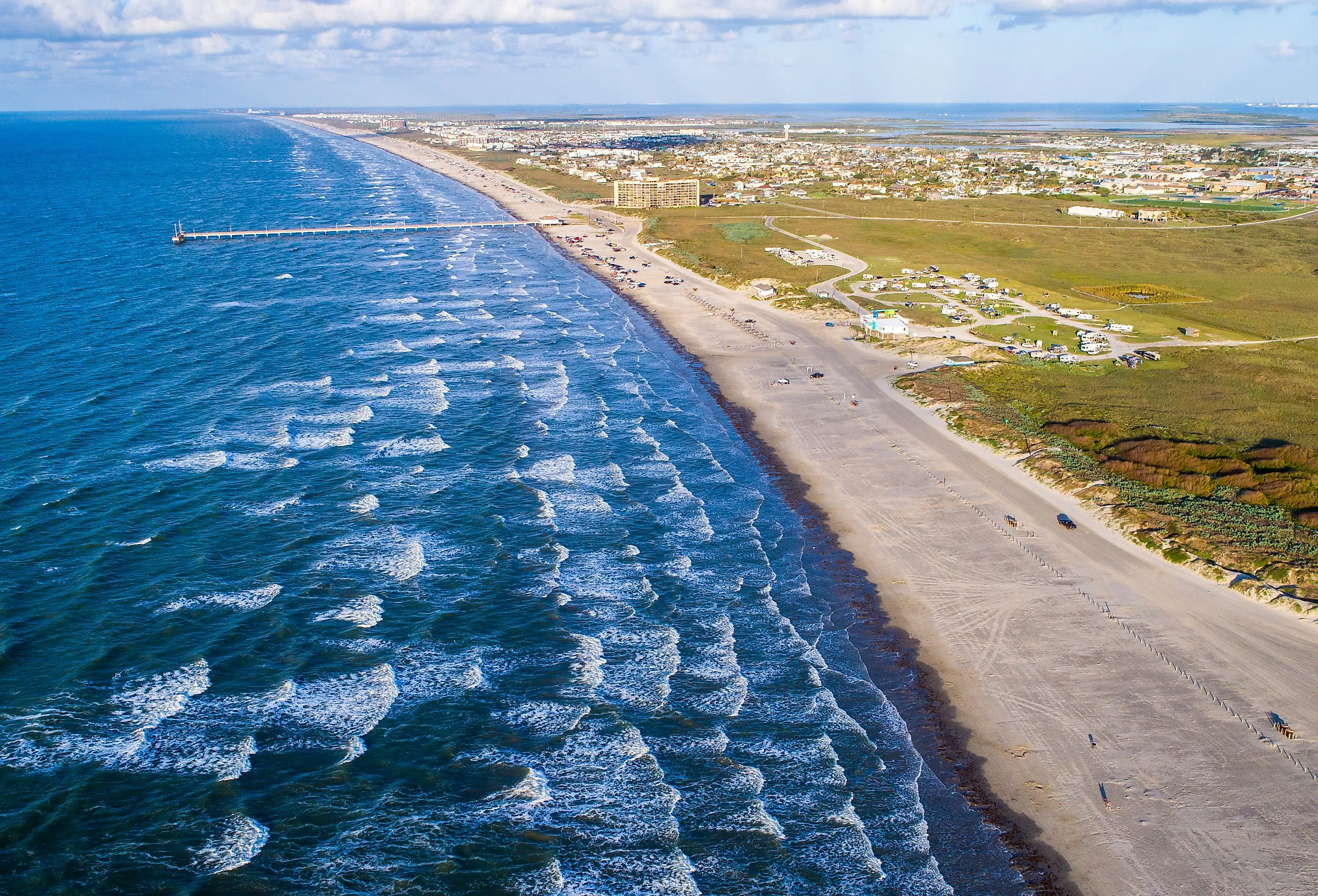
Port A starts with the short free ferry hop across the ship channel, where dolphins ride the wakes often enough that the crossing counts as the first attraction. The reward on the far side is miles of drivable Gulf beach on Mustang Island, a sea breeze that holds the afternoon under the inland triple digits, and a town that still feels like a fishing village with sand in its floorboards. Horace Caldwell Pier handles the anglers and the people-watching, and the Leonabelle Turnbull Birding Center's boardwalk puts roseate spoonbills and herons at point-blank range over the marsh. Farley Boat Works keeps the town's wooden-boat heritage alive with classes where visitors build their own skiff, plank by plank. Mornings belong to the surf, evenings to the jetty, and the middle of the day to whichever beach bar has the coldest air and the best shrimp.
Jefferson

Jefferson plays the shade card. In the 1870s, steamboats working Big Cypress Bayou made this, by most accounts, the busiest inland port in Texas after Galveston, and the boom left behind brick streets, ironwork balconies, and the Excelsior House, which has taken guests since the 1850s. The Turning Basin riverboat tours still narrate that history from the water. The real summer payoff sits 15 minutes east at Caddo Lake, often called the state's only natural lake, where paddling trails thread through flooded bald cypress hung with Spanish moss in what is frequently described as the largest cypress forest in the world. The canopy works like a porch the size of a lake, the water stays out of the sun, and the route map includes a stop in the community of Uncertain, which is exactly the right name for a place this easy to lose track of time in.
Pick Your Kind Of Cool
Cold water, high ground, or salt breeze: that is the whole menu, and it covers every corner of the state. The spring-fed rivers at San Marcos, New Braunfels, Wimberley, Leakey, and Glen Rose hold their temperature like a promise, the mile-high towns of Fort Davis and Marfa hand back the evenings the lowlands lose for three months, and Rockport and Port A let the Gulf do the work. Jefferson adds the option nobody plans for, a cypress canopy that shades the water itself. The regulars' rules apply everywhere: go midweek if you can, book the river houses and the Blue Hole slots early, and remember that May and September deliver the same cool water with half the crowd. The heat is not going anywhere, but for a weekend at a time, neither are you.