7 Best Downtowns In Michigan
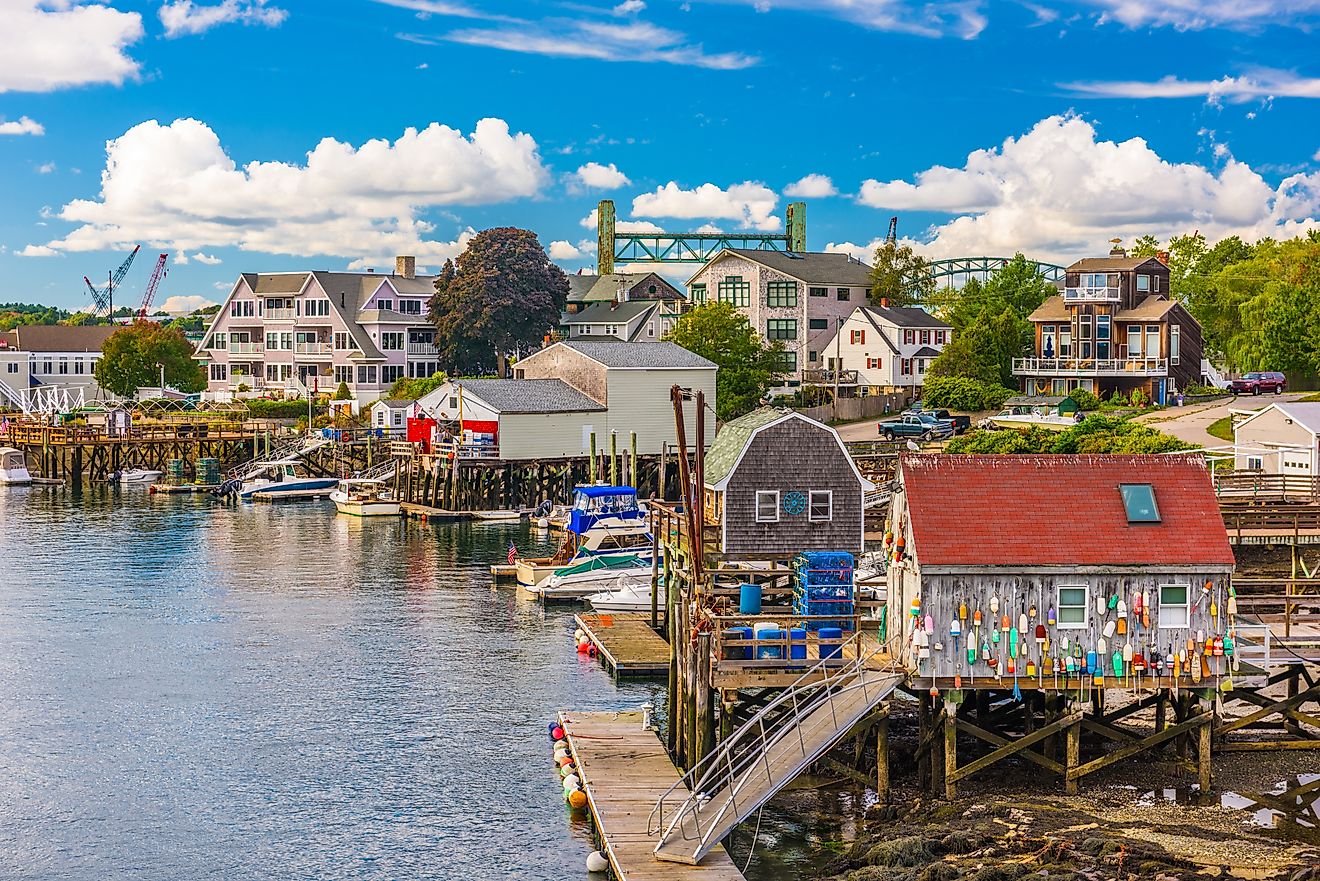
The best downtowns in Michigan fit a whole main street into a few walkable blocks of locally owned shops and restaurants. Holland runs on Dutch heritage and tulips. Frankenmuth has a Bavarian Main Street and a year-round Christmas store. Petoskey preserves the Victorian gaslight streets Hemingway once walked. Traverse City lives on cherries. Charlevoix shows off Earl Young's stone houses. Each one turns its specialty into a downtown you can walk end to end.
Holland

Holland centers its downtown on Eighth Street, a walkable strip of brick storefronts and local shops near Lake Michigan. The street plays up its Dutch roots all year. Each May, Tulip Time fills it with parades and more than six million tulips. Just north of downtown, Windmill Island Gardens runs De Zwaan, the only authentic working Dutch windmill in the country. It was built in the Netherlands in 1761 and shipped to Holland in 1964. It still grinds flour today.
The Holland Museum on 10th Street tells the local Dutch story. Alpenrose Restaurant cooks Central European food. Lemonjello's Coffee is the coffee stop on 9th Street. Centennial Park runs summer concerts from its bandshell.
Frankenmuth

Frankenmuth earns its "Michigan's Little Bavaria" name on Main Street, where the Bavarian buildings are real and not theme-park dressing. German Lutheran missionaries founded the town in 1845. Fifteen of them came from the Franconia region of Bavaria. Its Oktoberfest is the only one outside Germany that Munich has officially sanctioned, a stamp of approval the city gave in 1996.
Bronner's CHRISTmas Wonderland fills the south end of town and calls itself the world's largest Christmas store. It packs 7.35 acres of showroom onto a 27-acre lot. The store stocks more than 50,000 ornaments and draws about two million visitors a year. Zehnder's and the Bavarian Inn Restaurant face each other across Main Street. Both serve Frankenmuth's famous family-style chicken dinners. Zehnder's has run since 1928. The Zehnder family bought its rival, Fischer's Hotel, in 1950 and later made it the Bavarian Inn. The two still run as separate restaurants. The Frankenmuth Historical Museum walks through the German story. The River Place Shops gather more than 40 boutiques around a courtyard.
Petoskey

Downtown Petoskey is the Gaslight District, a few blocks of early-1900s brick storefronts along Mitchell and Howard Streets. A young Ernest Hemingway walked these streets. He spent more than 20 boyhood and teenage summers at the family cottage, Windemere, on nearby Walloon Lake. He first came north as a baby in 1899. He set several of his Nick Adams stories in the country around town. Stafford's Perry Hotel, where he stayed in 1916, is still open downtown. The Michigan Hemingway Society lays out a self-guided route past the sites he knew.
Chandler's runs a seasonal, locally sourced menu inside the restored 1909 Symons General Store on Howard Street. Roast & Toast handles the morning coffee crowd. The Crooked Tree Arts Center fills a converted 1890 Methodist church with rotating galleries and a black-box theater. Pennsylvania Park is downtown's green center, with a working fountain, a summer bandstand, and a Hemingway statue. Petoskey gave its name to the Petoskey stone, the fossilized coral that washes up along Little Traverse Bay and serves as Michigan's state stone.
Traverse City

Traverse City packs eight blocks of independent, locally owned shops and restaurants down Front Street. The region around it leads the country's tart-cherry business. Michigan grows about 75% of the nation's crop. That is why the area calls itself the Cherry Capital of the World. The National Cherry Festival each July pulls over 500,000 people downtown for parades, the Cherry Royale, and an air show.
The State Theatre on Front Street goes back to 1916. Filmmaker Michael Moore and his Traverse City Film Festival fixed up the old movie house and reopened it in 2007 as a nonprofit, volunteer-run cinema. Amical serves European bistro fare nearby. The Cooks' House works a tight tasting menu with farm-direct food. Higher Grounds Trading Co. roasts fair-trade coffee. Clinch Park beach is two blocks off the main strip, with a swim beach and the Traverse Area Recreational Trail running 12 miles east along the bay.
Charlevoix

Charlevoix stops its own main street every half hour through boating season. A drawbridge on Bridge Street lifts so sailboat masts can pass between Lake Michigan and Lake Charlevoix. The town's other claim is stone. Earl Young built around 30 houses and commercial buildings here between 1918 and the 1960s, with rounded walls, wavy rooflines, and boulder chimneys. Self-guided maps from the Harsha House trace them along Park Avenue and Clinton Street.
The Weathervane Restaurant on Pine River Lane is another Earl Young design, built right over the channel. Smoke on the Water serves slow-cooked meats and craft beer up Bridge Street. The Charlevoix Circle of Arts runs rotating shows in a former church on Clinton Street. The Harsha House Museum covers local history in an 1891 Victorian on State Street. East Park hosts the Apple Fest in October and the Venetian Festival in July, when decorated boats fill the channel for a night parade.
Rochester

Rochester is one of the oldest towns in the Detroit area. Settlers arrived in 1817, where the Clinton River, Paint Creek, and Stony Creek meet about 30 miles north of the city. Its downtown turns into one of Michigan's brightest spots every holiday season. The Big Bright Light Show wraps every Main Street storefront in more than 1.5 million LED bulbs from late November through mid-January. It draws people from across southeast Michigan.
Rochester Mills Beer Co. brews and serves pub food in a former wool mill on Water Street. O'Connor's Public House does Irish dishes and live music on Main Street. Bakehouse46 covers the morning pastry crowd. The Paint Creek Trail starts in town and runs 8.9 miles north to Lake Orion, the first rail-trail in Michigan. Rochester Municipal Park is a few blocks off Main, with a pond, a walking path, and the Art & Apples Festival each September, one of the state's biggest juried art fairs.
Marquette

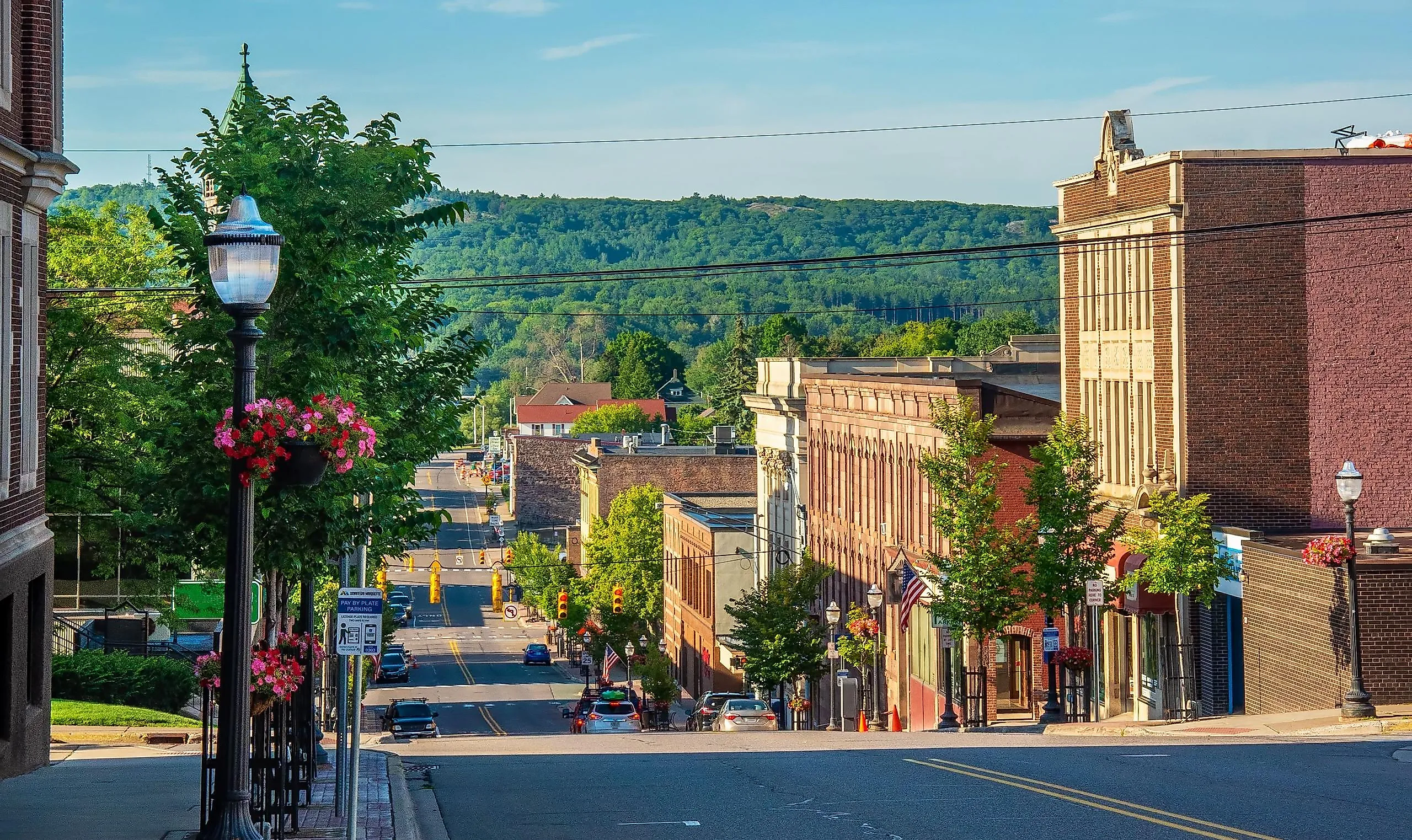
Marquette built itself around iron, and it still ships the stuff. The town started in 1849 as a port for iron ore off the Marquette Range. Freighters still load pellets at the active Presque Isle dock north of downtown. The Lower Harbor dock downtown closed in 1971 and now stands as a landmark, with local groups trying to turn it into public space. Marquette is the biggest city in the Upper Peninsula, on the south shore of Lake Superior. Northern Michigan University, founded in 1899, brings about 7,000 students to town and shapes much of the cultural calendar.
Donckers on Washington Street has made chocolates and run a soda fountain since 1896. Ore Dock Brewing Company brews up the street in a former insurance building and books live music. The Marquette Maritime Museum tells the harbor story by the Lower Harbor, next to a working Coast Guard station. Mattson Lower Harbor Park hosts the Hiawatha Music Festival in July and the Blueberry Festival earlier in summer. Blackrocks Brewery works out of a 19th-century house on Third Street and pours small-batch beer, with most of the crowd out on the patio and front porch.
Built to Be Walked
The seven best downtowns in Michigan run on the same formula. Each one has local owners, old storefronts, and one thing it does better than anywhere else. Holland grinds flour in a real Dutch windmill. Frankenmuth serves family-style chicken dinners. Petoskey gave its name to the state stone, a fossil coral. Traverse City revived a 1916 movie house downtown. Charlevoix raises a drawbridge for passing sailboats, Rochester lights Main Street for the holidays, and Marquette loads iron onto Lake Superior freighters. You can cross any of them on foot in an afternoon.