8 Most Breathtaking Towns In Maryland
Some views stop you where you stand. St. Michaels opens onto a working harbor lined with wooden boats. Cumberland fills a river valley walled in by steep green ridges. Havre de Grace looks out where the Susquehanna spills into open bay. Berlin keeps whole blocks of Victorian brick under old shade trees. Each town below earns the word breathtaking a different way. Most sit on the water and two rise in the western mountains. Here are seven Maryland towns worth the drive for the view alone.
Easton

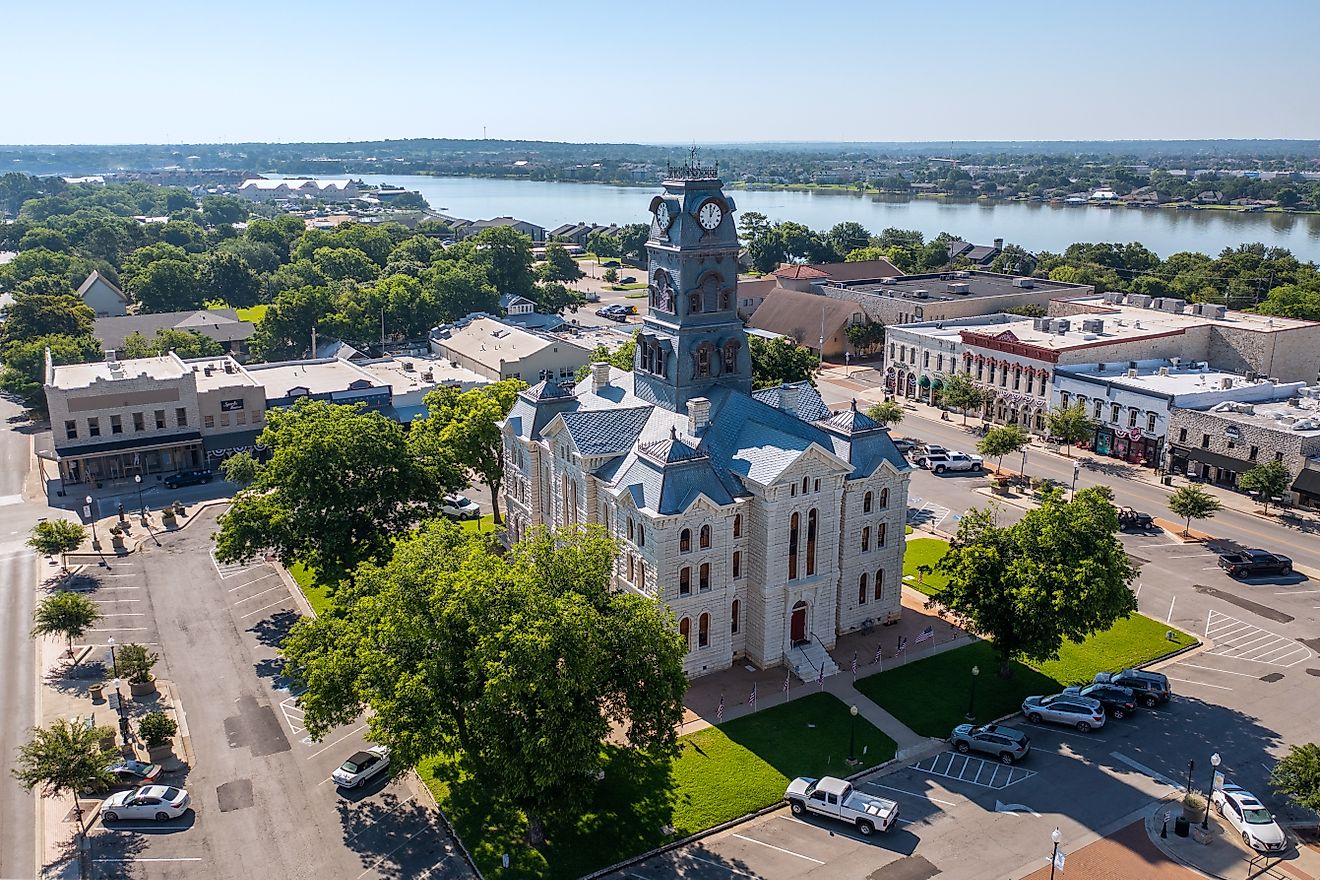
Talbot County ran its business out of Easton before the county had much else. The Talbot County Courthouse still sits at the center of town, a two-story red-brick building with a white octagonal cupola. Court days pulled farmers and merchants in from the whole shore, and the town grew up around that traffic. Two minutes away on Dover Street, the Avalon Theatre lights its marquee most nights. The 400-seat hall books musicals, concerts, and local productions through the year. Walk down to Easton Point on the Tred Avon River and you reach the old landing where shore boats once tied up. Kayakers launch from the public ramp there now. The Tidewater Inn keeps 86 rooms a few blocks off, and locals call it the Waterfowl Festival's unofficial headquarters each November.
St. Michaels

Nine miles west of Easton, St. Michaels sits on a neck of land between the Miles River and Broad Creek. The harbor was a shipbuilding town first, and the boats are still the reason to come. The Chesapeake Bay Maritime Museum runs a working wooden boatyard on Navy Point, where you can watch shipwrights plank a hull by hand. The 1879 Hooper Strait Lighthouse stands on the museum grounds, moved here from the middle of the bay and open to climb. Muskrat Park is a short walk away, its lawn sloping down to the water. Old cannons point out over the river there, and a bandstand stands in the middle of the green. The Inn at Perry Cabin holds the edge of town, and its dock runs sailing charters out at sunset.
Chestertown

By the 1700s Chestertown was Maryland's second-busiest port, and the money from that trade still lines the streets. Georgian brick houses run in rows along the Chester River, built by the merchants who shipped grain and tobacco downstream. The 1746 Custom House stands on South Water Street where the cargo was taxed and logged. Inside, the exhibits cover Chesapeake trade and Revolutionary politics and the region's African American history. Fountain Park sits at the middle of the historic district, its Victorian fountain topped by a statue of the goddess Hebe. The Schooner Sultana runs public sails from the waterfront, a full reproduction of a 1768 vessel the British used to chase smugglers. Guests raise the sail and take a turn at the tiller, then duck below to see the cramped crew quarters.
Havre de Grace

The Susquehanna River empties into the Chesapeake Bay right at Havre de Grace, and the town has worked that meeting point for two centuries. The Concord Point Lighthouse has marked the river mouth since 1827, one of the oldest lighthouses on the bay still standing. You can climb to the lantern room and tour the keeper's house across the road. The Havre de Grace Promenade starts at the lighthouse lawn and runs a boardwalk along the shore. Bald eagles work the shallows off the tidal marsh, and the sightlines stay open clear across the water. The Tidewater Grille sits at the end with a deck over the river. Order the crab cakes and watch the skiffs come in.
Oakland

Oakland is where the railroad takes over the story. The B&O reached town in 1851 and turned a mountain settlement into a resort stop for people escaping the summer heat. The 1884 B&O Railroad Station still stands downtown, a Queen Anne depot in red brick with stained glass and deep eaves. It runs as a museum now, with the B&O 476 out front, a Consolidation-type steam locomotive built in 1920. Second Street holds the rest of the old commercial row, brick storefronts full of shops and cafes. Nine miles north, Swallow Falls State Park protects a stand of hemlocks more than 300 years old. Muddy Creek Falls drops 53 feet through the gorge there, the tallest free-falling waterfall in Maryland.
Cumberland

Cumberland sat at the head of the canal and the start of the National Road, which made it the gateway west for a hundred years. The town fills a valley on the Potomac River, hemmed in by ridges. The Allegany County Courthouse crowns the hill on Washington Street, a Richardsonian Romanesque pile in red brick with a stone arch at the door. A short walk down the same street brings you to Emmanuel Episcopal Church, built of native sandstone on the old grounds of Fort Cumberland and set with Tiffany windows. The Western Maryland Scenic Railway runs restored steam and diesel trains out of the downtown depot. The route climbs through the Narrows, the gap the town cut between Wills and Haystack Mountains. The Great Allegheny Passage starts here too, the longest rail-trail east of the Mississippi, running 150 miles of old railbed to Pittsburgh.
Berlin

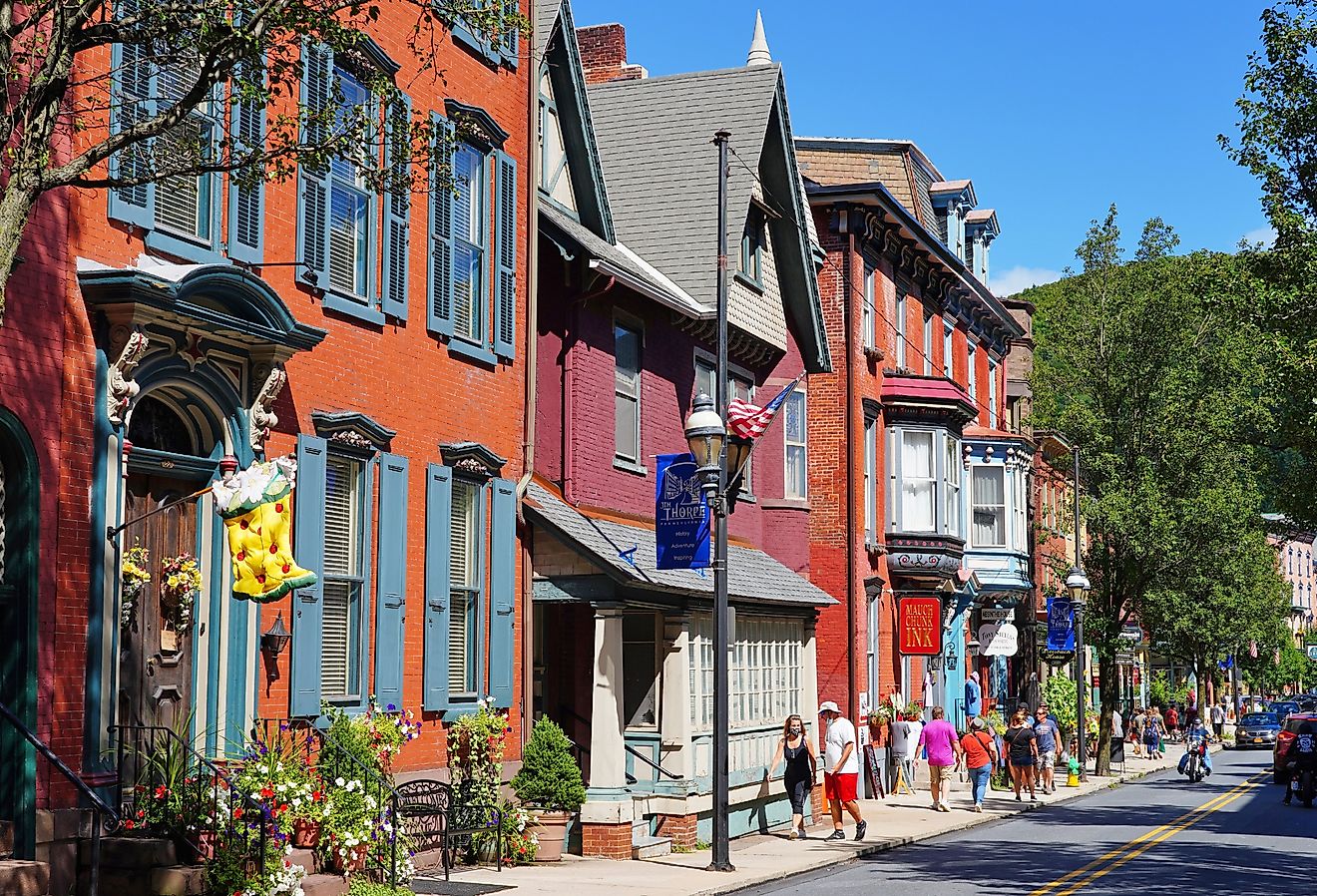
Berlin grew inland from the coast around a crossroads and a rail stop, and its Main Street stayed whole. The Atlantic Hotel has taken guests since 1895, a Victorian building whose front porch of rocking chairs looks straight down the street. Behind it, the Mermaid Museum fills an upstairs gallery with sea lore and folk art and a fair amount of oddball charm. North on Main, the Calvin B. Taylor House Museum keeps a Federal-style home stocked with period furniture and local railroad relics. The town holds more than 60 shops and restaurants inside a few brick-paved blocks. Stephen Decatur Park runs its shaded paths under old white oaks toward a central pond, about 21 acres in all. Filmmakers keep coming back because the whole thing still looks the part.
Ocean City

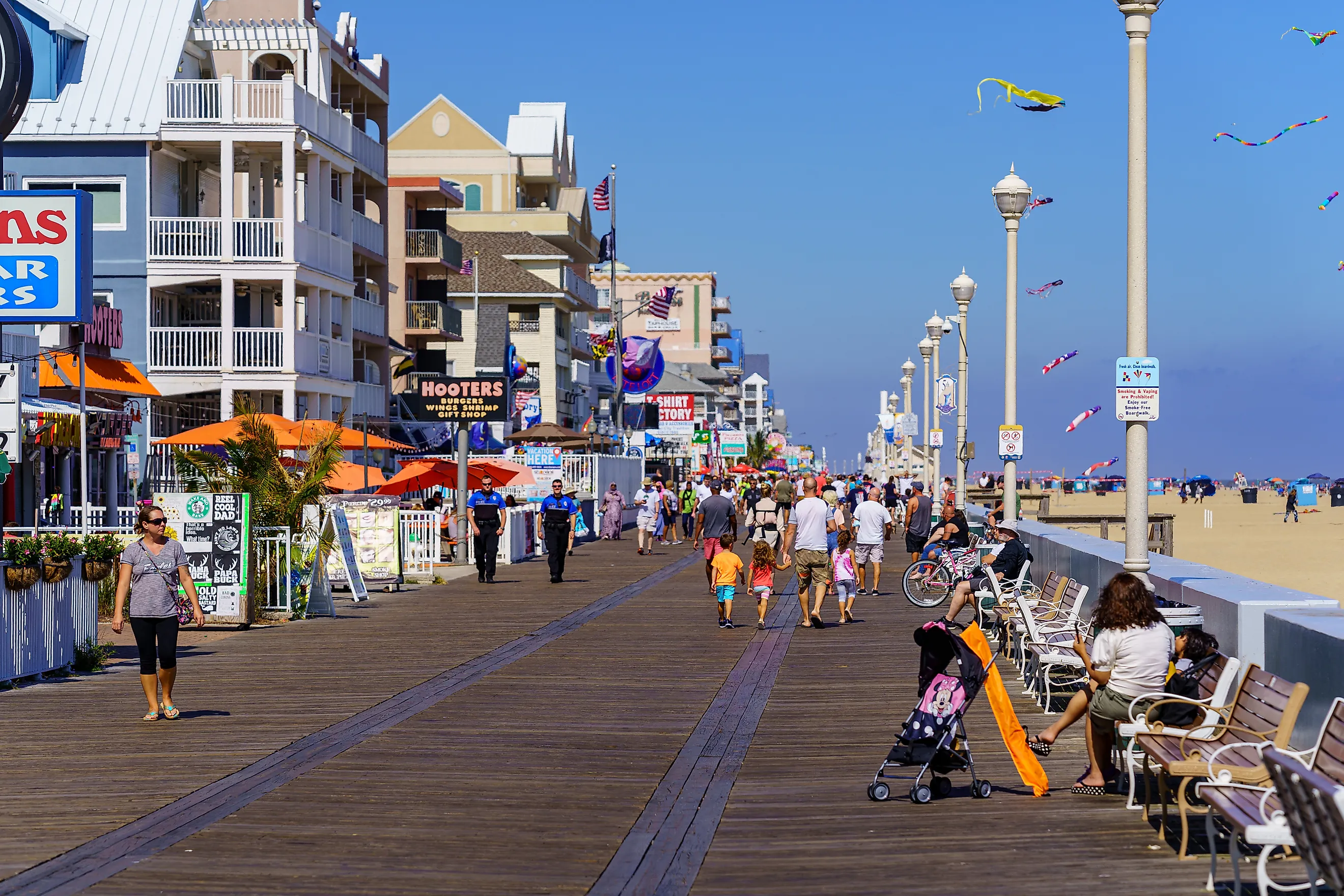
Ocean City faces the open Atlantic, and the beach runs ten miles up the barrier island. The boardwalk covers roughly three miles from the Inlet to 27th Street, wide and busy from spring through fall. Trimper's Rides has run its carousel and midway at the south end since 1893. The 1891 Life-Saving Station Museum sits at the boardwalk's foot, packed with surfboats and shipwreck relics from the crews who worked this coast. Its deck gives one of the best views of the Inlet, where charter boats run out to the ocean all day. Ten miles south, the wild ponies of Assateague Island graze the dunes and the surf line. The herd runs more than 300 horses across the beaches and salt marsh.
One State, Two Ways Of Getting Around
The drive west out of the tidewater tracks a real shift in how Maryland grew. The shore towns face their harbors because boats came first, and the boatyards and custom houses still hold the center of those places. The western towns turned toward the tracks because the railroad arrived later and mattered just as much. Cumberland guarded the road west, and Oakland became a mountain stop the trains built from scratch. Both halves kept their working parts instead of paving them over. Ocean City went its own way entirely, all beach and boardwalk out on the barrier island. That is why a courthouse square, a lighthouse, a steam depot, and a mile of arcades can all sit inside one weekend's drive.