8 Cutest Small Towns in Connecticut
The Connecticut coast was getting English settlement before half the colonies to the south even existed. Old Saybrook had settlers at the river mouth by 1635, and Guilford's stone Whitfield House went up just four years later. That early-American footprint is still on the ground in eight small Connecticut towns the rest of the state mostly takes for granted. Working lighthouses still mark the river mouths at Old Saybrook and Mystic. A twelve-acre historic town green still runs the center of Guilford. State parks the size of small islands sit at the edge of Westport and Greenwich. The eight ahead pair that preserved downtown character with the beaches, the museums, and the shoreline parks that keep them on local short-lists year-round.
Westport

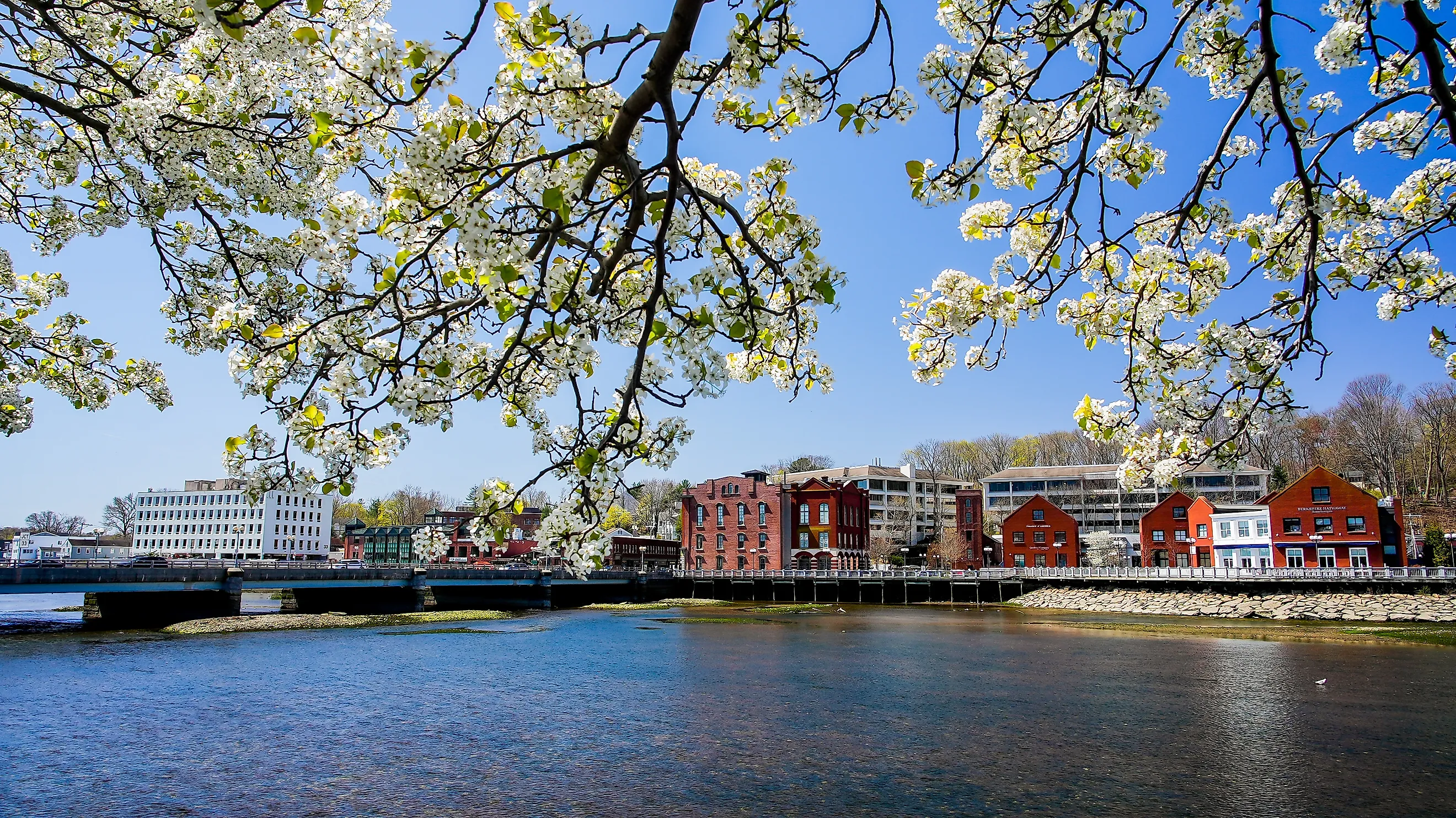
Westport runs three public beaches (Compo, Old Mill, and Burying Hill), all open to non-residents with daily parking permits. Compo's 1.5 miles of sand pulls in the sunset crowd along Soundview Drive. Sherwood Island State Park is the oldest state park in Connecticut, established 1914, with 235 acres of beach and salt marsh and the state's official 9/11 Living Memorial. The Westport Country Playhouse, founded in 1931 by playwright Lawrence Langner, is still one of the best-known regional theaters in the Northeast. The Saugatuck River cuts straight through downtown past the Westport Library and the restaurants that line both banks. The "one of the wealthiest small towns in America" headline isn't wrong, but you can still grab a coffee on Main Street without a hedge fund handshake.

Mystic

Mystic isn't technically a town; it's a village split between Groton and Stonington. Either way, it runs the largest maritime museum in the country across 19 acres at Mystic Seaport. The headliner is the Charles W. Morgan, built in 1841 and the only surviving wooden whaling ship anywhere in the world. The Mystic Aquarium handles more than 70 indoor and outdoor exhibits, including the largest outdoor beluga whale habitat in the United States. Downtown Mystic crosses its river on the 1922 Bascule Bridge, which still lifts every half hour during boating season to let masts through. Mystic Pizza, the West Main Street restaurant that gave the 1988 Julia Roberts movie its name, is still serving, though the franchise blew up well after the film did.
Madison

Madison was named for President James Madison and incorporated in 1826. Hammonasset Beach State Park is the largest shoreline state park in Connecticut at 919 acres and draws more than a million visitors a year. Two miles of sandy beach, a campground, the Meigs Point Nature Center, and a boardwalk that cuts through salt marsh all sit inside the park boundary. R.J. Julia Booksellers downtown is one of the most respected independent bookstores in New England, and the Boston Post Road strip around it stays walkable and local. The 1846 First Congregational Church anchors the town green; the 1685 Deacon John Grave House on Academy Street is older than Madison itself.
Greenwich

Greenwich was first settled in 1640, which makes it one of the oldest towns in the state. Great Captain Island, reachable by town ferry in summer, holds the 1829 Great Captain Island Light, an octagonal granite tower with the keeper's house still standing next to it. Greenwich Point Park (locally just "Tod's Point") covers 147 acres of beach, walking paths, and views back across the Sound to Long Island. The Bruce Museum on Steamboat Road reopened in 2023 after a $69 million expansion that roughly quadrupled the gallery space. The 1690s Putnam Cottage on the Boston Post Road preserves the tavern where General Israel Putnam reportedly stayed during the Revolutionary War, and where, according to local legend, he made his famous escape down the rocky slope on horseback.
Old Saybrook

Old Saybrook sits where the Connecticut River meets Long Island Sound. Settled in 1635, it was the original home of what became Yale: the Collegiate School was founded here in 1701 before relocating to New Haven in 1716. Two lighthouses anchor the river mouth. The Saybrook Breakwater Lighthouse, completed in 1886 at the end of the rock breakwater, is one of the most photographed lighthouses in the state. The Lynde Point Lighthouse, completed in 1838, is the second-oldest lighthouse in Connecticut. Harvey's Beach handles the town's primary swimming. The Katharine Hepburn Cultural Arts Center, named for the longtime Old Saybrook resident, runs a year-round performance schedule downtown.
East Lyme

East Lyme has roughly eight miles of Long Island Sound shoreline split between Niantic village and Black Point. The Niantic Bay Boardwalk is a 1.1-mile elevated wooden walkway that connects Hole-in-the-Wall Beach to McCook Point Park and is one of the most-walked seaside boardwalks in eastern Connecticut. Rocky Neck State Park covers 708 acres of beach, salt-marsh trails, and the 1936 WPA-era Ellie Mitchell Pavilion, a stone-and-timber bathhouse that still earns its keep on hot August afternoons. The Book Barn in downtown Niantic spreads more than 350,000 used titles across multiple barns and outbuildings, and the resident cats running between them are something of a local institution.
Colebrook

Colebrook is one of the lightest-populated towns in the state with around 1,400 residents, sitting up in the Litchfield Hills of the northwest corner. Chartered in 1779 during the early years of the Revolution, it still runs at a small-village scale. The Colebrook Historic District on the town green preserves Federal and Greek Revival buildings including the 1815 Colebrook Store (the kind of general store where the post office is still in the back) and the 1841 Colebrook Congregational Church. Haystack Mountain State Park, just up the road in Norfolk, runs a 0.7-mile trail to a 34-foot stone observation tower with views into Massachusetts on clear days. Algonquin State Forest covers more than 2,800 acres of public-access forest land around town for hiking, hunting, and fishing.
Guilford

Guilford was settled in 1639 by English Puritans led by Reverend Henry Whitfield, who negotiated a land purchase from the Menunkatuck band of the Quinnipiac. The Henry Whitfield House, completed that same year and now operated as the Henry Whitfield State Museum, is the oldest house in Connecticut and the oldest stone house in New England, a National Historic Landmark since 1997, and Connecticut's first state museum (opened 1899). The Guilford town green is one of the largest historic town greens in New England at 12 acres, ringed on all four sides by Federal and Greek Revival buildings. Jacobs Beach covers 25 acres on Long Island Sound with a small wooden pier and calm-water swimming that's popular with families. The Guilford Art Center on the green runs year-round classes in pottery, weaving, and metalwork, and the annual Craft Expo each July fills the green itself.
The Connecticut Eight, At A Glance
The eight above each run a different version of small-town Connecticut. Westport, Greenwich, and East Lyme cover the Sound with beaches, theater, and museums. Mystic and Old Saybrook handle the maritime-and-lighthouse identity of the eastern shoreline. Madison and Guilford run the strongest historic-town-green character on the central coast, with the 1639 Whitfield House the architectural headliner of the entire list. Colebrook closes things out in the Litchfield Hills, the rural counterweight to seven coastal entries. Eight ways to spend a Saturday, and most are inside a 90-minute drive of each other.